Mythos Atlas

Side by sideParallel across traditions

Pangu vs Purusha

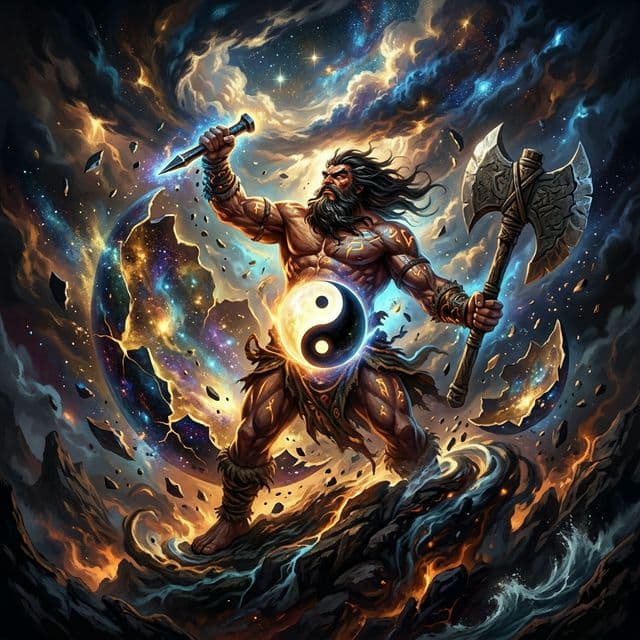
Pangu
PanguChinese
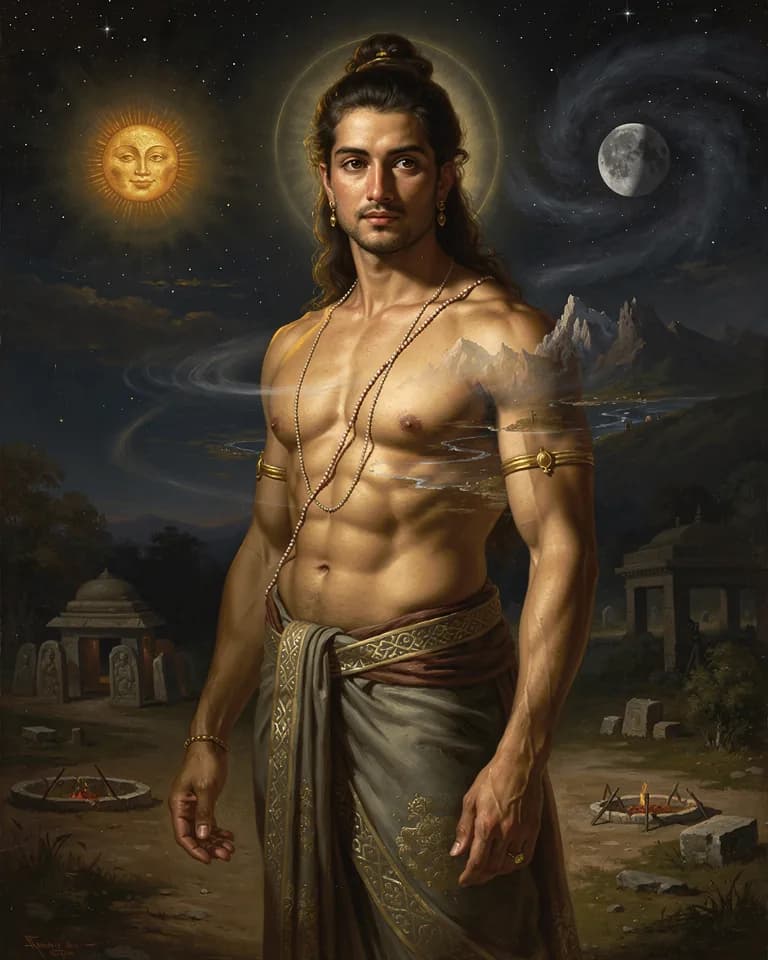
Purusha
PurushaHindu

Both are cosmic beings sacrificed to create the world and its various parts.

At a glance

Pangu and Purusha compared
PanguPurusha
TraditionChinese PantheonHindu Pantheon
Domainscreation, separation of heaven and earth, primordial beingthe cosmos, sacrifice, creation, the social order
Symbolscosmic egg, axe, chisel, yin-yanga thousand heads, eyes, and feet, the sacrificial victim
Also calledPan Gu, Primordial GiantPurusa, Puruṣa, the Cosmic Person

Where they meet

Both are associated with creation.

Where they part

Only Pangu

Associated with separation of heaven and earth and primordial being.

Only Purusha

Associated with the cosmos, sacrifice, and the social order.

Why they are compared

Both are cosmic beings whose bodies become the parts of the world.

How each was worshipped

Pangu

Cult sites
Scattered Pangu temples in South China; not a universal parish cult

Cosmogonic giant more than a parish god. Some villages keep a temple and a birthday. Most Chinese never visit one. The egg, the axe, and the body-become-world are story first.

Purusha

The Purusha Sukta is recited in Vedic and temple ritual, including daily worship of Vishnu, rather than Purusha receiving a separate cult.

The two figures

Chinese Pantheon

Pangu

The primordial giant who created the world by separating yin and yang, Heaven and Earth. After holding them apart for 18,000 years, his body became the features of the universe.

Before the world existed, there was only a cosmic egg of chaos. Within it, Pangu grew for 18,000 years until he awoke and split the egg with his axe, creating Heaven above and Earth below. He held them apart until they were stable, then his body became the features of the world.

Pangu is the creator deity of Chinese mythology, a primordial giant whose birth, life, and death created the universe as we know it. His story is one of the most profound creation myths, combining themes of sacrifice, transformation, and the origin of cosmic order.

Read the full Pangu entry

Hindu Pantheon

Purusha

The primordial cosmic being of Rigveda 10.90, the Purusha Sukta, whom the gods sacrificed so that the world could be made from his body: the sun from his eye, the moon from his mind, the sky from his head, the earth from his feet, and the four social classes from his mouth, arms, thighs, and feet.

Rigveda 10.90 says that from Purusha was born Viraj, and from Viraj Purusha again, a paradox of mutual origin. The gods then bound him as their sacrificial victim and made the ordered world from his divided body.

The Purusha Sukta (Rigveda 10.90) describes a cosmic Person with a thousand heads, eyes, and feet who covers the earth and extends beyond it. All creatures are a quarter of him; three quarters are immortal in heaven.

Read the full Purusha entry
About this comparison

Comparisons pair figures that play a similar role across traditions, or that the myths connect within one. A shared role does not, by itself, establish a shared origin.