Side by sideParallel across traditions

Kukulkan vs Quetzalcoatl

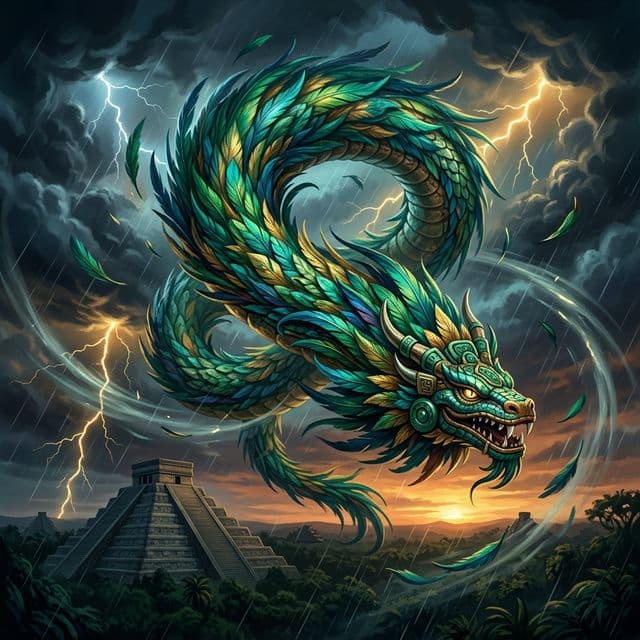
Kukulkan
KukulkanMesoamerican
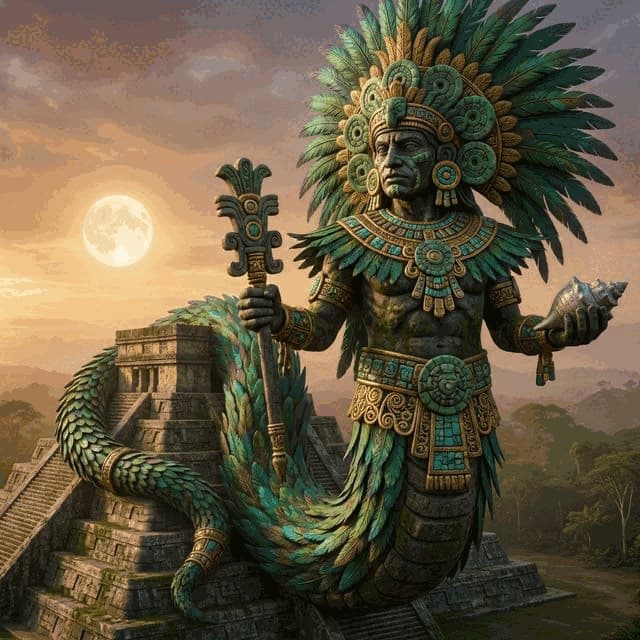
Quetzalcoatl
QuetzalcoatlAztec

The Feathered Serpent is the same deity of wind, wisdom, and creation shared across Mesoamerican cultures.

At a glance

Kukulkan and Quetzalcoatl compared
KukulkanQuetzalcoatl
TraditionMesoamerican PantheonAztec Pantheon
Domainswind, rain, sky, wisdom, creationwind, wisdom, learning, creation, priesthood
Symbolsfeathered serpent, quetzal feathers, serpentfeathered serpent, conch shell, wind jewel
Also calledK'uk'ulkan, Gukumatz, Q'uq'umatzFeathered Serpent

Where they meet

Both are associated with wind, wisdom, and creation.

They share a symbol: feathered serpent.

  • feathered serpent

Where they part

Only Kukulkan

Associated with rain and sky.

Only Quetzalcoatl

Associated with learning and priesthood.

Why they are compared

Kukulkan is the Maya equivalent of Quetzalcoatl, sharing the feathered serpent iconography and associations with wind, wisdom, and creation.

How each was worshipped

Kukulkan

Cult sites
El Castillo at Chichen Itza; Maya sites where the feathered serpent is a sky-and-wind being
Festivals
Equinox serpent-shadow gatherings at Chichen (modern; older rites are less documented)

Maya feathered serpent, related to but not identical with Mexica Quetzalcoatl. Pyramid, wind, and priesthood. Do not collapse Yucatan into Tenochtitlan. The Castillo is a calendar-machine as much as a temple.

Quetzalcoatl

Cult sites
Great Pyramid of Cholula; Round temples of Ehecatl-Quetzalcoatl
Festivals
Wind-god rites of Ehecatl; Cholula pilgrimages

Feathered serpent, wind, and priesthood. Cholula was his great house. Ehecatl's round temples cut the air. Some traditions oppose mass sacrifice in his name; others do not. Keep the contradiction; it is historical.

The two figures

Mesoamerican Pantheon

Kukulkan

The Maya feathered serpent deity, cognate with the Aztec Quetzalcoatl. Kukulkan represents the union of earth and sky, associated with wind, rain, and the transmission of knowledge to humanity.

Kukulkan emerged from the primordial sea as a creator deity alongside Tepeu. Together they spoke the world into existence, creating earth from the waters and all living things through the power of divine speech.

Kukulkan is the Yucatec Maya name for the feathered serpent deity worshipped throughout Mesoamerica. In K'iche' Maya tradition, he is known as **Q'uq'umatz** or **Gukumatz**. The name combines the Maya words for the quetzal bird (*k'uk'*) and serpent (*kan*), embodying the same earth-sky duality as the Aztec Quetzalcoatl.

Read the full Kukulkan entry

Aztec Pantheon

Quetzalcoatl

The Feathered Serpent, a creator deity who contributed to the creation of mankind. Patron of priests and inventor of books and the calendar.

One of the four sons of the creator couple Ometeotl. He journeyed to Mictlan to retrieve the bones of the ancestors to create the current race of humans.

Quetzalcoatl stands as one of the most complex and revered deities in Mesoamerican religion, his worship spanning multiple civilizations over thousands of years. His name combines **quetzal** (the resplendent bird with iridescent green feathers) and **coatl** (serpent), embodying the union of earth and sky, matter and spirit.

Read the full Quetzalcoatl entry
About this comparison

Comparisons pair figures that play a similar role across traditions, or that the myths connect within one. A shared role does not, by itself, establish a shared origin.