Mythos Atlas

Side by sideParallel across traditions

Mireuk vs Nuwa

Mireuk
MireukKorean
Nuwa
NuwaChinese

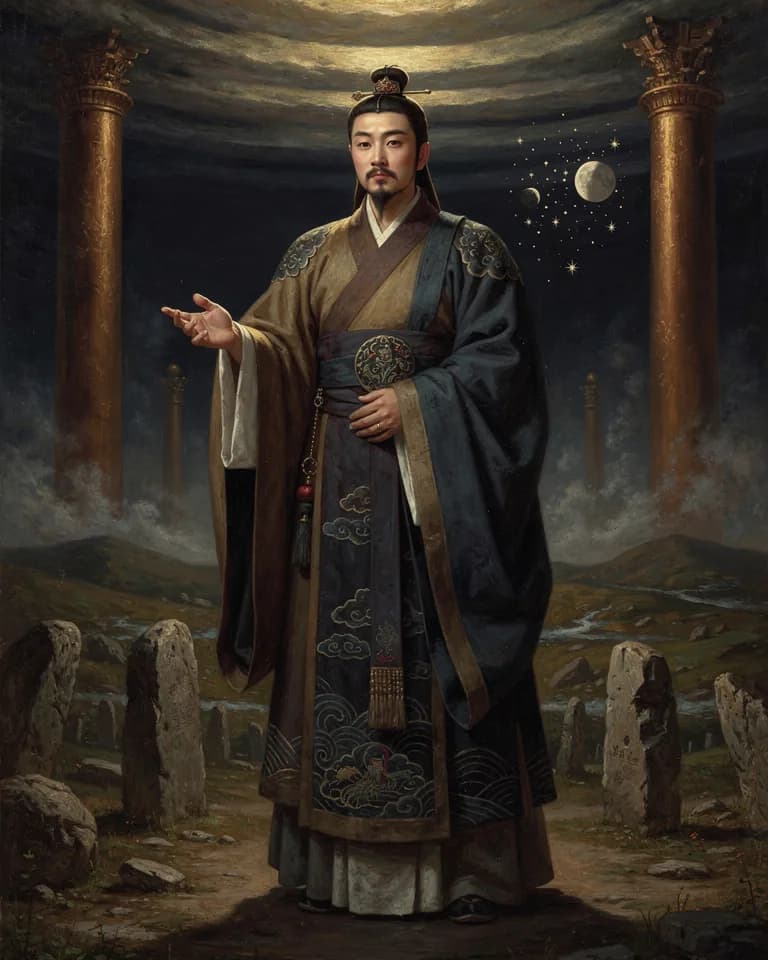
Nüwa props up the sky with four pillars (the legs of a great turtle) after it collapses, as Mireuk sets copper pillars at the earth's four corners; Nüwa also creates humans, as Mireuk does from insects on golden and silver trays.

At a glance

Mireuk and Nuwa compared
MireukNuwa
TraditionKorean TraditionChinese Pantheon
Domainscreation, the separation of heaven and earth, the first age of the worldcreation, humanity, marriage, order
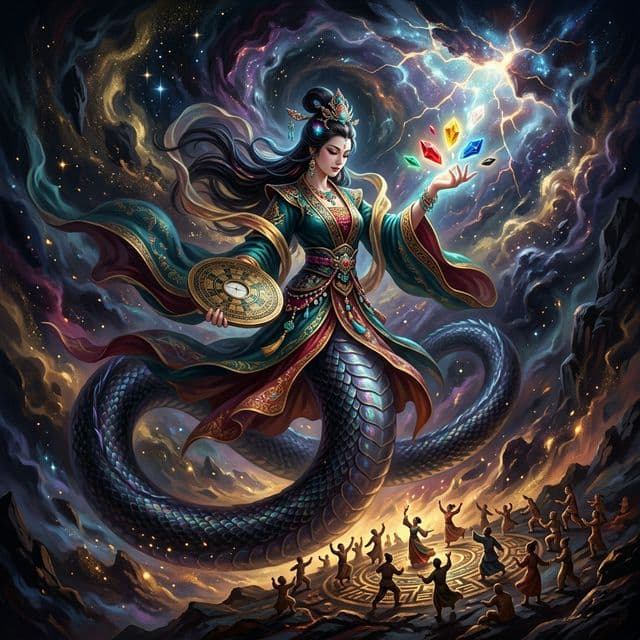
Symbolscopper pillars at the four corners of the earth, golden and silver trays, the flowerserpent tail, compass, five-colored stones, clay figures
Also calledMireuk-nimNu Wa, Empress Wa, Snake Goddess

Where they meet

Both are associated with creation.

Where they part

Only Mireuk

Associated with the separation of heaven and earth and the first age of the world.

Only Nuwa

Associated with humanity, marriage, and order.

How each was worshipped

Mireuk

Invoked as creator in the shamanic creation songs of the Hamgyeong region; folk veneration of stone Mireuk statues in Korean villages, often for children and protection, draws on the same name.

Nuwa

Cult sites
Nüwa temples in northern China (for example Huaiyang traditions); Paired with Fuxi on Han stone reliefs
Festivals
Human-creation festivals in local temple fairs

She patches the sky and makes humans from yellow earth. Cult is local and often paired with Fuxi. The serpent-human body on Han tombs is the image; the temple fair is the living remainder.

The two figures

Korean Tradition

Mireuk

The creator of the world in the Korean shamanic Song of Creation, who separates heaven and earth, props up the sky with copper pillars, makes stars from an extra sun and moon, and creates the first humans, before losing the world to the cheating Seokga.

Born when heaven and earth came into being (Changse-ga, recorded 1923).

In 1923 the folklorist Son Jin-tae recorded the *Changse-ga* ('Song of the Creation of the World') from the shaman Kim Ssang-dori of Hamheung in northern Korea, publishing it in 1930. It begins when heaven and earth came into being and Mireuk was born. Heaven and earth were stuck together, and Mireuk pushed the sky up like the lid of a pot and set copper pillars at the four corners of the earth to hold it. There were two suns and two moons; Mireuk took one moon to make the stars of the Big Dipper and the Southern Dipper, and one sun to make the great and small stars.

Read the full Mireuk entry

Chinese Pantheon

Nuwa

The serpent-bodied goddess who created humanity from yellow clay and repaired the broken sky after a great catastrophe. She is the mother of mankind and establisher of marriage.

In the age after Pangu created the world, the goddess Nuwa felt lonely wandering the empty earth. She took yellow clay and molded it into figures like herself, breathing life into them to create humanity. She is the mother of all people.

Nuwa is one of the most ancient and important goddesses in Chinese mythology, credited with creating humanity and saving the world from destruction. With her brother-husband Fuxi, she represents the primordial creative forces that shaped civilization.

Read the full Nuwa entry
About this comparison

Comparisons pair figures that play a similar role across traditions, or that the myths connect within one. A shared role does not, by itself, establish a shared origin.