Side by sideSiblings

Fuxi vs Nuwa

Fuxi
FuxiChinese
Nuwa
NuwaChinese

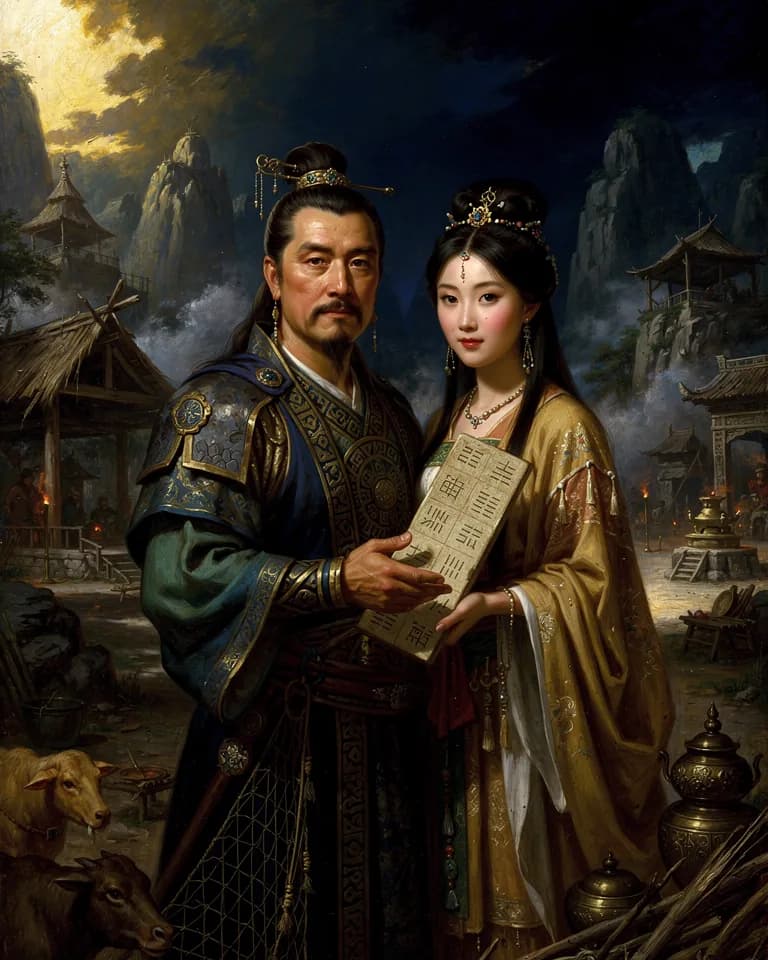
Fuxi and Nuwa are recorded as siblings in the Chinese Pantheon.

At a glance

Fuxi and Nuwa compared
FuxiNuwa
TraditionChinese PantheonChinese Pantheon
Domainsculture-founding, the Eight Trigrams, fishing and hunting, marriagecreation, humanity, marriage, order
Symbolsthe eight trigrams (bagua), a carpenter's square, serpent's tailserpent tail, compass, five-colored stones, clay figures
Also calledPaoxi, BaoxiNu Wa, Empress Wa, Snake Goddess

Where they meet

Both are associated with marriage.

Where they part

Only Fuxi

Associated with culture-founding, the eight trigrams, and fishing and hunting.

Only Nuwa

Associated with creation, humanity, and order.

How each was worshipped

Fuxi

Cult sites
Taihao Mausoleum and temple complex at Huaiyang, honored as Fuxi's traditional burial site
Festivals
Annual temple fair at Huaiyang commemorating Fuxi

Fuxi is honored chiefly through the Huaiyang temple fair tradition and, together with Nüwa, through Han-dynasty tomb art depicting the paired serpent-bodied culture-founders. His cult is regional and commemorative rather than a major state religion.

Nuwa

Cult sites
Nüwa temples in northern China (for example Huaiyang traditions); Paired with Fuxi on Han stone reliefs
Festivals
Human-creation festivals in local temple fairs

She patches the sky and makes humans from yellow earth. Cult is local and often paired with Fuxi. The serpent-human body on Han tombs is the image; the temple fair is the living remainder.

The two figures

Chinese Pantheon

Fuxi

Legendary first of the Three Sovereigns and culture hero credited with devising the Eight Trigrams, inventing fishing nets, and teaching humanity domestication. Paired with his sister (and, in some traditions, wife) Nüwa, Fuxi is shown in Han-dynasty art with a serpent's tail intertwined with hers, holding a carpenter's square to her compass.

Fuxi is counted as the first of the Three Sovereigns, legendary founders of Chinese civilization. Observing the patterns of heaven and earth, he devised the Eight Trigrams that underlie the Yijing, and he is further credited with teaching humanity fishing, hunting, animal domestication, and, in some traditions, the institution of marriage.

Fuxi is remembered in Chinese tradition as the first of the Three Sovereigns (San Huang), legendary culture-founders credited with establishing the foundations of civilization before the age of the Five Emperors. Where Nüwa is chiefly a creator and repairer of the world, Fuxi's role centers on teaching humanity the skills and institutions of ordered life.

Read the full Fuxi entry

Chinese Pantheon

Nuwa

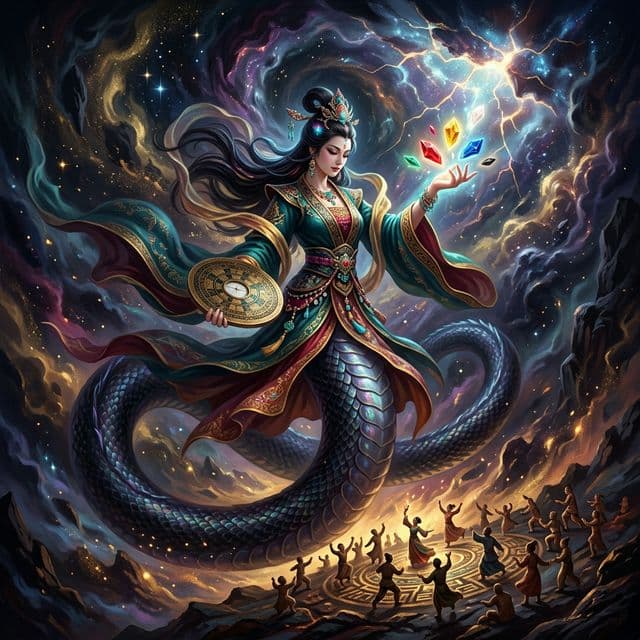
The serpent-bodied goddess who created humanity from yellow clay and repaired the broken sky after a great catastrophe. She is the mother of mankind and establisher of marriage.

In the age after Pangu created the world, the goddess Nuwa felt lonely wandering the empty earth. She took yellow clay and molded it into figures like herself, breathing life into them to create humanity. She is the mother of all people.

Nuwa is one of the most ancient and important goddesses in Chinese mythology, credited with creating humanity and saving the world from destruction. With her brother-husband Fuxi, she represents the primordial creative forces that shaped civilization.

Read the full Nuwa entry
About this comparison

Comparisons pair figures that play a similar role across traditions, or that the myths connect within one. A shared role does not, by itself, establish a shared origin.