Side by sideParallel across traditions

Fuxi vs Prometheus

Fuxi
FuxiChinese
Prometheus
PrometheusGreek

Both are culture-bringing figures credited with teaching humanity the foundational skills of civilized life.

At a glance

Fuxi and Prometheus compared
FuxiPrometheus
TraditionChinese PantheonGreek Pantheon
Domainsculture-founding, the Eight Trigrams, fishing and hunting, marriageforethought, fire, crafts, humanity
Symbolsthe eight trigrams (bagua), a carpenter's square, serpent's tailfire, torch, fennel stalk, eagle
Also calledPaoxi, BaoxiForethinker, Fire-Bringer

Where they meet

The atlas records no domain or symbol that Fuxi and Prometheus share.

They are compared for the part each plays in their own tradition rather than for any attribute in common.

Where they part

Only Fuxi

Associated with culture-founding, the eight trigrams, fishing and hunting, and marriage.

Only Prometheus

Associated with forethought, fire, crafts, and humanity.

How each was worshipped

Fuxi

Cult sites
Taihao Mausoleum and temple complex at Huaiyang, honored as Fuxi's traditional burial site
Festivals
Annual temple fair at Huaiyang commemorating Fuxi

Fuxi is honored chiefly through the Huaiyang temple fair tradition and, together with Nüwa, through Han-dynasty tomb art depicting the paired serpent-bodied culture-founders. His cult is regional and commemorative rather than a major state religion.

Prometheus

Cult sites
Altar in the Athenian Academy, with torch races toward the city; Cult at Kolonos with Athena
Festivals
Prometheia torch races

Almost no panhellenic temple. Athens ran torch races from his altar. He is a craftsman's and a thinker's god more than a state's. The chained Titan of tragedy is larger than the small civic footprint.

The two figures

Chinese Pantheon

Fuxi

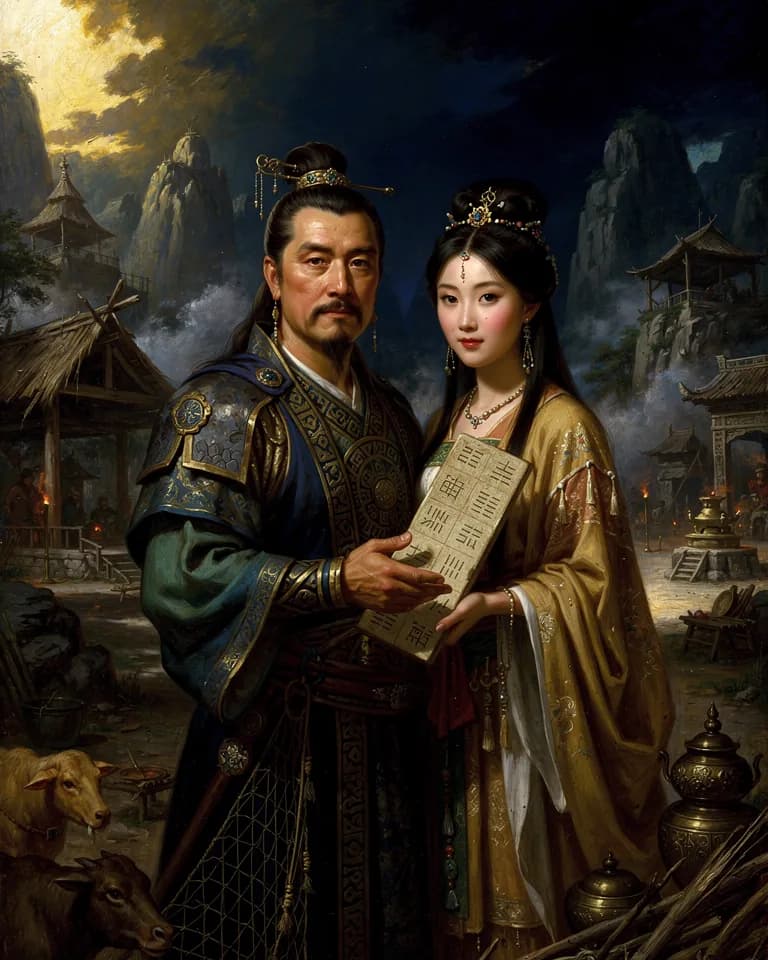
Legendary first of the Three Sovereigns and culture hero credited with devising the Eight Trigrams, inventing fishing nets, and teaching humanity domestication. Paired with his sister (and, in some traditions, wife) Nüwa, Fuxi is shown in Han-dynasty art with a serpent's tail intertwined with hers, holding a carpenter's square to her compass.

Fuxi is counted as the first of the Three Sovereigns, legendary founders of Chinese civilization. Observing the patterns of heaven and earth, he devised the Eight Trigrams that underlie the Yijing, and he is further credited with teaching humanity fishing, hunting, animal domestication, and, in some traditions, the institution of marriage.

Fuxi is remembered in Chinese tradition as the first of the Three Sovereigns (San Huang), legendary culture-founders credited with establishing the foundations of civilization before the age of the Five Emperors. Where Nüwa is chiefly a creator and repairer of the world, Fuxi's role centers on teaching humanity the skills and institutions of ordered life.

Read the full Fuxi entry

Greek Pantheon

Prometheus

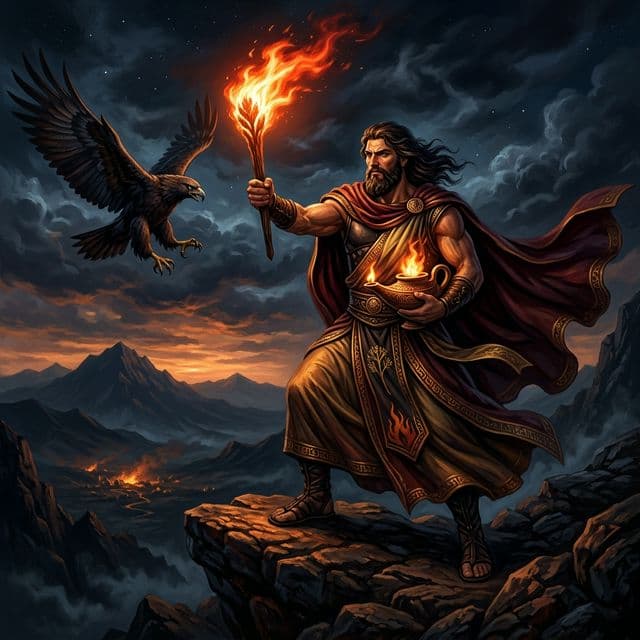
Titan who defied Zeus by stealing fire from the gods and giving it to humanity. For this transgression, Zeus chained him to a rock where an eagle devoured his liver daily.

Prometheus was a Titan, son of **Iapetus** and the Oceanid **Clymene**. Unlike most Titans, he sided with Zeus during the Titanomachy. He later created humanity from clay, and when Zeus denied them fire, Prometheus stole it from Hephaestus's forge, hiding it in a fennel stalk. Zeus punished him with eternal torment on Mount Caucasus.

**Prometheus** stands apart among the Titans as the great benefactor of humankind. His name means "forethought," contrasting with his brother **Epimetheus** ("afterthought"), and his actions shaped the relationship between gods and mortals.

Read the full Prometheus entry
About this comparison

Comparisons pair figures that play a similar role across traditions, or that the myths connect within one. A shared role does not, by itself, establish a shared origin.