Side by sideParallel across traditions

Agni vs Prometheus

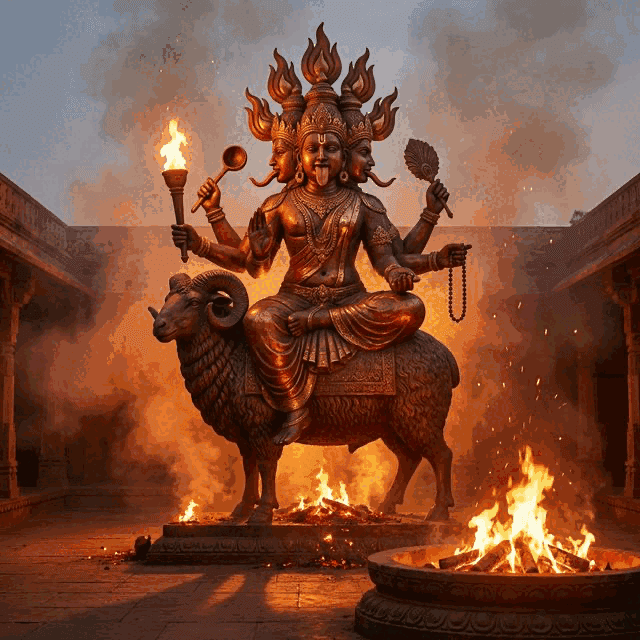
Agni
AgniHindu
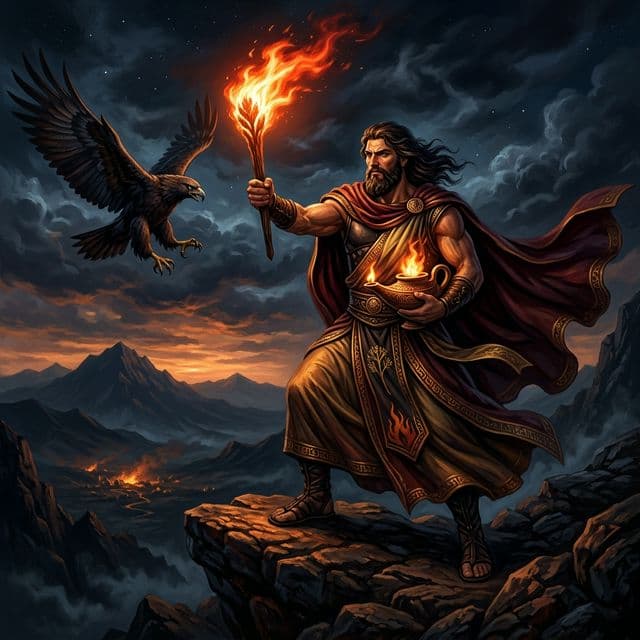
Prometheus
PrometheusGreek

Both mediate fire between the divine and human realms.

At a glance

Agni and Prometheus compared
AgniPrometheus
TraditionHindu PantheonGreek Pantheon
Domainsfire, sacrifice, purification, messengerforethought, fire, crafts, humanity
Symbolsflame, ram, seven tonguesfire, torch, fennel stalk, eagle
Also calledVahni, PavakaForethinker, Fire-Bringer

Where they meet

Both are associated with fire.

Where they part

Only Agni

Associated with sacrifice, purification, and messenger.

Only Prometheus

Associated with forethought, crafts, and humanity.

Why they are compared

Both are associated with the gift of fire to humanity, though Agni is fire personified rather than a fire-bringer.

How each was worshipped

Agni

Cult sites
Every Vedic fire; almost no standalone temple cult

Agni is the mouth. Domestic homa and the cremation fire are his working altars. Looking for a pilgrimage town misses the point: the cult is the flame itself.

Prometheus

Cult sites
Altar in the Athenian Academy, with torch races toward the city; Cult at Kolonos with Athena
Festivals
Prometheia torch races

Almost no panhellenic temple. Athens ran torch races from his altar. He is a craftsman's and a thinker's god more than a state's. The chained Titan of tragedy is larger than the small civic footprint.

The two figures

Hindu Pantheon

Agni

God of fire and messenger between gods and humans. Central to Vedic ritual, he carries offerings to the gods. Represents the sacrificial fire, digestive fire, and cosmic fire.

Agni's origins are described variously in Vedic texts. He was born from the cosmic waters, from the friction of two fire sticks, or from the flash of lightning. He is said to be reborn every time fire is kindled, making him eternally young despite being one of the oldest gods.

Agni is the god of **fire** and the divine messenger between gods and humans. One of the most important Vedic deities, he is present in every sacrificial fire, carrying offerings to the gods. He represents the sacrificial fire, the digestive fire, and the cosmic fire of transformation.

Read the full Agni entry

Greek Pantheon

Prometheus

Titan who defied Zeus by stealing fire from the gods and giving it to humanity. For this transgression, Zeus chained him to a rock where an eagle devoured his liver daily.

Prometheus was a Titan, son of **Iapetus** and the Oceanid **Clymene**. Unlike most Titans, he sided with Zeus during the Titanomachy. He later created humanity from clay, and when Zeus denied them fire, Prometheus stole it from Hephaestus's forge, hiding it in a fennel stalk. Zeus punished him with eternal torment on Mount Caucasus.

**Prometheus** stands apart among the Titans as the great benefactor of humankind. His name means "forethought," contrasting with his brother **Epimetheus** ("afterthought"), and his actions shaped the relationship between gods and mortals.

Read the full Prometheus entry
About this comparison

Comparisons pair figures that play a similar role across traditions, or that the myths connect within one. A shared role does not, by itself, establish a shared origin.