Mythos Atlas

Side by sideParallel across traditions

Agni vs Atar

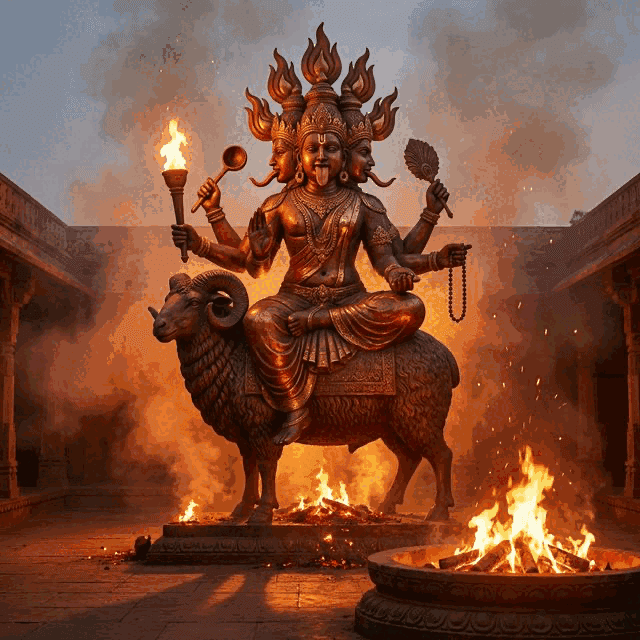
Agni
AgniHindu
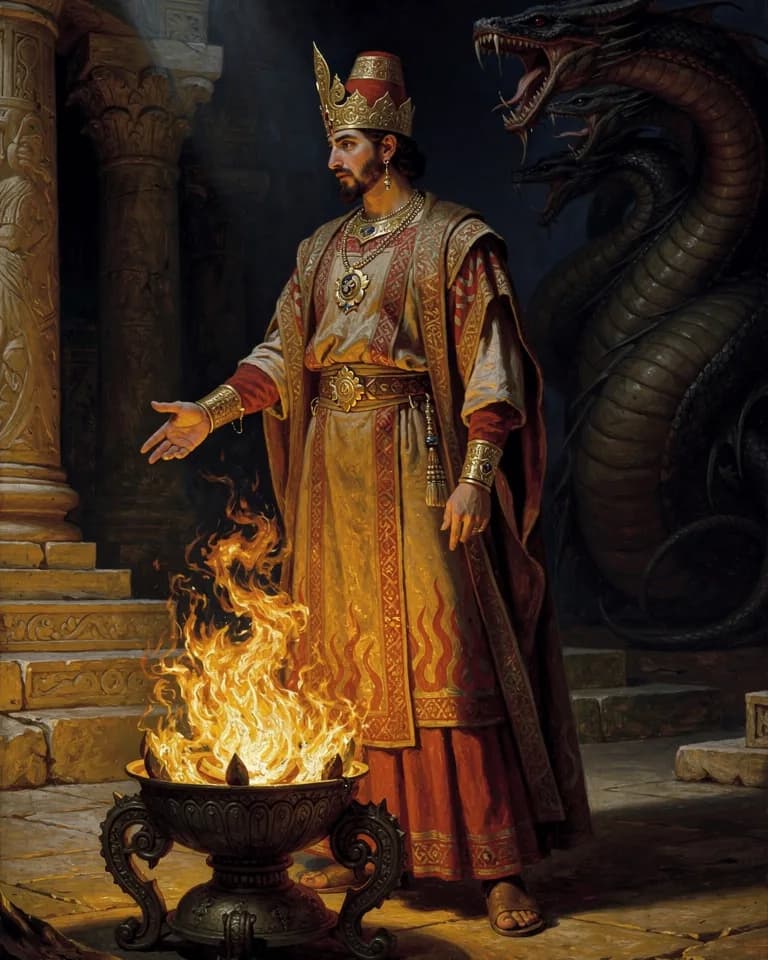
Atar
AtarPersian (Iranian)

Both are sacrificial fire personified as a god at the center of Indo-Iranian ritual; the names are not cognate, but the ritual role of fire as the medium between worshippers and the divine is shared.

At a glance

Agni and Atar compared
AgniAtar
TraditionHindu PantheonPersian (Iranian) Tradition
Domainsfire, sacrifice, purification, messengerfire, truth, ritual purity
Symbolsflame, ram, seven tonguesthe sacred fire, the fire altar
Also calledVahni, PavakaAdur, Azar, Atash

Where they meet

Both are associated with fire.

Where they part

Only Agni

Associated with sacrifice, purification, and messenger.

Only Atar

Associated with truth and ritual purity.

How each was worshipped

Agni

Cult sites
Every Vedic fire; almost no standalone temple cult

Agni is the mouth. Domestic homa and the cremation fire are his working altars. Looking for a pilgrimage town misses the point: the cult is the flame itself.

Atar

Cult sites
The Sasanian royal fire Adur Gushnasp at Takht-e Soleyman, Iran.; Living Atash Behram fires at Yazd (Iran) and Udvada (India), among others.
Festivals
Adargan, the feast of fire on the day Adar of the month Adar.

Consecrated fires are fed with sandalwood and incense by priests five times a day; the faithful pray facing the fire and must never pollute it.

The two figures

Hindu Pantheon

Agni

God of fire and messenger between gods and humans. Central to Vedic ritual, he carries offerings to the gods. Represents the sacrificial fire, digestive fire, and cosmic fire.

Agni's origins are described variously in Vedic texts. He was born from the cosmic waters, from the friction of two fire sticks, or from the flash of lightning. He is said to be reborn every time fire is kindled, making him eternally young despite being one of the oldest gods.

Agni is the god of **fire** and the divine messenger between gods and humans. One of the most important Vedic deities, he is present in every sacrificial fire, carrying offerings to the gods. He represents the sacrificial fire, the digestive fire, and the cosmic fire of transformation.

Read the full Agni entry

Persian (Iranian) Tradition

Atar

Fire as a divine being, 'son of Ahura Mazda', the visible focus of Zoroastrian worship, who in the Zamyad Yasht faces down the three-mouthed dragon Azhi Dahaka in the struggle for the royal Glory.

Son of Ahura Mazda, in the standard Avestan formula.

The Avesta calls Atar, fire, 'the son of Ahura Mazda', and fire is the element through which Zoroastrians approach God: prayers are said facing a fire or another source of light, and consecrated fires are kept burning in fire temples. Fire is not itself worshipped as God, Zoroastrians emphasize, but honored as the purest of creations and the symbol of truth and divine light.

Read the full Atar entry
About this comparison

Comparisons pair figures that play a similar role across traditions, or that the myths connect within one. A shared role does not, by itself, establish a shared origin.