Side by sideParallel across traditions

Agni vs Xiuhtecuhtli

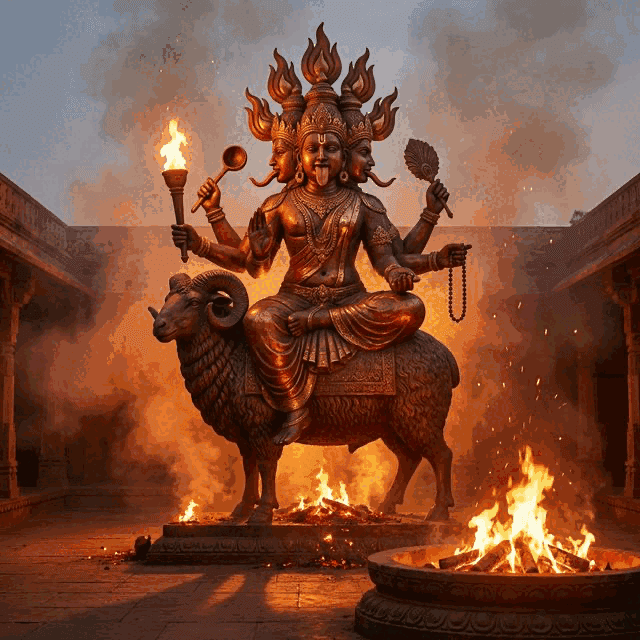
Agni
AgniHindu
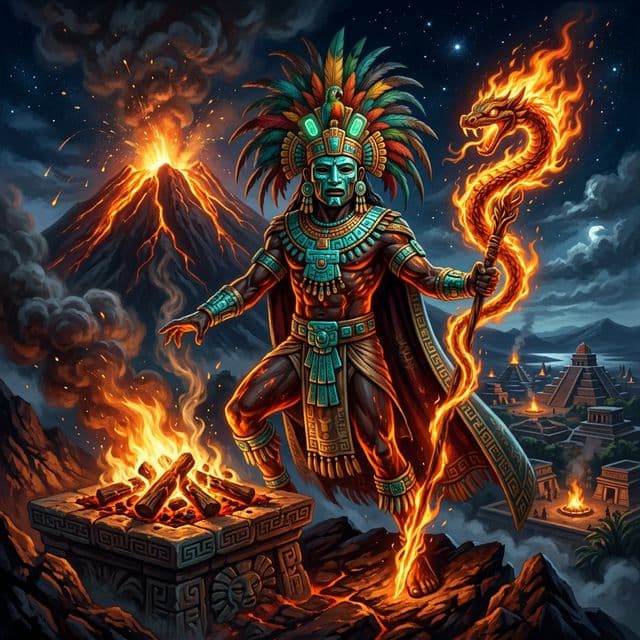
Xiuhtecuhtli
XiuhtecuhtliAztec

Both are fire gods central to sacrificial ritual and purification.

At a glance

Agni and Xiuhtecuhtli compared
AgniXiuhtecuhtli
TraditionHindu PantheonAztec Pantheon
Domainsfire, sacrifice, purification, messengerfire, time, turquoise, the calendar, kingship
Symbolsflame, ram, seven tonguesturquoise, fire, xiuhcoatl (fire serpent), brazier
Also calledVahni, PavakaTurquoise Lord, Lord of the Year, Huehueteotl

Where they meet

Both are associated with fire.

Where they part

Only Agni

Associated with sacrifice, purification, and messenger.

Only Xiuhtecuhtli

Associated with time, turquoise, the calendar, and kingship.

Why they are compared

Both are fire gods who serve as intermediaries between humans and other deities.

How each was worshipped

Agni

Cult sites
Every Vedic fire; almost no standalone temple cult

Agni is the mouth. Domestic homa and the cremation fire are his working altars. Looking for a pilgrimage town misses the point: the cult is the flame itself.

Xiuhtecuhtli

Cult sites
Turquoise-hearth shrines; New Fire at Huixachtlan
Festivals
Xiuhmolpilli / New Fire every 52 years; Izcalli

The old fire of the year-count. Every house-hearth was his small temple. The New Fire ceremony rekindled time itself.

The two figures

Hindu Pantheon

Agni

God of fire and messenger between gods and humans. Central to Vedic ritual, he carries offerings to the gods. Represents the sacrificial fire, digestive fire, and cosmic fire.

Agni's origins are described variously in Vedic texts. He was born from the cosmic waters, from the friction of two fire sticks, or from the flash of lightning. He is said to be reborn every time fire is kindled, making him eternally young despite being one of the oldest gods.

Agni is the god of **fire** and the divine messenger between gods and humans. One of the most important Vedic deities, he is present in every sacrificial fire, carrying offerings to the gods. He represents the sacrificial fire, the digestive fire, and the cosmic fire of transformation.

Read the full Agni entry

Aztec Pantheon

Xiuhtecuhtli

The god of fire, time, and the calendar. Xiuhtecuhtli was the oldest deity, dwelling at the center of the universe in the hearth fire that connected all realms. He presided over the New Fire ceremony every 52 years.

Xiuhtecuhtli existed from the beginning, the first spark that ignited creation. He placed himself at the center of the cosmos and from his fire came warmth, light, and the counting of time. He is the old god who was never born because he always was.

Xiuhtecuhtli ("Turquoise Lord") was the Aztec **god of fire and time**, one of the oldest deities in the Mesoamerican tradition. His other name, **Huehueteotl** ("Old God"), reflects his primordial nature. He dwelt in the **hearth fire** at the center of every home and at the center of the universe itself.

Read the full Xiuhtecuhtli entry
About this comparison

Comparisons pair figures that play a similar role across traditions, or that the myths connect within one. A shared role does not, by itself, establish a shared origin.