Side by sideParallel across traditions

Agni vs Kagutsuchi

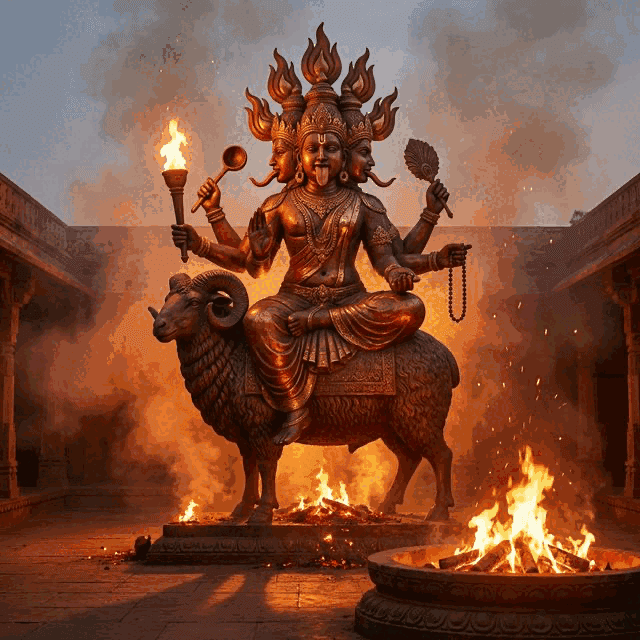
Agni
AgniHindu
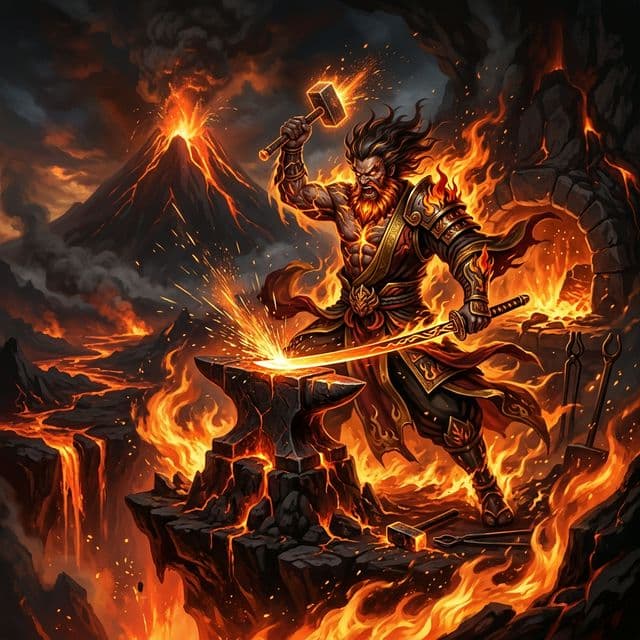
Kagutsuchi
KagutsuchiJapanese

Both are personifications of sacred/sacrificial fire.

At a glance

Agni and Kagutsuchi compared
AgniKagutsuchi
TraditionHindu PantheonJapanese Pantheon
Domainsfire, sacrifice, purification, messengerfire, volcanoes, smithing, destruction
Symbolsflame, ram, seven tonguesflames, volcanic fire, forge, sword
Also calledVahni, PavakaKagutsuchi-no-kami, Homusubi, Hi-no-Kagutsuchi

Where they meet

Both are associated with fire.

Where they part

Only Agni

Associated with sacrifice, purification, and messenger.

Only Kagutsuchi

Associated with volcanoes, smithing, and destruction.

Why they are compared

Both are embodiments of fire as a fundamental cosmic force.

How each was worshipped

Agni

Cult sites
Every Vedic fire; almost no standalone temple cult

Agni is the mouth. Domestic homa and the cremation fire are his working altars. Looking for a pilgrimage town misses the point: the cult is the flame itself.

Kagutsuchi

Cult sites
Fire-prevention rites; after his birth the mother dies in the Kojiki
Festivals
Hi-matsuri and local fire festivals

The fire that killed Izanami. Cult is control: charcoal, hearths, and not burning the town. A dangerous baby, not a cozy stove god.

The two figures

Hindu Pantheon

Agni

God of fire and messenger between gods and humans. Central to Vedic ritual, he carries offerings to the gods. Represents the sacrificial fire, digestive fire, and cosmic fire.

Agni's origins are described variously in Vedic texts. He was born from the cosmic waters, from the friction of two fire sticks, or from the flash of lightning. He is said to be reborn every time fire is kindled, making him eternally young despite being one of the oldest gods.

Agni is the god of **fire** and the divine messenger between gods and humans. One of the most important Vedic deities, he is present in every sacrificial fire, carrying offerings to the gods. He represents the sacrificial fire, the digestive fire, and the cosmic fire of transformation.

Read the full Agni entry

Japanese Pantheon

Kagutsuchi

The fire god whose birth killed his mother Izanami, triggering Izanagi's descent to Yomi and the eternal separation of life and death. From his death came many kami.

Kagutsuchi was born last among the kami created by **Izanagi** and **Izanami**. His fiery body burned Izanami fatally during childbirth. Grief-stricken and enraged, Izanagi decapitated Kagutsuchi with his sword. From the fire god's blood and body sprang numerous deities, including mountain gods, thunder gods, and the sword Futsu-no-Mitama.

**Kagutsuchi** (also called Homusubi, "fire-starter") occupies a tragic but pivotal position in Japanese creation mythology. His birth marked the end of the age of creation and set in motion the separation between the realms of life and death that defines Shinto cosmology.

Read the full Kagutsuchi entry
About this comparison

Comparisons pair figures that play a similar role across traditions, or that the myths connect within one. A shared role does not, by itself, establish a shared origin.