Side by sideParallel across traditions

Nuwa vs Prometheus

Nuwa
NuwaChinese
Prometheus
PrometheusGreek

Both create humanity from clay and are benefactors of mankind.

At a glance

Nuwa and Prometheus compared
NuwaPrometheus
TraditionChinese PantheonGreek Pantheon
Domainscreation, humanity, marriage, orderforethought, fire, crafts, humanity
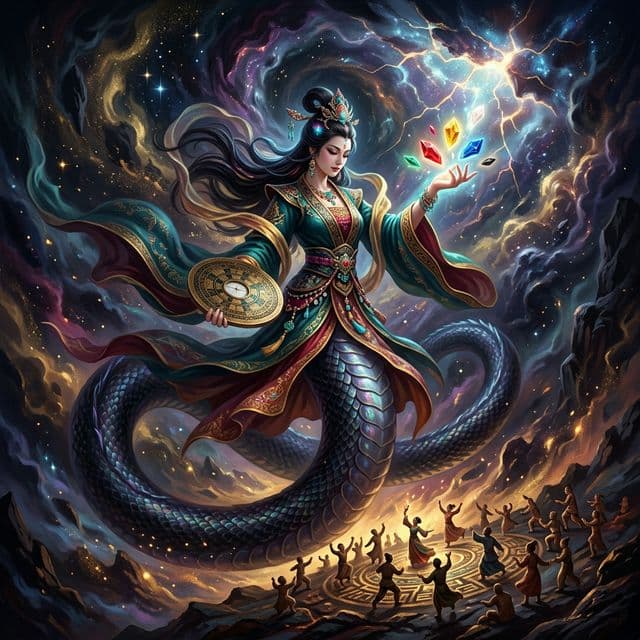
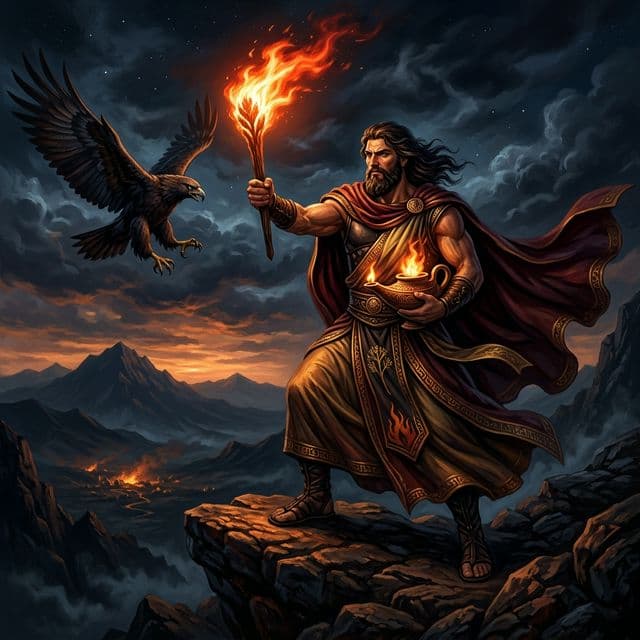
Symbolsserpent tail, compass, five-colored stones, clay figuresfire, torch, fennel stalk, eagle
Also calledNu Wa, Empress Wa, Snake GoddessForethinker, Fire-Bringer

Where they meet

Both are associated with humanity.

Where they part

Only Nuwa

Associated with creation, marriage, and order.

Only Prometheus

Associated with forethought, fire, and crafts.

How each was worshipped

Nuwa

Cult sites
Nüwa temples in northern China (for example Huaiyang traditions); Paired with Fuxi on Han stone reliefs
Festivals
Human-creation festivals in local temple fairs

She patches the sky and makes humans from yellow earth. Cult is local and often paired with Fuxi. The serpent-human body on Han tombs is the image; the temple fair is the living remainder.

Prometheus

Cult sites
Altar in the Athenian Academy, with torch races toward the city; Cult at Kolonos with Athena
Festivals
Prometheia torch races

Almost no panhellenic temple. Athens ran torch races from his altar. He is a craftsman's and a thinker's god more than a state's. The chained Titan of tragedy is larger than the small civic footprint.

The two figures

Chinese Pantheon

Nuwa

The serpent-bodied goddess who created humanity from yellow clay and repaired the broken sky after a great catastrophe. She is the mother of mankind and establisher of marriage.

In the age after Pangu created the world, the goddess Nuwa felt lonely wandering the empty earth. She took yellow clay and molded it into figures like herself, breathing life into them to create humanity. She is the mother of all people.

Nuwa is one of the most ancient and important goddesses in Chinese mythology, credited with creating humanity and saving the world from destruction. With her brother-husband Fuxi, she represents the primordial creative forces that shaped civilization.

Read the full Nuwa entry

Greek Pantheon

Prometheus

Titan who defied Zeus by stealing fire from the gods and giving it to humanity. For this transgression, Zeus chained him to a rock where an eagle devoured his liver daily.

Prometheus was a Titan, son of **Iapetus** and the Oceanid **Clymene**. Unlike most Titans, he sided with Zeus during the Titanomachy. He later created humanity from clay, and when Zeus denied them fire, Prometheus stole it from Hephaestus's forge, hiding it in a fennel stalk. Zeus punished him with eternal torment on Mount Caucasus.

**Prometheus** stands apart among the Titans as the great benefactor of humankind. His name means "forethought," contrasting with his brother **Epimetheus** ("afterthought"), and his actions shaped the relationship between gods and mortals.

Read the full Prometheus entry
About this comparison

Comparisons pair figures that play a similar role across traditions, or that the myths connect within one. A shared role does not, by itself, establish a shared origin.