Mythos Atlas

Side by sideParallel across traditions

Ninhursag vs Nuwa

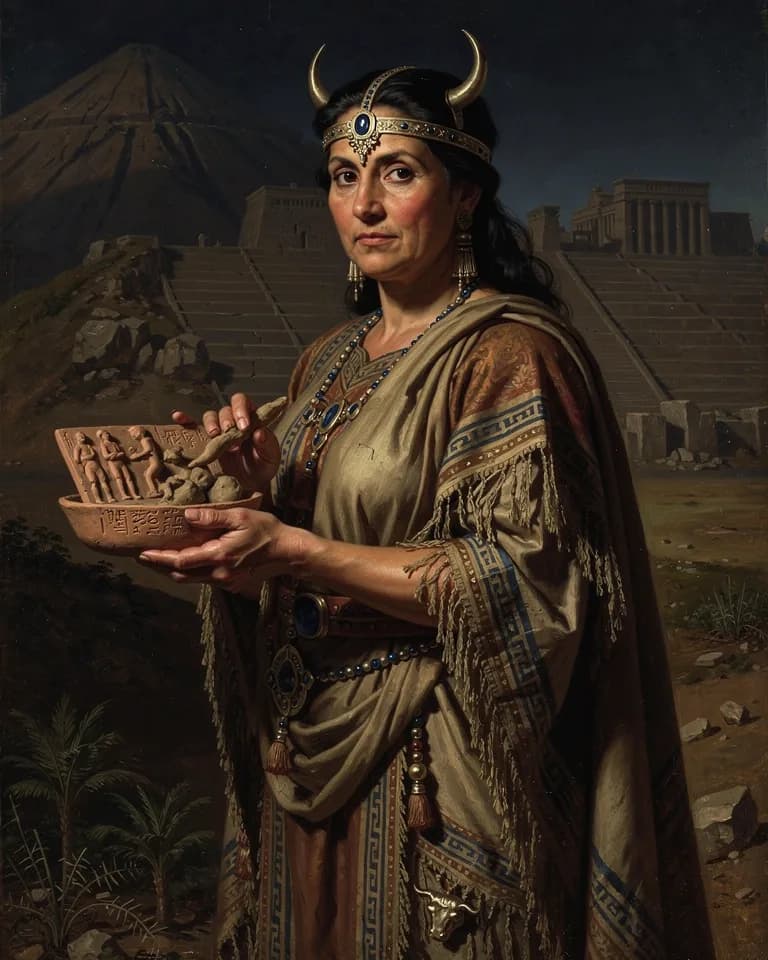
Ninhursag
NinhursagMesopotamian
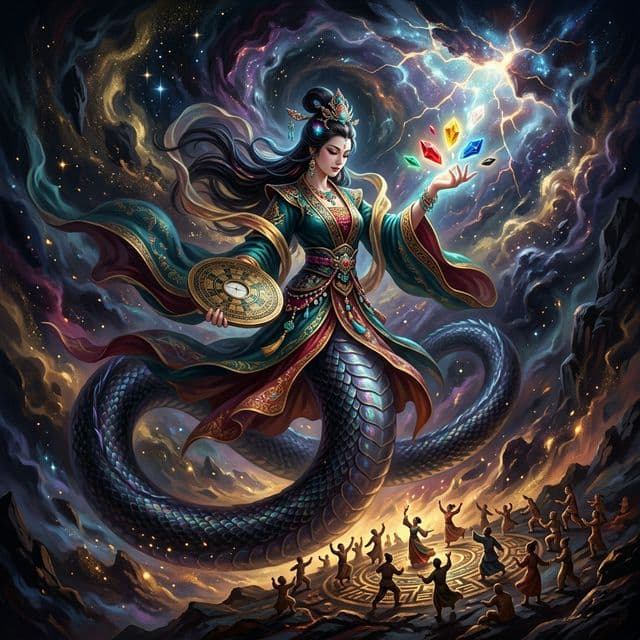
Nuwa
NuwaChinese

Both are creator goddesses who fashion humans from clay.

At a glance

Ninhursag and Nuwa compared
NinhursagNuwa
TraditionMesopotamian PantheonChinese Pantheon
Domainsbirth, creation of humans, mountains and foothills, motherhoodcreation, humanity, marriage, order
Symbolsomega-shaped symbol (possibly a uterus or cow's uterus), stags, the foothillsserpent tail, compass, five-colored stones, clay figures
Also calledNinhursaga, Ninmah, Nintu, Damgalnuna, Aruru, Belet-ili (Akkadian), MamiNu Wa, Empress Wa, Snake Goddess

Where they meet

The atlas records no domain or symbol that Ninhursag and Nuwa share.

They are compared for the part each plays in their own tradition rather than for any attribute in common.

Where they part

Only Ninhursag

Associated with birth, creation of humans, mountains and foothills, and motherhood.

Only Nuwa

Associated with creation, humanity, marriage, and order.

How each was worshipped

Ninhursag

Cult sites
Temple at Kesh; Temple at Adab; Early Dynastic temple at Tell al-Ubaid near Ur

Invoked as the divine midwife and 'mother of the gods'; kings of Lagash and other cities claimed to have been nourished by her milk.

Nuwa

Cult sites
Nüwa temples in northern China (for example Huaiyang traditions); Paired with Fuxi on Han stone reliefs
Festivals
Human-creation festivals in local temple fairs

She patches the sky and makes humans from yellow earth. Cult is local and often paired with Fuxi. The serpent-human body on Han tombs is the image; the temple fair is the living remainder.

The two figures

Mesopotamian Pantheon

Ninhursag

The great Sumerian mother goddess, 'Lady of the Mountain', who presides over birth and the shaping of humankind. Under names such as Ninmah, Nintu, and Aruru, she fashions people from clay; in the Epic of Gilgamesh, as Aruru, she creates Enkidu.

Ninhursag belongs to the oldest generation of Sumerian great gods. One Sumerian tradition says her name 'Lady of the Mountain' was given by her son Ninurta when he heaped up the foothills after defeating the demon Asag.

Ninhursag was among the most important deities of early Sumer, often ranked with An, Enlil, and Enki among the great gods. Many names cluster around her (Ninmah 'exalted lady', Nintu 'lady of birth', Aruru, and the Akkadian Belet-ili 'lady of the gods'), and scholars debate how far these were once distinct goddesses. All share her central role as divine midwife and shaper of life.

Read the full Ninhursag entry

Chinese Pantheon

Nuwa

The serpent-bodied goddess who created humanity from yellow clay and repaired the broken sky after a great catastrophe. She is the mother of mankind and establisher of marriage.

In the age after Pangu created the world, the goddess Nuwa felt lonely wandering the empty earth. She took yellow clay and molded it into figures like herself, breathing life into them to create humanity. She is the mother of all people.

Nuwa is one of the most ancient and important goddesses in Chinese mythology, credited with creating humanity and saving the world from destruction. With her brother-husband Fuxi, she represents the primordial creative forces that shaped civilization.

Read the full Nuwa entry
About this comparison

Comparisons pair figures that play a similar role across traditions, or that the myths connect within one. A shared role does not, by itself, establish a shared origin.