Mesopotamian Pantheon
Ninhursag
𒀭𒊩𒌆𒄯𒊕(dNin-ḫur-saĝ)
Also known as Ninhursaga, Ninmah, Nintu, Damgalnuna, Aruru, Belet-ili (Akkadian), Mami
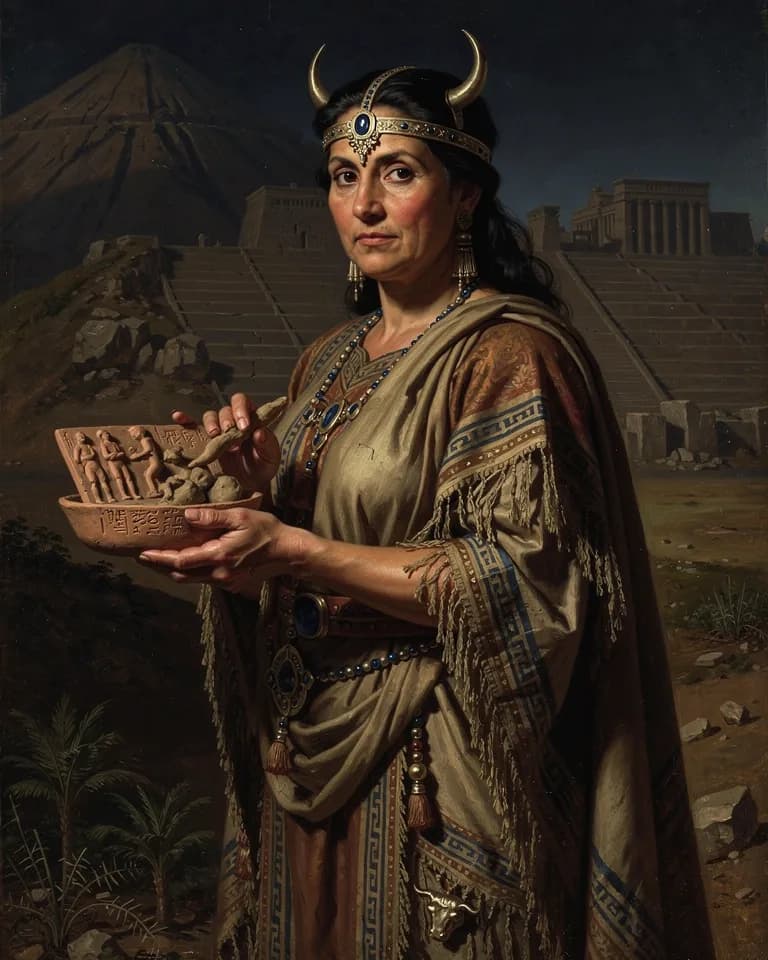
- birth
- creation of humans
- mountains and foothills
- motherhood
The great Sumerian mother goddess, 'Lady of the Mountain', who presides over birth and the shaping of humankind. Under names such as Ninmah, Nintu, and Aruru, she fashions people from clay; in the Epic of Gilgamesh, as Aruru, she creates Enkidu.
About Ninhursag
The Mother Goddess
Ninhursag was among the most important deities of early Sumer, often ranked with An, Enlil, and Enki among the great gods. Many names cluster around her (Ninmah 'exalted lady', Nintu 'lady of birth', Aruru, and the Akkadian Belet-ili 'lady of the gods'), and scholars debate how far these were once distinct goddesses. All share her central role as divine midwife and shaper of life.
Maker of Humankind
In the Sumerian Enki and Ninmah, the goddess forms humans from clay with Enki. In the Babylonian Atrahasis, the birth goddess Mami (Nintu) mixes clay with the flesh and blood of a slain god to create people to bear the gods' labor. In the Epic of Gilgamesh, the gods ask Aruru, who made Gilgamesh, to make his equal: she washes her hands, pinches off clay, and casts it into the wilderness, and Enkidu is born.
Enki and Ninhursag
In the myth set in the paradise of Dilmun, Enki couples with Ninhursag and then with a line of daughters and granddaughters, and eats plants she has grown. Ninhursag curses him, and he sickens until she relents and bears eight healing deities, one for each ailing part of his body.
Cult
Her temples stood at Kesh and Adab, and at Tell al-Ubaid near Ur, where a temple to her dating to the Early Dynastic period was excavated in the 1920s.
Origin story
Ninhursag belongs to the oldest generation of Sumerian great gods. One Sumerian tradition says her name 'Lady of the Mountain' was given by her son Ninurta when he heaped up the foothills after defeating the demon Asag.
Across traditions
Parallel figures
Figures who play a role like Ninhursag's in other traditions.
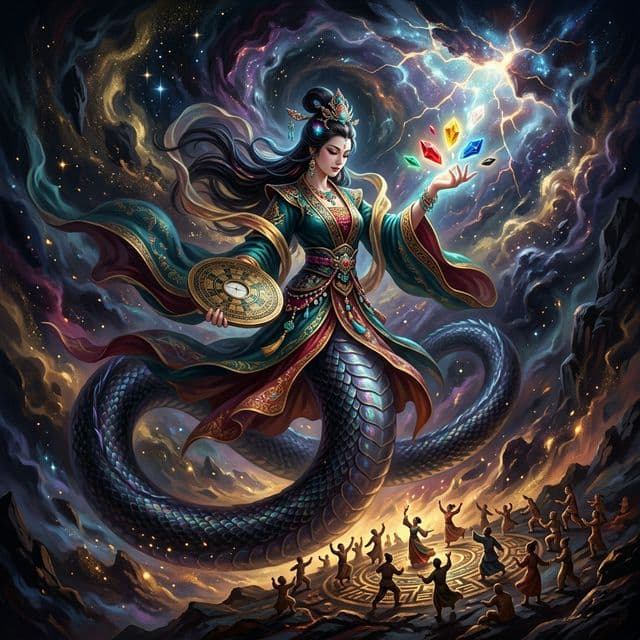 ChineseNuwa
Both are creator goddesses who fashion humans from clay
Compare Ninhursag and Nuwa side by side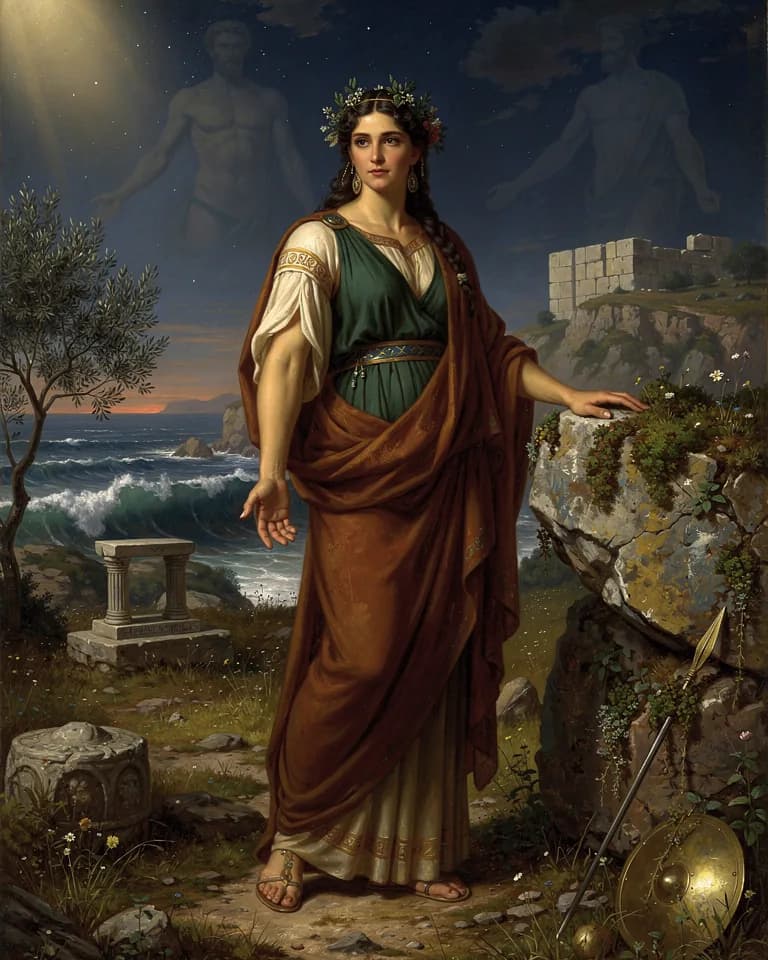 GreekGaia
Both are primordial mother figures tied to the land and the origin of life
Compare Ninhursag and Gaia side by side
Worship and cult
Temples, festivals, and practices recorded for Ninhursag
Invoked as the divine midwife and 'mother of the gods'; kings of Lagash and other cities claimed to have been nourished by her milk.
Sacred sites
- Temple at Kesh
- Temple at Adab
- Early Dynastic temple at Tell al-Ubaid near Ur
Family
Sources and further reading
Source notes
These references are recorded in the catalog. Their passage wording and translation have not been checked, so quotations are not displayed here.
- Epic of Gilgamesh, Tablet I (Standard Babylonian Version) (paraphrase)
- Enki and Ninhursag (Sumerian) (paraphrase)
Further reading
Tablet I, Aruru's creation of Enkidu
Read online: Epic of Gilgamesh (opens in new tab)Background on the great Sumerian gods and their cult cities
About this entry
By Elizabeth Stein for Mythos Atlas. About the author. Editorial notes are grounded in the site's cited sources and can be challenged through the contact page.
Parallels are editorial comparisons across traditions: a shared role does not, by itself, establish a shared origin.
Family relationships come from the atlas's kinship records. Ancient sources often disagree on divine genealogy.
Genealogy
Family tree
Ninhursag's parents, consorts, children and rivals, as recorded in the atlas.