Mythos Atlas

Side by sideParallel across traditions

Gaia vs Ninhursag

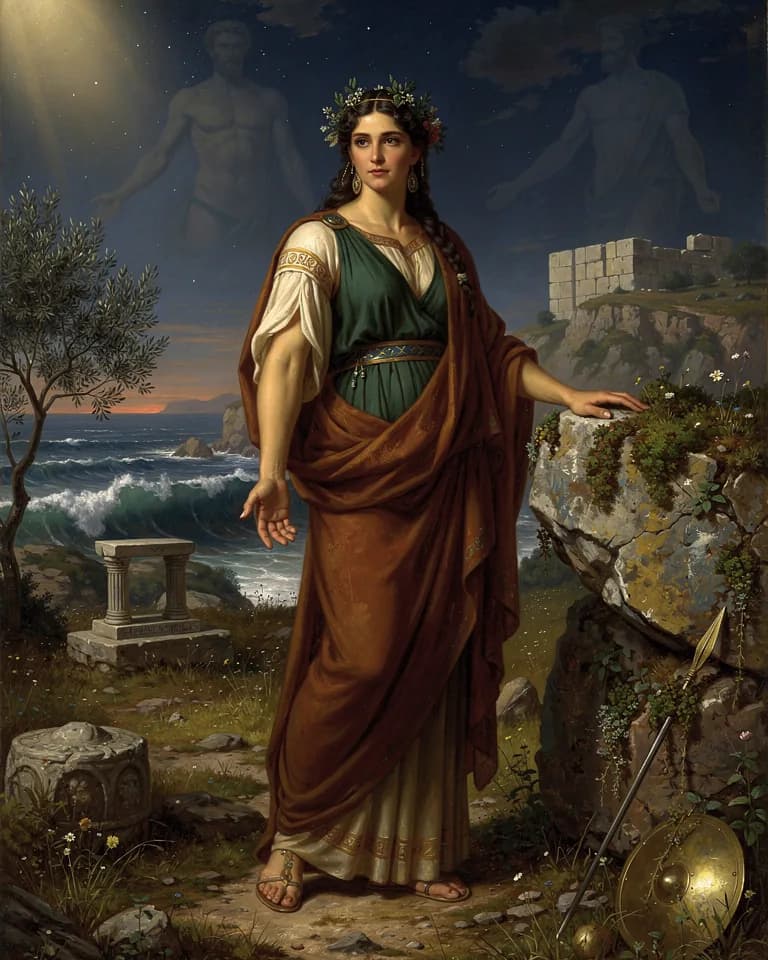
Gaia
GaiaGreek
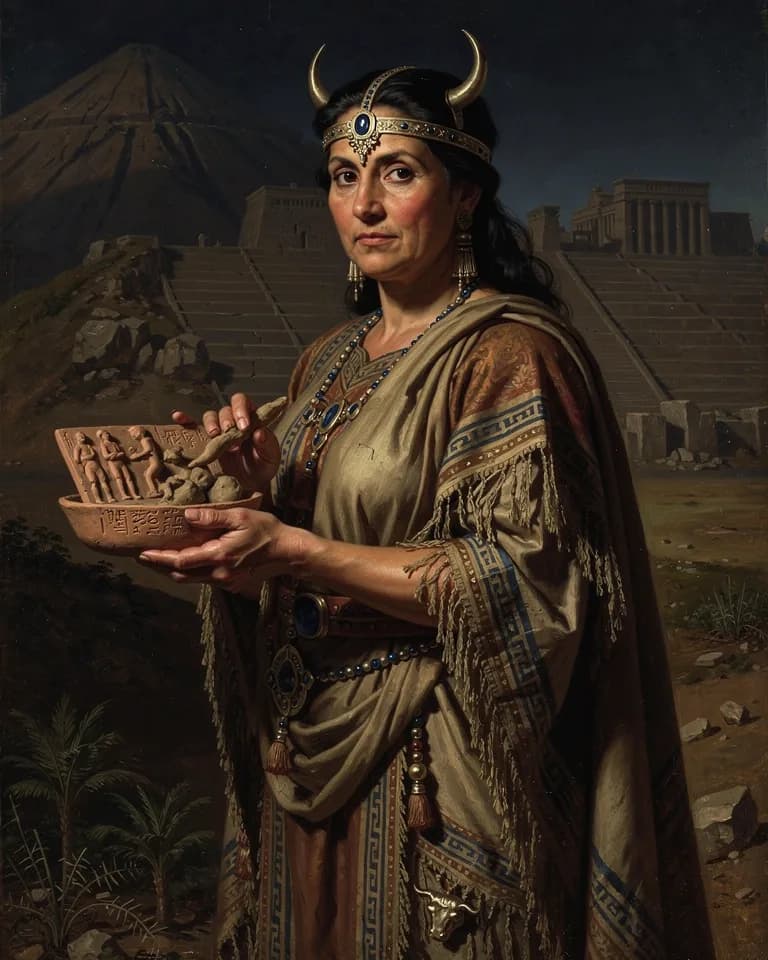
Ninhursag
NinhursagMesopotamian

Both are primordial mother figures tied to the land and the origin of life.

At a glance

Gaia and Ninhursag compared
GaiaNinhursag
TraditionGreek PantheonMesopotamian Pantheon
Domainsthe earth, primordial creation, motherhood of the Titans and Giantsbirth, creation of humans, mountains and foothills, motherhood
Symbolsthe earth itself, cornucopia (later art), serpents (in Gigantomachy imagery)omega-shaped symbol (possibly a uterus or cow's uterus), stags, the foothills
Also calledGe, Gaea, Tellus (Roman)Ninhursaga, Ninmah, Nintu, Damgalnuna, Aruru, Belet-ili (Akkadian), Mami

Where they meet

The atlas records no domain or symbol that Gaia and Ninhursag share.

They are compared for the part each plays in their own tradition rather than for any attribute in common.

Where they part

Only Gaia

Associated with the earth, primordial creation, and motherhood of the titans and giants.

Only Ninhursag

Associated with birth, creation of humans, mountains and foothills, and motherhood.

How each was worshipped

Gaia

Cult sites
Shared sanctuary traditions at early Delphi (pre-Apolline oracle, per later Greek tradition); Altars at Athens and Olympia
Festivals
Invoked in solemn oaths alongside Uranus and the underworld rivers

Gaia's cult was diffuse rather than centered on grand temples: oaths, first-fruits offerings to the earth, and the tradition — reported by later Greek writers, not universally accepted by modern scholars — that Delphi's oracle originally belonged to her before passing to Themis and then Apollo.

Ninhursag

Cult sites
Temple at Kesh; Temple at Adab; Early Dynastic temple at Tell al-Ubaid near Ur

Invoked as the divine midwife and 'mother of the gods'; kings of Lagash and other cities claimed to have been nourished by her milk.

The two figures

Greek Pantheon

Gaia

Primordial goddess of the Earth, one of the first beings to emerge from Chaos. Gaia is the mother of the sky (Uranus), the sea (Pontus), the Titans, the Cyclopes, and, through the blood of Uranus, the Giants and the Furies.

Gaia emerged directly after Chaos as one of the first primordial beings. She alone brought forth Uranus (the Sky) and Pontus (the Sea), then united with Uranus to bear the Titans, Cyclopes, and Hecatoncheires, becoming the ancestral mother of nearly every subsequent generation of gods.

In Hesiod's *Theogony*, Gaia is among the very first entities to exist, arising after Chaos as "the ever-sure foundation of all." From herself alone she bore Uranus, the starry Sky, to cover her on every side, and Pontus, the sea. She then united with Uranus to bear the twelve Titans, the three one-eyed Cyclopes, and the three monstrous Hundred-Handed Ones (Hecatoncheires).

Read the full Gaia entry

Mesopotamian Pantheon

Ninhursag

The great Sumerian mother goddess, 'Lady of the Mountain', who presides over birth and the shaping of humankind. Under names such as Ninmah, Nintu, and Aruru, she fashions people from clay; in the Epic of Gilgamesh, as Aruru, she creates Enkidu.

Ninhursag belongs to the oldest generation of Sumerian great gods. One Sumerian tradition says her name 'Lady of the Mountain' was given by her son Ninurta when he heaped up the foothills after defeating the demon Asag.

Ninhursag was among the most important deities of early Sumer, often ranked with An, Enlil, and Enki among the great gods. Many names cluster around her (Ninmah 'exalted lady', Nintu 'lady of birth', Aruru, and the Akkadian Belet-ili 'lady of the gods'), and scholars debate how far these were once distinct goddesses. All share her central role as divine midwife and shaper of life.

Read the full Ninhursag entry
About this comparison

Comparisons pair figures that play a similar role across traditions, or that the myths connect within one. A shared role does not, by itself, establish a shared origin.