
Mythos Atlas

Side by sideParallel across traditions

Asase Yaa vs Gaia

Asase Yaa
Asase YaaAkan
Gaia
GaiaGreek

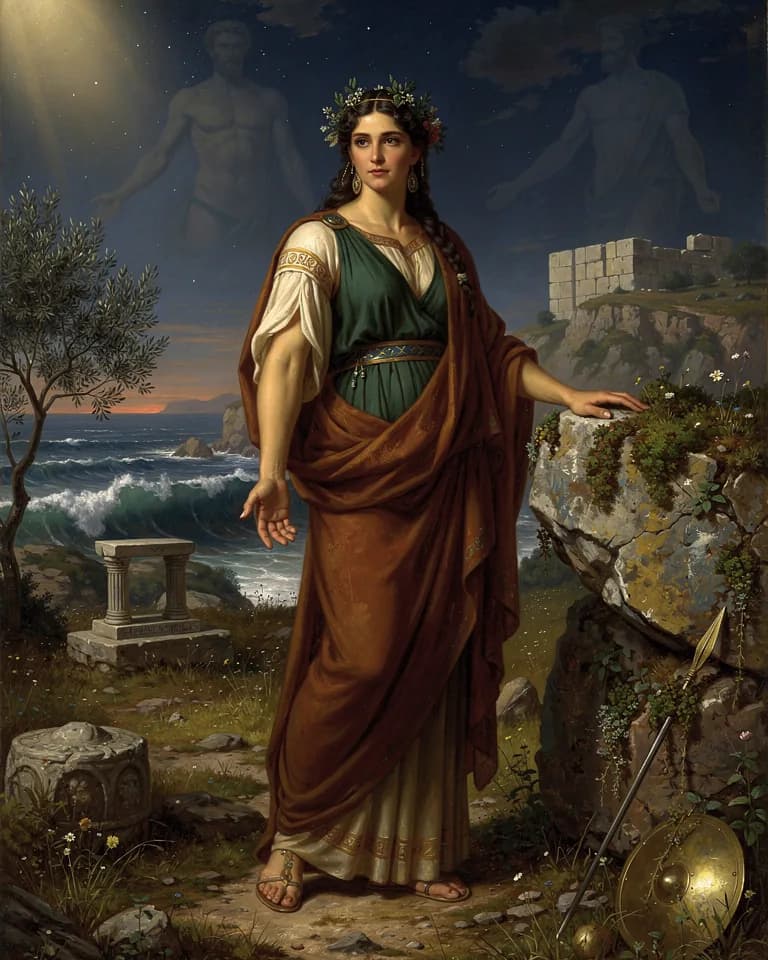
Both are the earth personified as a primordial female power beneath the sky.

At a glance

Asase Yaa and Gaia compared
Asase YaaGaia
TraditionAkan TraditionGreek Pantheon
Domainsthe earth, fertility of the soil, the dead, truth and oathsthe earth, primordial creation, motherhood of the Titans and Giants
Symbolsthe soil, the hoe, libation poured on the groundthe earth itself, cornucopia (later art), serpents (in Gigantomachy imagery)
Also calledAsase Efua, Aberewa (Old Woman), Mother EarthGe, Gaea, Tellus (Roman)

Where they meet

Both are associated with the earth.

Where they part

Only Asase Yaa

Associated with fertility of the soil, the dead, and truth and oaths.

Only Gaia

Associated with primordial creation and motherhood of the titans and giants.

How each was worshipped

Asase Yaa

Honoured through libations poured on the ground, especially at the opening of prayers and ceremonies; in many Asante areas Thursday, her day, was kept free of farm work.

Gaia

Cult sites
Shared sanctuary traditions at early Delphi (pre-Apolline oracle, per later Greek tradition); Altars at Athens and Olympia
Festivals
Invoked in solemn oaths alongside Uranus and the underworld rivers

Gaia's cult was diffuse rather than centered on grand temples: oaths, first-fruits offerings to the earth, and the tradition — reported by later Greek writers, not universally accepted by modern scholars — that Delphi's oracle originally belonged to her before passing to Themis and then Apollo.

The two figures

Akan Tradition

Asase Yaa

The earth in Akan religion, honoured with libations rather than temples. Her day-name, Yaa, marks her as Thursday-born, and in many Asante areas the land was not farmed on her day.

Rattray's Asante informants in the early 1920s described Asase Yaa as the second great power after the sky god: the earth that bears crops and receives the dead. Unlike the abosom, she had no priests and no shrine; she was addressed in the libation poured on the ground at the start of prayers, and in the invocation that names the sky god first and the earth second. Her name is the word for earth joined to a day-name: Yaa for a female born on Thursday, which is why Thursday was kept as her rest day and farming on it was avoided in many Asante communities. In Fante areas, where her day is Friday, she is Asase Efua.

Read the full Asase Yaa entry

Greek Pantheon

Gaia

Primordial goddess of the Earth, one of the first beings to emerge from Chaos. Gaia is the mother of the sky (Uranus), the sea (Pontus), the Titans, the Cyclopes, and, through the blood of Uranus, the Giants and the Furies.

Gaia emerged directly after Chaos as one of the first primordial beings. She alone brought forth Uranus (the Sky) and Pontus (the Sea), then united with Uranus to bear the Titans, Cyclopes, and Hecatoncheires, becoming the ancestral mother of nearly every subsequent generation of gods.

In Hesiod's *Theogony*, Gaia is among the very first entities to exist, arising after Chaos as "the ever-sure foundation of all." From herself alone she bore Uranus, the starry Sky, to cover her on every side, and Pontus, the sea. She then united with Uranus to bear the twelve Titans, the three one-eyed Cyclopes, and the three monstrous Hundred-Handed Ones (Hecatoncheires).

Read the full Gaia entry
About this comparison

Comparisons pair figures that play a similar role across traditions, or that the myths connect within one. A shared role does not, by itself, establish a shared origin.