Akan TraditionThe Earth
Asase Yaa
Asase Yaa(Asase Yaa)
Also known as Asase Efua, Aberewa (Old Woman), Mother Earth

- the earth
- fertility of the soil
- the dead
- truth and oaths
The earth in Akan religion, honoured with libations rather than temples. Her day-name, Yaa, marks her as Thursday-born, and in many Asante areas the land was not farmed on her day.
About Asase Yaa
The earth herself
Rattray's Asante informants in the early 1920s described Asase Yaa as the second great power after the sky god: the earth that bears crops and receives the dead. Unlike the abosom, she had no priests and no shrine; she was addressed in the libation poured on the ground at the start of prayers, and in the invocation that names the sky god first and the earth second. Her name is the word for earth joined to a day-name: Yaa for a female born on Thursday, which is why Thursday was kept as her rest day and farming on it was avoided in many Asante communities. In Fante areas, where her day is Friday, she is Asase Efua.
Earth, the dead, and truth
Because the dead are buried in her, the earth is closely tied to the ancestors, and she was invoked when land was cleared, graves were dug, and oaths were sworn. Rattray records that permission was asked of the earth before breaking ground. Some modern writers describe her as Nyame's wife; that pairing is widely repeated but is a relationship of complementary powers, sky and earth, more than a narrative marriage with its own myths.
A living practice
Pouring libation to the earth remains a common part of Akan ceremony in Ghana today, including at civic events, which is the clearest continuity with the tradition Rattray recorded.
Across traditions
Parallel figures
Figures who play a role like Asase Yaa's in other traditions.
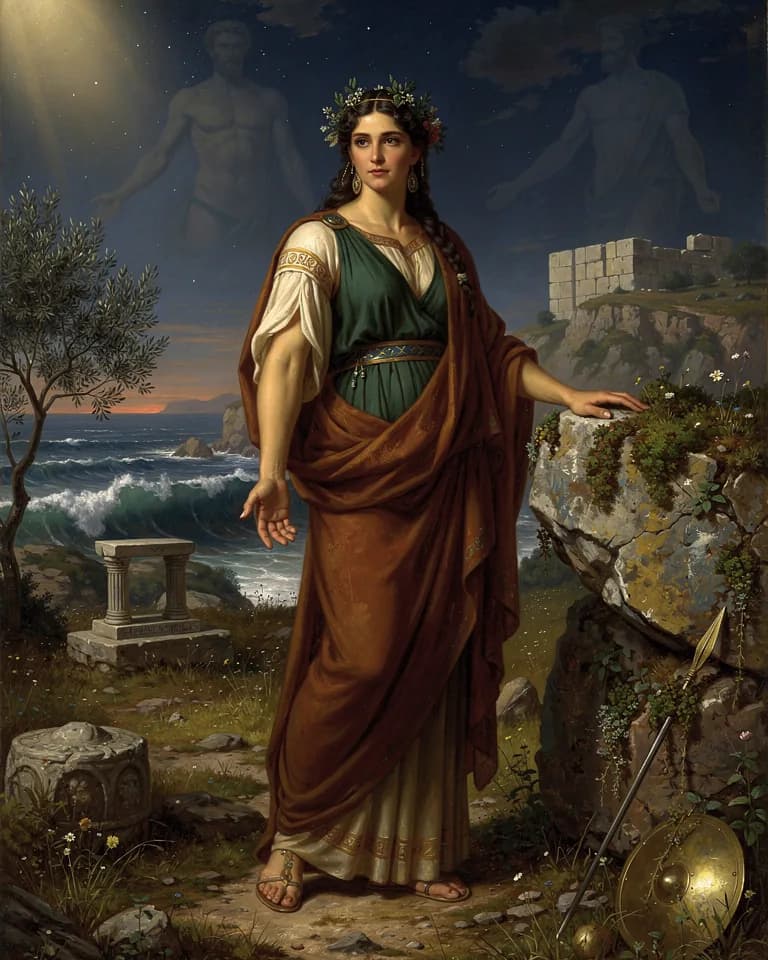 GreekGaia
Both are the earth personified as a primordial female power beneath the sky
Compare Asase Yaa and Gaia side by side
Worship and cult
Temples, festivals, and practices recorded for Asase Yaa
Honoured through libations poured on the ground, especially at the opening of prayers and ceremonies; in many Asante areas Thursday, her day, was kept free of farm work.
Family
Sources and further reading
Source notes
These references are recorded in the catalog. Their passage wording and translation have not been checked, so quotations are not displayed here.
- R. S. Rattray, Ashanti
About this entry
By Elizabeth Stein for Mythos Atlas. About the author. Editorial notes are grounded in the site's cited sources and can be challenged through the contact page.
Parallels are editorial comparisons across traditions: a shared role does not, by itself, establish a shared origin.
Family relationships come from the atlas's kinship records. Ancient sources often disagree on divine genealogy.
Genealogy
Family tree
Asase Yaa's parents, consorts, children and rivals, as recorded in the atlas.