Mesopotamian Pantheon
Enki
Also known as Ea, Nudimmud
- wisdom
- water
- creation
- magic
- crafts
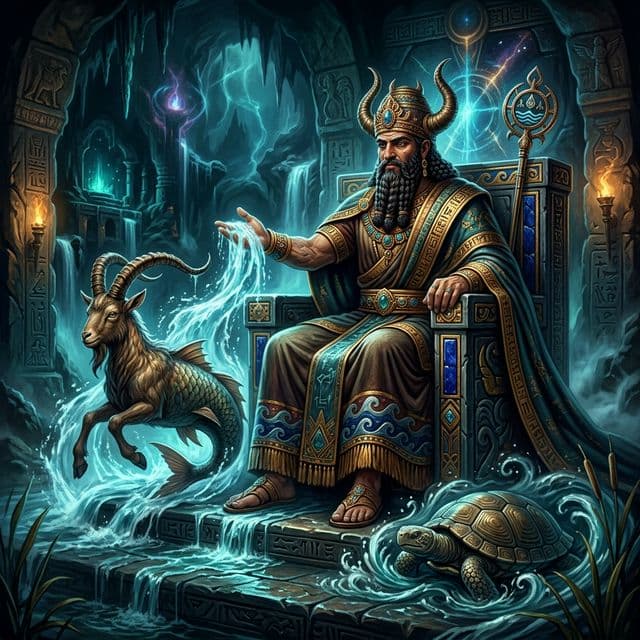
God of wisdom, fresh water, and creation. Enki is the cleverest of the gods, creator of humanity, and the cunning protector of mortals against divine wrath.
About Enki
Lord of the Sweet Waters
Enki is the god of the Abzu, the primordial freshwater ocean beneath the earth from which all springs, rivers, and groundwater flow. But more than water, Enki embodies the creative intelligence of the cosmos. He is the craftsman god, the divine trickster, the keeper of the me (divine decrees that govern civilization), and the friend of humanity.
Creator of Humanity
In the Atrahasis epic, Enki creates humanity from clay mixed with the blood of a slain god, fashioning beings to take over the labor of the lesser gods. Unlike other creator deities, Enki maintains an ongoing relationship with his creation, acting as humanity's advocate in the divine assembly.
The Great Trickster
Enki's wisdom manifests as cunning. When Enlil decreed the Flood to destroy humanity, Enki circumvented the decree by speaking to a reed wall rather than directly to Utnapishtim, technically obeying while saving the human race. He frequently outwits other gods, including retrieving the me from Inanna when she stole them while he was drunk.
Keeper of Divine Knowledge
Enki guards the me, the divine laws that govern everything from kingship to basket-weaving. From his temple in Eridu, the oldest city, he dispenses these civilizing arts to humanity. Priests, scribes, and craftsmen all worked under his patronage.
The Compassionate God
Unique among the great gods, Enki consistently sides with humanity. When other gods threaten destruction, Enki finds loopholes. When mortals face impossible tasks, Enki provides solutions. He represents the beneficent aspect of divine wisdom applied to human welfare.
Origin story
Enki dwelt in the Abzu, the sweet underground waters, from before the creation of humanity. When the gods grew tired of labor, Enki conceived the plan to create humans as workers. He shaped the first humans from clay and the blood of Geshtu-e, a god sacrificed for the purpose, breathing life into them with divine water.
Across traditions
Parallel figures
Figures who play a role like Enki's in other traditions.
 GreekAthenaIllustration
Both are gods of wisdom and crafts who aid heroes
Compare Enki and Athena side by side EgyptianThothIllustration
Both are gods of wisdom, writing, and magic
Compare Enki and Thoth side by side NorseLokiIllustration
Both are cunning trickster figures, though Enki is benevolent
Compare Enki and Loki side by side
Worship and cult
Temples, festivals, and practices recorded for Enki
Sweet water under the earth. Craft, sex, and cleverness belong to Eridu. Kings still listed Eridu first in the antediluvian sequence.
Sacred sites
- E-abzu at Eridu
Festivals
- Eridu temple rites; wisdom and freshwater
Family
In the atlas
Where Enki appears
Play the myth
Branching retellings featuring Enki: your choices decide the ending.
Sources and further reading
Source notes
These references are recorded in the catalog. Their passage wording and translation have not been checked, so quotations are not displayed here.
- Enki and the World Order
Appears in
Ancient and classical works featuring this figure.
God of wisdom and subterranean sweet waters (Ea) who slays Apsu and fathers Marduk (Tablets I-II)
About this entry
By Elizabeth Stein for Mythos Atlas. About the author. Editorial notes are grounded in the site's cited sources and can be challenged through the contact page.
Parallels are editorial comparisons across traditions: a shared role does not, by itself, establish a shared origin.
Family relationships come from the atlas's kinship records. Ancient sources often disagree on divine genealogy.
Keep exploring
One myth a week, with its sources in a short email. The sign-up form is just below.
Genealogy
Family tree
Enki's parents, consorts, children and rivals, as recorded in the atlas.