Side by sideParallel across traditions

Enki vs Itzamna

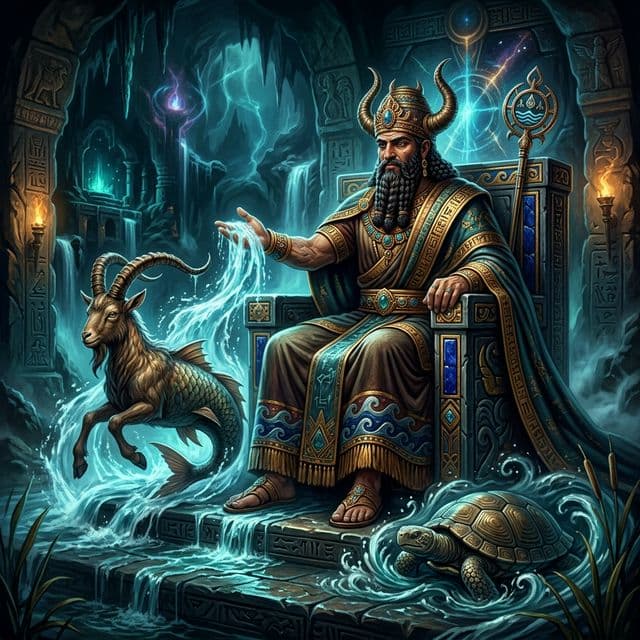
Enki
EnkiMesopotamian
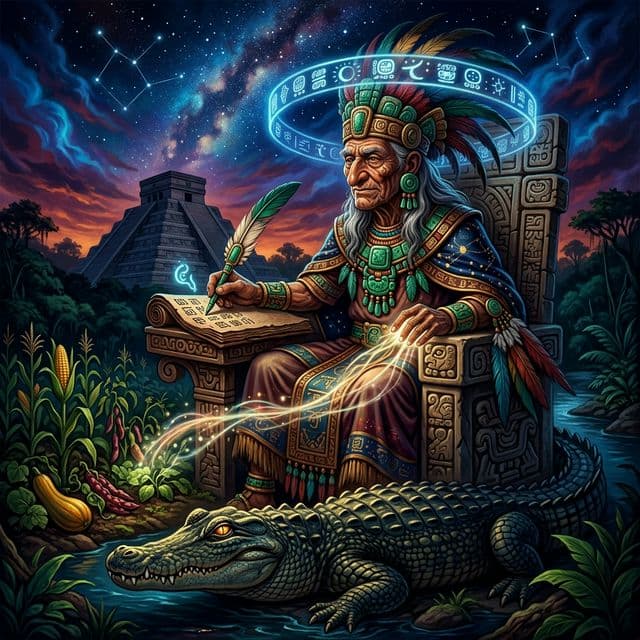
Itzamna
ItzamnaMesoamerican

Both are wise, benevolent creator gods associated with knowledge and civilization.

At a glance

Enki and Itzamna compared
EnkiItzamna
TraditionMesopotamian PantheonMesoamerican Pantheon
Domainswisdom, water, creation, magic, craftscreation, sky, writing, healing, agriculture
Symbolsflowing waters, goat-fish, turtleaged face, roman nose, sky band, caiman
Also calledEa, NudimmudItzam Na, God D, Zamna

Where they meet

Both are associated with creation.

Where they part

Only Enki

Associated with wisdom, water, magic, and crafts.

Only Itzamna

Associated with sky, writing, healing, and agriculture.

How each was worshipped

Enki

Cult sites
E-abzu at Eridu
Festivals
Eridu temple rites; wisdom and freshwater

Sweet water under the earth. Craft, sex, and cleverness belong to Eridu. Kings still listed Eridu first in the antediluvian sequence.

Itzamna

Cult sites
Maya temple-pyramids where the creator-priest god is named in inscriptions; Writing-houses; he is a patron of scribes
Festivals
New-year and calendar rites in the Maya cycle

Old man, creator, and inventor of writing. Priestly more than popular. Codices and inscriptions keep him. Cult is the calendar and the incense of the court, not a single surviving pilgrim road.

The two figures

Mesopotamian Pantheon

Enki

God of wisdom, fresh water, and creation. Enki is the cleverest of the gods, creator of humanity, and the cunning protector of mortals against divine wrath.

Enki dwelt in the Abzu, the sweet underground waters, from before the creation of humanity. When the gods grew tired of labor, Enki conceived the plan to create humans as workers. He shaped the first humans from clay and the blood of Geshtu-e, a god sacrificed for the purpose, breathing life into them with divine water.

Enki is the god of the Abzu, the primordial freshwater ocean beneath the earth from which all springs, rivers, and groundwater flow. But more than water, Enki embodies the creative intelligence of the cosmos. He is the craftsman god, the divine trickster, the keeper of the me (divine decrees that govern civilization), and the friend of humanity.

Read the full Enki entry

Mesoamerican Pantheon

Itzamna

The supreme creator god of the Maya, lord of the heavens and inventor of writing, calendars, and agriculture. Depicted as a wise, aged figure, Itzamna represents cosmic order and benevolent rulership.

Itzamna emerged in the primordial time before the current creation. He established cosmic order, separating sky from earth, setting the sun and moon on their courses, and teaching humanity the arts of civilization.

Itzamna stands at the apex of the Maya pantheon as the lord of the heavens and the supreme creator deity. His name may derive from *itz* (dew or sap, associated with divine essence) and *amna* (house), making him "Lord of the Celestial House."

Read the full Itzamna entry
About this comparison

Comparisons pair figures that play a similar role across traditions, or that the myths connect within one. A shared role does not, by itself, establish a shared origin.