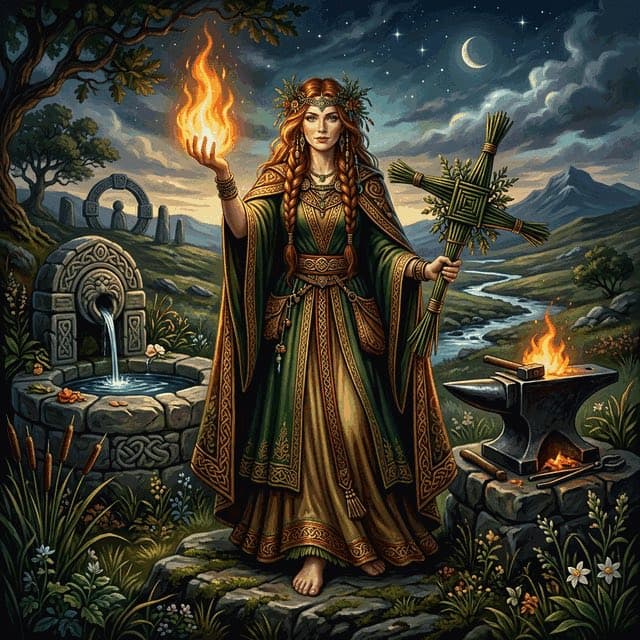
Brigid
The exalted goddess of fire, poetry, and the forge. She bridges the worlds of creativity and craftsmanship, and her sacred flame burns eternally.
Divine domains
38 deities from 16 traditions whose entries in this atlas list fertility among their domains, grouped by tradition.
The exalted goddess of fire, poetry, and the forge. She bridges the worlds of creativity and craftsmanship, and her sacred flame burns eternally.
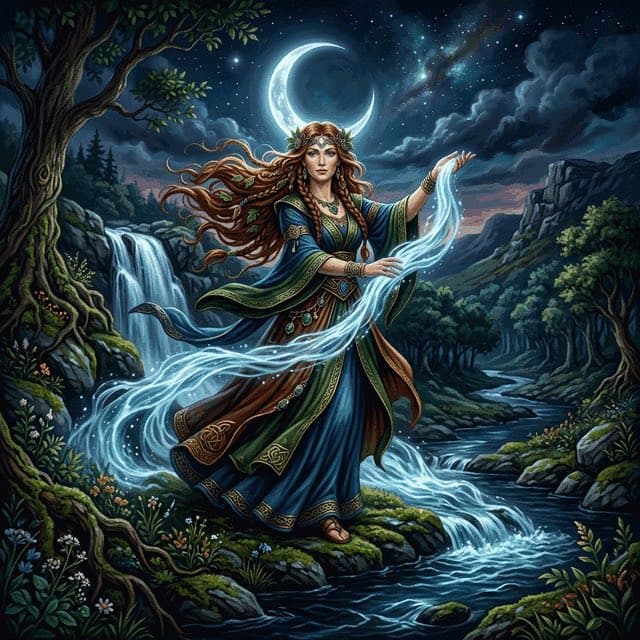
The primordial mother goddess whose name lives on in the Tuatha Dé Danann, the divine tribe of Ireland. Though rarely appearing in myths directly, her presence permeates the land itself.
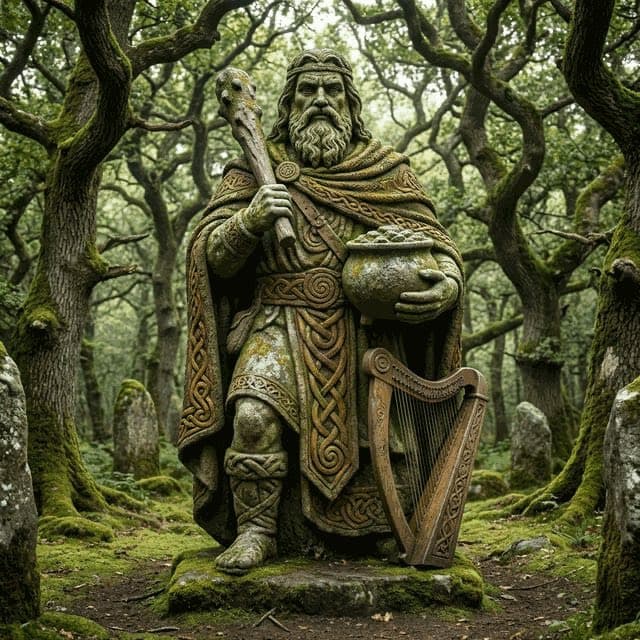
The father figure and king of the Tuatha Dé Danann. A giant, bearded powerhouse with a magic club that can kill with one end and heal with the other, and a cauldron that never runs empty.
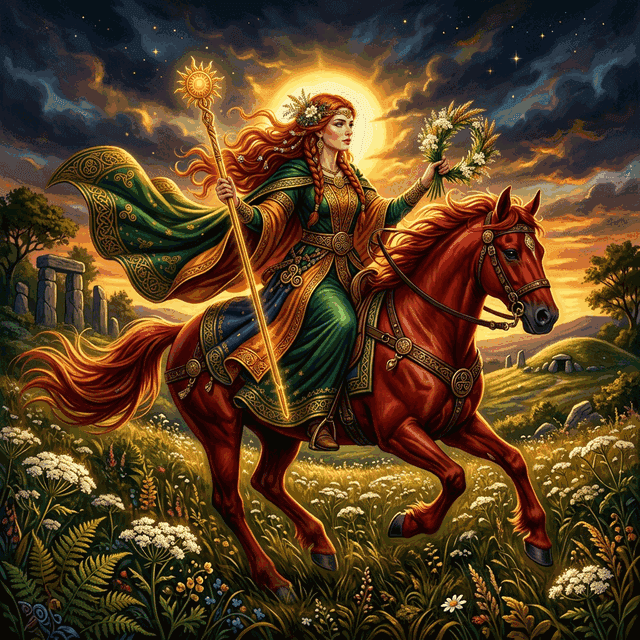
Radiant goddess of summer and love, associated with Knockainey in County Limerick. Her midsummer fires blessed the cattle and crops of Munster.
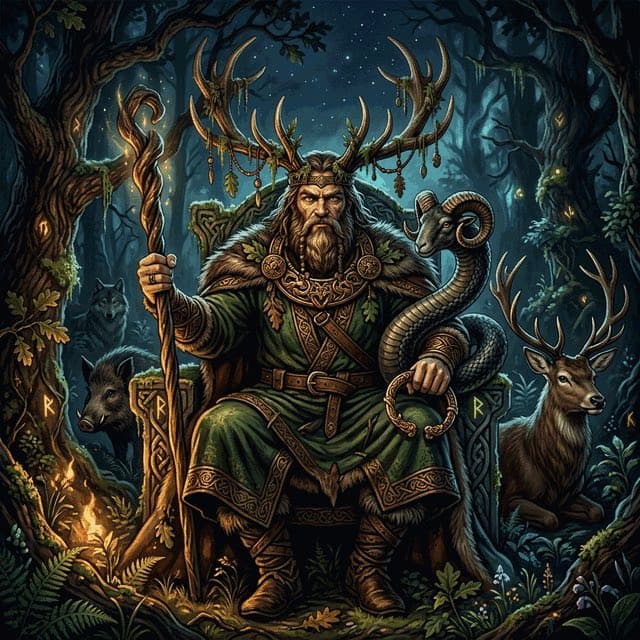
The horned god of wild places and untamed nature. He sits cross-legged, lord of beasts, holding a torc in one hand and a serpent in the other.
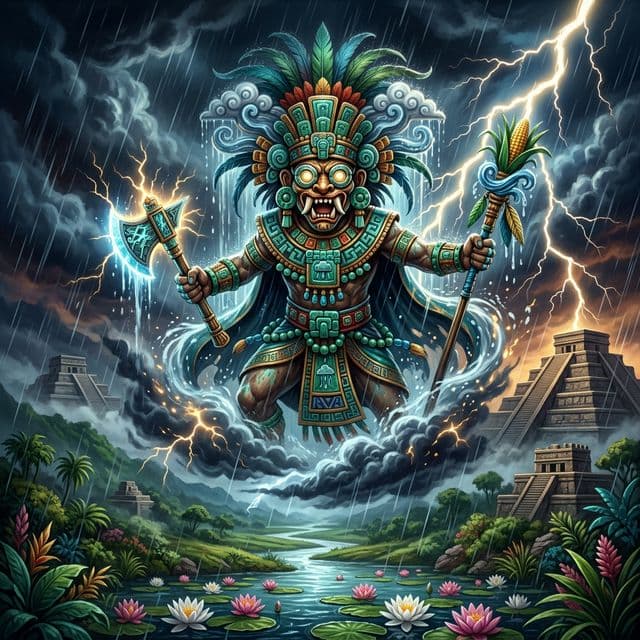
The Aztec god of rain, fertility, and water. Tlaloc's distinctive goggled eyes and fanged mouth make him one of the most recognizable deities in Mesoamerican art. He shared the summit of the Templo Mayor with Huitzilopochtli.
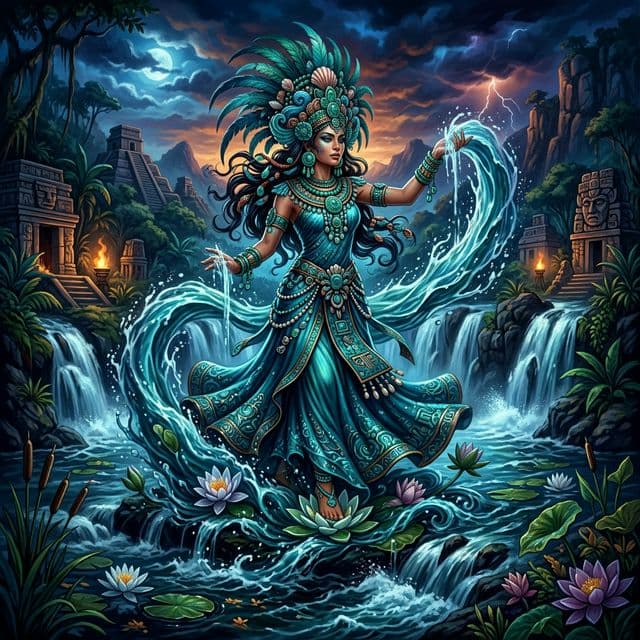
The Aztec goddess of flowing water, rivers, and lakes. Consort of Tlaloc, Chalchiuhtlicue presided over the Fourth Sun before its destruction by flood. She is the patron of newborns and purification.
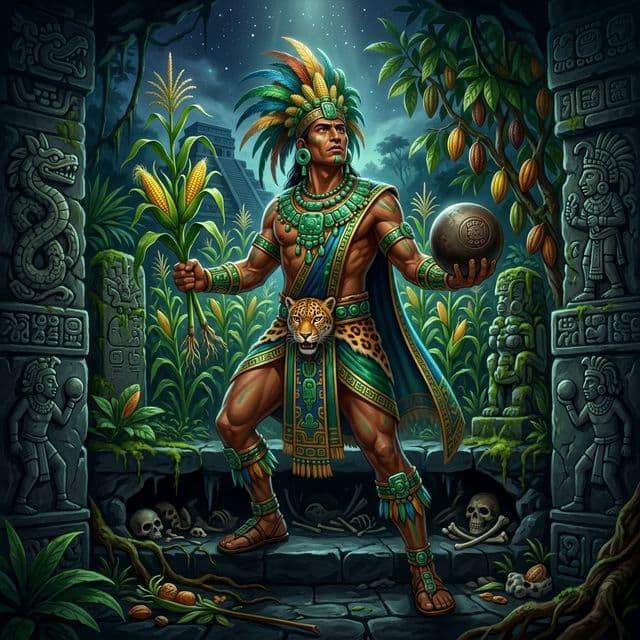
The Maya maize god, father of the Hero Twins. Hun Hunahpu's death in Xibalba and resurrection by his sons represents the planting and sprouting of maize, the fundamental cycle of Maya agricultural life.
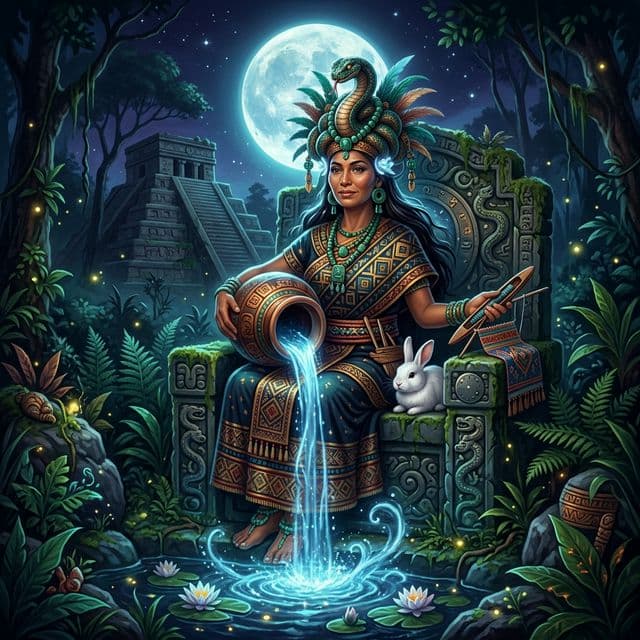
The Maya moon goddess associated with fertility, childbirth, medicine, and weaving. Ix Chel appears in both young and aged forms, representing different aspects of the lunar cycle and feminine power.
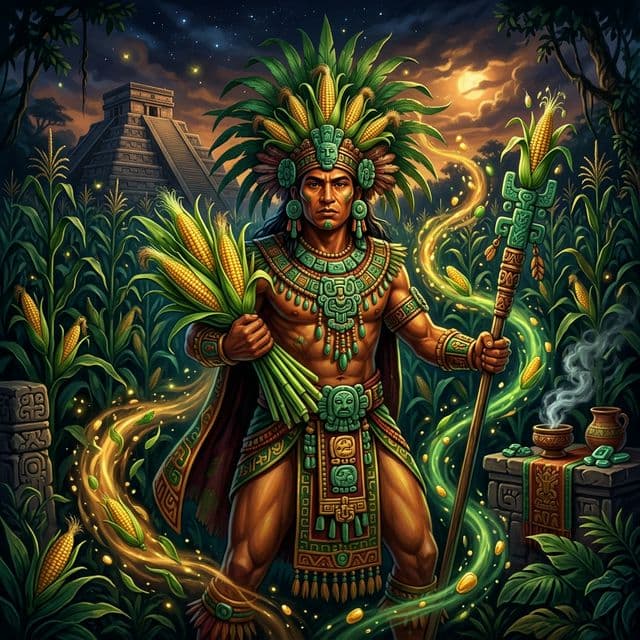
The Aztec god of maize and sustenance. Centeotl represents the sacred maize plant that sustained Mesoamerican civilization.
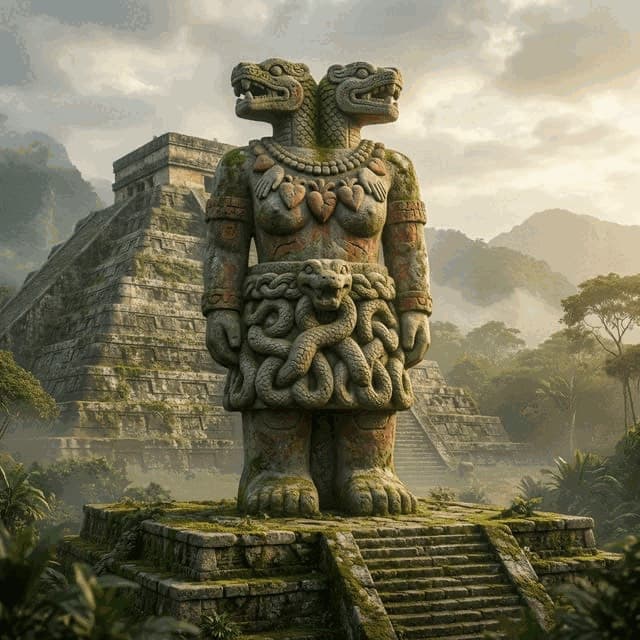
Earth mother goddess who gave birth to the moon, stars, and Huitzilopochtli. Depicted wearing a skirt of writhing serpents and a necklace of human hearts and hands.
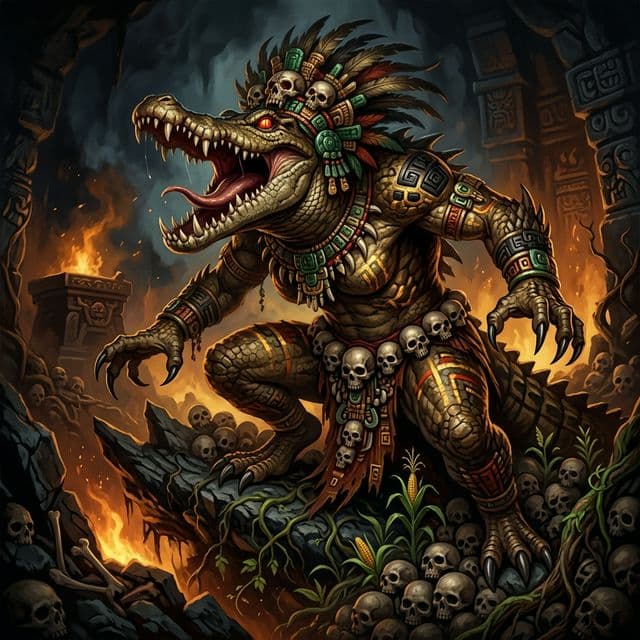
The monstrous earth deity from whose dismembered body the world was created. Tlaltecuhtli devours the dead and demands blood in return for crops, embodying the earth's duality as giver and taker of life.
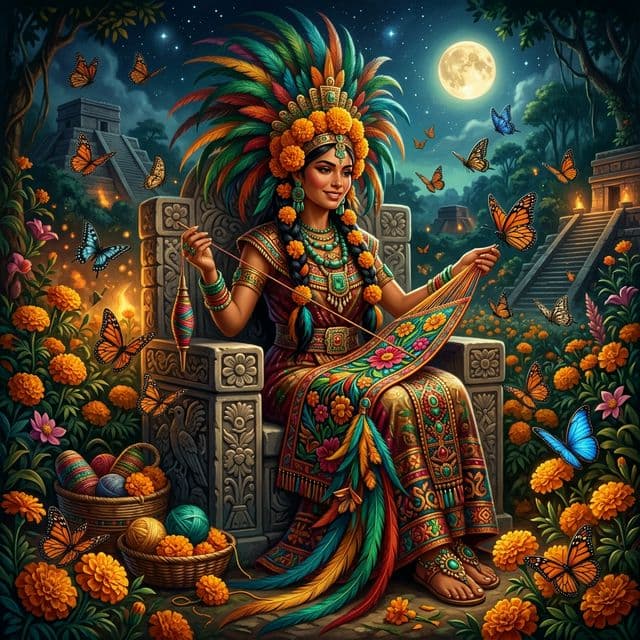
The goddess of beauty, love, flowers, and female sexuality. Xochiquetzal was patron of artisans, weavers, and pregnant women, and dwelt in the paradise of Tamoanchan.
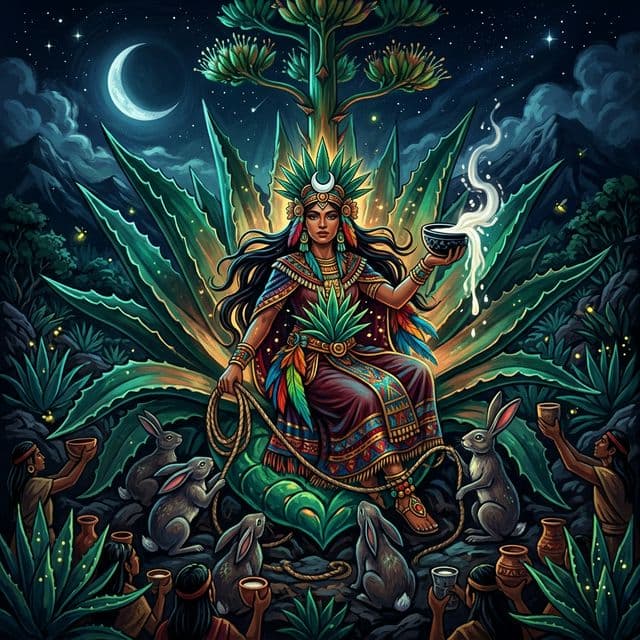
The goddess of the maguey plant and its fermented drink pulque. Mayahuel is depicted with 400 breasts to nurse her 400 children, the Centzon Totochtin (400 Rabbits) of intoxication.
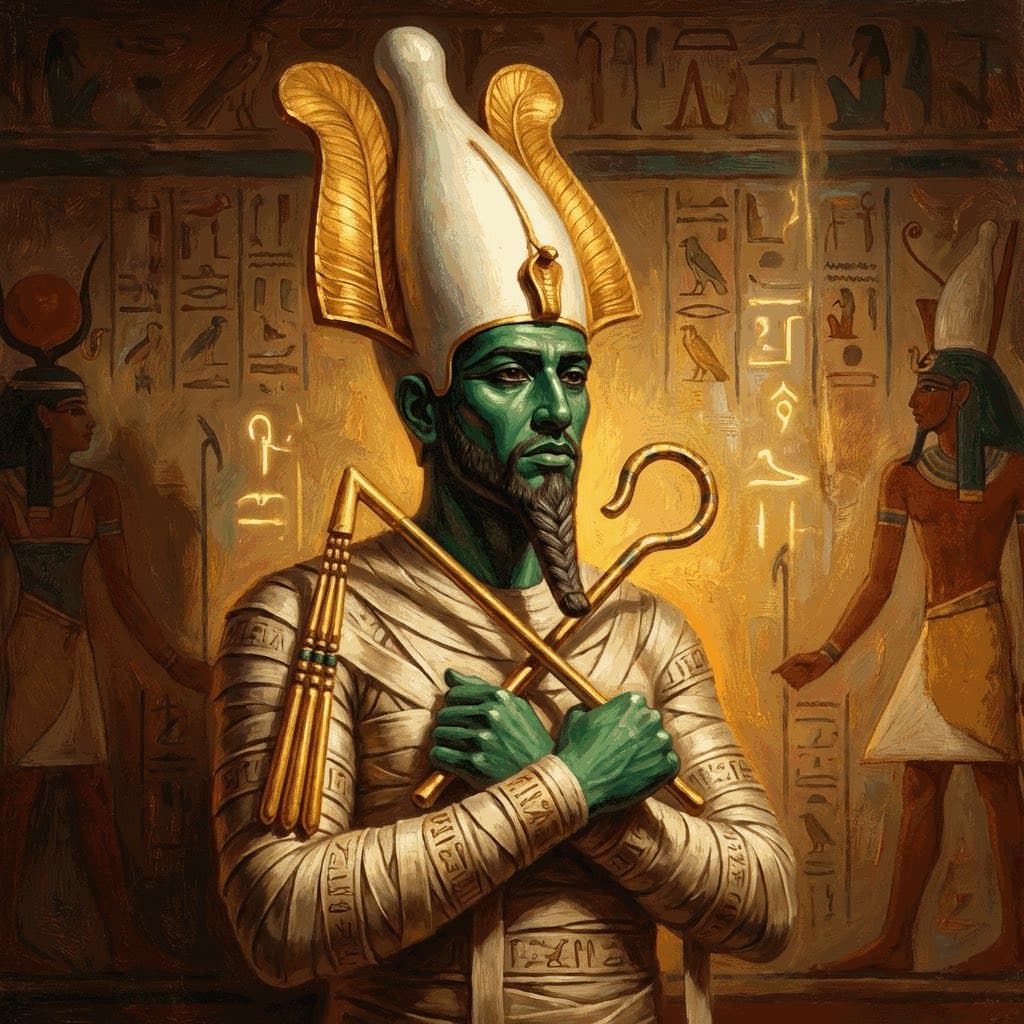
God of the afterlife, resurrection, and fertility. First pharaoh and lawgiver who taught agriculture to humanity. Murdered by his brother Set and resurrected by Isis.
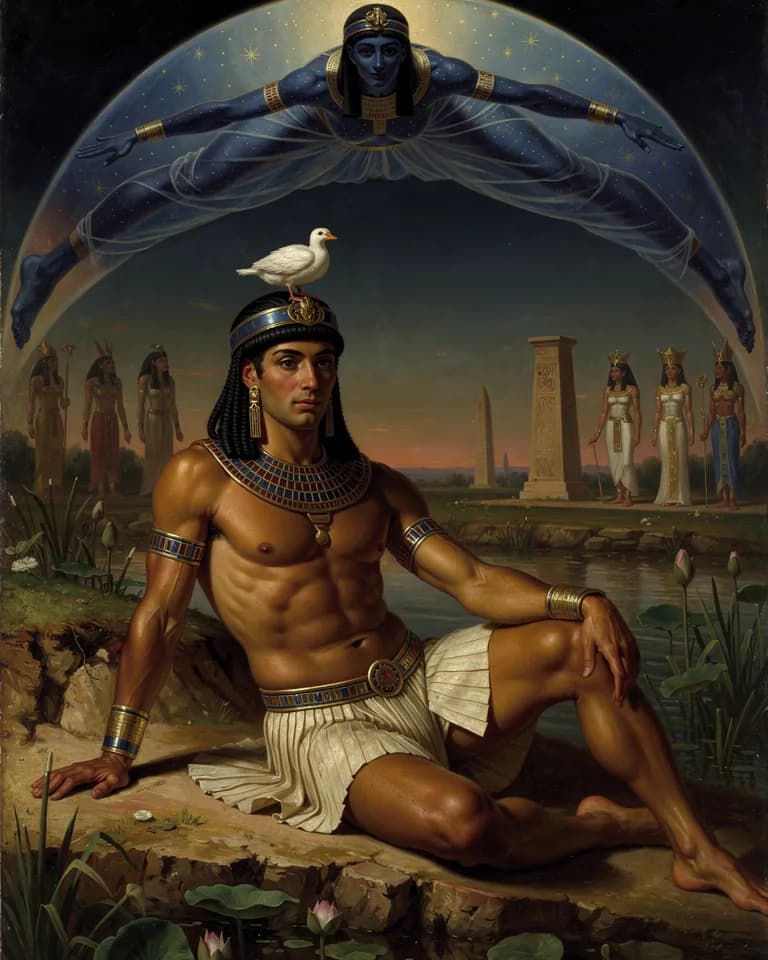
God of the earth, son of Shu, consort of Nut, and father of Osiris, Isis, Set, and Nephthys. Geb is depicted reclining beneath the arched figure of Nut, and stands within the Ennead's line of divine kingship passed down from Atum through Shu to Osiris.
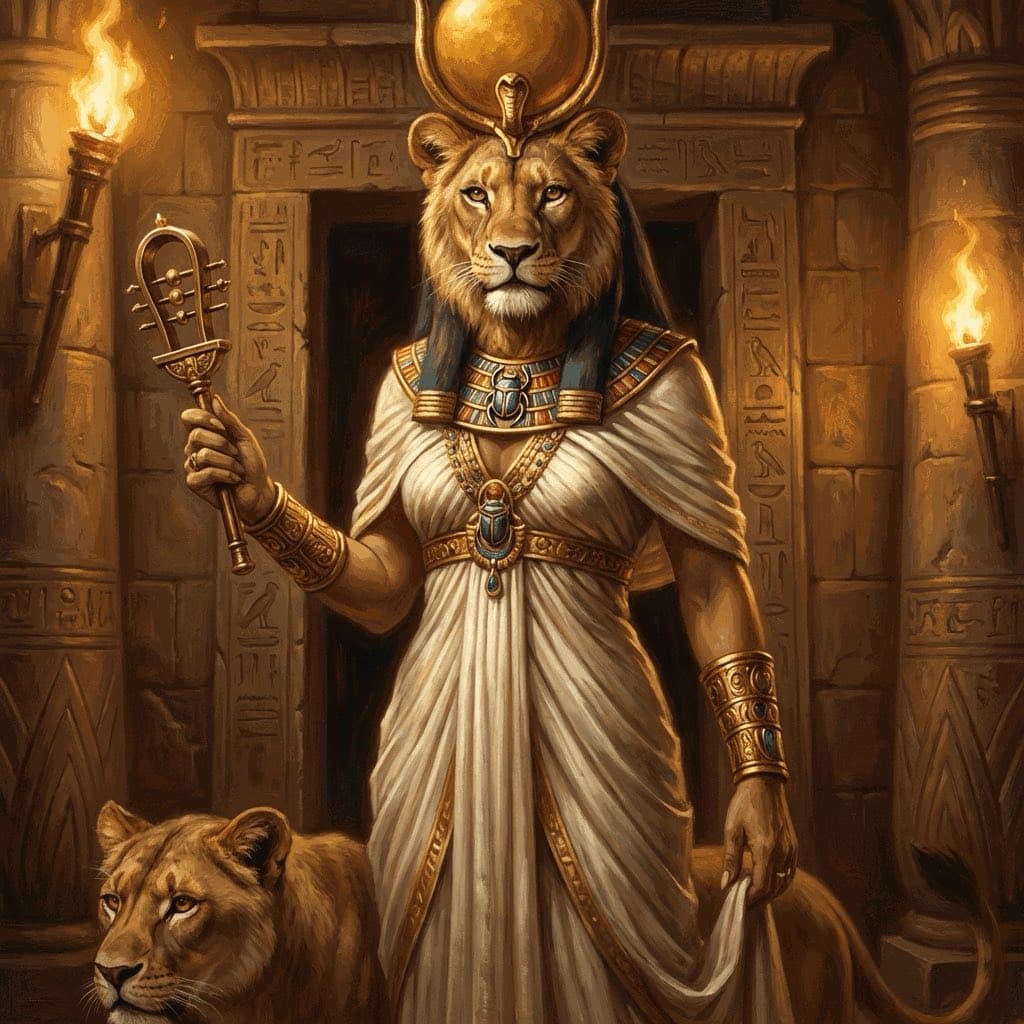
Goddess of home, fertility, and protection. Originally a fierce lioness warrior goddess, she later became gentler as a cat goddess.
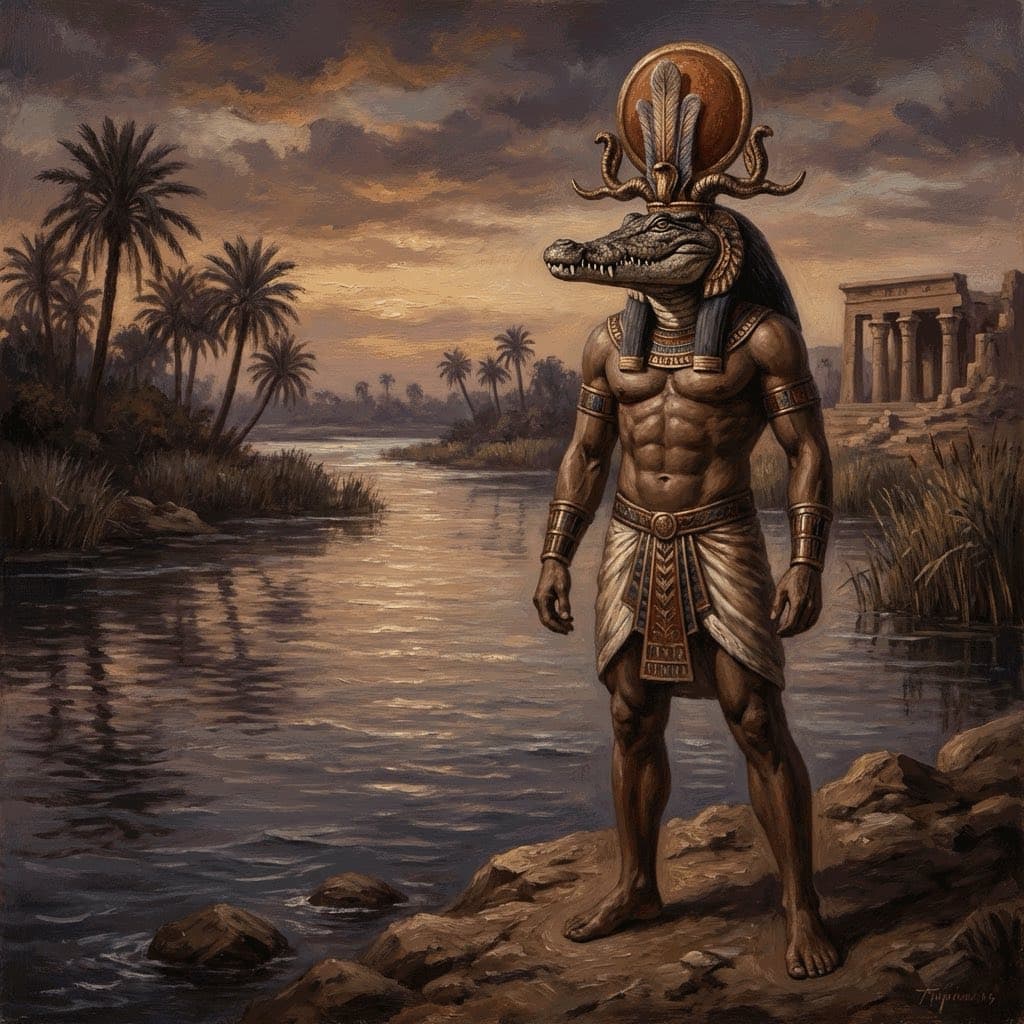
Crocodile god of the Nile and its fertility. Protector against the dangers of the Nile and symbol of pharaonic power and military prowess.
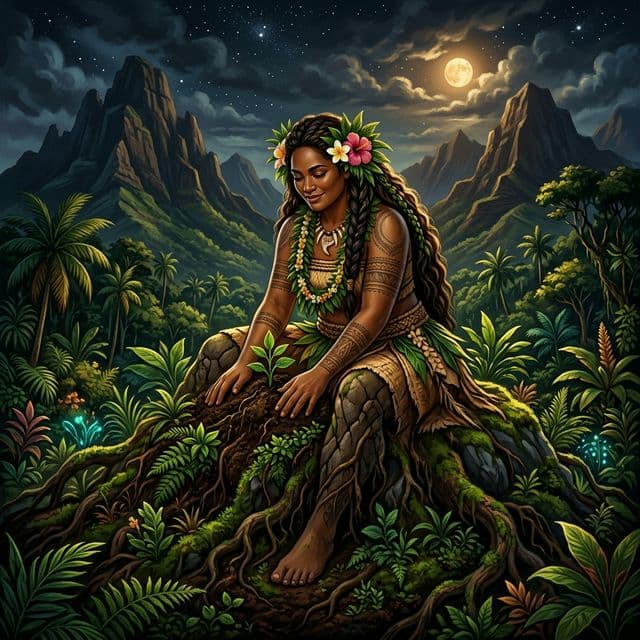
The Earth Mother, wife of Rangi the Sky Father. Papa lay in eternal embrace with Rangi until their children separated them, bringing light into the world. She remains the foundation upon which all life exists.
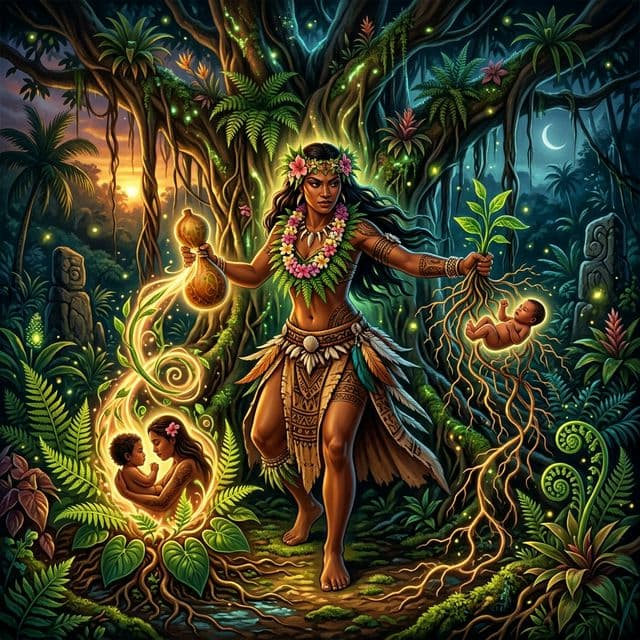
A powerful fertility goddess with the ability to regenerate herself and transform her age. In Hawaiian tradition, Haumea is the mother of Pele and many other deities, and taught humans the secrets of childbirth.
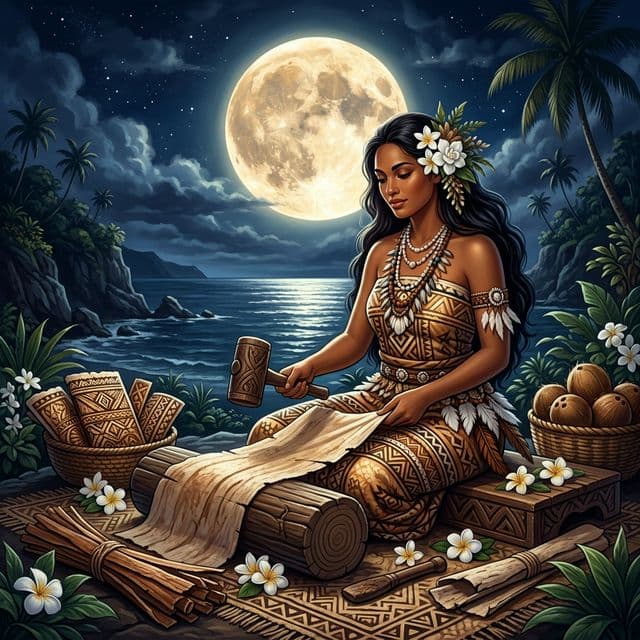
The goddess of the moon and women's arts, particularly the making of tapa cloth. Hina appears in many forms across Polynesia, sometimes as the mother of Maui, sometimes as a goddess who fled to the moon.
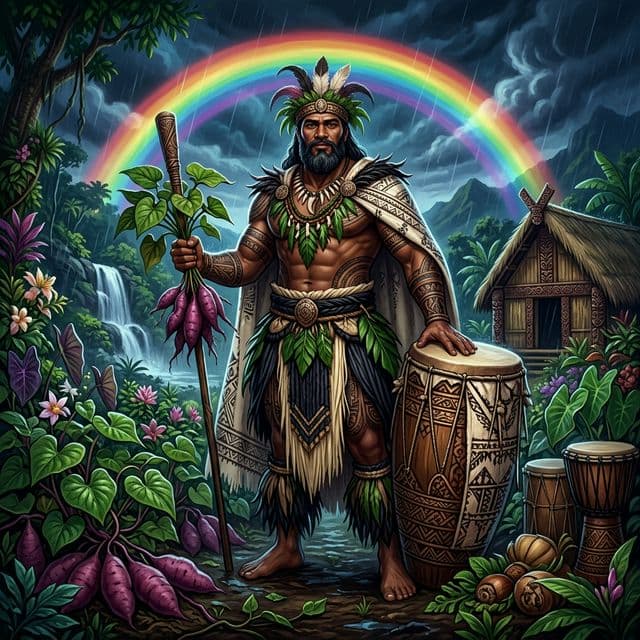
The god of cultivated plants, peace, and agriculture. Rongo represents the peaceful arts of cultivation that sustain life, standing in contrast to his brother Tu's warlike nature.
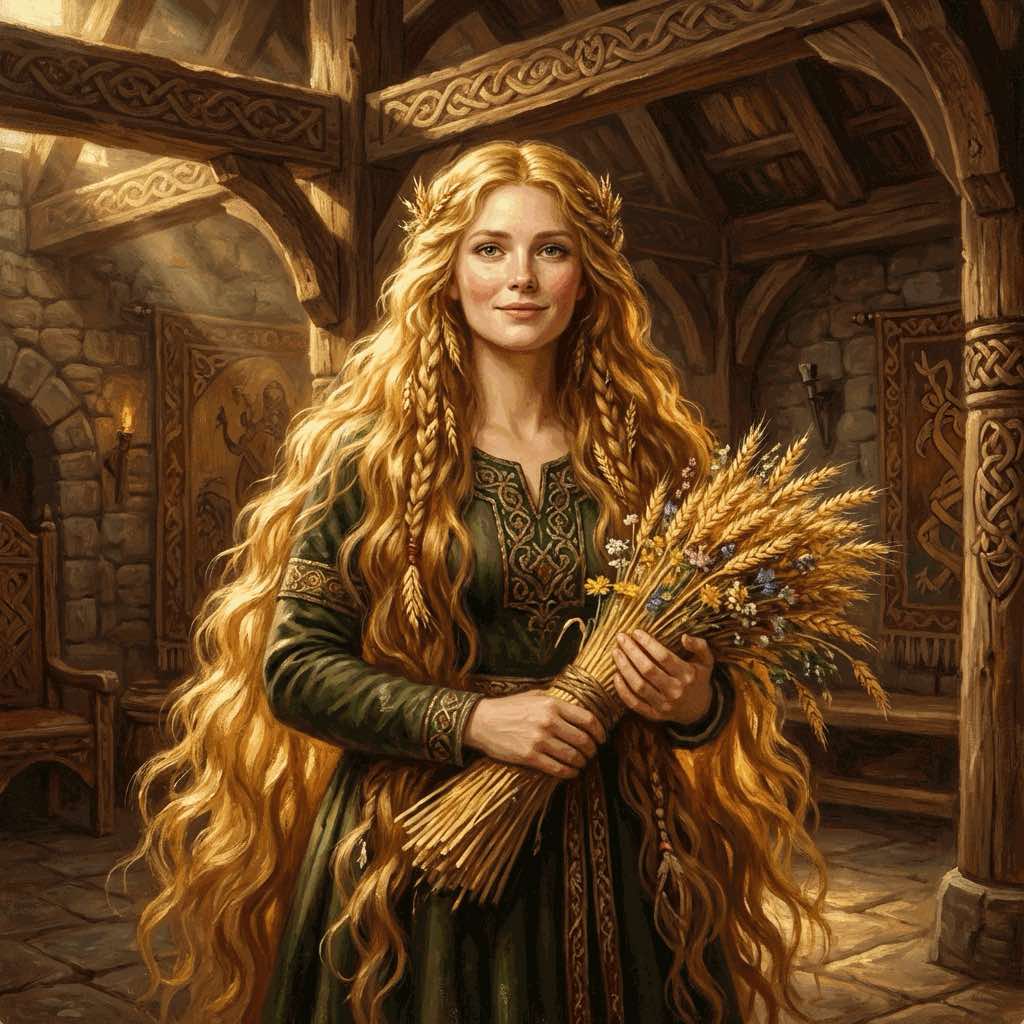
Wife of Thor and goddess associated with earth and harvest. Famous for her beautiful golden hair, which was once cut by Loki as a prank.
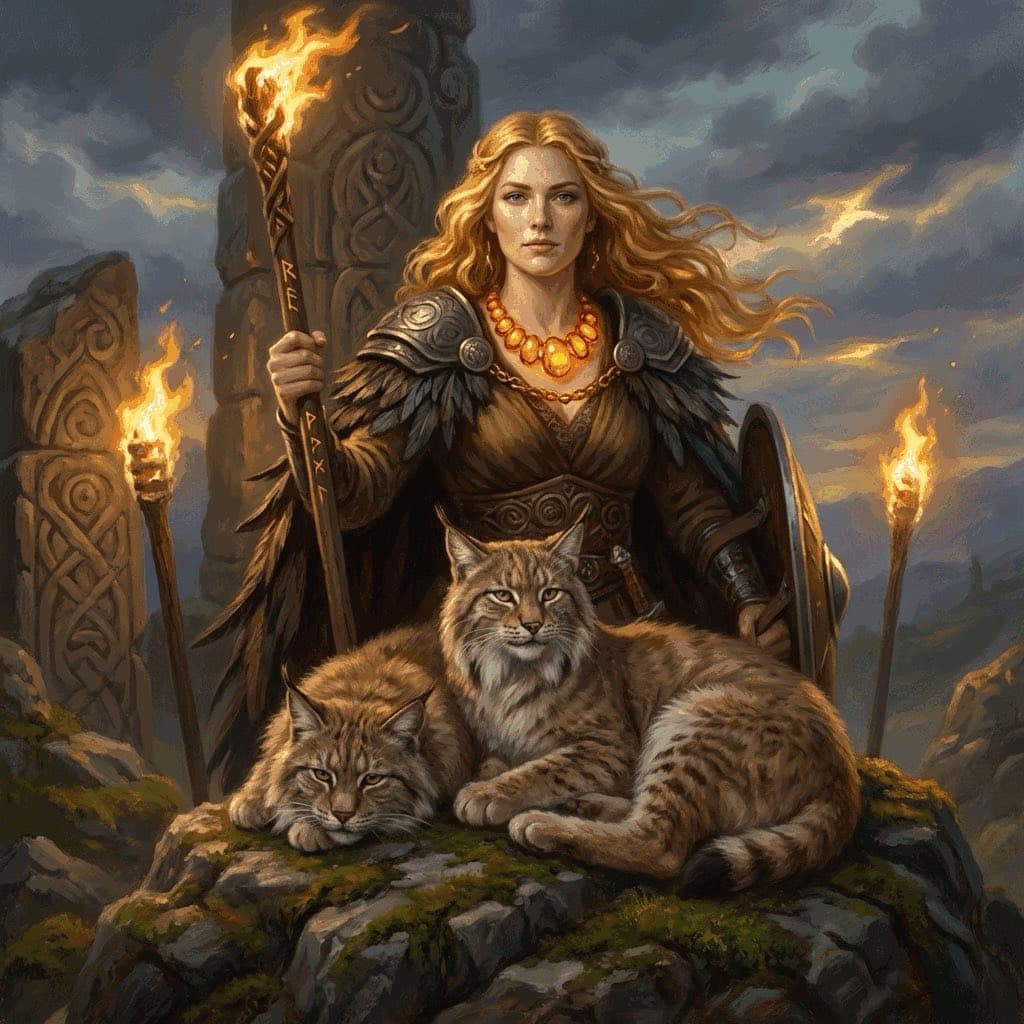
Most renowned of the Vanir, goddess of love, beauty, and fertility, but also associated with war and death. She receives half of those who die in battle in her hall Folkvangr.
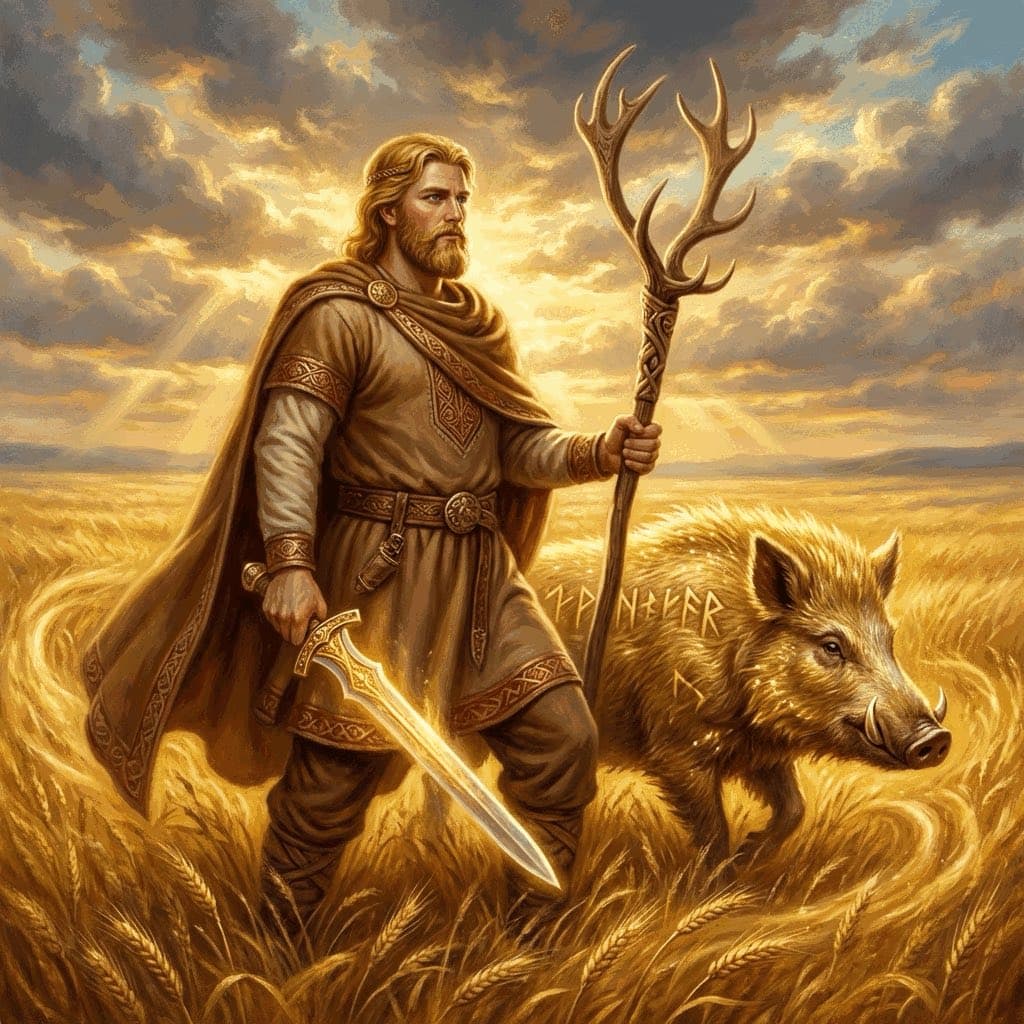
One of the Vanir, god of fertility, prosperity, and fair weather. Owner of the magical ship Skidbladnir and the golden boar Gullinbursti.
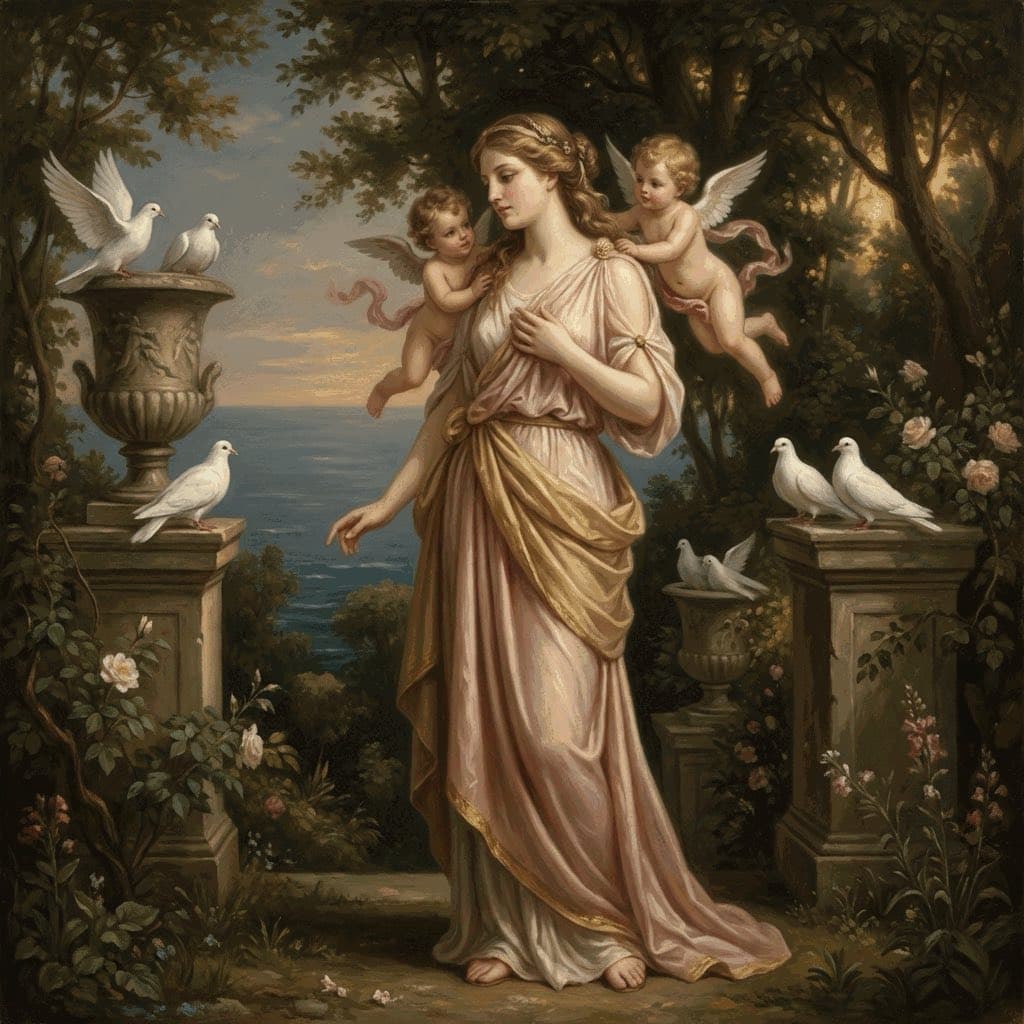
Goddess of love, beauty, desire, sex, and fertility. Mother of the Roman people through her son Aeneas, ancestor of Romulus. Patron goddess of the Julian family.
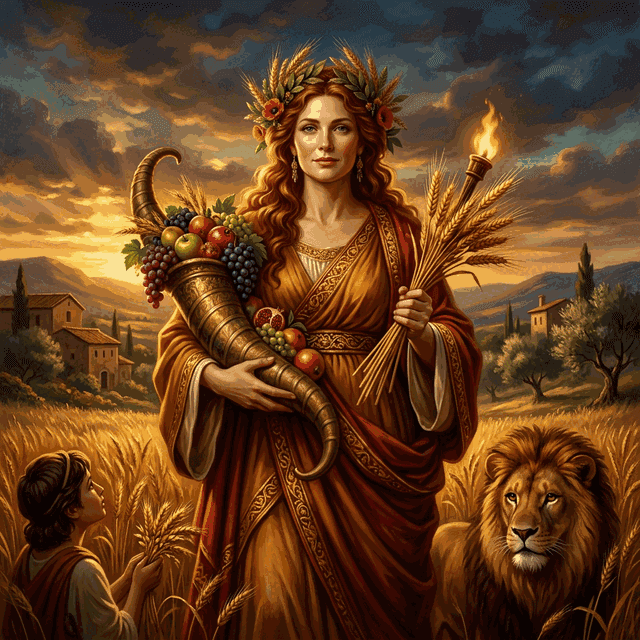
Goddess of agriculture, grain crops, fertility, and motherhood. Her cult was central to Roman plebeian identity. Mother of Proserpina (Persephone). Roman equivalent of Demeter.
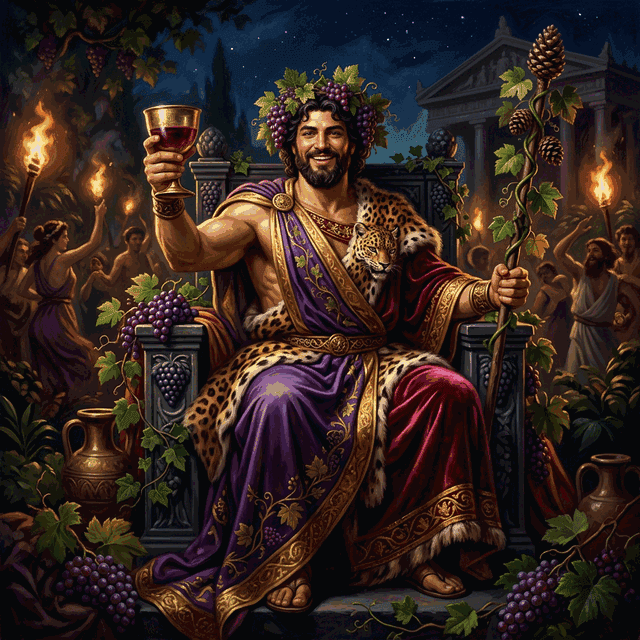
God of wine, festivity, fertility, and ritual madness. His cult included the Bacchanalia festivals. Roman equivalent of Dionysus, also identified with the Italian god Liber.
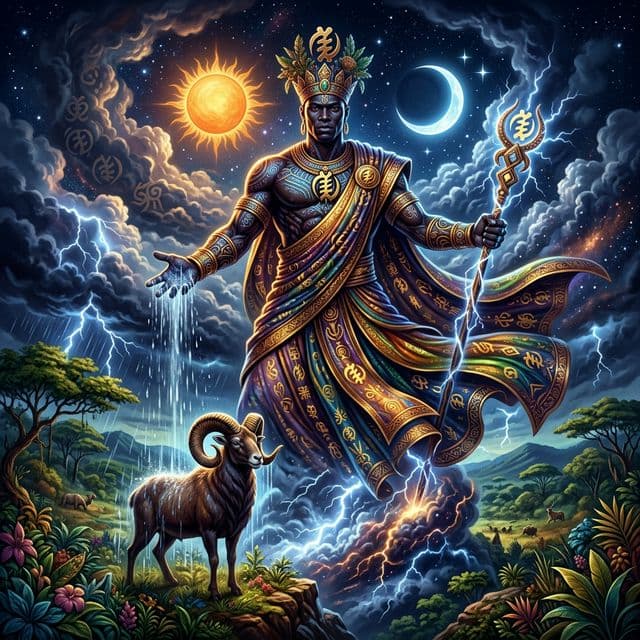
The supreme sky god of the Akan people. Nyame is the creator of all things and source of all life, though he withdrew from direct involvement with humanity.
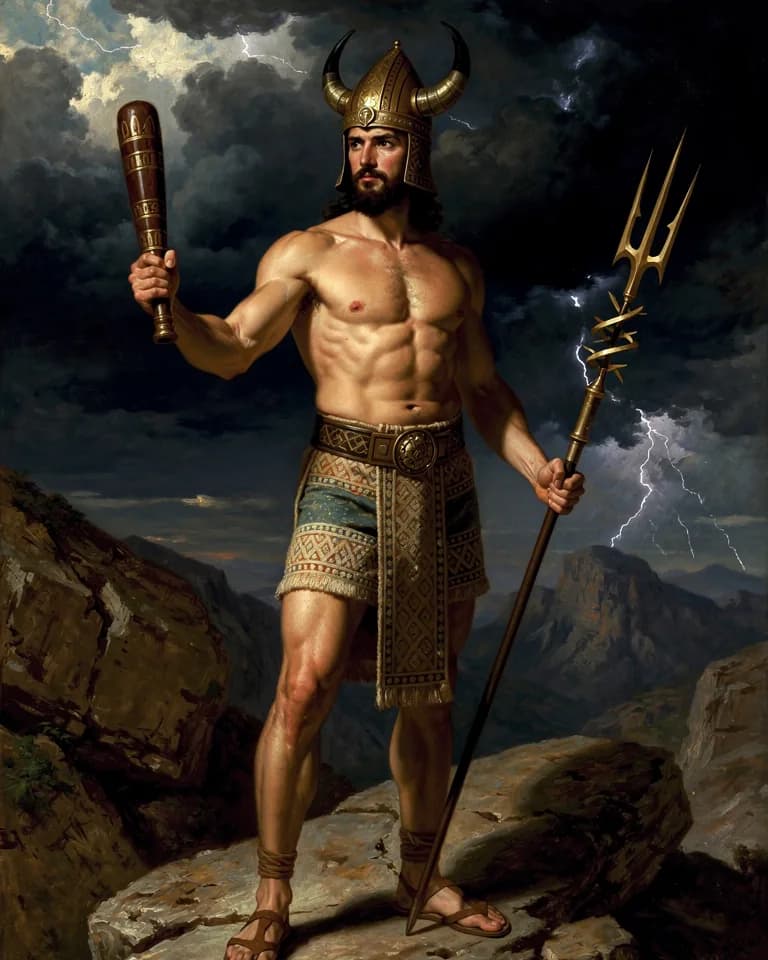
The storm-god of Ugarit, 'Rider of the Clouds', whose rain makes the land fertile; he defeats Yamm the Sea, builds his palace on Mount Zaphon, is swallowed by Mot (Death), and returns to life.
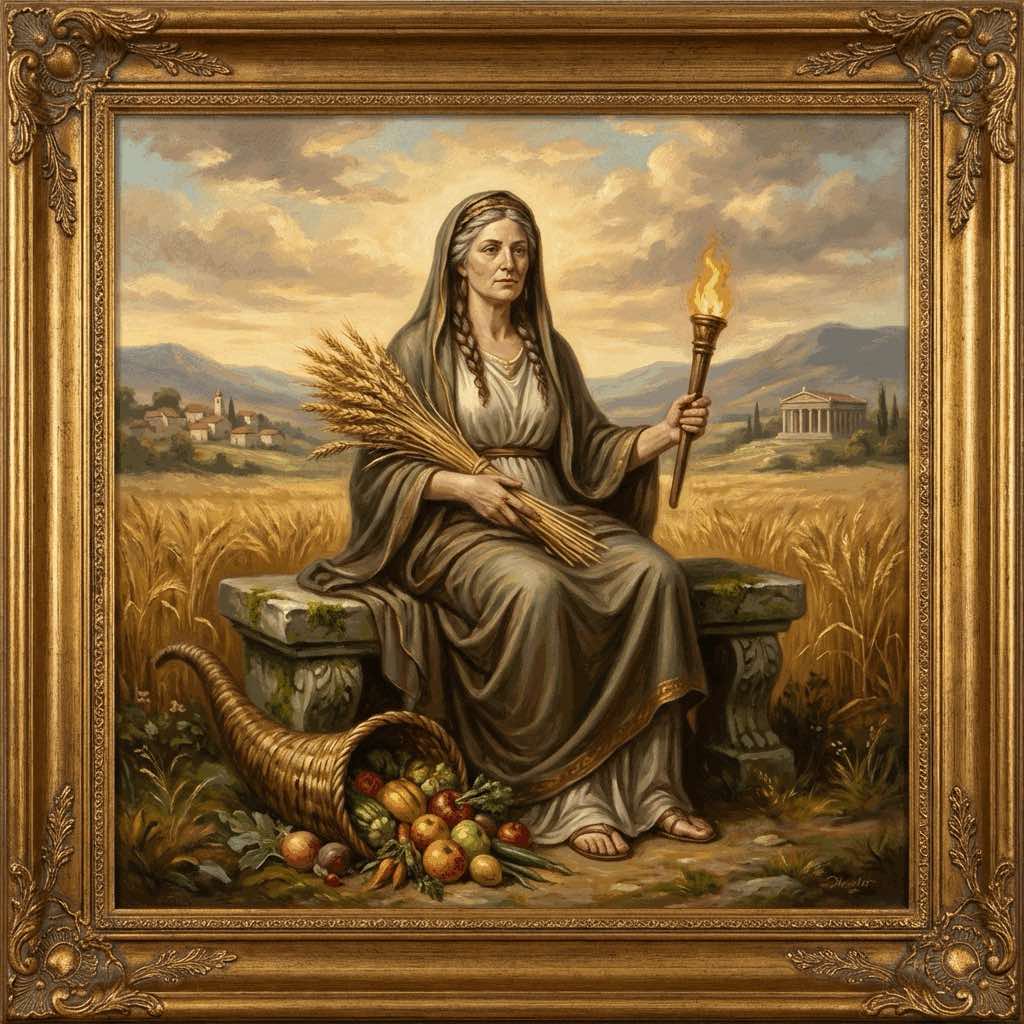
Goddess of agriculture, harvest, and fertility. Mother of Persephone, whose abduction by Hades explains the seasons.
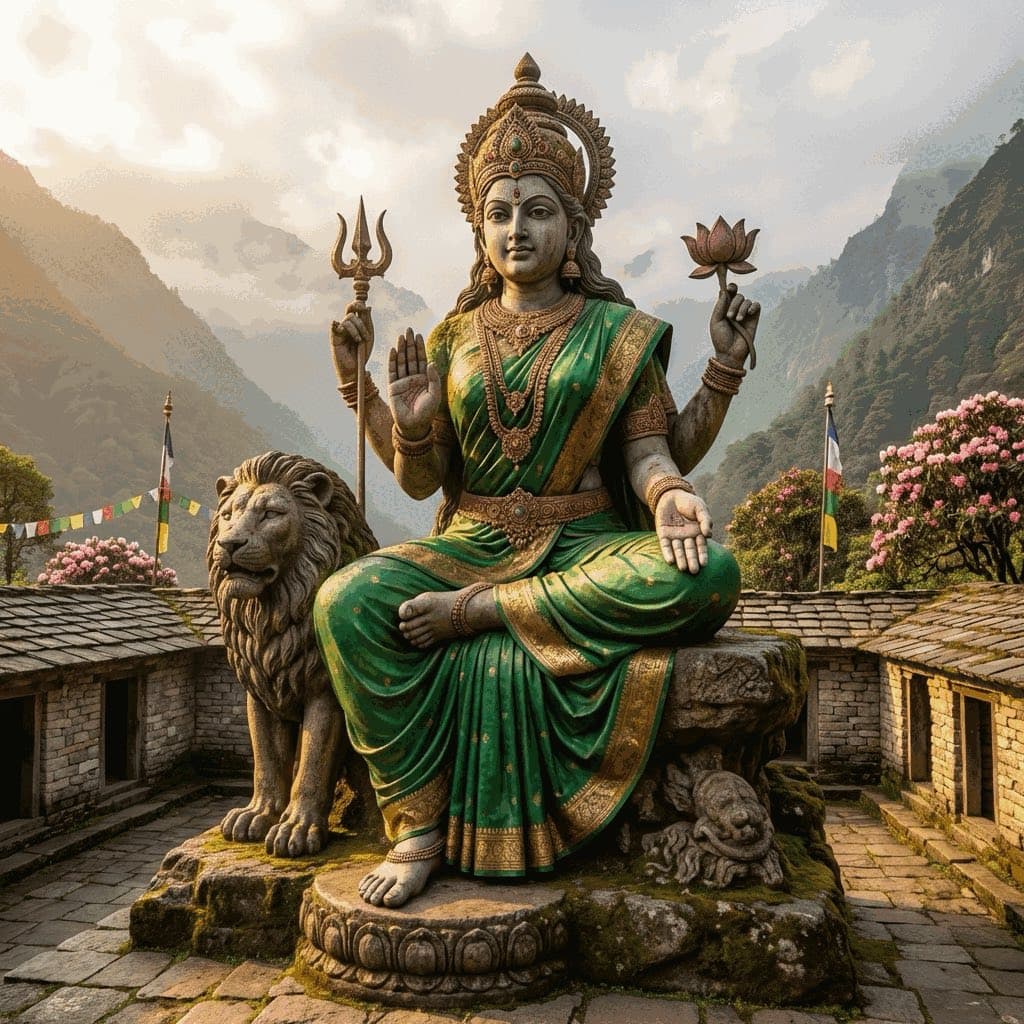
Goddess of power, fertility, love, and devotion. Consort of Shiva and mother of Ganesha and Kartikeya. Represents Shakti, the divine feminine creative power.
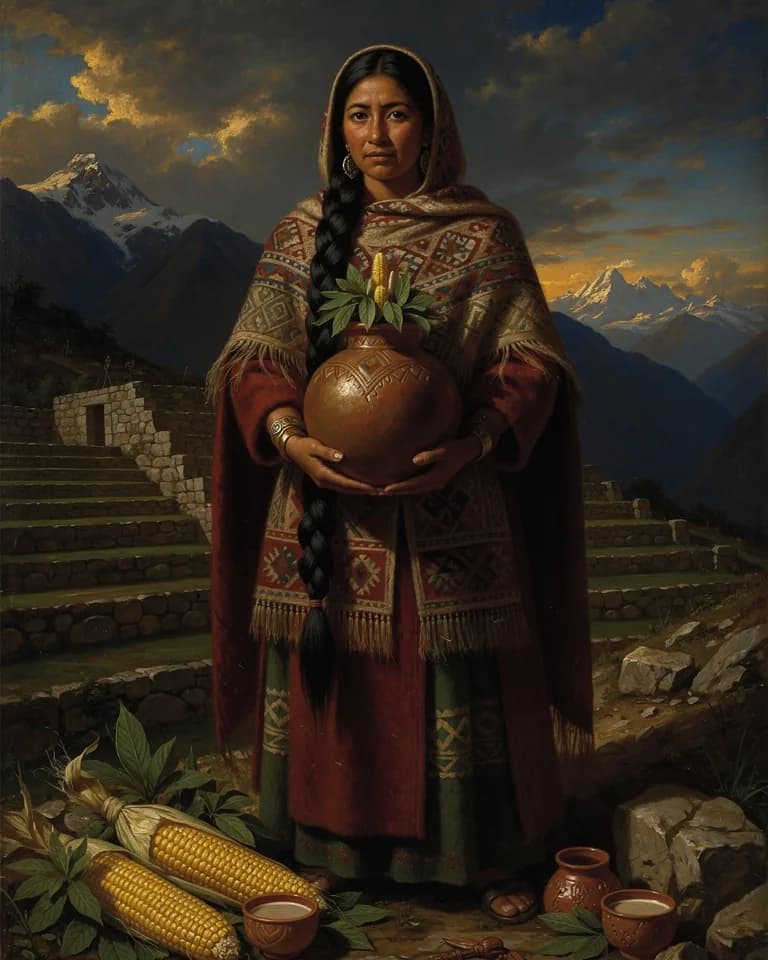
The Earth Mother of the Andes, recorded by colonial writers as receiving offerings of maize beer and coca in the fields, and still honored by Quechua and Aymara communities today.
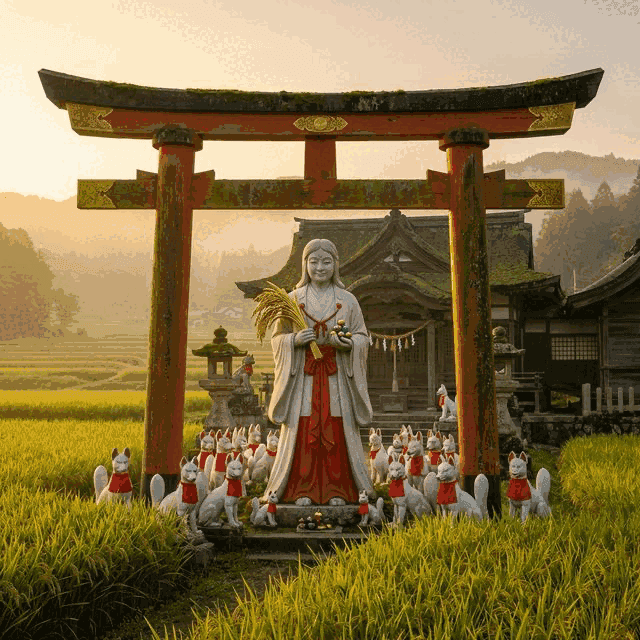
Kami of rice, fertility, agriculture, industry, and prosperity. One of the most popular kami in Japan. Associated with foxes (kitsune) as messengers.
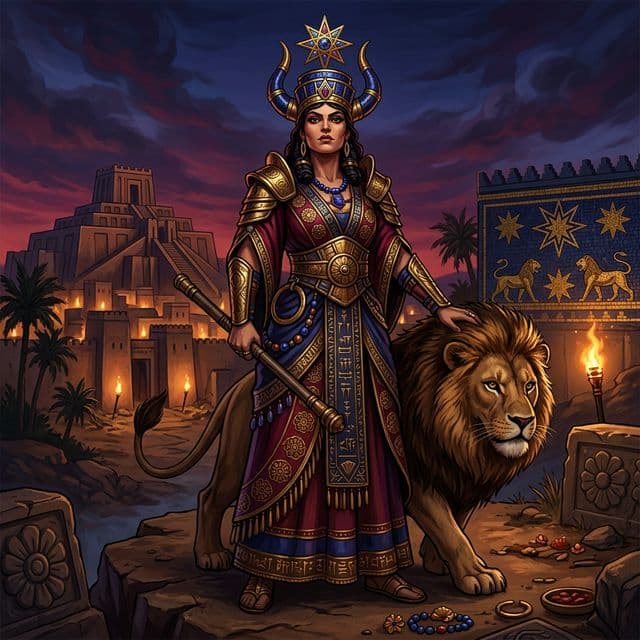
Queen of Heaven and goddess of love and war. Inanna is the most complex and dynamic deity of the Mesopotamian pantheon, embodying both desire and destruction.
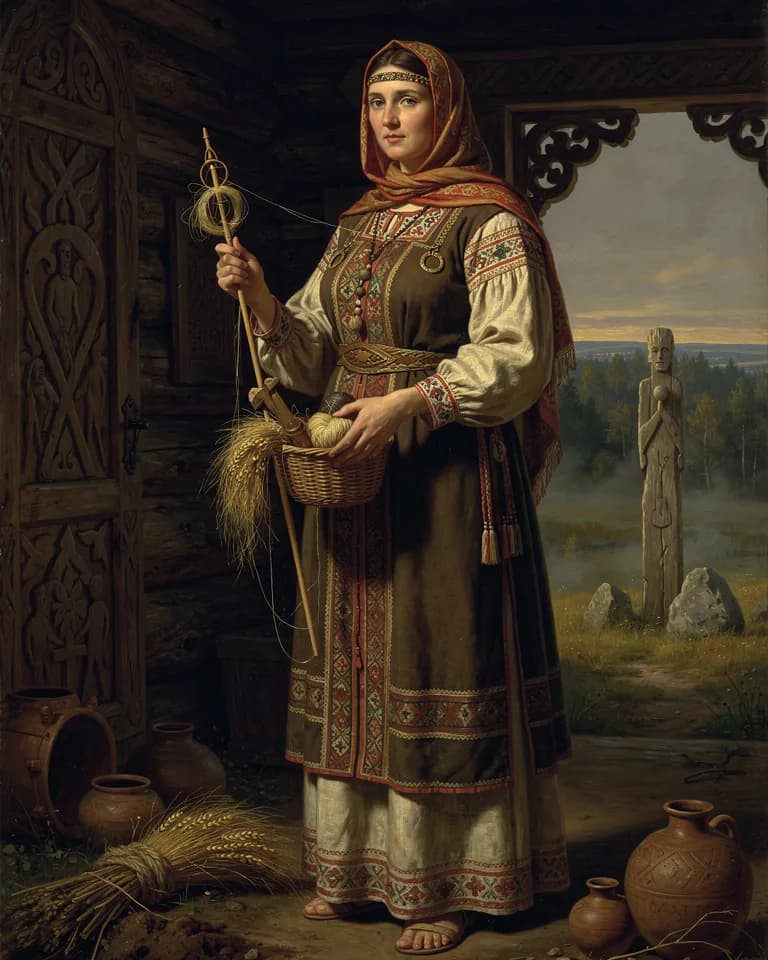
The only goddess among Vladimir's six idols of 980, later folk memory keeps her as a spirit watching over spinning and women's household work.
Editorial comparisons recorded on these entries; a shared role does not establish a shared origin.
Demeter (Greek) and Ceres (Roman)
Ceres is the direct Roman equivalent, goddess of grain, harvest, and agriculture
Compare Demeter and CeresFreyja (Norse) and Inanna (Mesopotamian)
Inanna already lists Freyja; both goddesses combine love and beauty with war, death, and formidable independent power
Compare Freyja and InannaSif (Norse) and Demeter (Greek)
Sif's golden hair is traditionally interpreted as a symbol of ripe wheat, paralleling Demeter's domain of grain and harvest
Compare Sif and DemeterCeres (Roman) and Inari (Japanese)
Both preside over the staple grain crop (wheat/rice) and agricultural prosperity
Compare Ceres and InariXochiquetzal (Aztec) and Freyja (Norse)
Both combine aspects of love, beauty, and fertility with patronage of arts and crafts
Compare Xochiquetzal and FreyjaHun Hunahpu (Mesoamerican) and Osiris (Egyptian)
Both are dying-and-rising gods associated with agricultural fertility
Compare Hun Hunahpu and OsirisRongo (Polynesian) and Demeter (Greek)
Both are deities of cultivated crops and agricultural fertility
Compare Rongo and DemeterHaumea (Polynesian) and Demeter (Greek)
Both are powerful fertility goddesses associated with the abundance of the earth
Compare Haumea and DemeterCenteotl (Mesoamerican) and Demeter (Greek)
Both are grain deities whose blessing ensures agricultural abundance
Compare Centeotl and DemeterBuilt from each deity's catalog entry. See every domain side by side on Divine Domains, or browse every cross-pantheon parallel.