Greek Pantheon
Demeter
Also known as Ceres
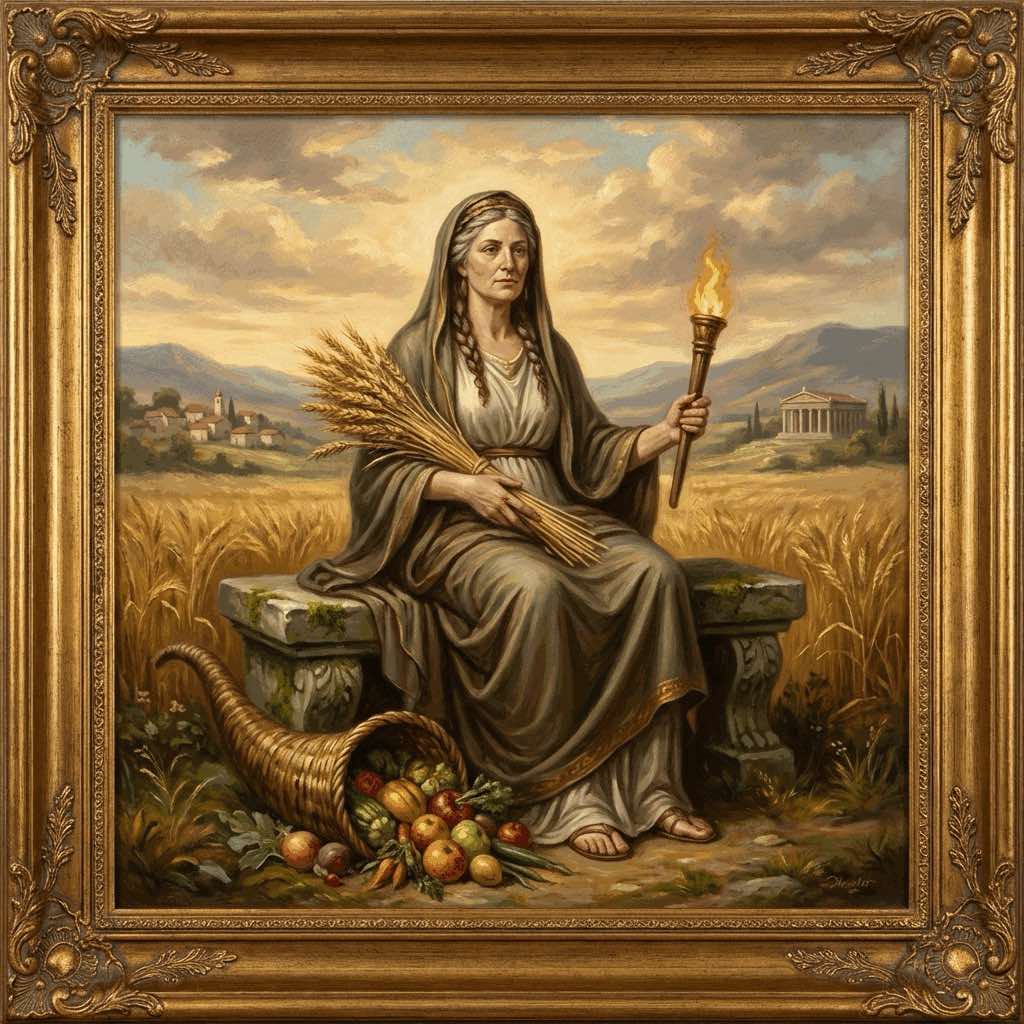
- agriculture
- harvest
- fertility
- sacred law
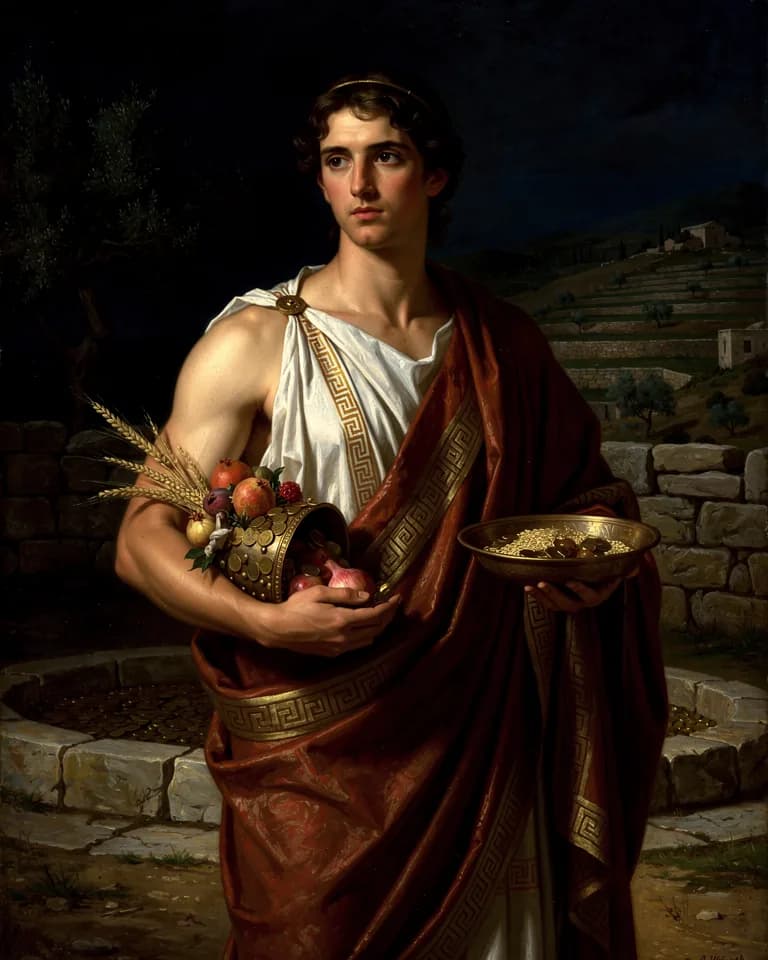
Goddess of agriculture, harvest, and fertility. Mother of Persephone, whose abduction by Hades explains the seasons.
About Demeter
The Earth Mother
Demeter acts as the provider of food and the protector of marriage. She presides over the cycle of life and death through the harvest.
The Seasons
Her daughter Persephone was abducted by Hades. In her grief, Demeter neglected the earth, causing a great famine (winter). Zeus intervened, and it was decreed that Persephone would spend part of the year in the Underworld (winter) and part with her mother (spring/summer).
Across traditions
Parallel figures
Figures who play a role like Demeter's in other traditions.
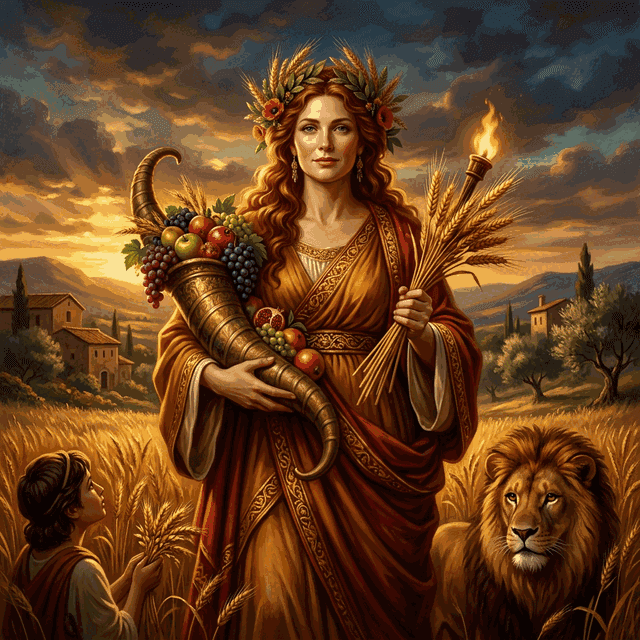 RomanCeresIllustration
Ceres is the direct Roman equivalent, goddess of grain, harvest, and agriculture
Compare Demeter and Ceres side by side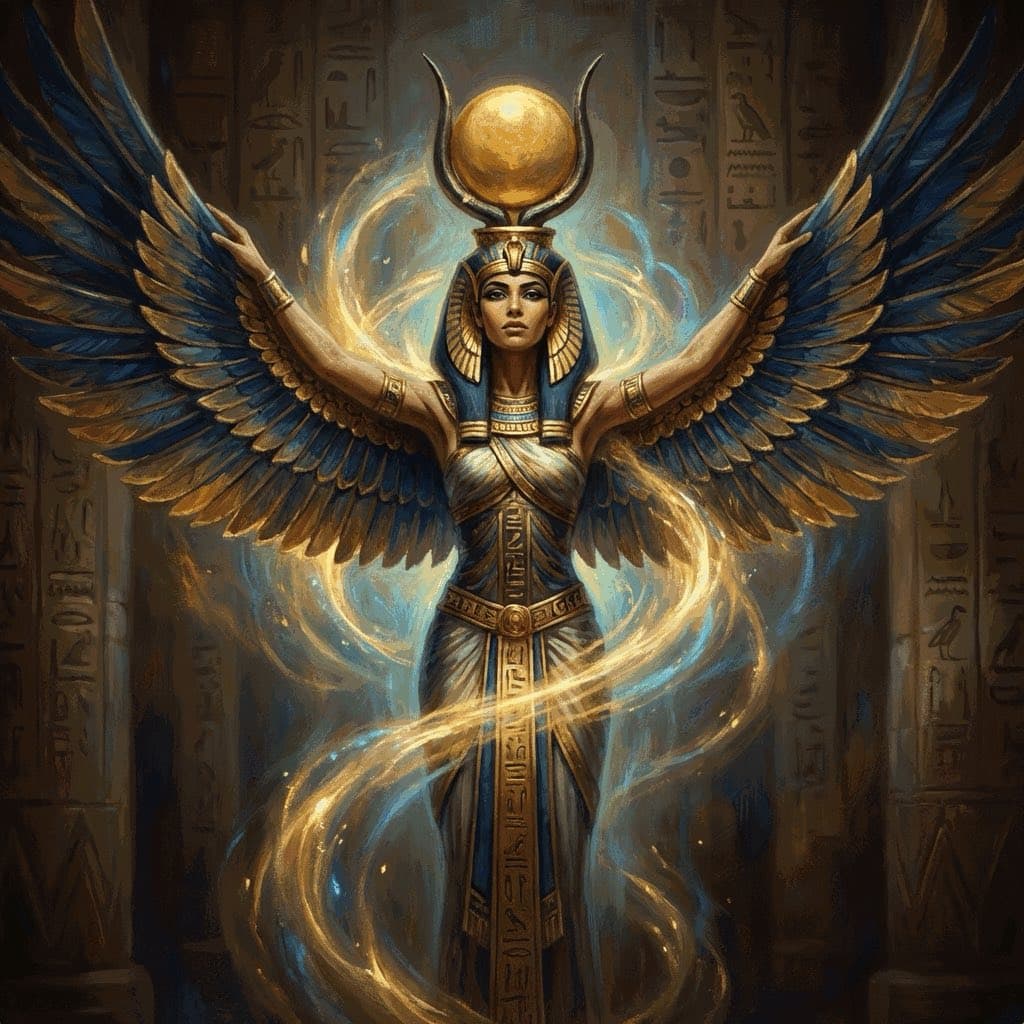 EgyptianIsisIllustration
Herodotus (Histories 2.59) identifies Demeter with Isis; both are mother-goddesses tied to agricultural fertility and mystery cult
Compare Demeter and Isis side by side
Worship and cult
Temples, festivals, and practices recorded for Demeter
Grain and the mother's grief. Eleusis promised a better lot after death to initiates who could keep silence. The Thesmophoria was a women's festival of piglets and decayed offerings. Sicily claimed her as strongly as Attica.
Sacred sites
- Telesterion at Eleusis
- Thesmophorion sanctuaries in many cities
Festivals
- Eleusinian Mysteries
- Thesmophoria
- Haloa
Family


Relationship sources
Theogony — Zeus sibling of Demeter
Hesiod · H. G. Evelyn-White, Hesiod, the Homeric Hymns and Homerica (1914), Loeb Classical Library 57; Theoi transcription · Theogony 453–458
Theogony — Demeter parent of Persephone: Demeter is Persephone's mother
Hesiod · Hugh G. Evelyn-White, Hesiod, the Homeric Hymns and Homerica (1914), Project Gutenberg #348 · Theogony 912–914
Theogony — Cronus parent of Demeter
Hesiod · Hugh G. Evelyn-White, Hesiod, the Homeric Hymns and Homerica (1914), Project Gutenberg #348 · Theogony 453–491
Hesiod · H. G. Evelyn-White, Hesiod, the Homeric Hymns and Homerica (1914), Loeb Classical Library 57; Theoi transcription · Theogony 969–974
Theogony — Rhea parent of Demeter
Hesiod · Hugh G. Evelyn-White, Hesiod, the Homeric Hymns and Homerica (1914), Project Gutenberg #348 · Theogony 453–491
Questions about Demeter's family
- Who are Demeter's parents?
- The atlas's kinship records name 2 parents of Demeter: Cronus and Rhea. Ancient accounts do not always agree on divine parentage.
- Who are Demeter's children?
- Children of Demeter recorded in the atlas: Persephone and Plutus.
- Who are Demeter's siblings?
- Siblings of Demeter recorded in the atlas: Zeus.
In the atlas
Where Demeter appears
In the museums
Demeter in art
Real objects in public collections, released into the public domain by the museums that hold them. Dates refer to when each object was made. Objects made within the tradition come first, later depictions after.
 (opens the museum record)
Ancient object
Ten marble fragments of the Great Eleusinian Relief (opens the museum record)
Fragments of the Great Eleusinian Relief, a Roman marble copy of a lost Greek original; the museum's tags identify Demeter and Persephone among the figures. The relief reflects imagery from the Eleusinian Mysteries, the cult centered on Demeter and her daughter.
Sources and further reading
Source notes
These references are recorded in the catalog. Their passage wording and translation have not been checked, so quotations are not displayed here.
- Homeric Hymn II, To Demeter (trans. Evelyn-White)
Appears in
Ancient and classical works featuring this figure.
Goddess of agriculture whose grief for her abducted daughter withers the crops of the earth (Hymn 2)
About this entry
By Elizabeth Stein for Mythos Atlas. About the author. Editorial notes are grounded in the site's cited sources and can be challenged through the contact page.
Parallels are editorial comparisons across traditions: a shared role does not, by itself, establish a shared origin.
Family relationships come from the atlas's kinship records. Ancient sources often disagree on divine genealogy.
Keep exploring
One myth a week, with its sources in a short email. The sign-up form is just below.
Genealogy
Family tree
Demeter's parents, consorts, children and rivals, as recorded in the atlas.