Greek Pantheon
Rhea
- motherhood
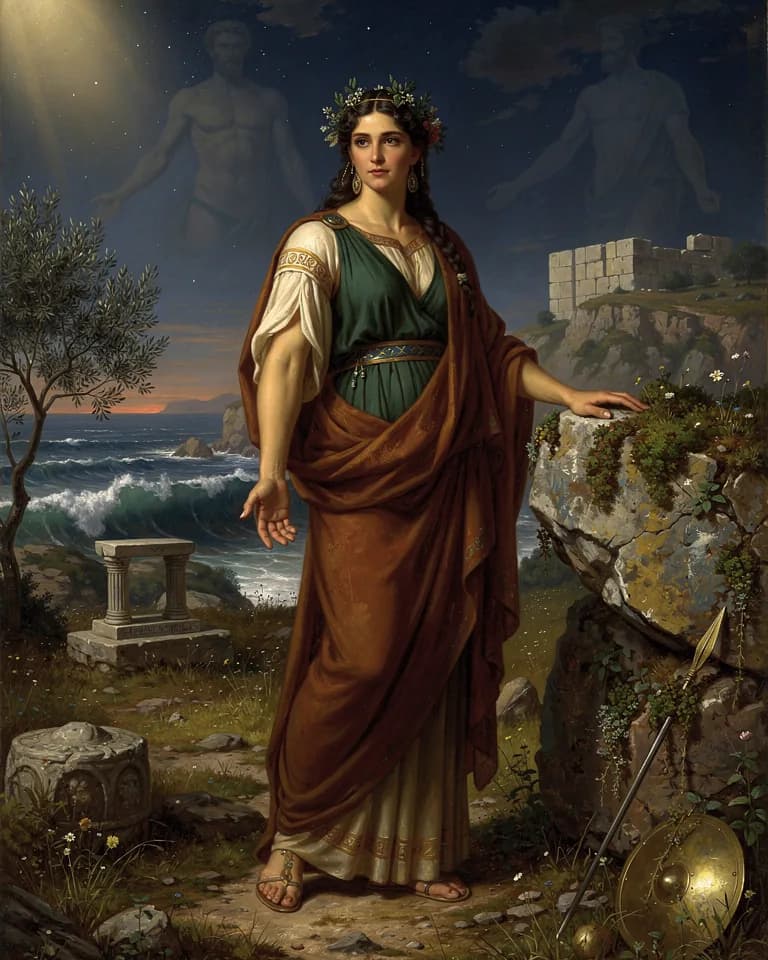
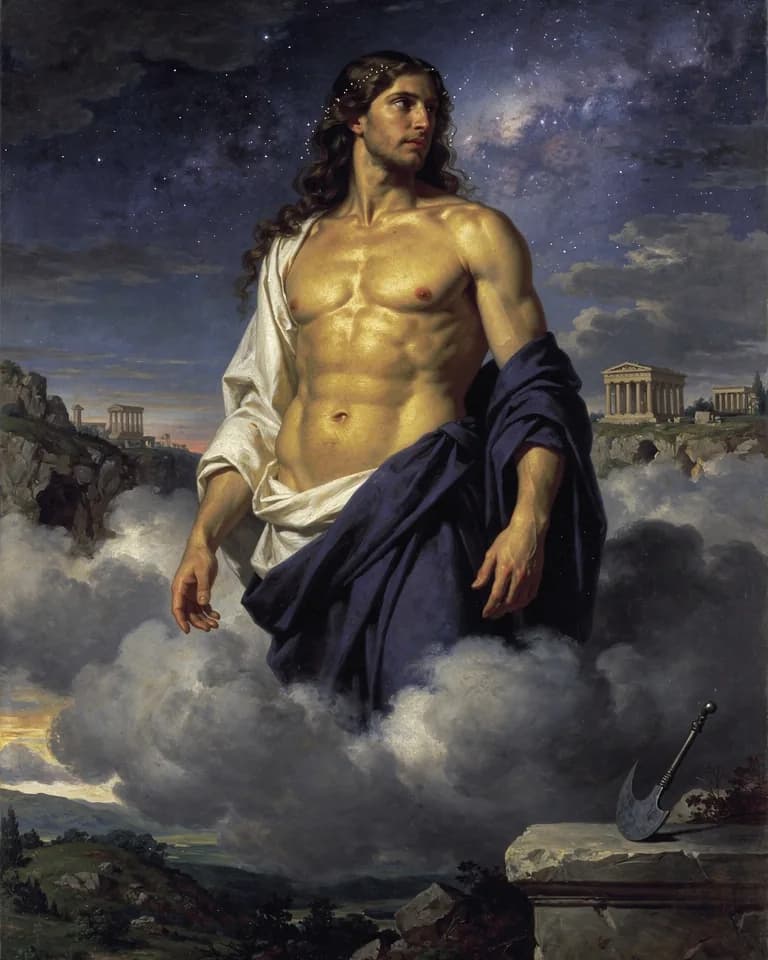
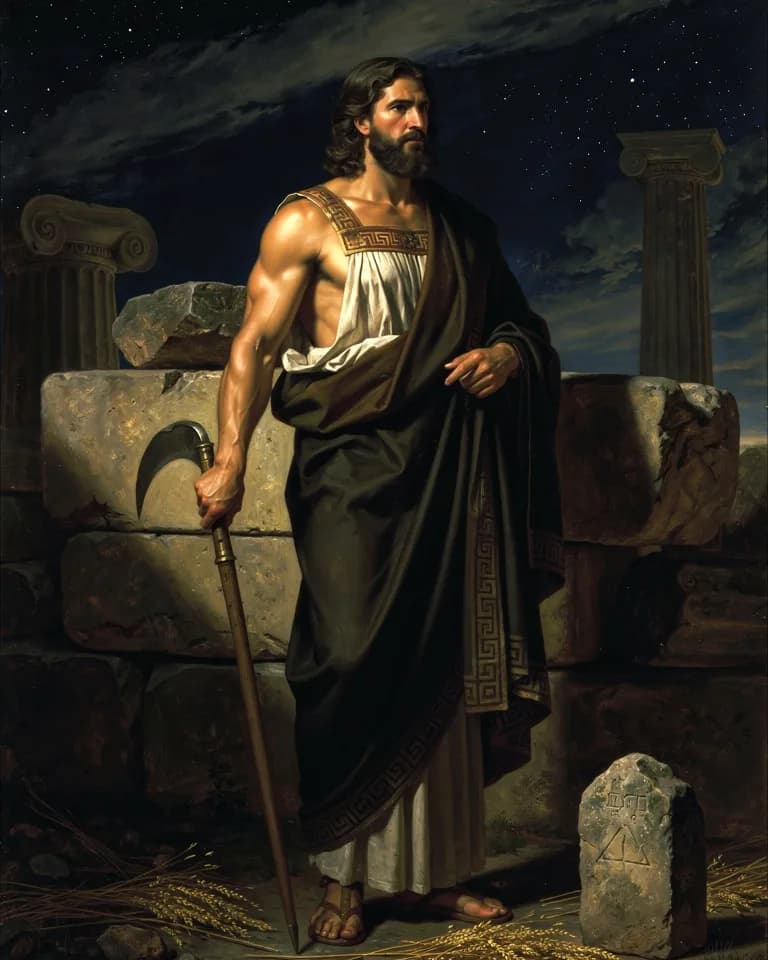
Titan daughter of Gaia and Uranus. With Cronus, she is the mother of Hestia, Demeter, Hera, Hades, Poseidon, and Zeus in Hesiod’s Theogony.
About Rhea
Hesiod’s Theogony names Rhea as a daughter of Gaia and Uranus. With Cronus she bears Hestia, Demeter, Hera, Hades, Poseidon, and Zeus. Cronus swallows the children to prevent a son from replacing him. Before Zeus is born, Rhea asks her parents to help conceal his birth. They send her to Crete, where Gaia receives Zeus to raise him. A stone wrapped in swaddling clothes is given to Cronus in the child’s place (Theogony 132–138; 453–491).
Family
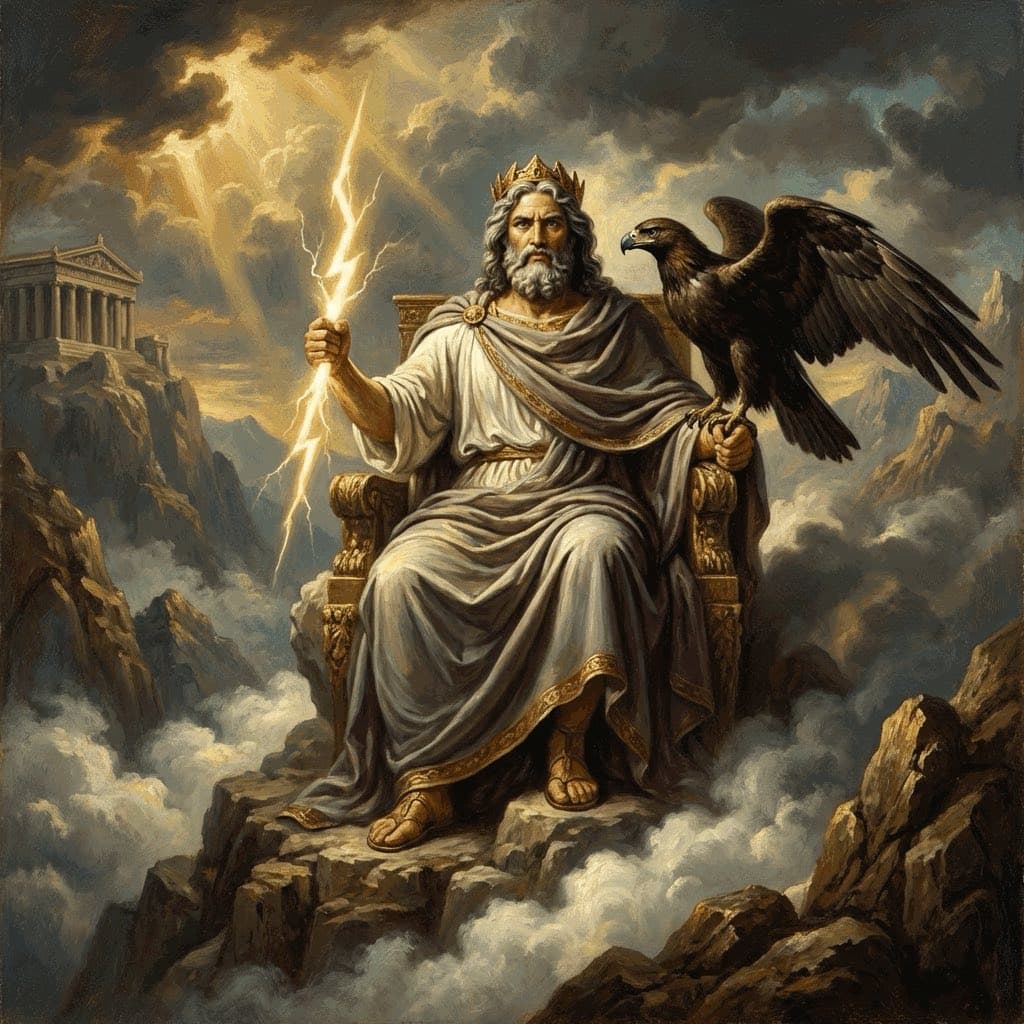
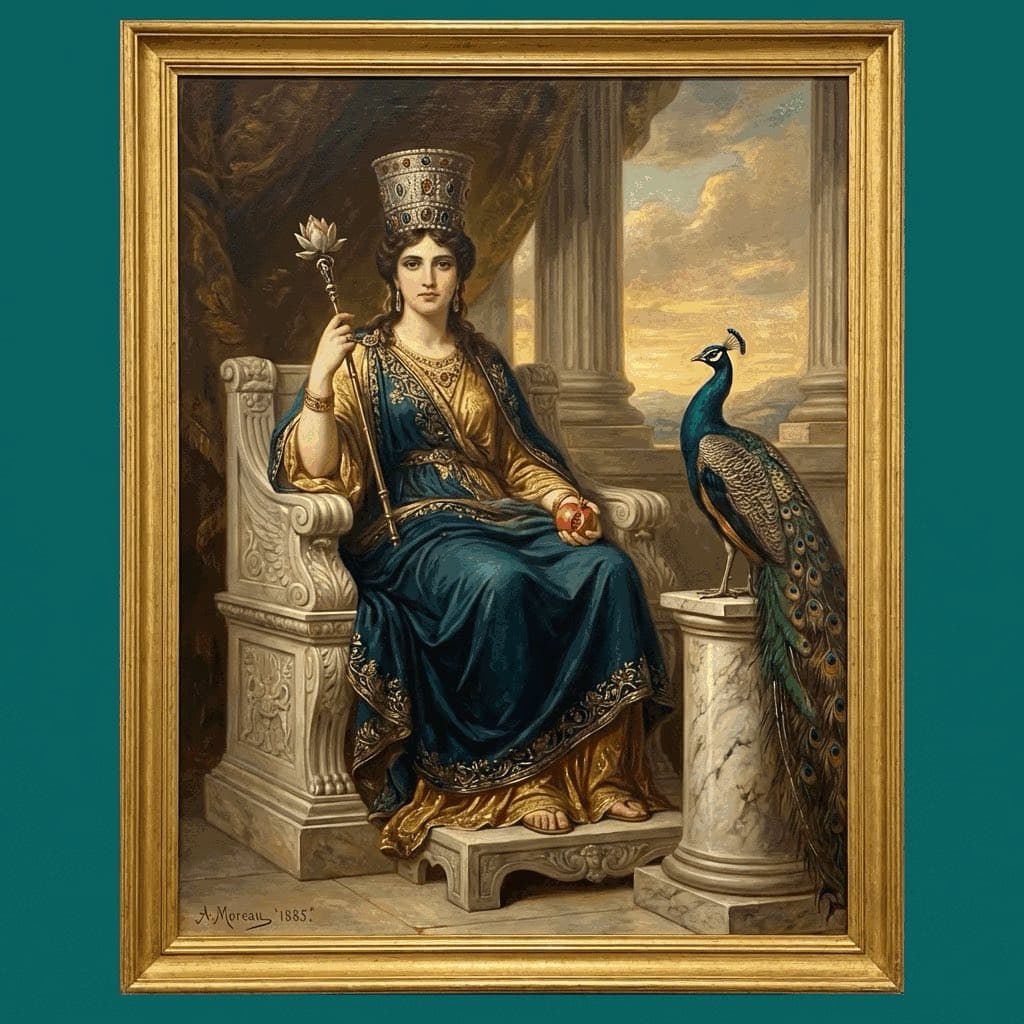
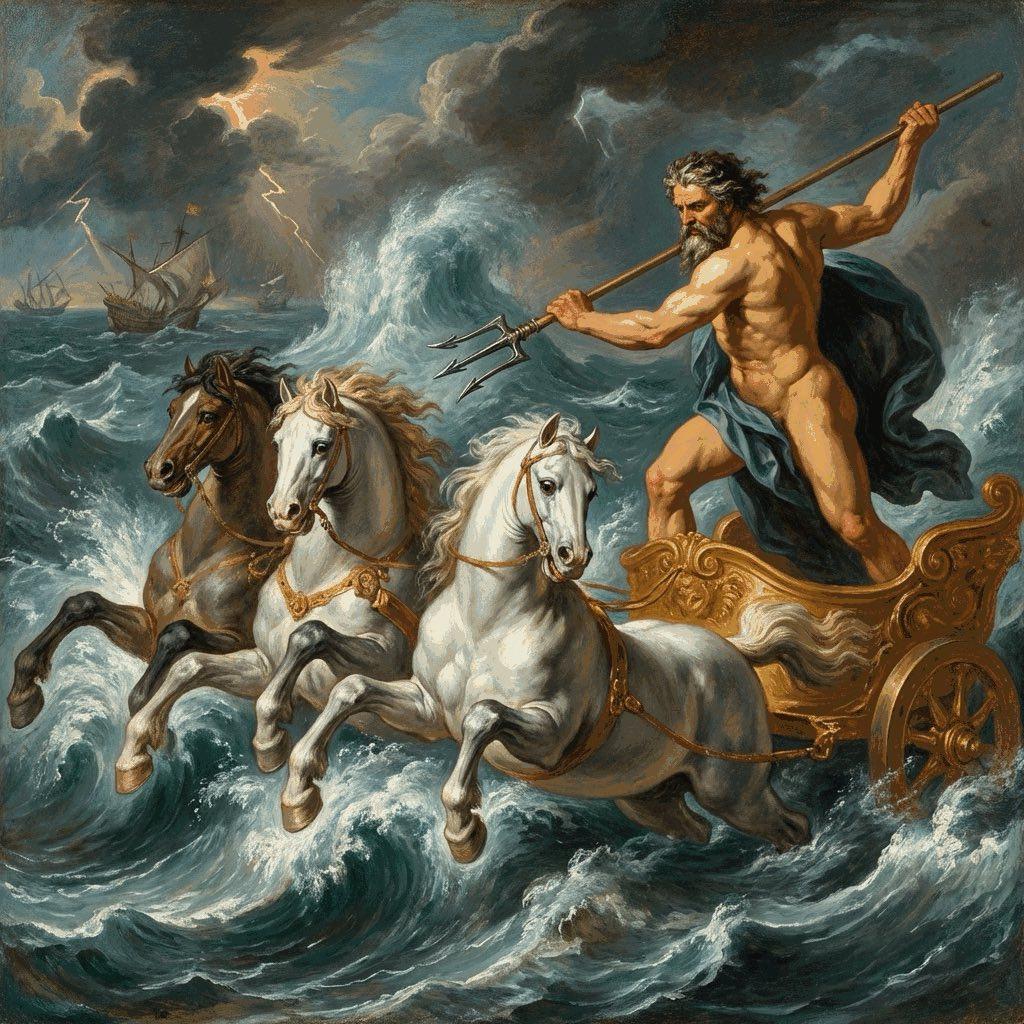
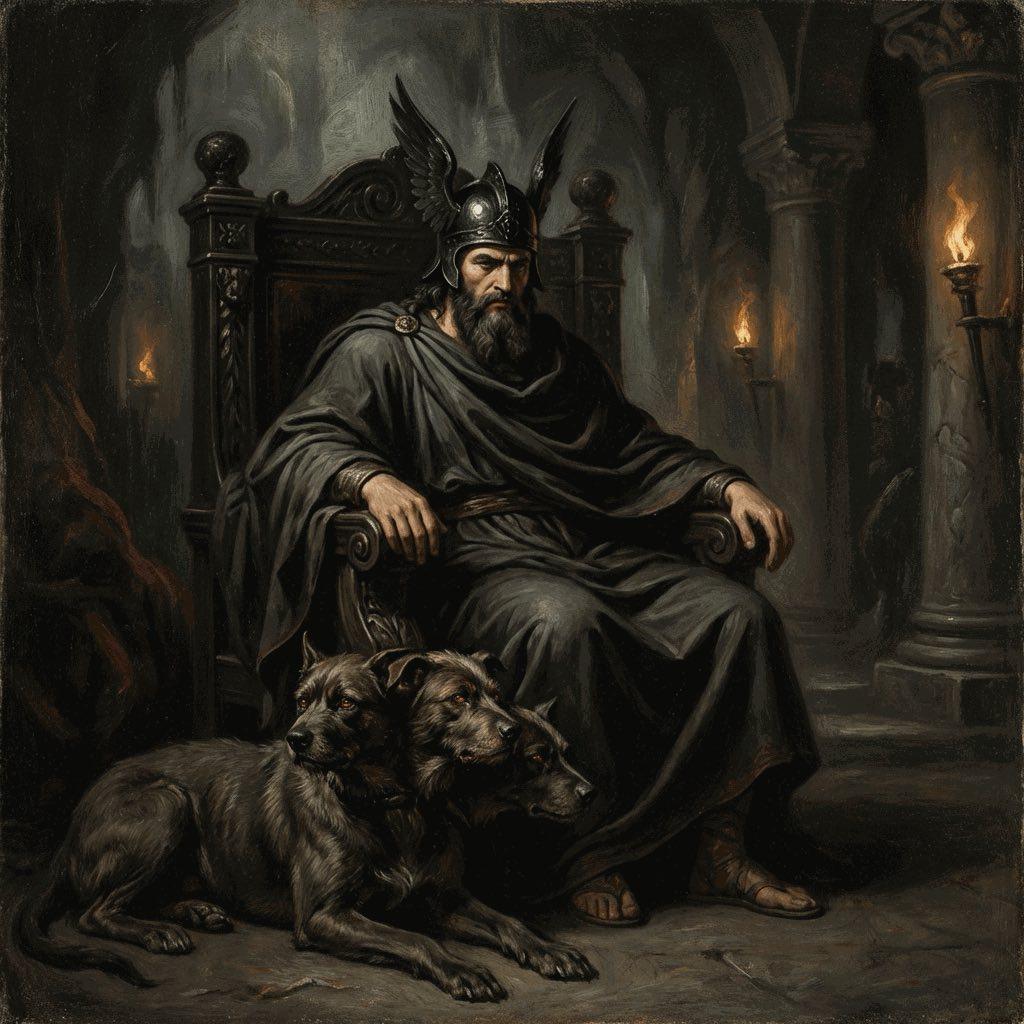

Family tree
Rhea's parents, consorts, children and rivals, as recorded in the atlas.
Relationship sources
Theogony (Rhea parent of Zeus, Hera, Poseidon, Hades, Demeter, and Hestia)
Hesiod · Hugh G. Evelyn-White, Hesiod, the Homeric Hymns and Homerica (1914), Project Gutenberg #348 · Theogony 453–491
Theogony (Gaia and Uranus parent of Rhea)
Hesiod · Hugh G. Evelyn-White, Hesiod, the Homeric Hymns and Homerica (1914), Project Gutenberg #348 · Theogony 132–138
Theogony (Cronus lover of Rhea)
Hesiod · Hugh G. Evelyn-White, Hesiod, the Homeric Hymns and Homerica (1914), Project Gutenberg #348 · Theogony 453–491
Questions about Rhea's family
- Who are Rhea's parents?
- The atlas's kinship records name 2 parents of Rhea: Gaia and Uranus. Ancient accounts do not always agree on divine parentage.
- Who are Rhea's children?
- Children of Rhea recorded in the atlas: Zeus, Hera, Poseidon, Hades, Demeter, and Hestia.
- Who were Rhea's spouses and consorts?
- Spouses and consorts of Rhea recorded in the atlas: Cronus.
Sources and further reading
Source notes
These references are recorded in the catalog. Their passage wording and translation have not been checked, so quotations are not displayed here.
- Hesiod, Theogony (editorial paraphrase)
Cite this page
No publication date is recorded for this page, so each citation uses n.d. and today's date as the access date.
About this entry
By Elizabeth Stein for Mythos Atlas. About the author. Editorial notes are grounded in the site's cited sources and can be challenged through the contact page.
Parallels are editorial comparisons across traditions: a shared role does not, by itself, establish a shared origin.
Family relationships come from the atlas's kinship records. Ancient sources often disagree on divine genealogy.
Keep exploring
One myth a week, by email
A short email with one myth, its sources and a question to think about. Unsubscribe any time. See a sample issue.