Side by sideParallel across traditions

Ceres vs Demeter

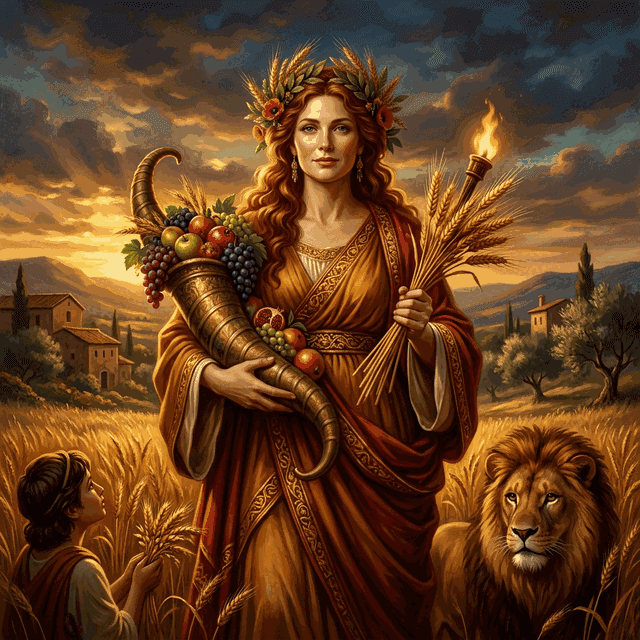
Ceres
CeresRoman
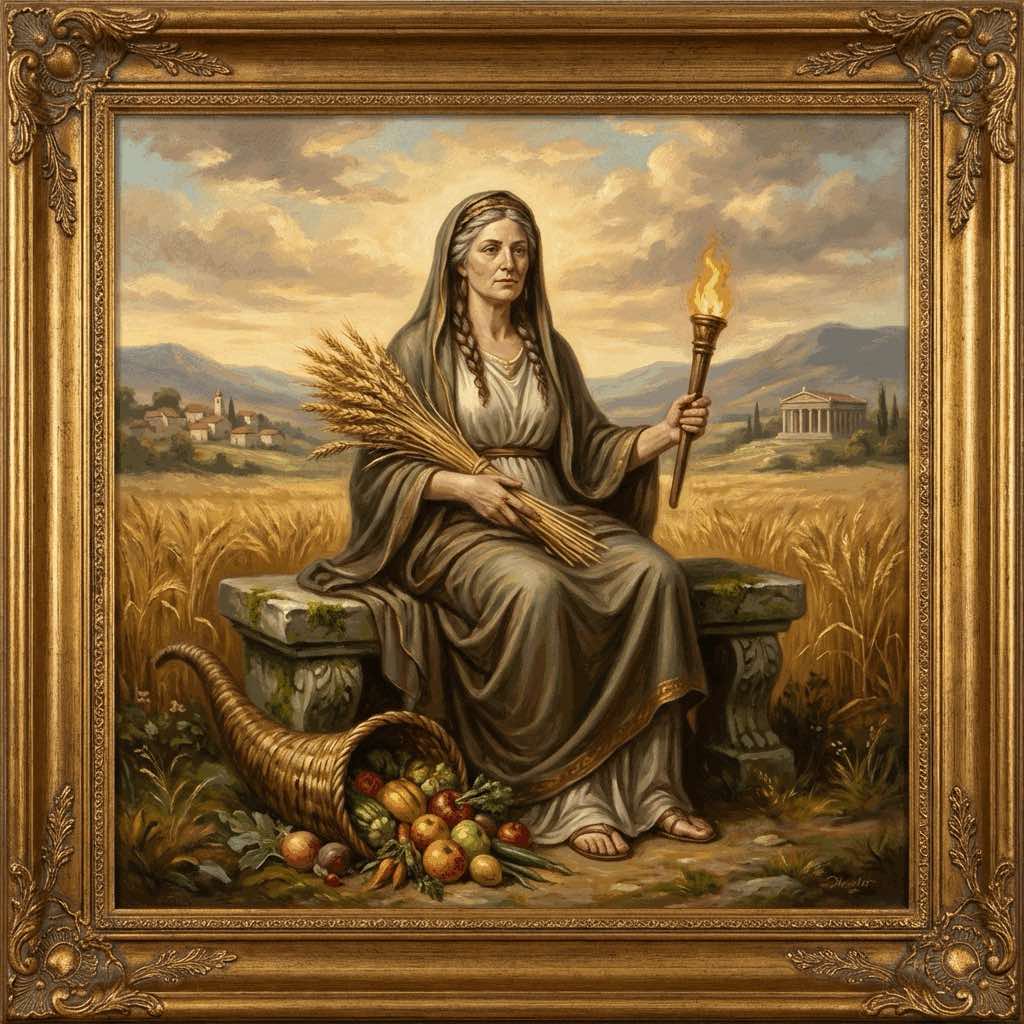
Demeter
DemeterGreek

Ceres is the direct Roman equivalent, goddess of grain, harvest, and agriculture.

At a glance

Ceres and Demeter compared
CeresDemeter
TraditionRoman PantheonGreek Pantheon
Domainsagriculture, grain, harvest, fertility, motherhoodagriculture, harvest, fertility, sacred law
Symbolswheat, torch, cornucopia, poppieswheat, torch, cornucopia, poppies
Also calledNone recordedCeres

Where they meet

Both are associated with agriculture, harvest, and fertility.

They share symbols: wheat, torch, cornucopia, and poppies.

  • wheat
  • torch
  • cornucopia
  • poppies

Where they part

Only Ceres

Associated with grain and motherhood.

Only Demeter

Associated with sacred law.

Why they are compared

Demeter is the direct Greek equivalent, goddess of grain and harvest.

How each was worshipped

Ceres

Cult sites
Temple of Ceres, Liber, and Libera on the Aventine; Rural shrines and boundary rites in the grain fields
Festivals
Cerialia (12–19 April); Ambarvalia; Ludi Ceriales

Plebeian aediles ran her games. Foxes with burning brands were loosed in the Circus at the Cerialia, a rite nobody quite explains. Greek priestesses served Ceres in the ritus Graecus. Grain, plebeian politics, and the underworld (her daughter) share the same altar.

Demeter

Cult sites
Telesterion at Eleusis; Thesmophorion sanctuaries in many cities
Festivals
Eleusinian Mysteries; Thesmophoria; Haloa

Grain and the mother's grief. Eleusis promised a better lot after death to initiates who could keep silence. The Thesmophoria was a women's festival of piglets and decayed offerings. Sicily claimed her as strongly as Attica.

The two figures

Roman Pantheon

Ceres

Goddess of agriculture, grain crops, fertility, and motherhood. Her cult was central to Roman plebeian identity. Mother of Proserpina (Persephone). Roman equivalent of Demeter.

Ceres is grain, growth, and the legal protections of the Roman plebs. Her Aventine temple, vowed in 496 BCE and shared with Liber and Libera, was a plebeian center as much as a harvest shrine. The aediles of the plebs operated from her precinct. To starve the people was to offend this goddess in public.

Read the full Ceres entry

Greek Pantheon

Demeter

Goddess of agriculture, harvest, and fertility. Mother of Persephone, whose abduction by Hades explains the seasons.

Demeter acts as the provider of food and the protector of marriage. She presides over the cycle of life and death through the harvest.

Read the full Demeter entry
About this comparison

Comparisons pair figures that play a similar role across traditions, or that the myths connect within one. A shared role does not, by itself, establish a shared origin.