Egyptian Pantheon
Isis
Also known as Aset, Throne, Lady of Ten Thousand Names
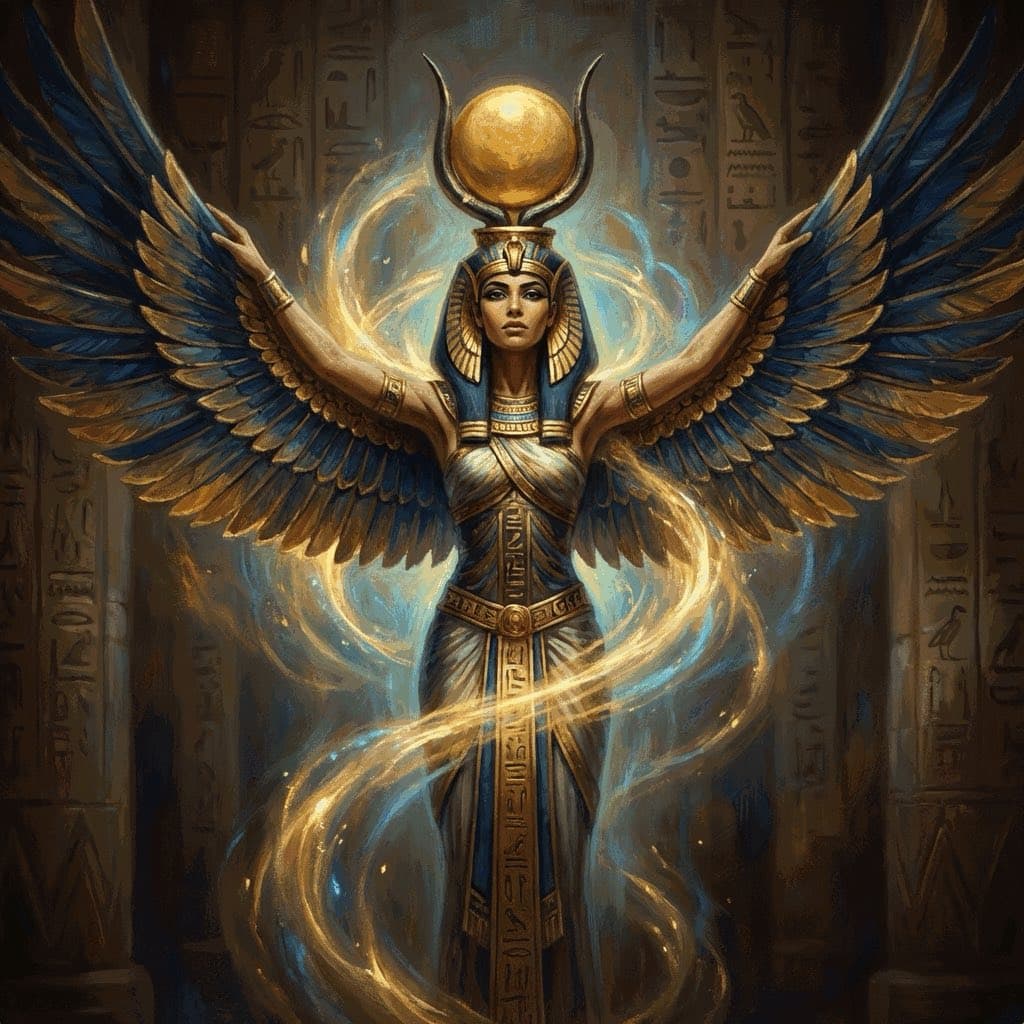
- magic
- motherhood
- healing
- protection
- wisdom
The most powerful goddess in the Egyptian pantheon, wife of Osiris and mother of Horus. Goddess of magic, healing, and protection.
About Isis
The Great Enchantress
Isis is the goddess of magic, healing, and motherhood. Her cleverness and magical power allowed her to learn the secret name of Ra, gaining dominion over the cosmos.
The Resurrection of Osiris
Her greatest feat was finding the scattered pieces of her husband Osiris and restoring him to life long enough to conceive their son, Horus. She protected Horus from Set until he was old enough to claim the throne.
Across traditions
Parallel figures
Figures who play a role like Isis's in other traditions.
 GreekDemeterIllustration
Herodotus (Histories 2.59) identifies Isis with Demeter; both are mother-goddesses tied to agricultural fertility and mystery cult
Compare Isis and Demeter side by side
Worship and cult
Temples, festivals, and practices recorded for Isis
Throne, magic, and the search for Osiris. Philae kept her when other houses closed. In Rome she became a mystery goddess of sailors and households. The knot of Isis and the sistrum are working tools, not ornaments.
Sacred sites
- Philae, until late antiquity
- Temples across Egypt and, later, the Roman Mediterranean
Festivals
- Isia
- Navigium Isidis (in the Roman world)
- Khoiak with Osiris
Family
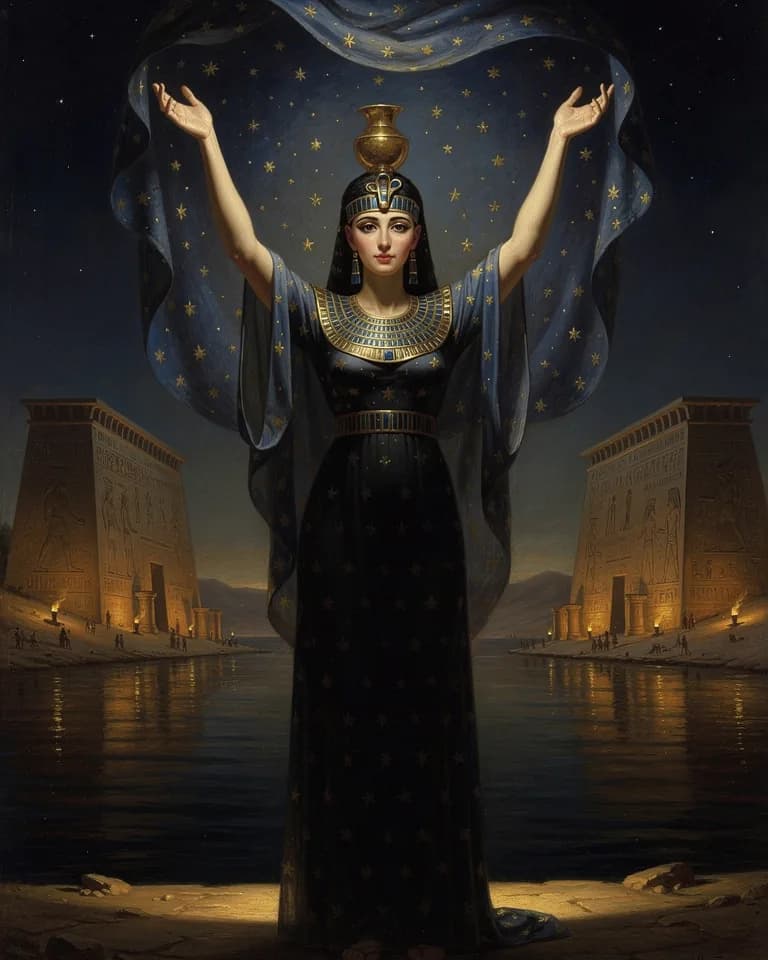
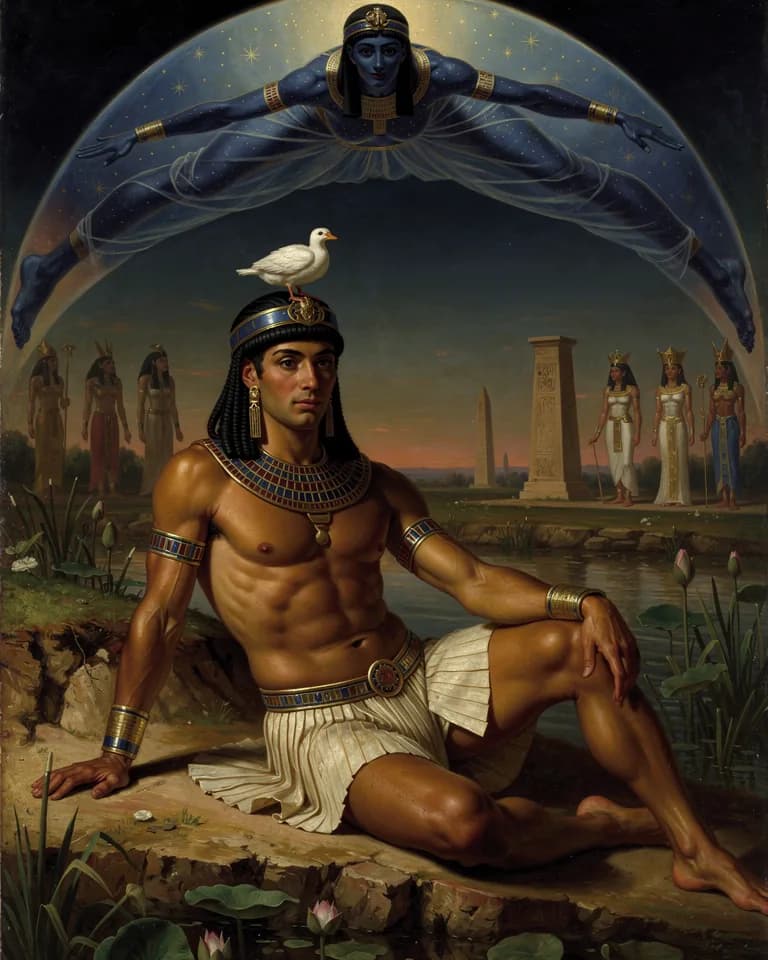
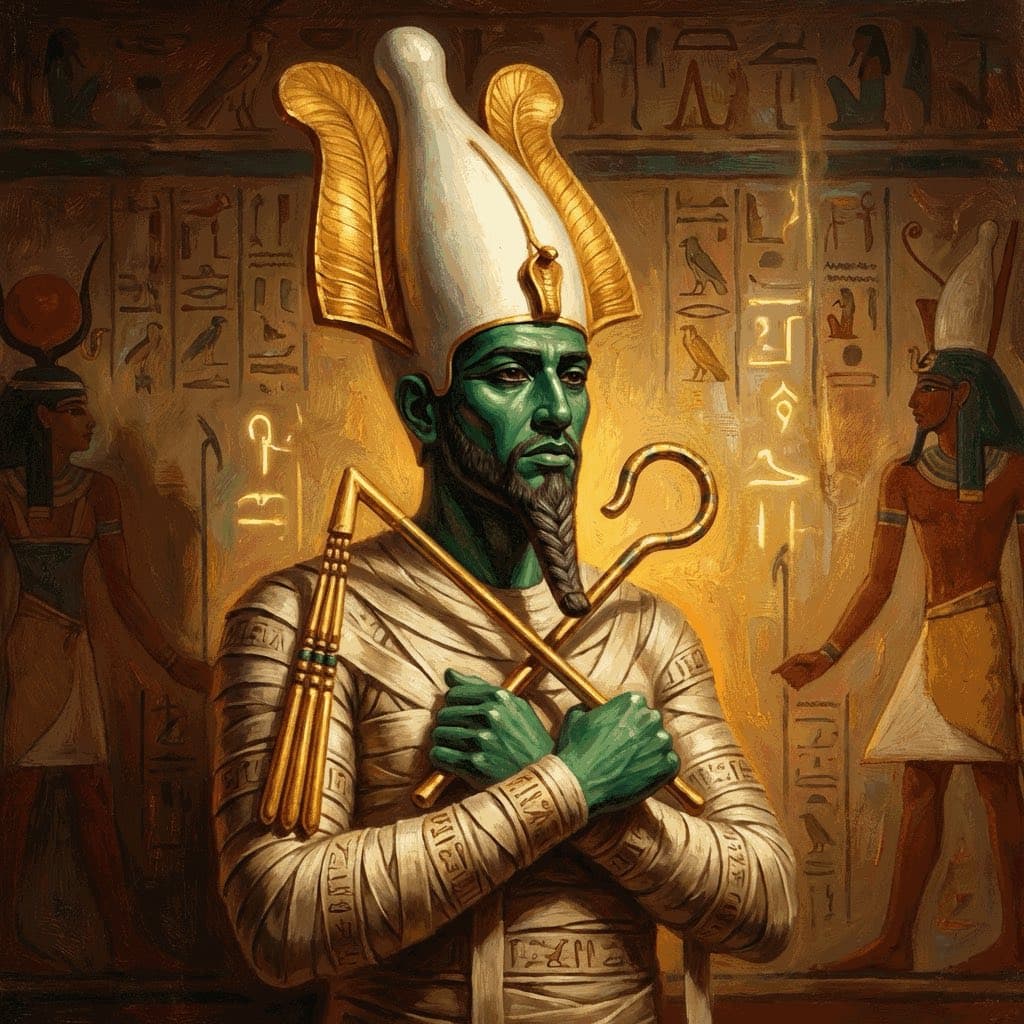
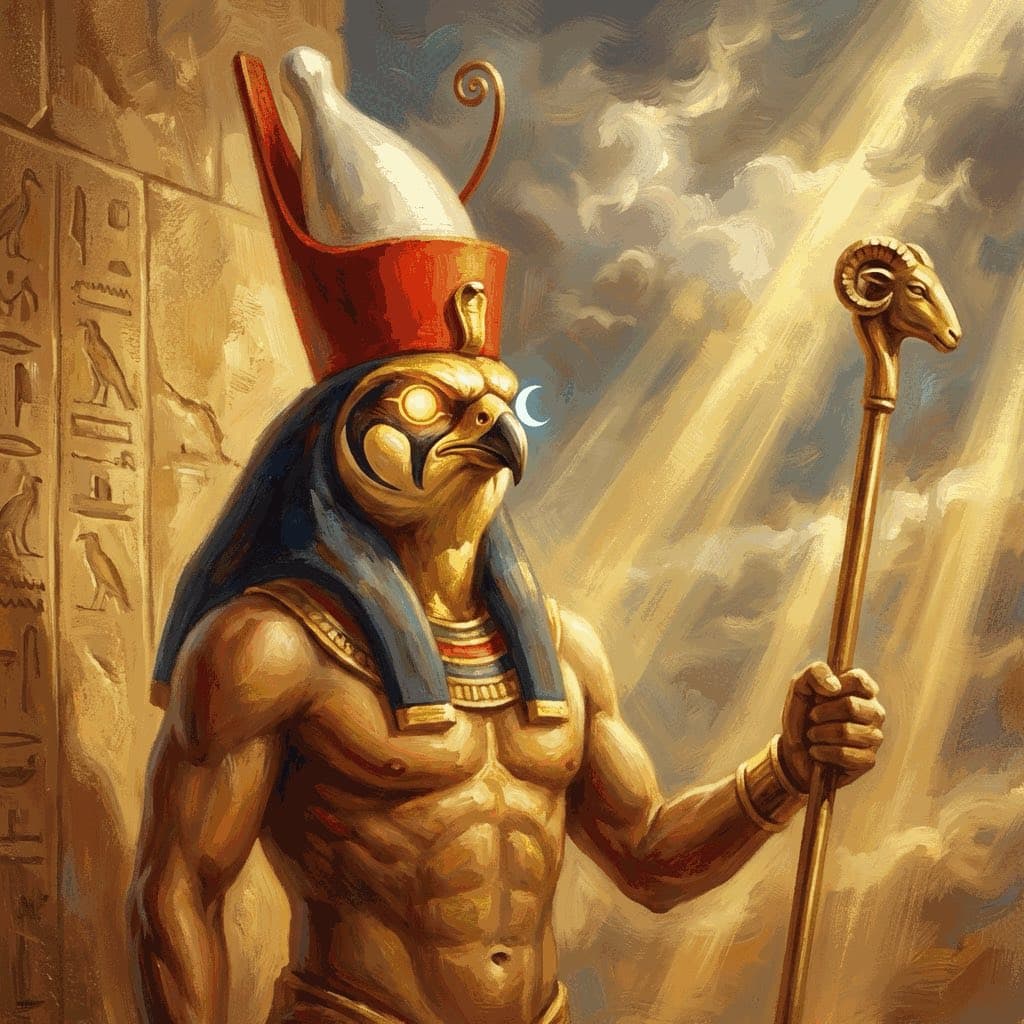
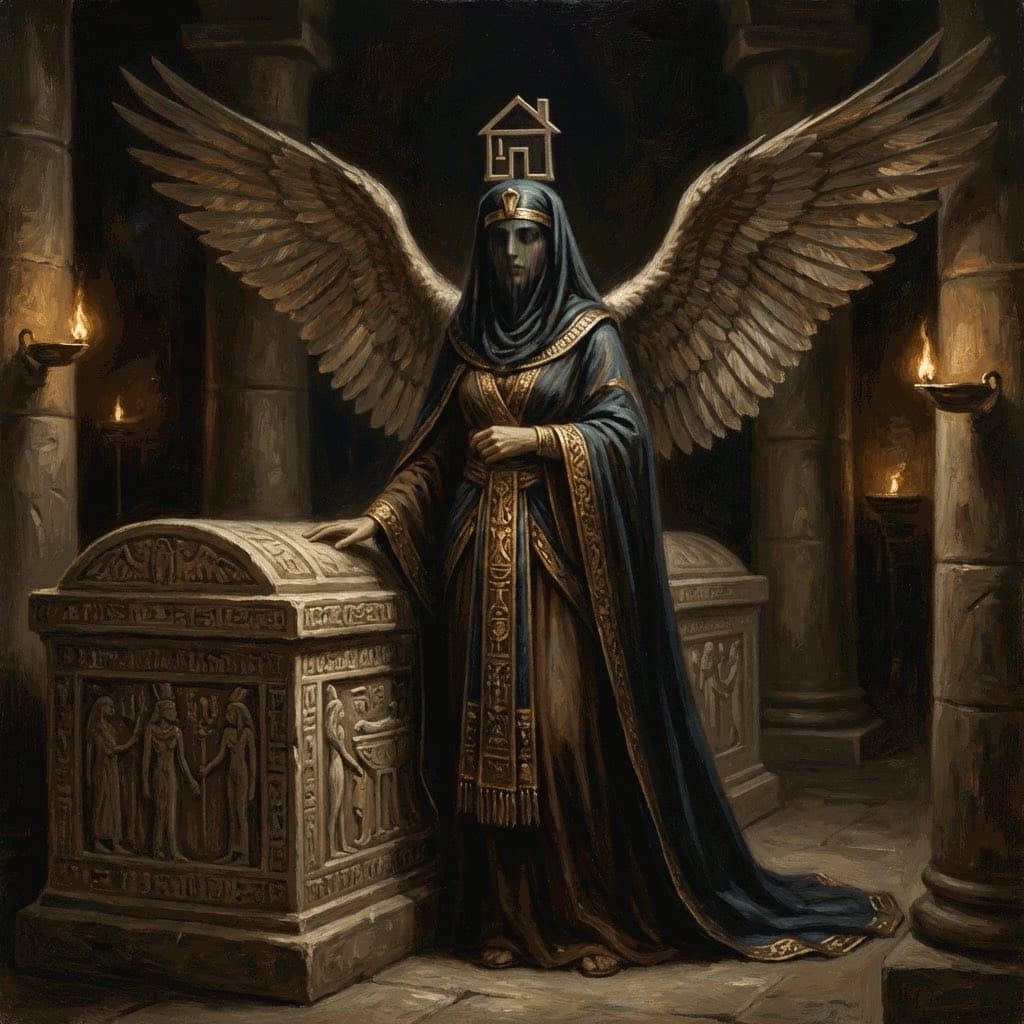
Relationship sources
On Isis and Osiris (De Iside et Osiride) — Osiris sibling of Isis
Plutarch · Frank Cole Babbitt, Plutarch, Moralia, Volume V (1936), Loeb Classical Library; LacusCurtius transcription · On Isis and Osiris 12 (355D–356A)
On Isis and Osiris (De Iside et Osiride) — Isis sibling of Nephthys
Plutarch · Frank Cole Babbitt, Plutarch, Moralia, Volume V (1936), Loeb Classical Library; LacusCurtius transcription · On Isis and Osiris 14 (356E–F)
On Isis and Osiris (De Iside et Osiride) — Isis parent of Horus
Plutarch · Frank Cole Babbitt, Plutarch, Moralia, Volume V (1936), Loeb Classical Library; LacusCurtius transcription · On Isis and Osiris 18 (357F–358A)
Questions about Isis's family
- Who are Isis's parents?
- The atlas's kinship records name 2 parents of Isis: Nut and Geb. Ancient accounts do not always agree on divine parentage.
- Who are Isis's children?
- Children of Isis recorded in the atlas: Horus.
- Who were Isis's spouses and consorts?
- Spouses and consorts of Isis recorded in the atlas: Osiris.
In the museums
Isis in art
Real objects in public collections, released into the public domain by the museums that hold them. Dates refer to when each object was made. Objects made within the tradition come first, later depictions after.
 (opens the museum record)
Ancient object
Bronze statuette of Isis with infant Horus (opens the museum record)
A bronze statuette showing Isis nursing the infant Horus, a widely produced devotional type from the Late Period onward. The museum's own title names both figures.
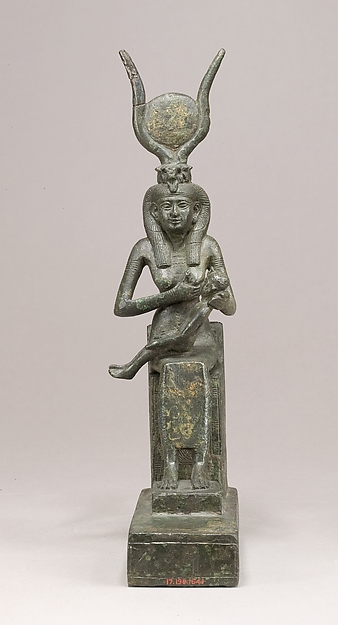 (opens the museum record)
Ancient object
Isis nursing Horus (opens the museum record)
A second bronze figure of Isis nursing Horus, one of the most common devotional images in later Egyptian religion. Such figures were placed in shrines by worshippers seeking the goddess's maternal protection.
Sources and further reading
Source notes
These references are recorded in the catalog. Their passage wording and translation have not been checked, so quotations are not displayed here.
- Plutarch, Isis and Osiris (trans. Babbitt)
Appears in
Ancient and classical works featuring this figure.
Great enchantress whose magical wings protect the deceased from decay and danger (Spells 151, 156)
Sister-wife who gathers the dismembered Osiris and revives his royal ka (Utterances 218, 364)
About this entry
By Elizabeth Stein for Mythos Atlas. About the author. Editorial notes are grounded in the site's cited sources and can be challenged through the contact page.
Parallels are editorial comparisons across traditions: a shared role does not, by itself, establish a shared origin.
Family relationships come from the atlas's kinship records. Ancient sources often disagree on divine genealogy.
Keep exploring
One myth a week, with its sources in a short email. The sign-up form is just below.
Genealogy
Family tree
Isis's parents, consorts, children and rivals, as recorded in the atlas.