Side by sideParent and child

Geb vs Isis

Geb
GebEgyptian
Isis
IsisEgyptian

Geb and Isis are recorded as parent and child in the Egyptian Pantheon.

At a glance

Geb and Isis compared
GebIsis
TraditionEgyptian PantheonEgyptian Pantheon
Domainsthe earth, fertility, kingship, earthquakes (as his 'laughter')magic, motherhood, healing, protection, wisdom
Symbolsthe goose, vegetation growing from a reclining body, green skin (in some depictions)throne, tyet knot, wings, vulture headdress, sistrum
Also calledThe Great Cackler (epithet)Aset, Throne, Lady of Ten Thousand Names

Where they meet

The atlas records no domain or symbol that Geb and Isis share.

They are compared because of how the myths connect them, not because of what they rule.

Where they part

Only Geb

Associated with the earth, fertility, kingship, and earthquakes (as his 'laughter').

Only Isis

Associated with magic, motherhood, healing, protection, and wisdom.

How each was worshipped

Geb

Cult sites
No major independent state temple; honored primarily through royal kingship ideology and funerary texts

Geb's cult was expressed less through dedicated temples than through his central place in the ideology of kingship, with pharaohs formally described as occupying 'the throne of Geb,' and through funerary texts that invoked him as guardian and judge of the dead within the earth.

Isis

Cult sites
Philae, until late antiquity; Temples across Egypt and, later, the Roman Mediterranean
Festivals
Isia; Navigium Isidis (in the Roman world); Khoiak with Osiris

Throne, magic, and the search for Osiris. Philae kept her when other houses closed. In Rome she became a mystery goddess of sailors and households. The knot of Isis and the sistrum are working tools, not ornaments.

The two figures

Egyptian Pantheon

Geb

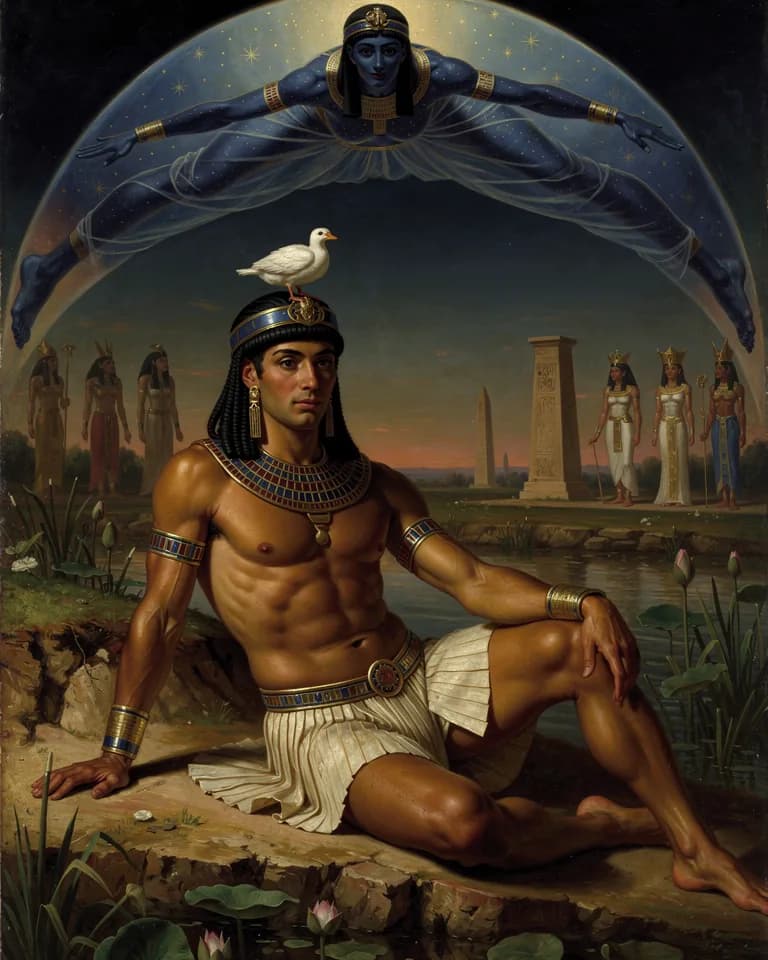
God of the earth, son of Shu, consort of Nut, and father of Osiris, Isis, Set, and Nephthys. Geb is depicted reclining beneath the arched figure of Nut, and stands within the Ennead's line of divine kingship passed down from Atum through Shu to Osiris.

Geb was born to Shu and Tefnut and, with his sister and consort Nut, fathered Osiris, Isis, Set, and Nephthys. Within the Ennead's line of succession, Geb inherited kingship from his father Shu and passed it to his son Osiris, tying the living pharaoh's own throne back to this primordial chain of divine rulers.

Geb is the personification of the earth in Egyptian cosmology, son of Shu and Tefnut and, with his sister and consort Nut, father of Osiris, Isis, Set, and Nephthys. Egyptian art typically shows him reclining on the ground beneath the arched body of Nut, sometimes with green skin or with vegetation sprouting directly from his form, imagery that ties him closely to the fertility of the land and its crops.

Read the full Geb entry

Egyptian Pantheon

Isis

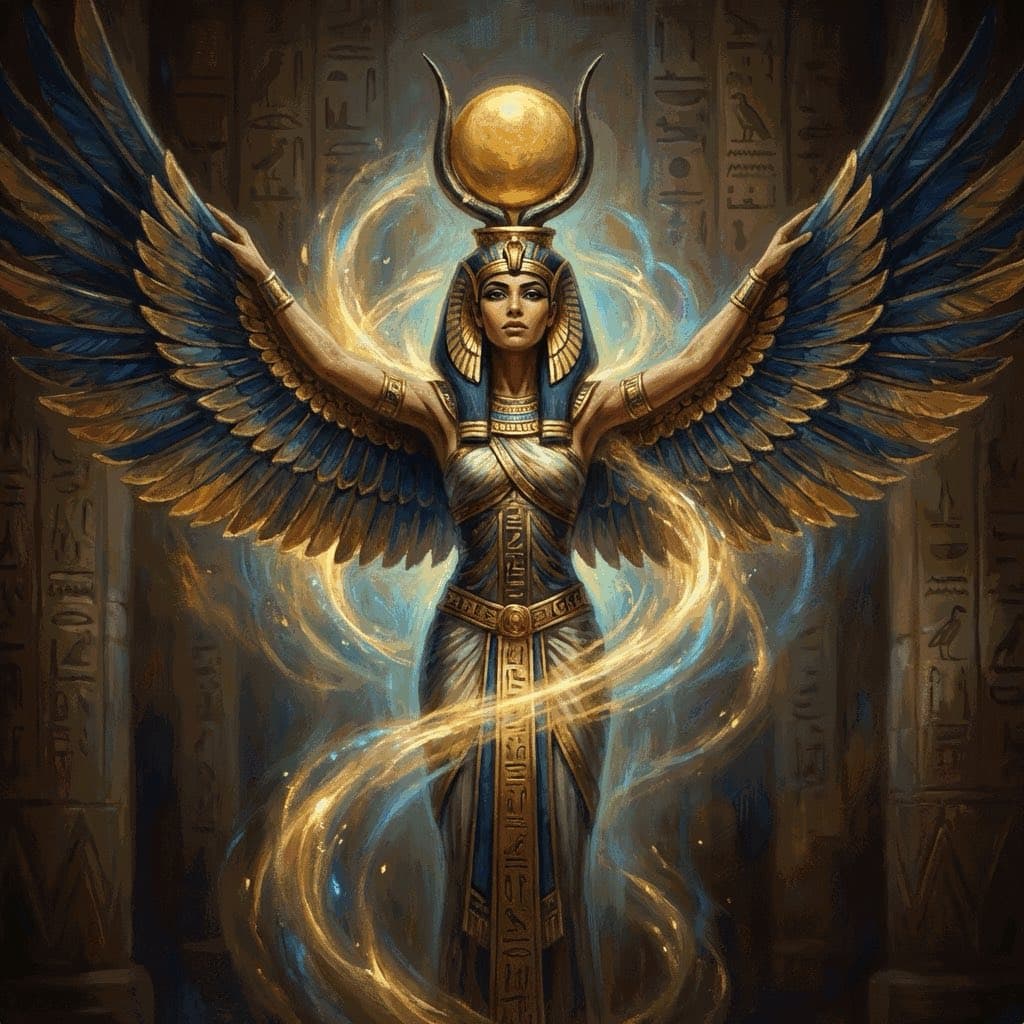
The most powerful goddess in the Egyptian pantheon, wife of Osiris and mother of Horus. Goddess of magic, healing, and protection.

Isis is the goddess of magic, healing, and motherhood. Her cleverness and magical power allowed her to learn the secret name of Ra, gaining dominion over the cosmos.

Read the full Isis entry
About this comparison

Comparisons pair figures that play a similar role across traditions, or that the myths connect within one. A shared role does not, by itself, establish a shared origin.