Egyptian Pantheon
Horus
Also known as Heru, Horus the Elder, Horus the Younger
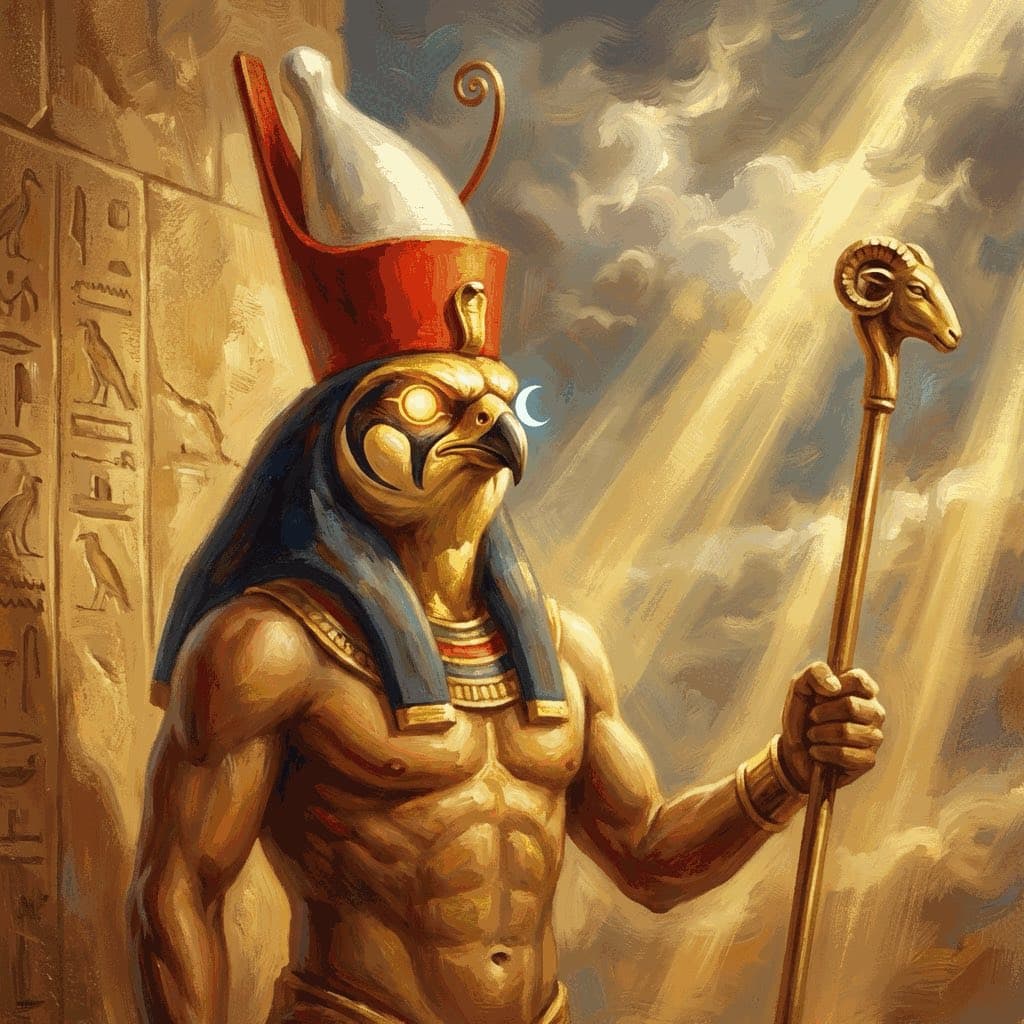
- kingship
- sky
- war
- protection
- hunting
Sky god whose eyes are the sun and moon. Son of Osiris and Isis, he avenged his father by defeating Set in battle, becoming the rightful king.
About Horus
The Living Pharaoh
Horus is the falcon-headed god of the sky and kingship. Every pharaoh was believed to be the living incarnation of Horus.
The Eye of Horus
In his battles with his uncle Set to avenge his father Osiris, Horus lost his left eye. It was restored by Thoth and became the Wedjat eye, a powerful symbol of protection and healing.
Across traditions
Parallel figures
Figures who play a role like Horus's in other traditions.
 GreekApolloIllustration
Herodotus explicitly identifies Horus with Apollo; both are gods of the sky, light, and divine kingship/order
Compare Horus and Apollo side by side
Worship and cult
Temples, festivals, and practices recorded for Horus
The living king is Horus; the dead king is Osiris. Edfu's reliefs stage the spearing of Seth. The eye, the falcon, and the two crowns are state cult, not a children's bird story.
Sacred sites
- Temple of Horus at Edfu
- Hierakonpolis and the living king as Horus
Festivals
- Coronation rites
- Edfu festival of victory over Seth
Family
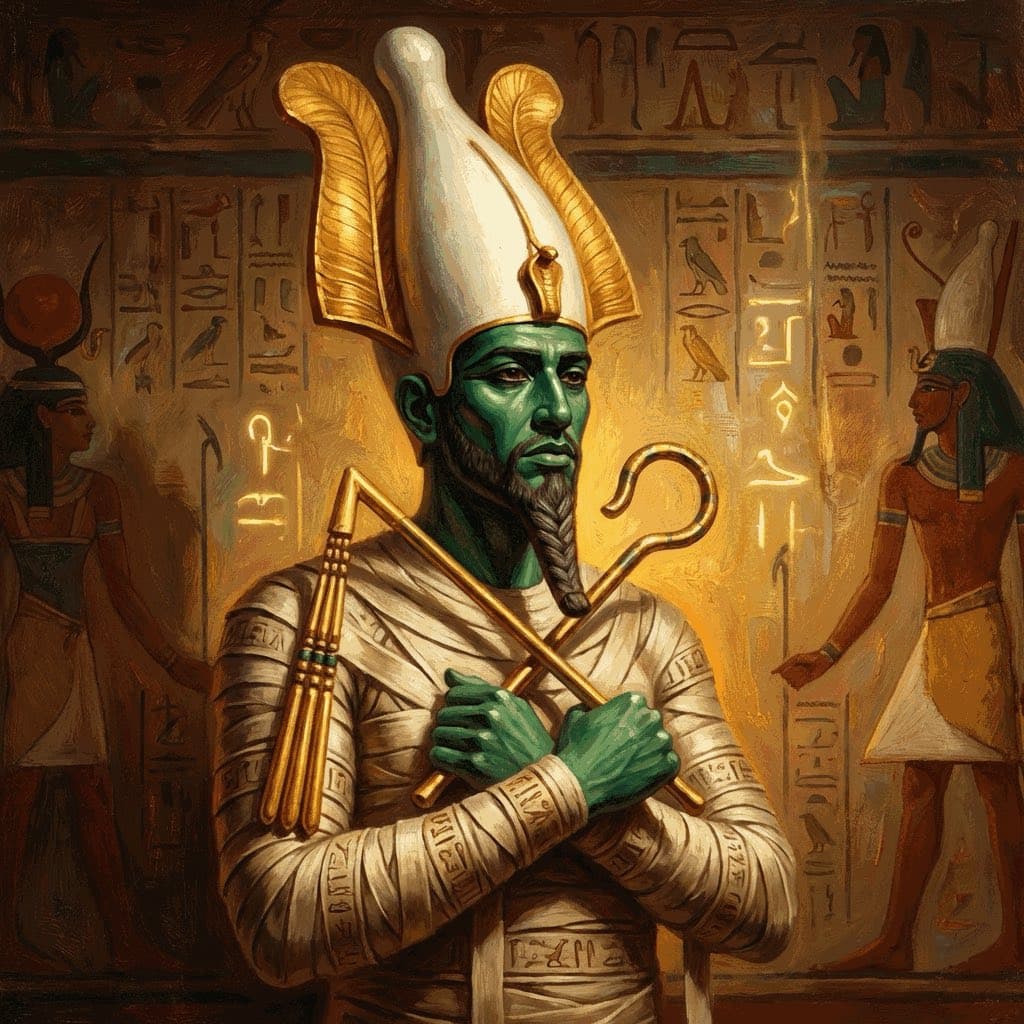
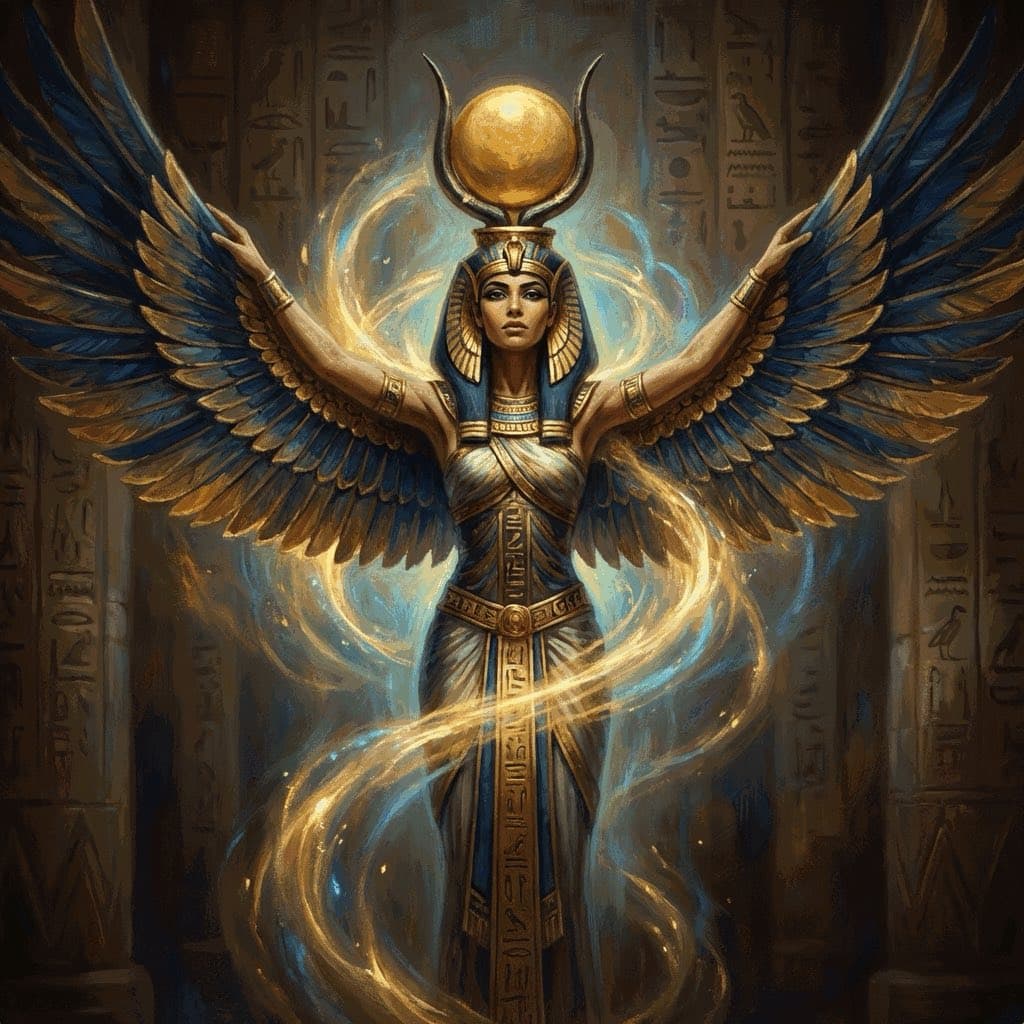
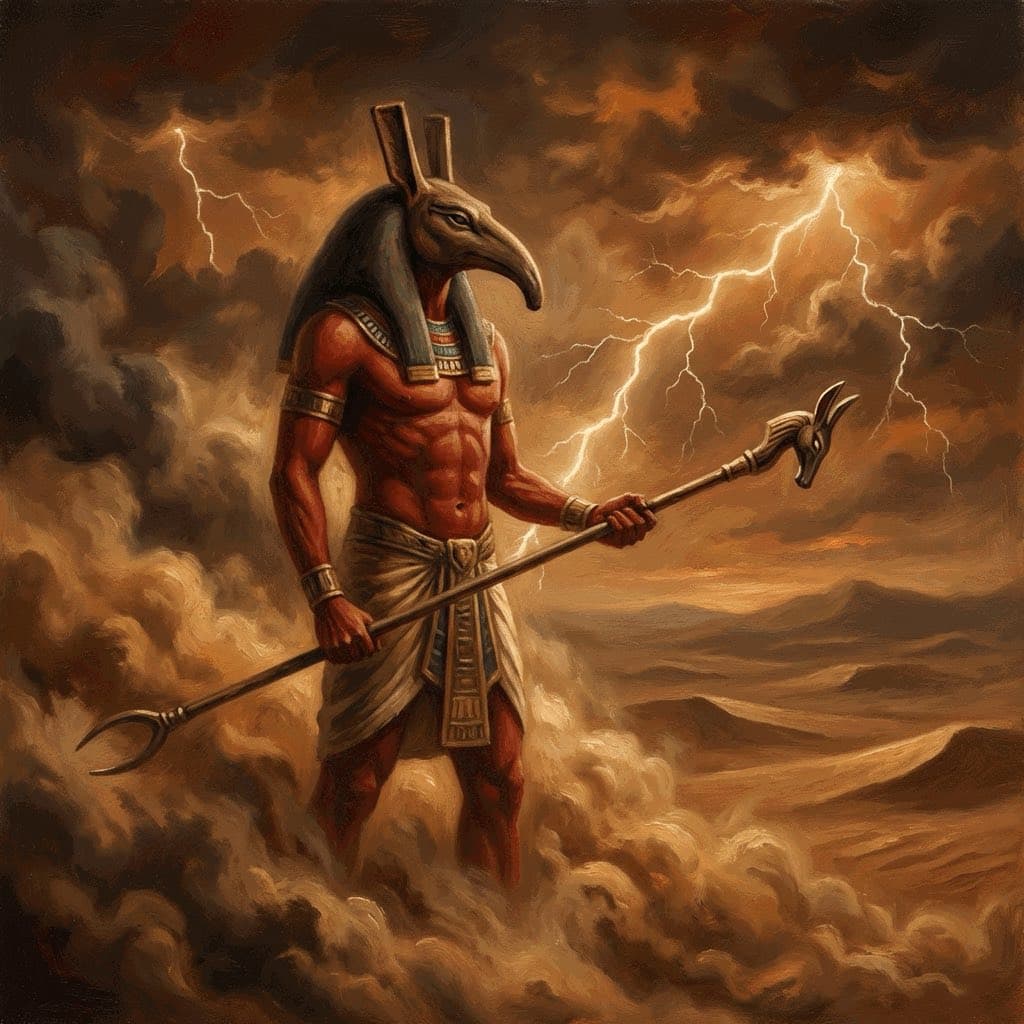
Relationship sources
On Isis and Osiris (De Iside et Osiride) — Isis parent of Horus
Plutarch · Frank Cole Babbitt, Plutarch, Moralia, Volume V (1936), Loeb Classical Library; LacusCurtius transcription · On Isis and Osiris 18 (357F–358A)
In the museums
Horus in art
Real objects in public collections, released into the public domain by the museums that hold them. Dates refer to when each object was made. Objects made within the tradition come first, later depictions after.
 (opens the museum record)
Ancient object
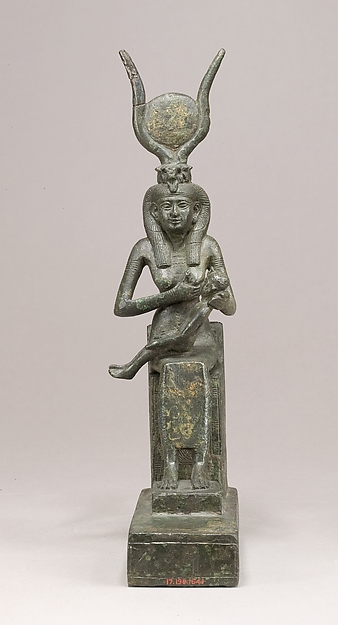
Bronze statuette of Isis with infant Horus (opens the museum record)
A bronze statuette showing Isis nursing the infant Horus, a widely produced devotional type from the Late Period onward. The museum's own title names both figures.
 (opens the museum record)
Ancient object
Isis nursing Horus (opens the museum record)
A second bronze figure of Isis nursing Horus, one of the most common devotional images in later Egyptian religion. Such figures were placed in shrines by worshippers seeking the goddess's maternal protection.
 (opens the museum record)
Ancient object
Horus falcon (opens the museum record)
A faience amulet in the form of the Horus falcon wearing the double crown, tagged by the museum with his name. Falcon amulets invoked Horus's protection and his association with kingship.
 (opens the museum record)
Ancient object
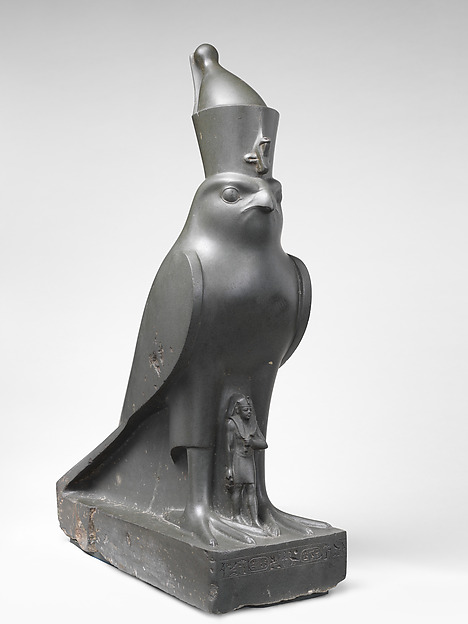
Statue of Horus as a falcon protecting King Nectanebo II (opens the museum record)
A stone statue showing Horus as a falcon protecting King Nectanebo II, who stands beneath the god's wings. The museum's title identifies both the god and the specific king he shelters.
Sources and further reading
Source notes
These references are recorded in the catalog. Their passage wording and translation have not been checked, so quotations are not displayed here.
- Plutarch, Isis and Osiris (trans. Babbitt)
Appears in
Ancient and classical works featuring this figure.
Protective prince and son of Osiris who introduces the vindicated soul to his enthroned father (Spells 125, 173)
Filial avenger whose restored Eye imparts divine vitality to the entombed monarch (Utterances 214, 587)
About this entry
By Elizabeth Stein for Mythos Atlas. About the author. Editorial notes are grounded in the site's cited sources and can be challenged through the contact page.
Parallels are editorial comparisons across traditions: a shared role does not, by itself, establish a shared origin.
Family relationships come from the atlas's kinship records. Ancient sources often disagree on divine genealogy.
Keep exploring
One myth a week, with its sources in a short email. The sign-up form is just below.
Genealogy
Family tree
Horus's parents, consorts, children and rivals, as recorded in the atlas.