Inca and Andean Tradition
Pachamama
Pachamama
Also known as Mama Pacha
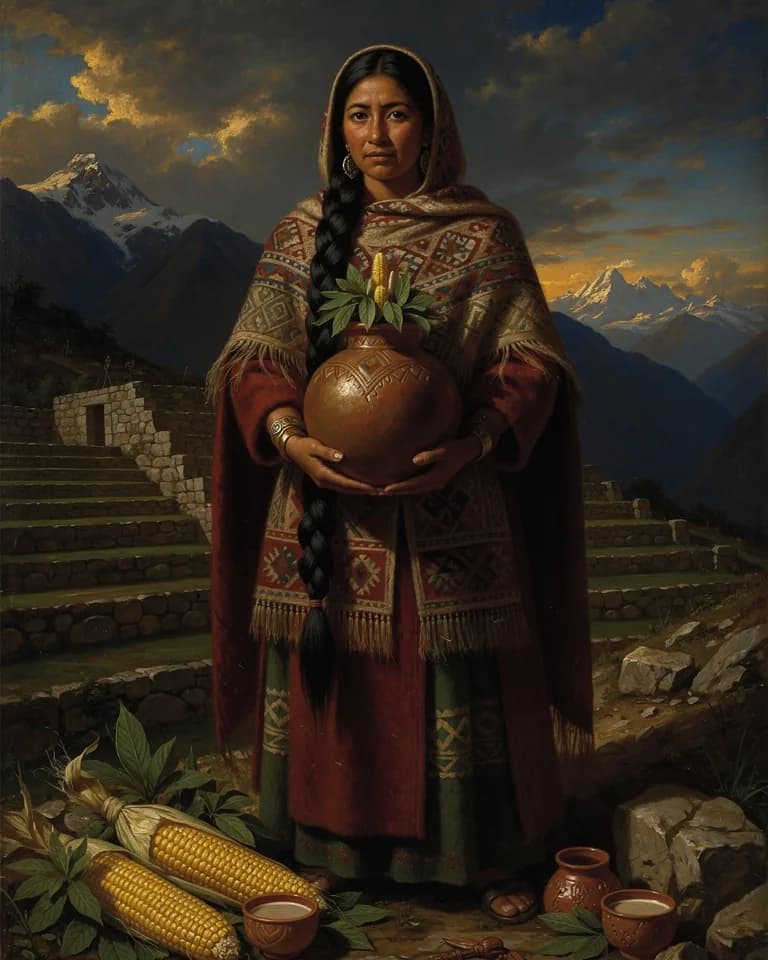
- the earth
- fertility
- agriculture
The Earth Mother of the Andes, recorded by colonial writers as receiving offerings of maize beer and coca in the fields, and still honored by Quechua and Aymara communities today.
About Pachamama
Colonial attestation
Pachamama is named in the Jesuit José de Acosta's Natural and Moral History of the Indies (1590), which lists among the objects of Andean worship the earth, called Pachamama, and the sea, called Mamacocha, following the jurist Polo de Ondegardo's earlier inquiries. The extirpation literature of the early seventeenth century, such as Pablo José de Arriaga's Extirpación de la idolatría del Pirú (1621), describes offerings of maize beer and coca made to the earth in agricultural rites. She belonged less to the imperial theology of Cusco than to everyday agricultural practice, which is one reason her cult survived the destruction of the state religion.
A living tradition
Offerings to Pachamama continue across the Andes: the ch'alla, sprinkling alcohol or maize beer on the ground before drinking, and the burned or buried despacho bundles prepared by ritual specialists, especially in August, the month considered hers in much of highland Peru, Bolivia, and northwest Argentina. In colonial art she was sometimes merged with the Virgin Mary; the anonymous painting La Virgen del Cerro (c. 1720) in Potosí shows Mary as the silver mountain itself.
Cautions
Much popular writing today presents Pachamama as an ancient goddess with elaborate myths. The colonial sources attest her name and offerings, not a detailed mythology; modern ritual practice is her richest record.
Origin story
No origin narrative survives in the colonial sources; she is the earth itself, addressed as mother.
Across traditions
Parallel figures
Figures who play a role like Pachamama's in other traditions.
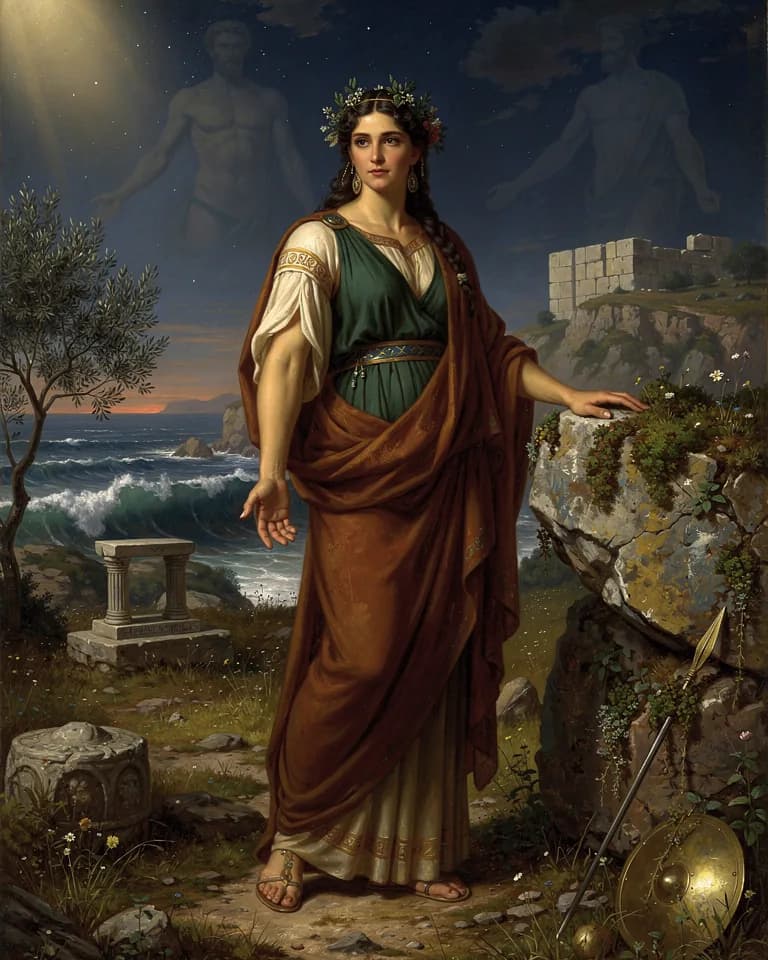 GreekGaia
Both personify the earth as a mother, though Gaia has a developed genealogy and mythology in Hesiod while Pachamama is attested chiefly through agricultural offerings.
Compare Pachamama and Gaia side by side
Worship and cult
Temples, festivals, and practices recorded for Pachamama
Libations of maize beer (chicha) and offerings of coca to the earth before plowing and at harvest, recorded by colonial writers; today the ch'alla libation and despacho offering bundles.
Festivals
- August offerings to Pachamama, widely observed today in highland Peru, Bolivia, and northwest Argentina (a living practice, documented ethnographically rather than in pre-conquest sources).
Sources and further reading
Source notes
These references are recorded in the catalog. Their passage wording and translation have not been checked, so quotations are not displayed here.
- José de Acosta, Historia natural y moral de las Indias, Book 5 (paraphrase)
- Pablo José de Arriaga, Extirpación de la idolatría del Pirú (paraphrase)
About this entry
By Elizabeth Stein for Mythos Atlas. About the author. Editorial notes are grounded in the site's cited sources and can be challenged through the contact page.
Parallels are editorial comparisons across traditions: a shared role does not, by itself, establish a shared origin.