Andes (western South America)
Inca and Andean Tradition
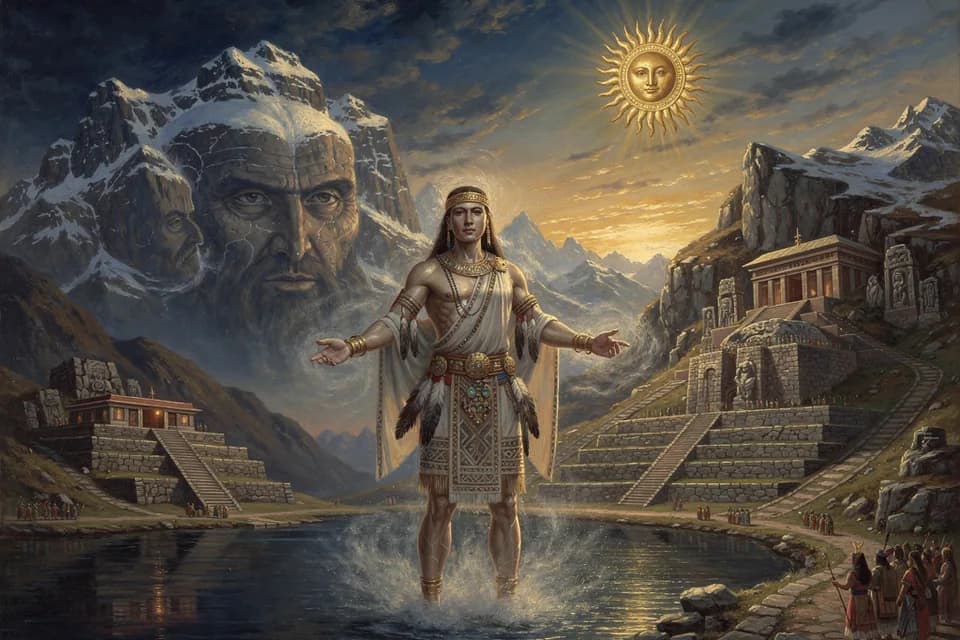
The religion of the Inca state and the older Andean shrines it absorbed: Viracocha the maker rising from Lake Titicaca, Inti the Sun as ancestor of the Inca kings, and the mountain and coastal huacas of the Huarochirí Manuscript, all known through writers of the colonial era.
History and context
Known only through the colonial filter
The Incas kept records on knotted cords (khipu) read by trained specialists, but they left no written narratives of their gods. Every story on this site was written down after the Spanish invasion of 1532, by people with their own purposes. Juan de Betanzos (1551) wrote in Cusco with the help of his wife's royal Inca kin. Cristóbal de Molina (c. 1575) questioned elders who had served in the state cult. Pedro Sarmiento de Gamboa (1572) interviewed Inca lineage heads for a viceroy who wanted the Incas shown as tyrants. The Inca Garcilaso de la Vega (1609), son of a Spanish captain and an Inca noblewoman, wrote from Spain decades later and presented Inca religion as a noble monotheism that anticipated Christianity. Felipe Guaman Poma de Ayala (c. 1615), an Andean noble, drew and wrote a long protest to the Spanish king. And much of what survives about local gods comes from the campaigns to destroy them: the Quechua Huarochirí Manuscript (c. 1598-1608) was compiled in the circle of the extirpator Francisco de Ávila. Each of these sources is used here for what it can show, with its point of view stated.
Two layers: the state cult and the huacas
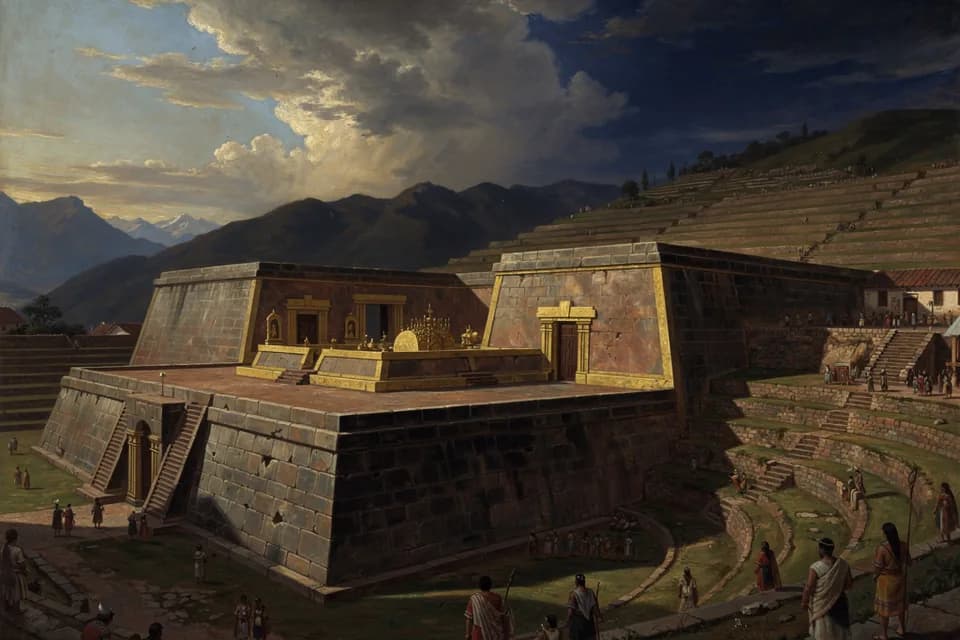
At the top of the Inca state cult stood the Creator (called Viracocha, Con Tici Viracocha, or Pachayachachic), the Sun (Inti), the Thunder (Illapa), and the Moon (Mama Killa), whose images and chambers were housed in the Coricancha, the gold-sheathed temple at the center of Cusco. Beneath and alongside them were countless huacas: mountains, springs, stones, ancestral mummies, and regional gods with their own priests, oracles, and stories, such as Pachacamac on the coast and Pariacaca in the highlands of Huarochirí. The Inca state generally absorbed these rather than abolishing them, adding a Temple of the Sun beside Pachacamac's ancient shrine, for example, and keeping the images of conquered peoples' huacas in Cusco. Around Cusco itself, the Jesuit Bernabé Cobo later listed more than three hundred shrines arranged along imaginary lines (ceques) radiating from the Coricancha.
Origins, ancestors, and the Sun
The Inca kings claimed descent from the Sun through the founding ancestor Manco Cápac. Chroniclers preserve two main versions of that origin: in one, told by Garcilaso, the Sun sends his son and daughter to Lake Titicaca to civilize humanity; in the other, told by Betanzos and Sarmiento, four brothers and four sisters emerge from a cave at Pacaritambo and travel to the valley of Cusco. Andean peoples more generally traced each lineage to a pacarina, a place of emergence such as a lake, spring, or cave.
After 1572, and today
The Inca state ended with the fall of Vilcabamba and the execution of Túpac Amaru in 1572, when the Sun image called the Punchao was also captured. Andean religion did not end with it. Quechua and Aymara communities continue to make offerings to Pachamama and to the mountain lords (apus), often alongside Catholic practice, and the Inti Raymi solstice pageant has been re-staged at Sacsayhuamán in Cusco since 1944 as a civic festival reconstructed largely from Garcilaso's description.
Cosmology
Hanan Pacha, Kay Pacha, Uku Pacha: The Andean Worlds
An upper world of Sun, Moon, Thunder, and the heavenly river; this world of mountains, fields, and the sea; and an inner world from which ancestors emerged and serpents rise. Water circulates between them.
Mayu, the River of the Sky: · The Milky Way, called Mayu ('river'), along which the llama Yacana walks to drink from the sea and from which the Thunder draws rain (Huarochirí Manuscript ch. 29; Cobo). It links sky, earth, and ocean in a single circuit of water rather than standing as a vertical tree or pillar.
Hanan Pacha: The Upper World
AboveHanan Pachahanan pacha
The world above: the Sun, the Moon, the Thunder with his sling, the stars and dark-cloud animals, and the river of the Milky Way.
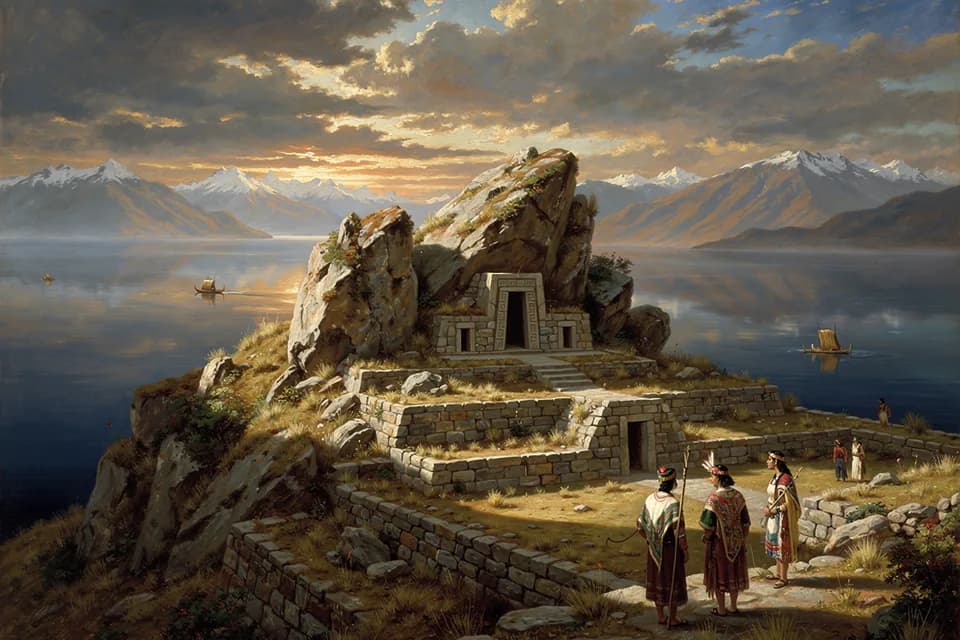
Visit Island of the Sun (Lake Titicaca)
Kay Pacha: This World
MiddleKay Pachakay pacha
The world of the living: the earth mother, the mountain lords and huacas, the fields and herds, and the city of Cusco at the center of the four quarters.
Visit Coricancha
Mama Qucha: The Sea
WatersThe Sea and the Lakesmama qucha
The mother of waters at the edge of the world, into which Cavillaca vanished at Pachacamac and from which the sky-llama drinks at midnight.
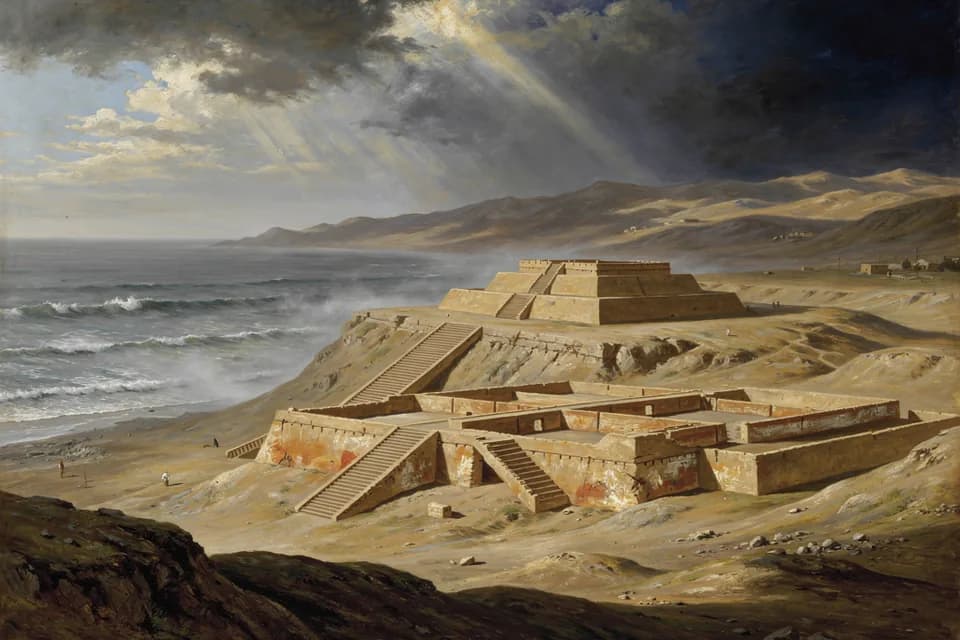
Visit Sanctuary of Pachacamac
Uku Pacha: The Inner World
BelowUku Pachauku pacha
The world within: the dark places beneath the earth through which Viracocha sent the peoples to emerge at their pacarinas, the realm of seeds and the dead, and the home of serpents such as the amaru.
 Inti
Inti Mama Killa
 Illapa
 Viracocha
 Yacana
 Urcuchillay
 Pachamama
 Pariacaca
 Pachacamac
 Cuniraya Viracocha
 Manco Cápac
 Mama Ocllo
 Mama Qucha
 Huallallo Carhuincho
 Amaru
AmaruSources
Works cited
Suma y narración de los Incas
Juan de Betanzos
Relación de las fábulas y ritos de los Incas
Cristóbal de Molina
Comentarios Reales de los Incas
Inca Garcilaso de la Vega
The Huarochirí Manuscript
Anonymous; trans. Frank Salomon and George L. Urioste
El primer nueva corónica y buen gobierno
Felipe Guaman Poma de Ayala
Inca Religion and Customs (Historia del Nuevo Mundo, Books 13-14)
Bernabé Cobo; trans. Roland Hamilton
About this guide
By Elizabeth Stein for Mythos Atlas. About the author. Editorial notes are grounded in the site's cited sources and can be challenged through the contact page.
The catalog period is the span of the sources this atlas draws on, not the age of the tradition itself. Many traditions are older than their first written record, and many are still practised.
12 in the atlas
Deities, Huacas & Ancestors
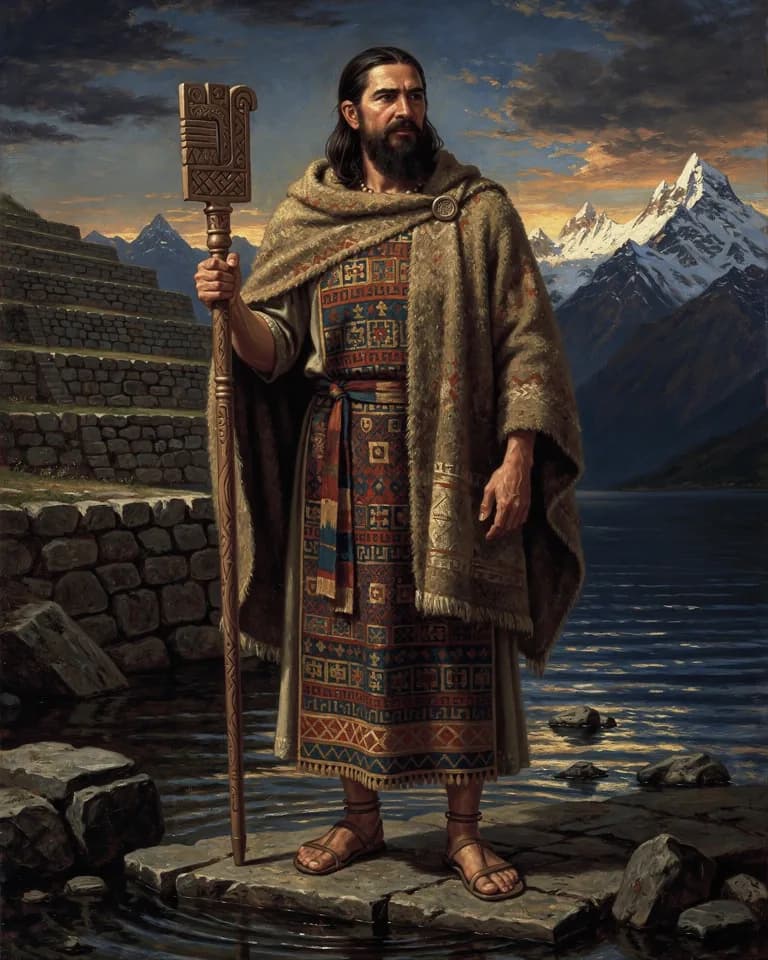 ViracochaCreator
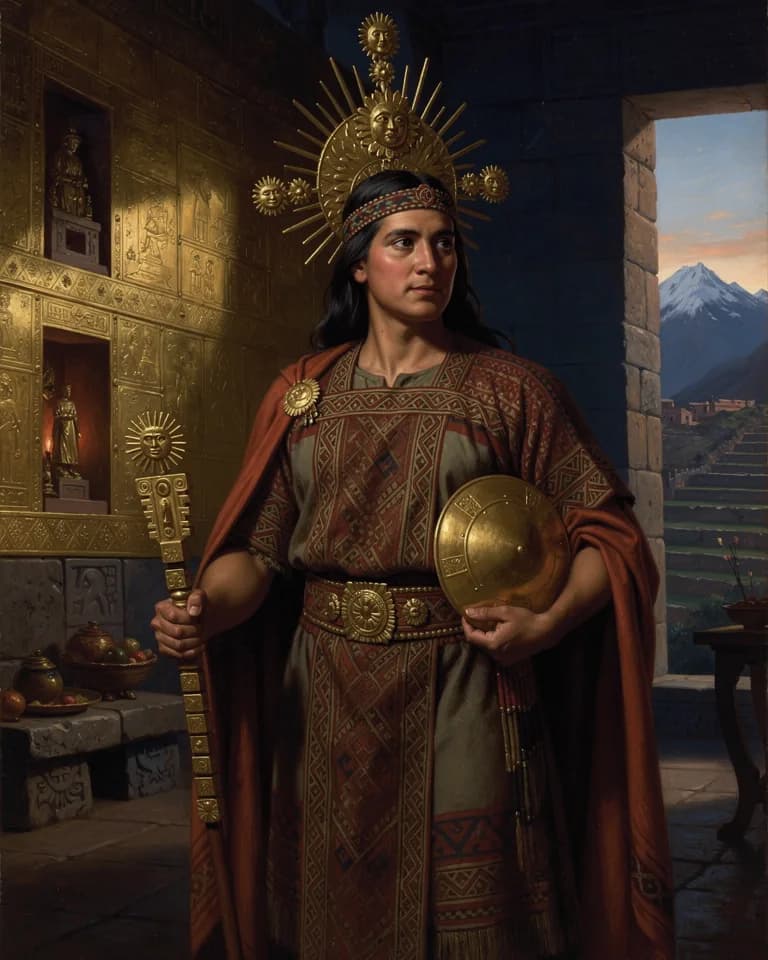 IntiDynastic Ancestor
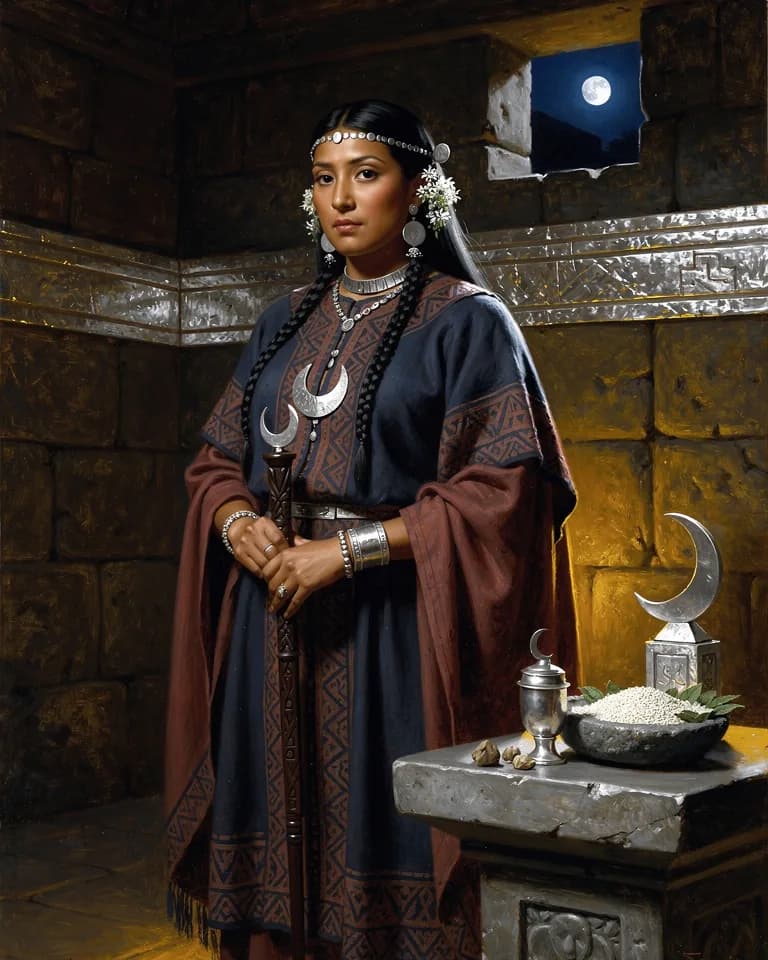 Mama Killathe moon, the calendar
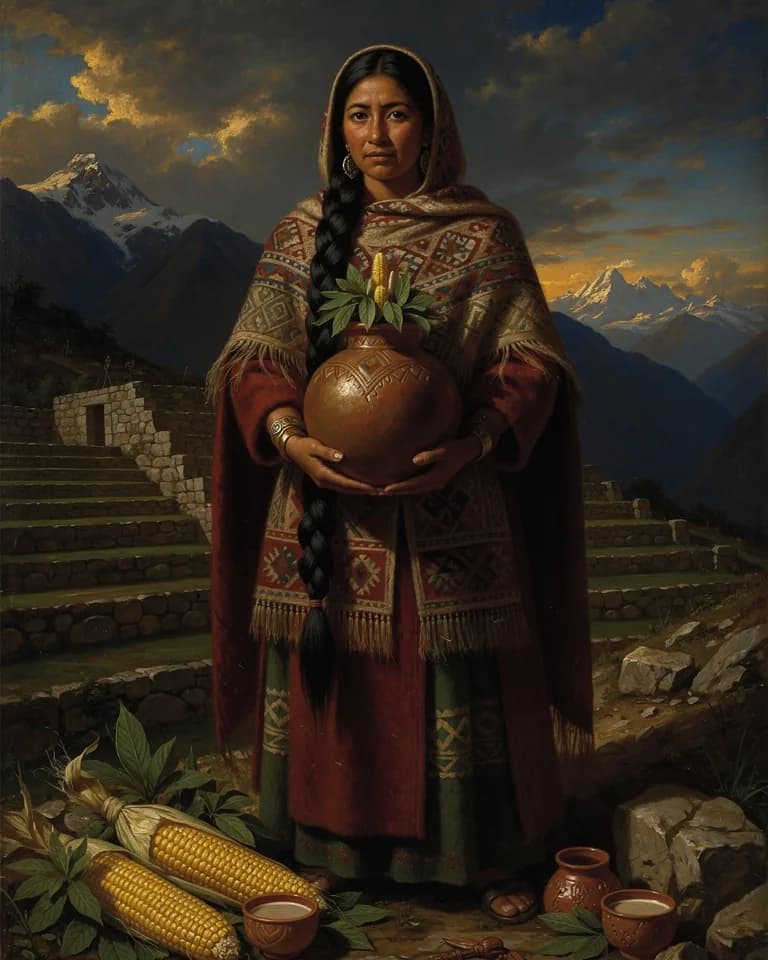 Pachamamathe earth, fertility
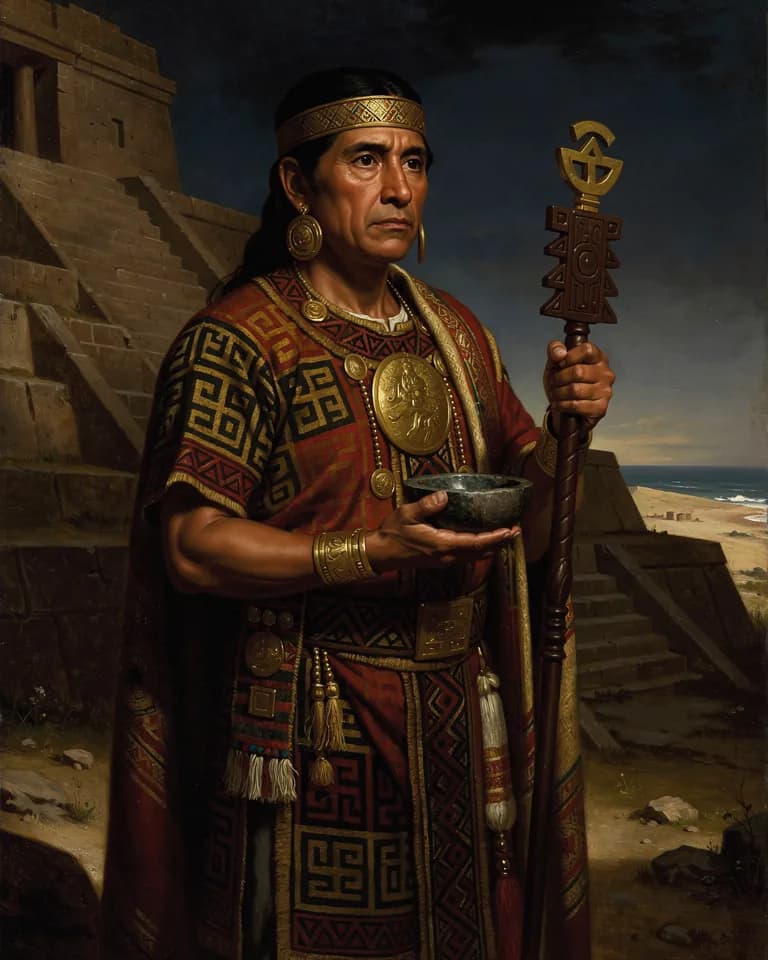 Pachacamacthe earth and its tremors, oracles
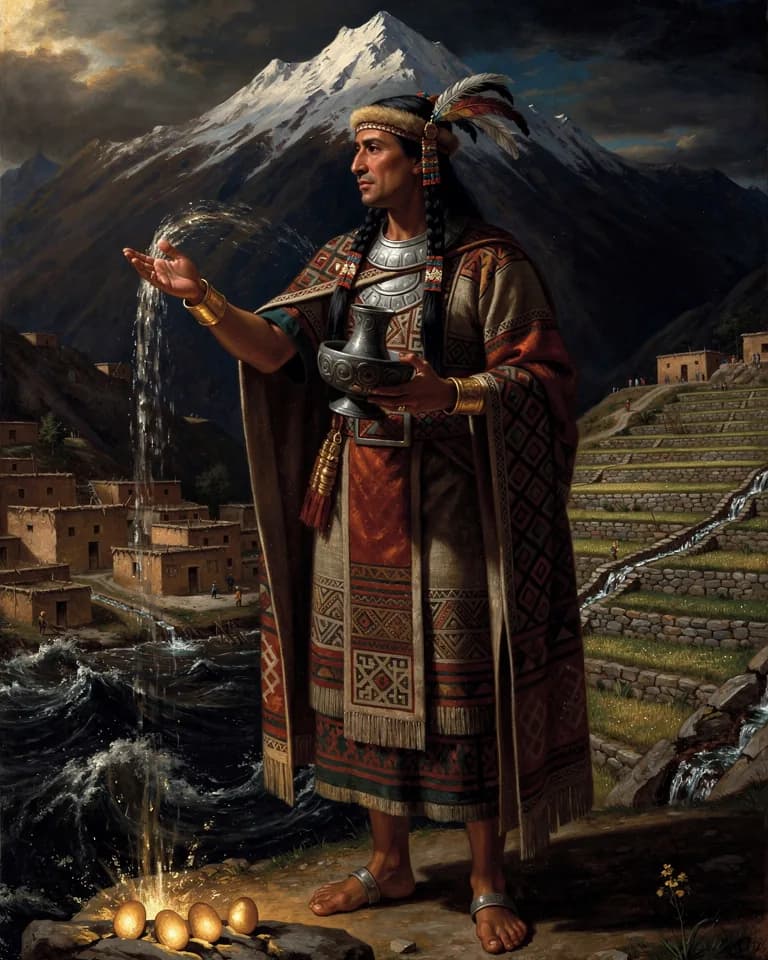 Pariacacarain and storm, irrigation water
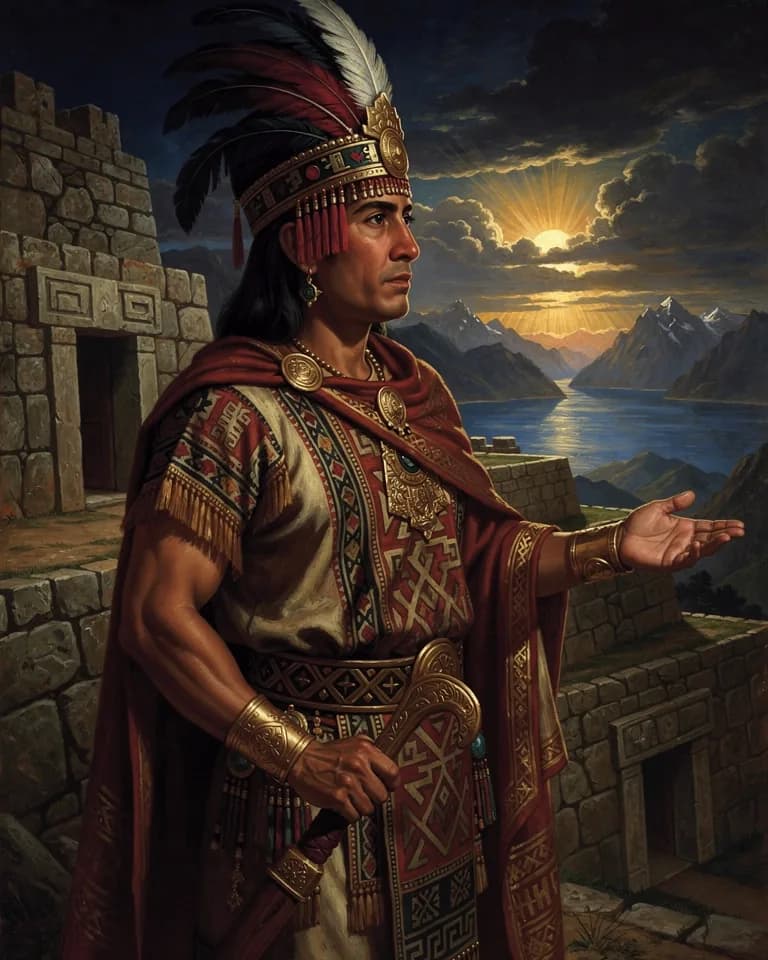 Manco CápacFounding Ancestor
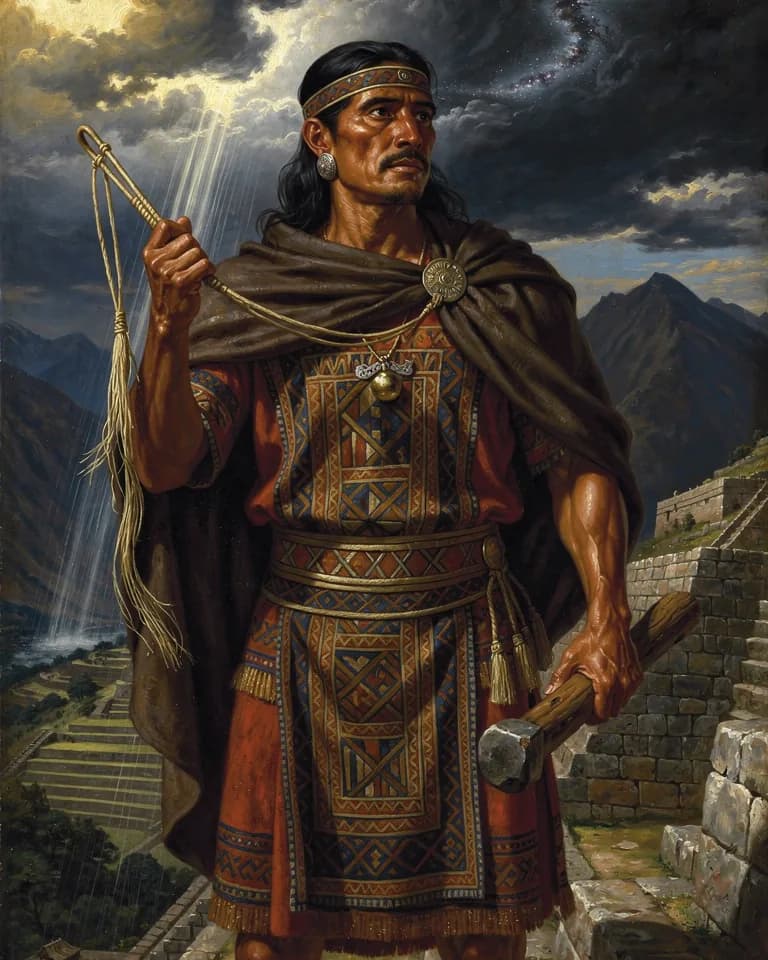 Illapathunder, lightning
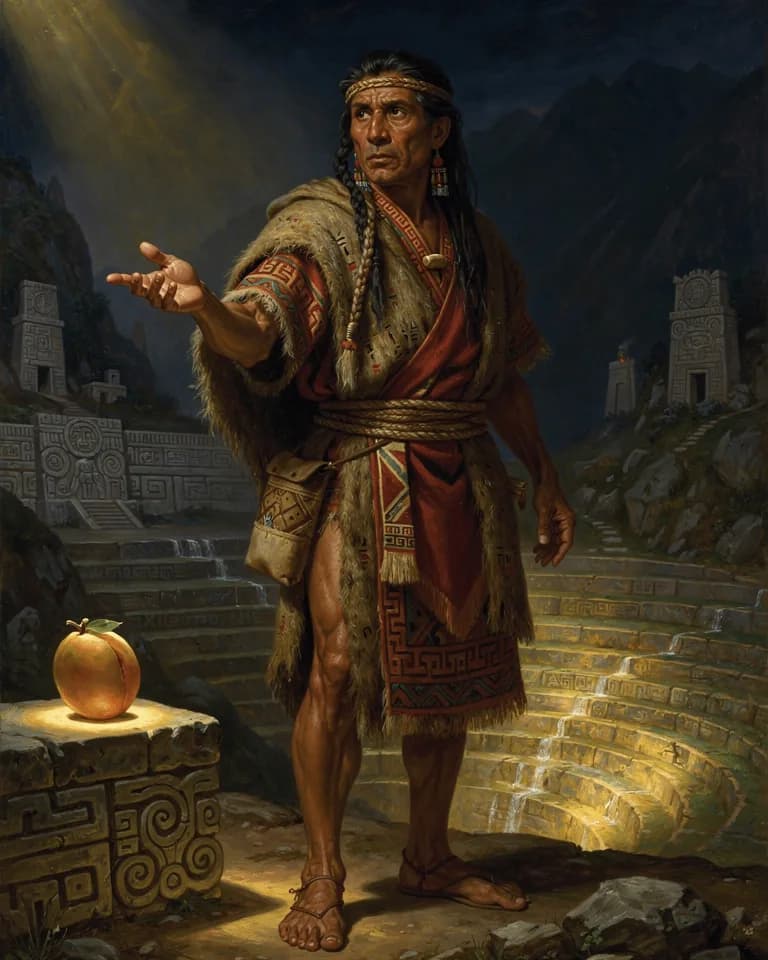 Cuniraya ViracochaTrickster Creator
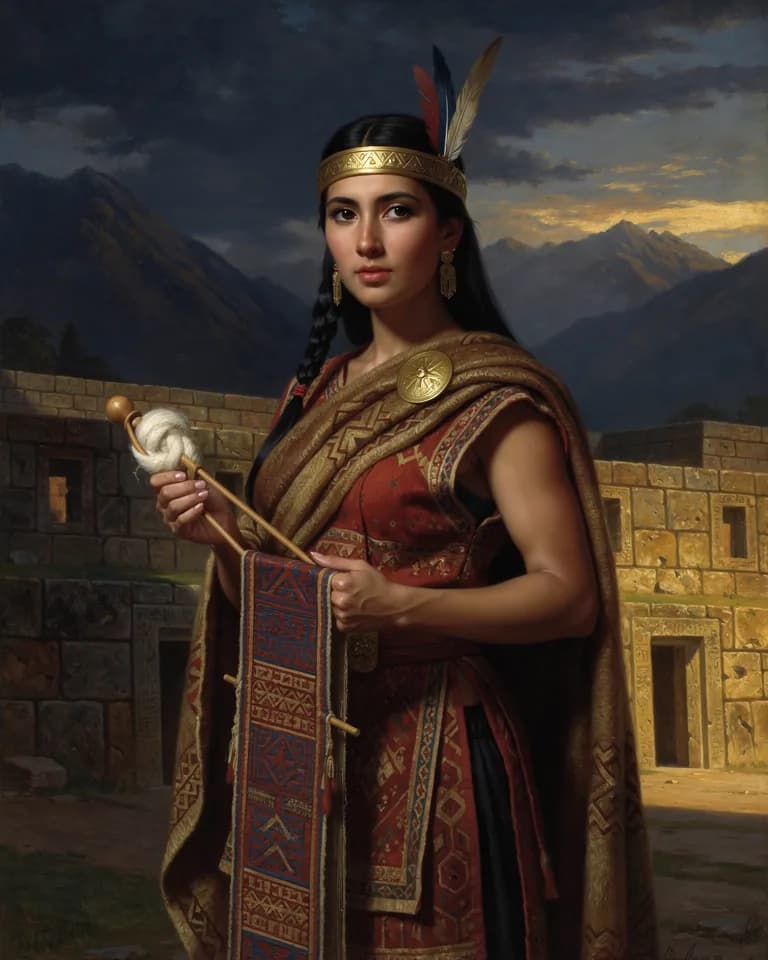 Mama OclloFounding Ancestress
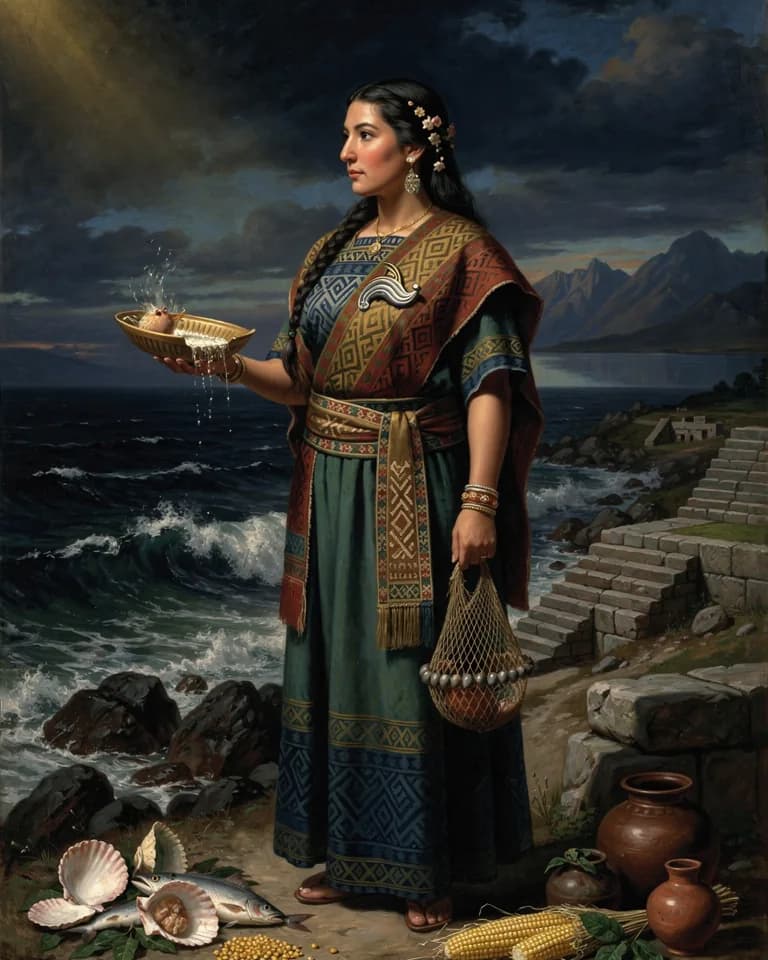 Mama Quchathe sea, lakes and waters
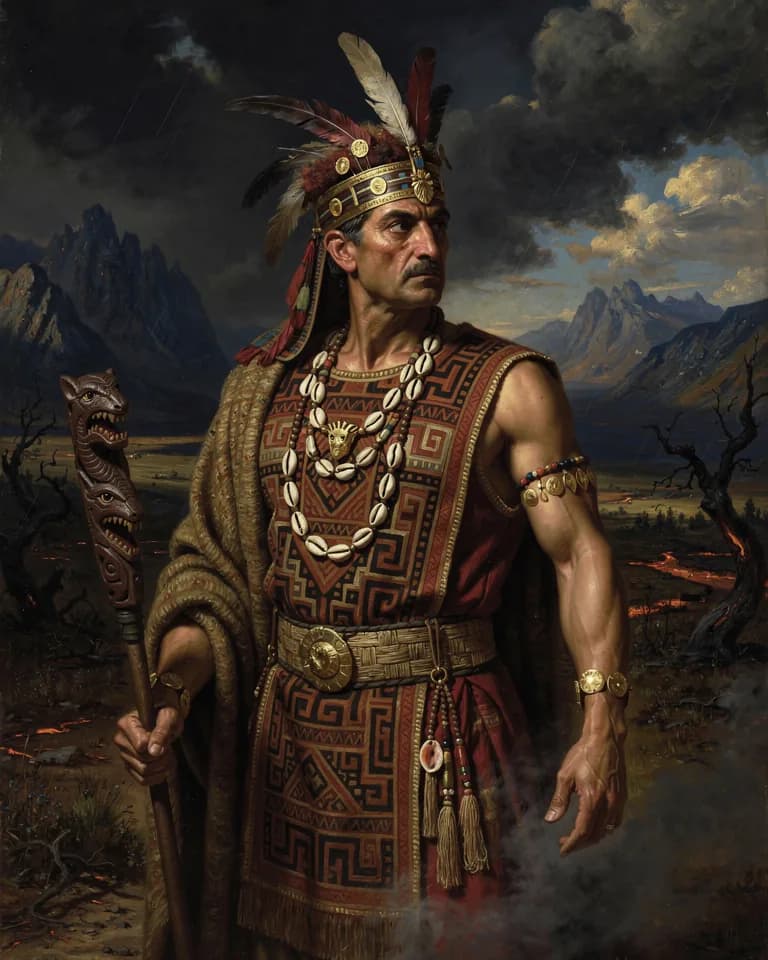 Huallallo Carhuinchofire, the hot lowland (yunca) world
6 retold
Stories and myths
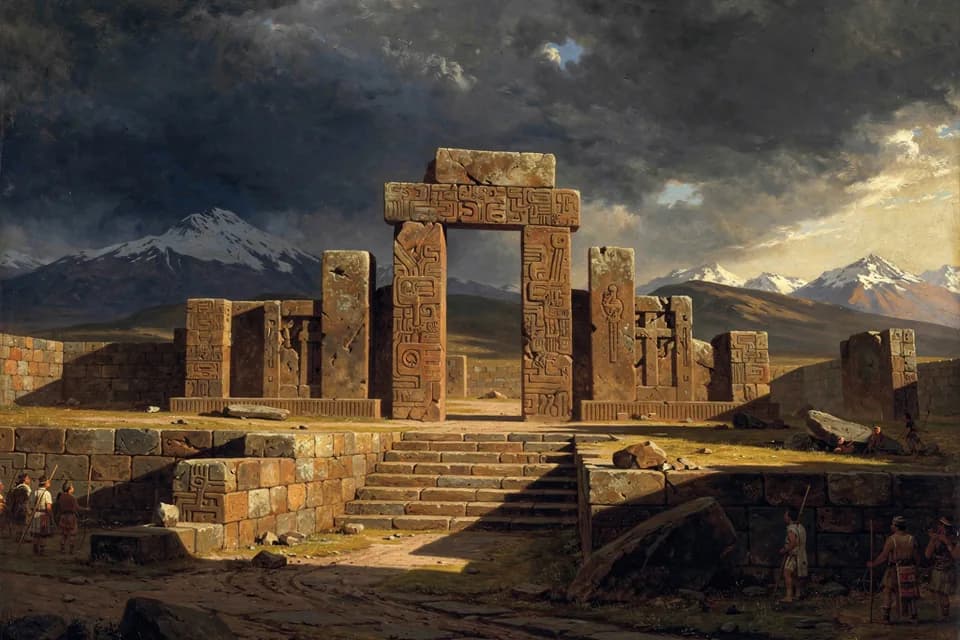
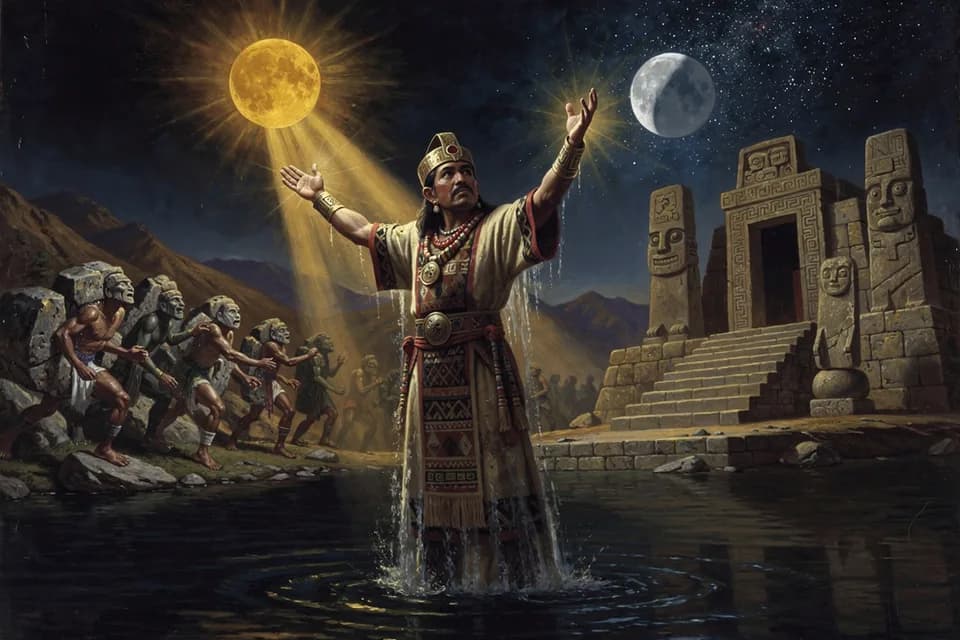 Viracocha Makes the World at TiticacacreationRising from Lake Titicaca into a world of darkness, the Creator turns a first, disobedient people to stone, makes the sun, moon, and stars at Tiwanaku, shapes the nations in stone and sends them underground to emerge at their own places, then walks away across the western sea.
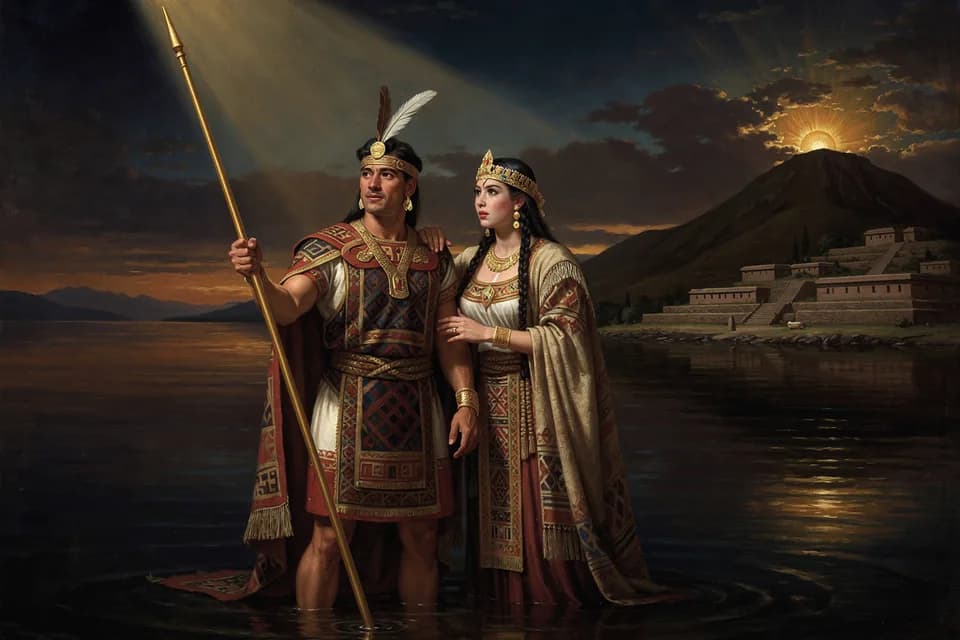 Children of the Sun: Manco Cápac and Mama OcllooriginThe Sun sends his son and daughter from Lake Titicaca with a golden rod to find the place where it will sink into the earth; it vanishes at Huanacauri, and there they found Cusco. A second tradition tells instead of four brothers and four sisters emerging from a cave at Pacaritambo.
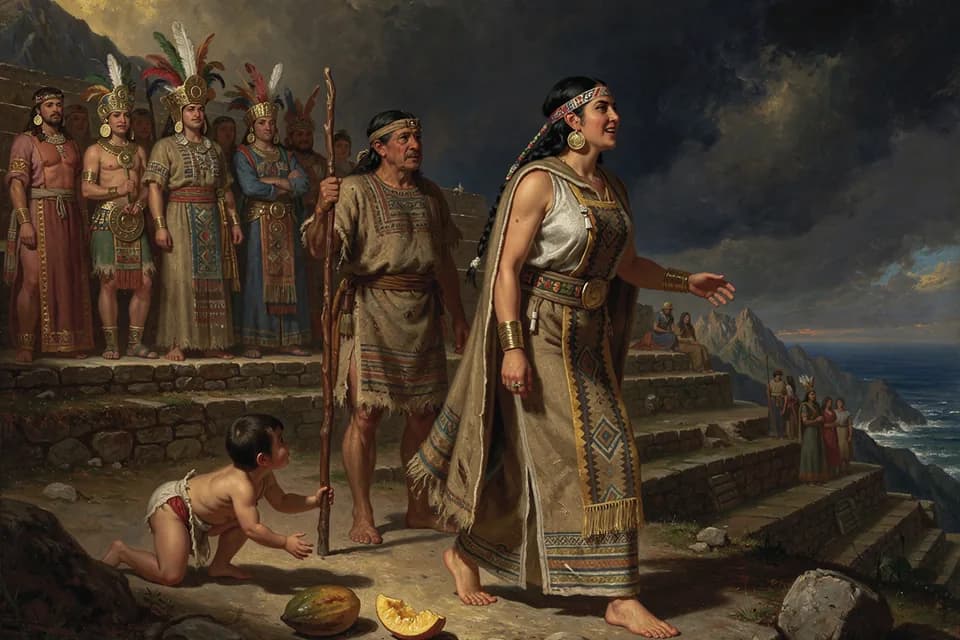 Cuniraya and CavillacatricksterThe ragged trickster Cuniraya fathers a child on the proud huaca Cavillaca through a lúcuma fruit; when the child crawls to him before all the gods, she flees in shame to the sea at Pachacamac and turns to stone, while Cuniraya blesses and curses the animals he meets in pursuit.
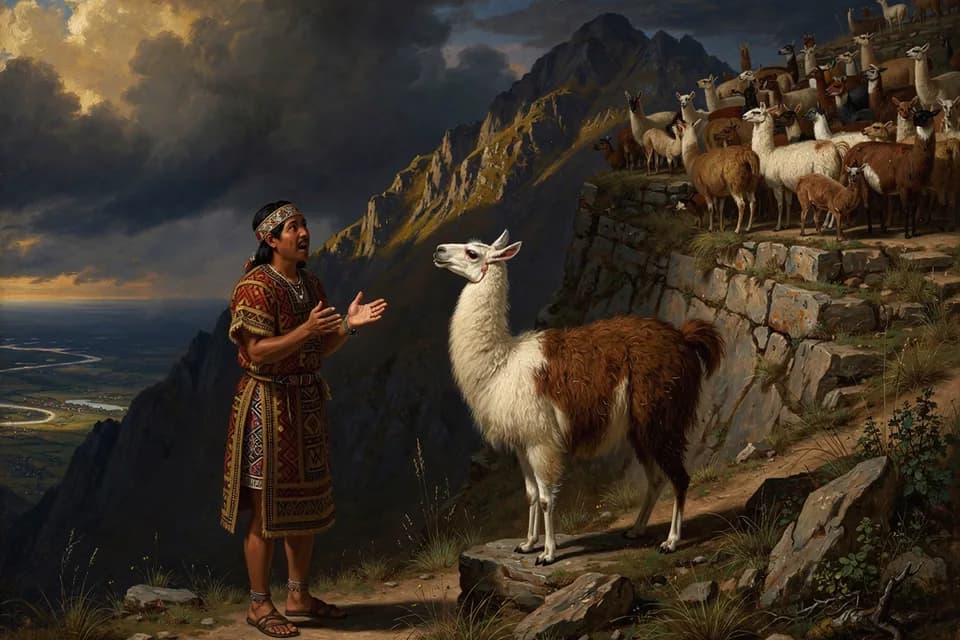 The Llama Who Foresaw the FloodmythA llama refuses to graze and tells its astonished owner that the sea will rise in five days; the man follows it up the mountain Villcacoto, where the animals crowd together as the water climbs, and becomes the ancestor of everyone who lives today.
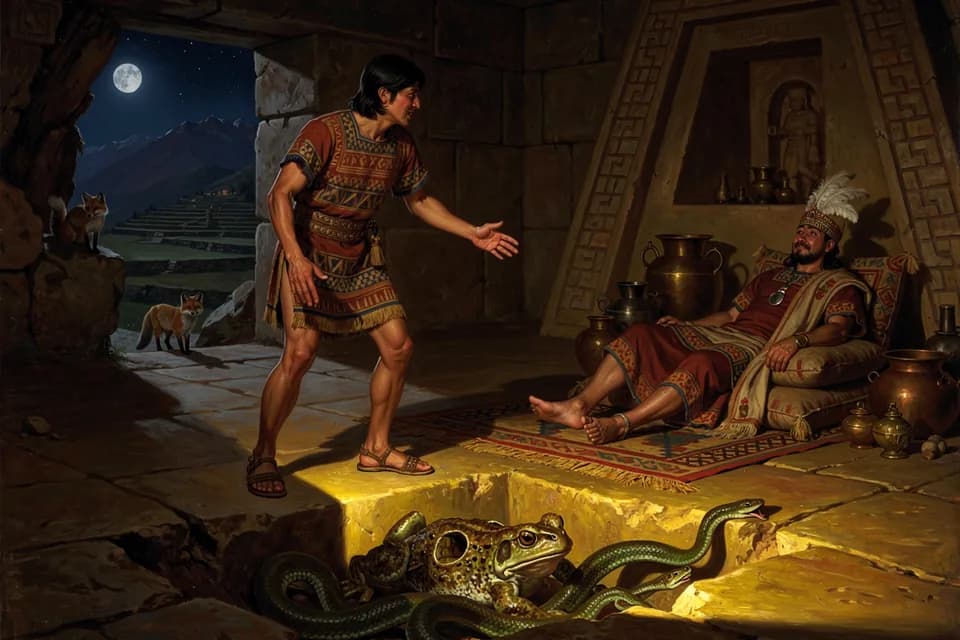 Huatyacuri and the Rich Man Who Called Himself GodlegendPariacaca's poor son Huatyacuri overhears two foxes reveal why a rich lord who claims to be a god is dying; he cures him by exposing a two-headed toad and serpents in his house, wins the lord's daughter, and with his father's help defeats his jealous brother-in-law in every contest.
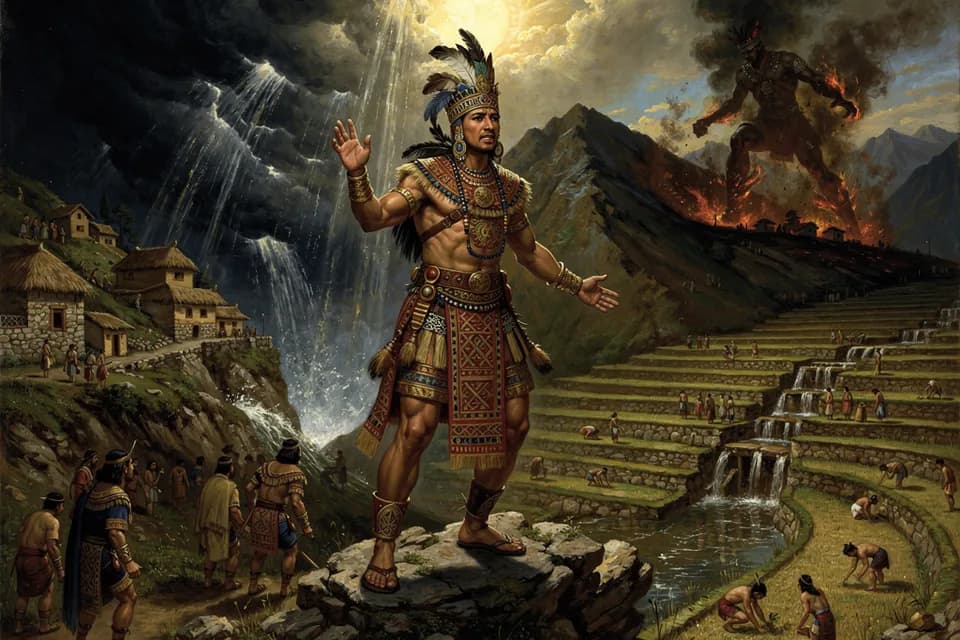 Pariacaca and Huallallo CarhuinchowarBorn from five eggs, Pariacaca drowns a village that refused a stranger drink, brings irrigation water to the fields of Cupara for the woman Choque Suso, and at last drives the child-eating lord of the old hot world, Huallallo Carhuincho, out of the highlands in a war of water against fire.
6 in the atlas