Inca and Andean TraditionIsland
Island of the Sun (Lake Titicaca)
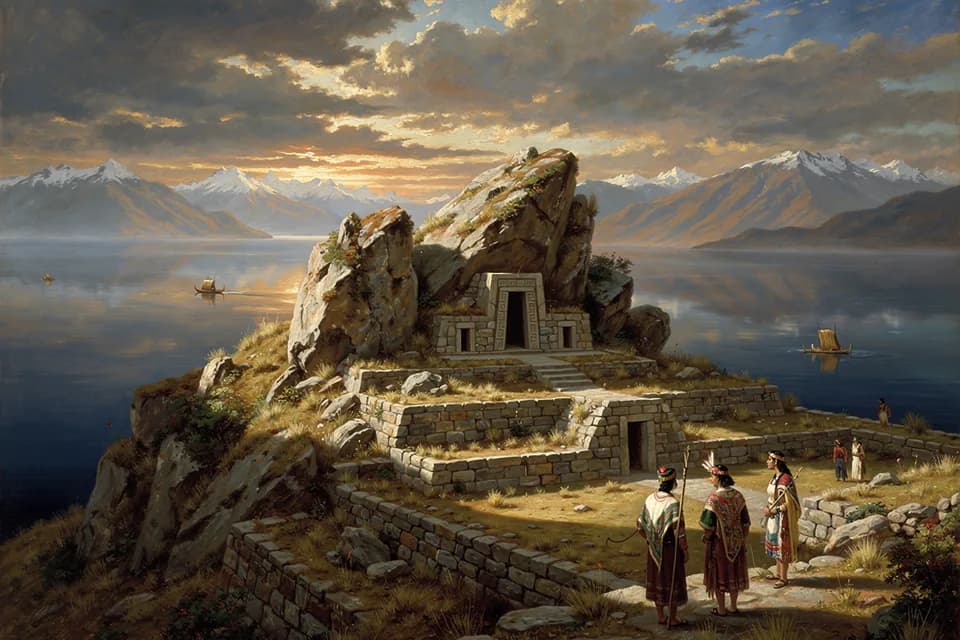
The island in the Bolivian part of Lake Titicaca honored in Inca times as the place where the Sun first rose, site of a major Inca pilgrimage sanctuary centered on a sacred rock.
About Island of the Sun (Lake Titicaca)
Where the Sun rose
The Island of the Sun lies in the southern part of Lake Titicaca, today in Bolivia. Colonial writers including Bernabé Cobo and the Augustinian Alonso Ramos Gavilán (1621) report that Andeans held that the Sun had first risen from a great rock on the island after a time of darkness, and the Inca state turned the place into one of its most important pilgrimage centers, alongside the neighboring Island of the Moon (Coati).
The Inca sanctuary
Pilgrims passed through checkpoints on the mainland and the island before approaching the sacred rock, where offerings were made; Inca buildings still stand on the island, including the structures known as Pilkokaina and the Chincana. Archaeological survey by Brian Bauer and Charles Stanish has shown that the island had been a ritual center well before the Incas, who expanded and reorganized it.
In the myths
The island connects the two great Inca origin traditions: Betanzos's Viracocha makes the sun rise in the Titicaca basin, and Garcilaso's Sun places his children Manco Cápac and Mama Ocllo in the lake.
On the map
Island of the Sun (Lake Titicaca) among other places of the Inca and Andean Tradition.
Sources and further reading
Source notes
These references are recorded in the catalog. Their passage wording and translation have not been checked, so quotations are not displayed here.
- Bernabé Cobo, Historia del Nuevo Mundo, Book 13 (paraphrase)
About this entry
By Elizabeth Stein for Mythos Atlas. About the author. Editorial notes are grounded in the site's cited sources and can be challenged through the contact page.
Coordinates mark where the myths place a site, or where the tradition locates it today. Mythic realms are left off the map or marked as symbolic placements.