Inca and Andean TraditionSacred Site
Sanctuary of Pachacamac
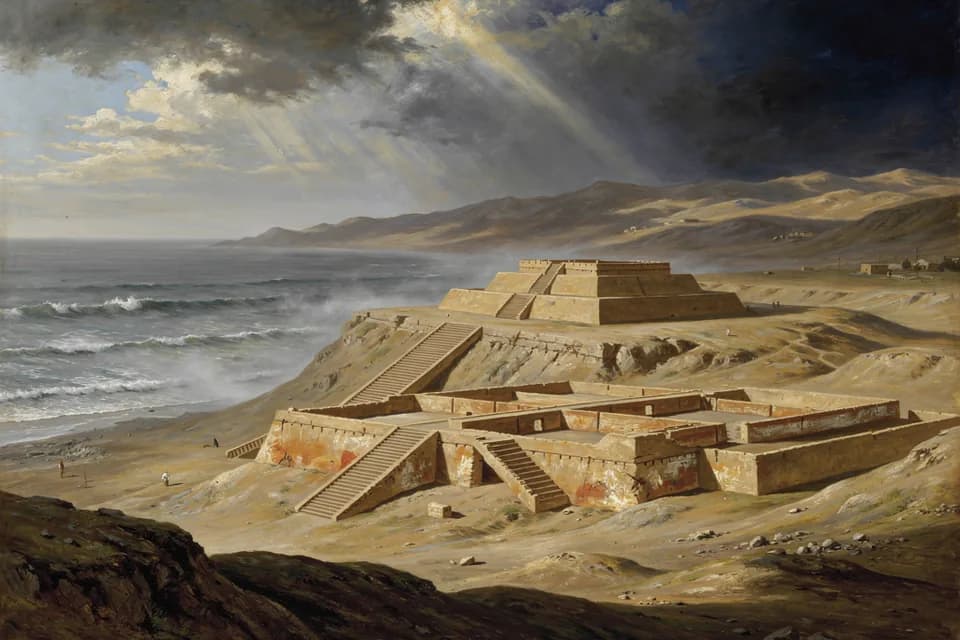
The great oracle sanctuary near the mouth of the Lurín River south of Lima, center of Pachacamac's cult for over a thousand years, where the Incas added a Temple of the Sun and Hernando Pizarro broke the idol in 1533.
About Sanctuary of Pachacamac
A millennium of pilgrims
The adobe pyramids and plazas of Pachacamac spread over the desert coast just south of Lima, overlooking the Pacific near the mouth of the Lurín River. The site was a religious center from roughly the early centuries CE, grew in importance under the Wari influence of the later first millennium, and under the Ychsma polity became the seat of an oracle consulted from far along the coast and highlands.
Inca and Spanish
The Incas, taking the coast in the fifteenth century, built a Temple of the Sun on the hill above the older Painted Temple and a house of chosen women (acllahuasi), while continuing to consult Pachacamac's oracle. In January 1533 Hernando Pizarro arrived seeking gold, forced his way into the sanctuary, and had the idol destroyed; his letter and the account of Miguel de Estete describe the episode. A carved wooden idol found at the Painted Temple in 1938 is displayed in the site museum.
In the stories
In the Huarochirí stories, the proud huaca Cavillaca walks into the sea at Pachacamac with her child and becomes stone, and Cuniraya meets Pachacamac's daughters on the beach there.
On the map
Sanctuary of Pachacamac among other places of the Inca and Andean Tradition.
Sources and further reading
Source notes
These references are recorded in the catalog. Their passage wording and translation have not been checked, so quotations are not displayed here.
- Francisco de Ávila, Tratado de los errores, ch. II (trans. Markham 1873)
About this entry
By Elizabeth Stein for Mythos Atlas. About the author. Editorial notes are grounded in the site's cited sources and can be challenged through the contact page.
Coordinates mark where the myths place a site, or where the tradition locates it today. Mythic realms are left off the map or marked as symbolic placements.