Inca and Andean TraditionMountain
Pariacaca Mountain
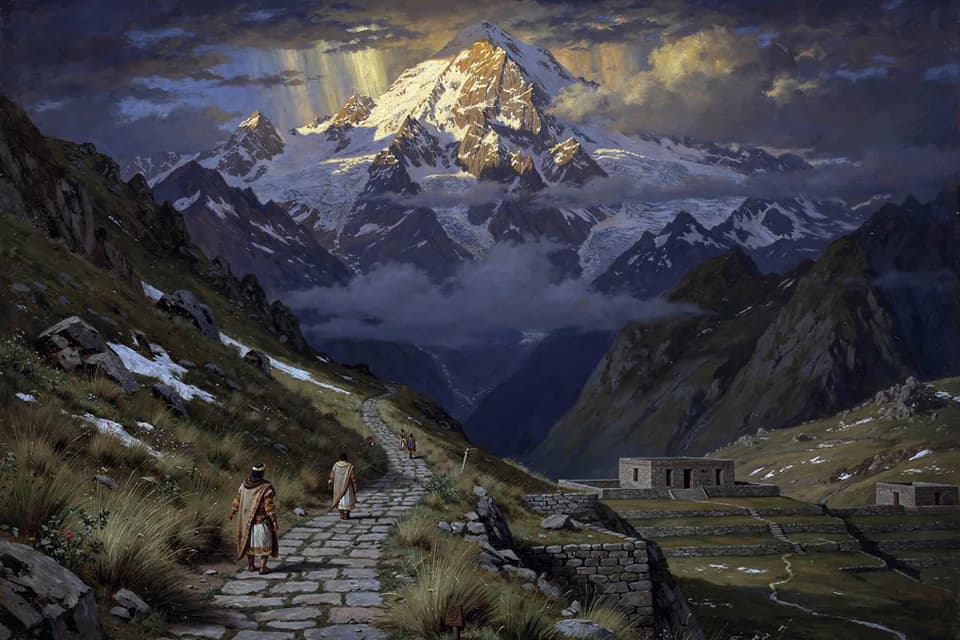
The glaciated peak on the border of Peru's Lima and Junín regions that was, and was the home of, the god Pariacaca of the Huarochirí Manuscript, crossed by an Inca road from Jauja to the coast.
About Pariacaca Mountain
The mountain as god
In Andean religion a great mountain can be a god in its own right, and Pariacaca is the clearest case in the colonial record. The Huarochirí Manuscript treats the snow peak and the god Pariacaca as one: born from five eggs on the nearby mountain Condorcoto, he goes up to the heights, defeats Huallallo Carhuincho, and establishes his cult, with the peoples of the province making pilgrimage to him.
Snow and water
The peak rises well above 5,000 meters on the continental divide in the Cordillera Central. Its snowmelt feeds the rivers and valleys of Huarochirí and Yauyos below, so that the mountain's role as the giver of irrigation water in the stories follows the landscape closely.
The road over the pass
An Inca road connecting the highland center of Jauja (Xauxa) with Pachacamac on the coast crossed the Pariacaca range; stretches of this route, with stone stairways, form part of the Qhapaq Ñan (Andean Road System) World Heritage listing. Spanish travelers of 1533 described the difficult crossing.
On the map
Pariacaca Mountain among other places of the Inca and Andean Tradition.
Sources and further reading
Source notes
These references are recorded in the catalog. Their passage wording and translation have not been checked, so quotations are not displayed here.
- Huarochirí Manuscript, chs. 8-9 (paraphrase)
About this entry
By Elizabeth Stein for Mythos Atlas. About the author. Editorial notes are grounded in the site's cited sources and can be challenged through the contact page.
Coordinates mark where the myths place a site, or where the tradition locates it today. Mythic realms are left off the map or marked as symbolic placements.