Inca and Andean TraditionDynastic Ancestor
Inti
Inti
Also known as Punchao, Apu Inti
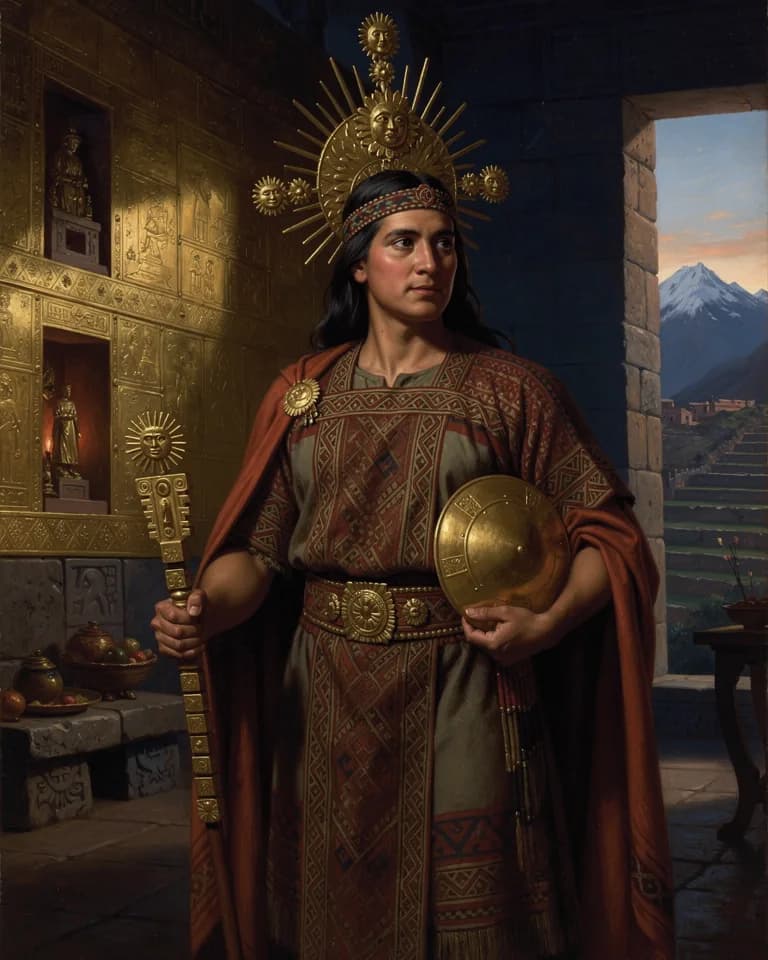
- the sun
- kingship
- harvest
The Sun, divine ancestor of the Inca kings and center of the state cult, worshipped in the gold-sheathed Coricancha of Cusco and at the June solstice festival of Inti Raymi.
About Inti
The Sun as royal ancestor
The Inca kings called themselves children of the Sun (intip churin), and Garcilaso de la Vega's version of the dynasty's origin has the Sun himself send his son Manco Cápac and daughter Mama Ocllo to Lake Titicaca to teach humanity. Sun worship was the most visible part of the imperial cult: the Sun owned lands and herds in every conquered province, and communities of chosen women (acllacuna) wove cloth and brewed maize beer for him.
The Coricancha and the Punchao
In Cusco the Sun's chief temple, the Coricancha, had walls plated with gold, which Spanish agents stripped in 1533 to pay Atahualpa's ransom. Its most sacred image was the Punchao ('day'), a golden figure of the Sun that later chroniclers describe as containing the powdered hearts of past kings. The Punchao was carried into the Vilcabamba refuge after the conquest and captured by Viceroy Toledo's forces in 1572; its later fate is unknown.
Inti Raymi
Garcilaso describes Inti Raymi, the Sun's festival at the June solstice (midwinter in the southern Andes), as the greatest ceremony of the year, when the ruler and nobles greeted the rising sun in Cusco's main square. The modern Inti Raymi performed at Sacsayhuamán each 24 June since 1944 is a reconstruction based largely on Garcilaso, not a continuous survival.
Origin story
In Betanzos's account the Sun is made by Viracocha at Tiwanaku, rising from the Island of the Sun in Lake Titicaca; in Inca royal ideology he is the father of the first Inca, Manco Cápac.
Across traditions
Parallel figures
Figures who play a role like Inti's in other traditions.
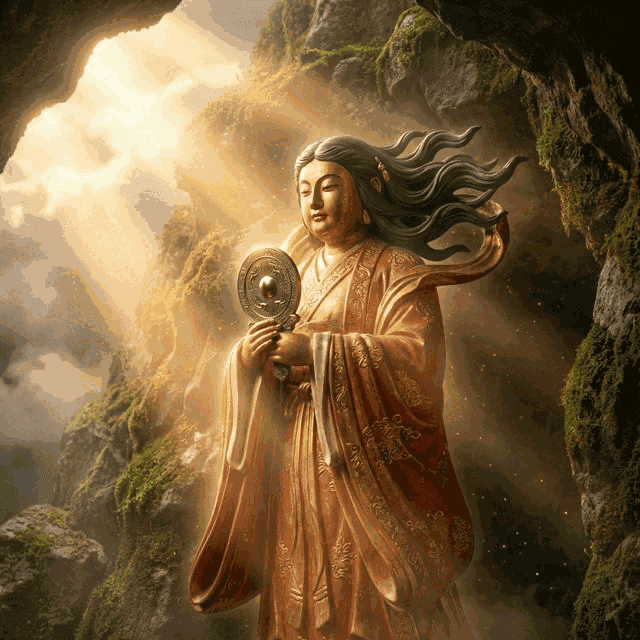 JapaneseAmaterasu
Both are sun deities claimed as the direct ancestor of a ruling dynasty (the Sapa Inca as 'son of the Sun'; the Japanese imperial line as descendants of Amaterasu), with the ruler serving as the sun's chief priest.
Compare Inti and Amaterasu side by side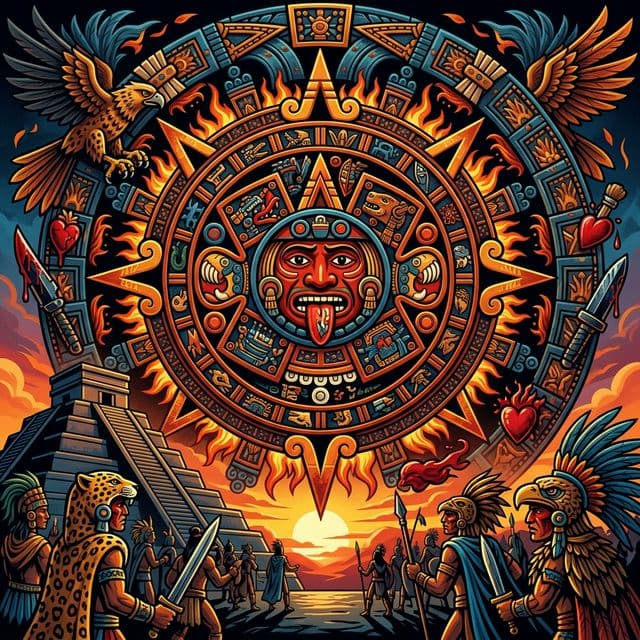 AztecTonatiuh
Both are sun gods at the center of an expanding American state's official cult, though Inti's role as royal ancestor has no close Mexica equivalent.
Compare Inti and Tonatiuh side by side
Worship and cult
Temples, festivals, and practices recorded for Inti
The Sun held lands and herds in every province; chosen women (acllacuna) in walled compounds wove fine cloth and prepared maize beer for his cult; llamas and cloth were burned as offerings in Cusco.
Sacred sites
- The Coricancha in Cusco, the chief temple of the Sun, whose curved Inca masonry survives beneath the Dominican church and convent of Santo Domingo.
- Sun temples built by the Incas across the empire, including one at Pachacamac beside the older coastal sanctuary and another on the Island of the Sun in Lake Titicaca.
Festivals
- Inti Raymi, at the June solstice, described by Garcilaso (Part I, Book 6); re-staged at Sacsayhuamán since 1944 as a reconstructed civic pageant.
Family
Inti's family at a glance
- Who are Inti's children?
- Children of Inti recorded in the atlas: Manco Cápac and Mama Ocllo.
- Who were Inti's spouses and consorts?
- Spouses and consorts of Inti recorded in the atlas: Mama Killa.
In the atlas
Where Inti appears
Play the myth
Branching retellings featuring Inti: your choices decide the ending.
Sources and further reading
Source notes
These references are recorded in the catalog. Their passage wording and translation have not been checked, so quotations are not displayed here.
- Garcilaso de la Vega, Comentarios Reales, Part I, Book 1, ch. 15 (paraphrase of the origin speech)
- Garcilaso de la Vega, Comentarios Reales, Part I, Book 3 (paraphrase of the Coricancha description)
About this entry
By Elizabeth Stein for Mythos Atlas. About the author. Editorial notes are grounded in the site's cited sources and can be challenged through the contact page.
Parallels are editorial comparisons across traditions: a shared role does not, by itself, establish a shared origin.
Family relationships come from the atlas's kinship records. Ancient sources often disagree on divine genealogy.
Genealogy
Family tree
Inti's parents, consorts, children and rivals, as recorded in the atlas.