Mythos Atlas

Side by sideParallel across traditions

Inti vs Tonatiuh

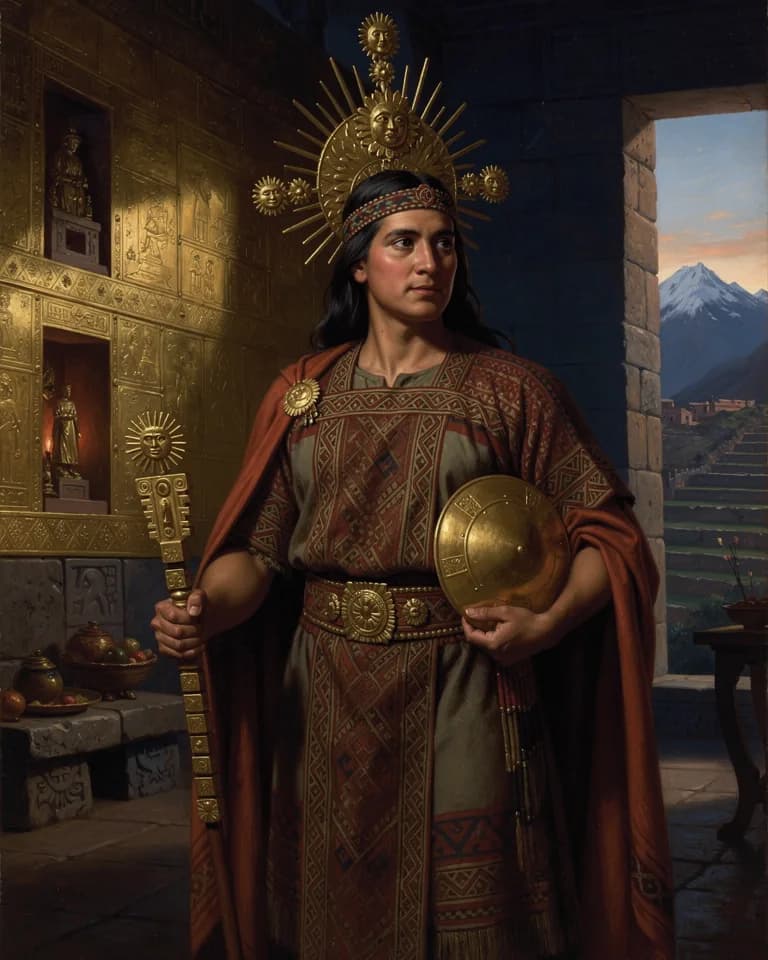
Inti
IntiInca and Andean
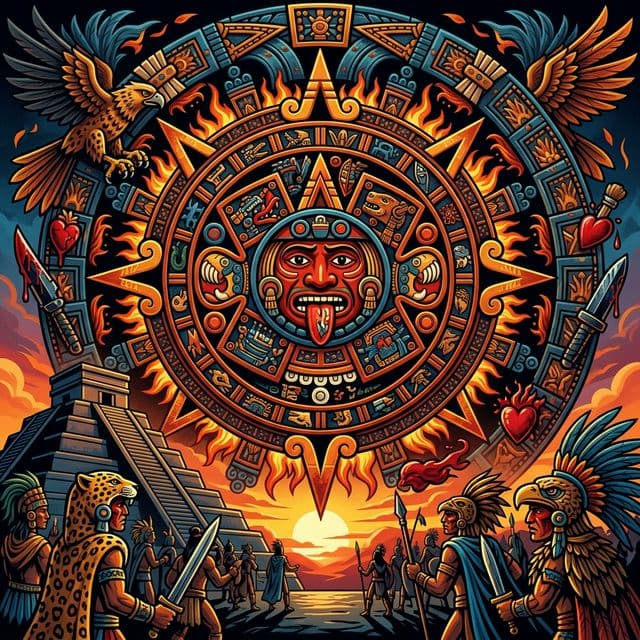
Tonatiuh
TonatiuhAztec

Both are sun gods at the center of an expanding American state's official cult, though Inti's role as royal ancestor has no close Mexica equivalent.

At a glance

Inti and Tonatiuh compared
IntiTonatiuh
TraditionInca and Andean TraditionAztec Pantheon
Domainsthe sun, kingship, harvestsun, warriors, sacrifice, the Fifth Sun
Symbolsa golden disk, the Punchao image, goldsun disk, eagle, tongue protruding, flint knife
Also calledPunchao, Apu IntiHe Who Goes Forth Shining, Nahui Ollin

Where they meet

The atlas records no domain or symbol that Inti and Tonatiuh share.

They are compared for the part each plays in their own tradition rather than for any attribute in common.

Where they part

Only Inti

Associated with the sun, kingship, and harvest.

Only Tonatiuh

Associated with sun, warriors, sacrifice, and the fifth sun.

How each was worshipped

Inti

Cult sites
The Coricancha in Cusco, the chief temple of the Sun, whose curved Inca masonry survives beneath the Dominican church and convent of Santo Domingo.; Sun temples built by the Incas across the empire, including one at Pachacamac beside the older coastal sanctuary and another on the Island of the Sun in Lake Titicaca.
Festivals
Inti Raymi, at the June solstice, described by Garcilaso (Part I, Book 6); re-staged at Sacsayhuamán since 1944 as a reconstructed civic pageant.

The Sun held lands and herds in every province; chosen women (acllacuna) in walled compounds wove fine cloth and prepared maize beer for his cult; llamas and cloth were burned as offerings in Cusco.

Tonatiuh

Cult sites
The sun's face on the so-called Aztec calendar stone is a cult image, not a building; Offerings toward the sun at the Templo Mayor
Festivals
Solar offerings in the veintena calendar

The Fifth Sun who drinks war. Hearts and blood in the Mexica explanation of why the sun rises. There is no gentle pastoral Tonatiuh in the imperial sources. Name the cost if you name the god.

The two figures

Inca and Andean Tradition

Inti

The Sun, divine ancestor of the Inca kings and center of the state cult, worshipped in the gold-sheathed Coricancha of Cusco and at the June solstice festival of Inti Raymi.

In Betanzos's account the Sun is made by Viracocha at Tiwanaku, rising from the Island of the Sun in Lake Titicaca; in Inca royal ideology he is the father of the first Inca, Manco Cápac.

The Inca kings called themselves children of the Sun (*intip churin*), and Garcilaso de la Vega's version of the dynasty's origin has the Sun himself send his son Manco Cápac and daughter Mama Ocllo to Lake Titicaca to teach humanity. Sun worship was the most visible part of the imperial cult: the Sun owned lands and herds in every conquered province, and communities of chosen women (*acllacuna*) wove cloth and brewed maize beer for him.

Read the full Inti entry

Aztec Pantheon

Tonatiuh

The sun god of the Fifth Sun (the current world age). Tonatiuh demanded human hearts and blood to fuel his daily journey across the sky, driving the Aztec system of ritual sacrifice.

After the destruction of the Fourth Sun, the gods gathered at Teotihuacan. Nanahuatzin threw himself into the sacrificial fire and rose as the Fifth Sun. The other gods sacrificed their hearts to make him move, establishing the cosmic debt that humans must repay through sacrifice.

Tonatiuh ("He Who Goes Forth Shining") was the **sun of the current world age**, the Fifth Sun. In Aztec cosmology, four previous suns had been destroyed, each ending in cataclysm. Tonatiuh was the current sun, and the Aztecs believed he required **human blood and hearts** to maintain his journey across the sky.

Read the full Tonatiuh entry
About this comparison

Comparisons pair figures that play a similar role across traditions, or that the myths connect within one. A shared role does not, by itself, establish a shared origin.