Mythos Atlas

Side by sideParallel across traditions

Helios vs Tonatiuh

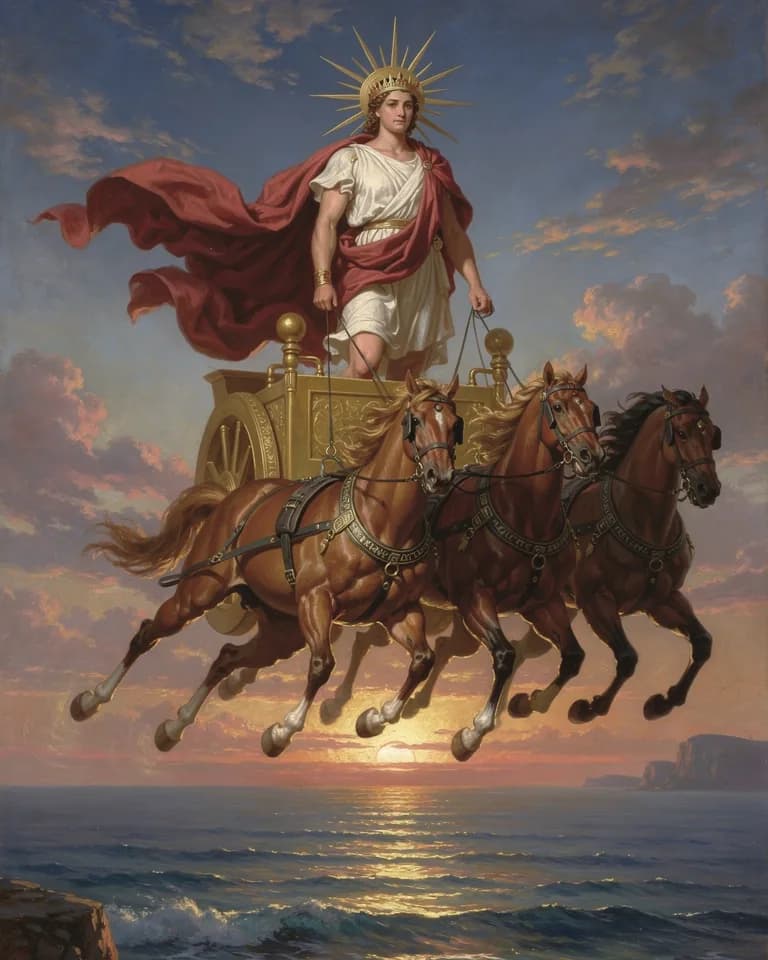
Helios
HeliosGreek
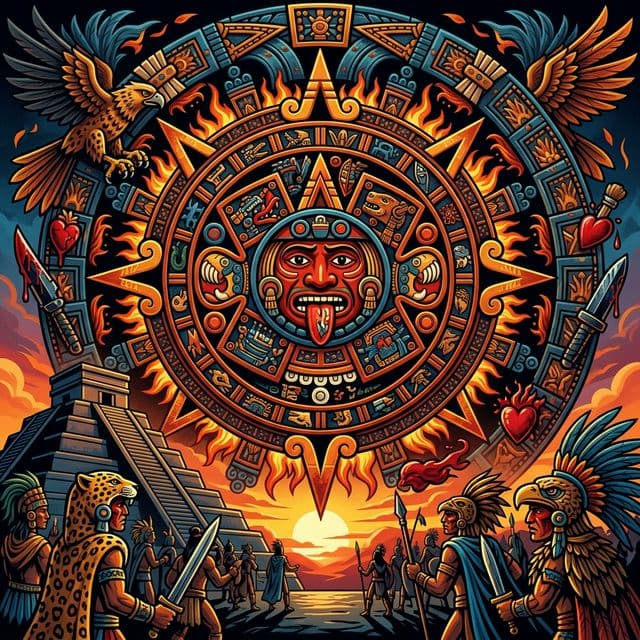
Tonatiuh
TonatiuhAztec

Both are personifications of the sun who travel across the sky.

At a glance

Helios and Tonatiuh compared
HeliosTonatiuh
TraditionGreek PantheonAztec Pantheon
Domainsthe sun, sight, oaths, daylightsun, warriors, sacrifice, the Fifth Sun
Symbolsfour-horse chariot, radiate crown, golden helmet, cattle of the sunsun disk, eagle, tongue protruding, flint knife
Also calledHelius, Hyperion (as epithet), Sol (Roman)He Who Goes Forth Shining, Nahui Ollin

Where they meet

The atlas records no domain or symbol that Helios and Tonatiuh share.

They are compared for the part each plays in their own tradition rather than for any attribute in common.

Where they part

Only Helios

Associated with the sun, sight, oaths, and daylight.

Only Tonatiuh

Associated with sun, warriors, sacrifice, and the fifth sun.

How each was worshipped

Helios

Cult sites
Rhodes, where the Colossus represented him
Festivals
Halieia (Rhodian games in his honor)

Rhodes gave Helios civic cult with games; a Roman report says the Rhodians yearly cast a four-horse chariot into the sea for him. Elsewhere he was more often invoked than worshipped, especially as witness to oaths.

Tonatiuh

Cult sites
The sun's face on the so-called Aztec calendar stone is a cult image, not a building; Offerings toward the sun at the Templo Mayor
Festivals
Solar offerings in the veintena calendar

The Fifth Sun who drinks war. Hearts and blood in the Mexica explanation of why the sun rises. There is no gentle pastoral Tonatiuh in the imperial sources. Name the cost if you name the god.

The two figures

Greek Pantheon

Helios

The Titan-born sun who drives his chariot across the sky each day and sees everything beneath it. Son of Hyperion and Theia, brother of Selene (Moon) and Eos (Dawn), Helios is the witness gods and mortals call on because nothing happens outside his gaze.

Helios was born to the Titans Hyperion and Theia, together with his sisters Selene and Eos. Hesiod lists the three light-bringers as a single brood; the Homeric Hymn to Helios names their mother Euryphaessa, 'far-shining', a title that may be another name for Theia.

Hesiod names Helios as a child of the Titans Hyperion and Theia, born with his sisters Selene and Eos. He is not an Olympian but an older power, and Greek poetry treats him less as a ruler than as a witness: because he crosses the whole sky every day, he sees what others miss.

Read the full Helios entry

Aztec Pantheon

Tonatiuh

The sun god of the Fifth Sun (the current world age). Tonatiuh demanded human hearts and blood to fuel his daily journey across the sky, driving the Aztec system of ritual sacrifice.

After the destruction of the Fourth Sun, the gods gathered at Teotihuacan. Nanahuatzin threw himself into the sacrificial fire and rose as the Fifth Sun. The other gods sacrificed their hearts to make him move, establishing the cosmic debt that humans must repay through sacrifice.

Tonatiuh ("He Who Goes Forth Shining") was the **sun of the current world age**, the Fifth Sun. In Aztec cosmology, four previous suns had been destroyed, each ending in cataclysm. Tonatiuh was the current sun, and the Aztecs believed he required **human blood and hearts** to maintain his journey across the sky.

Read the full Tonatiuh entry
About this comparison

Comparisons pair figures that play a similar role across traditions, or that the myths connect within one. A shared role does not, by itself, establish a shared origin.