Mythos Atlas

Side by sideParallel across traditions

Helios vs Shamash

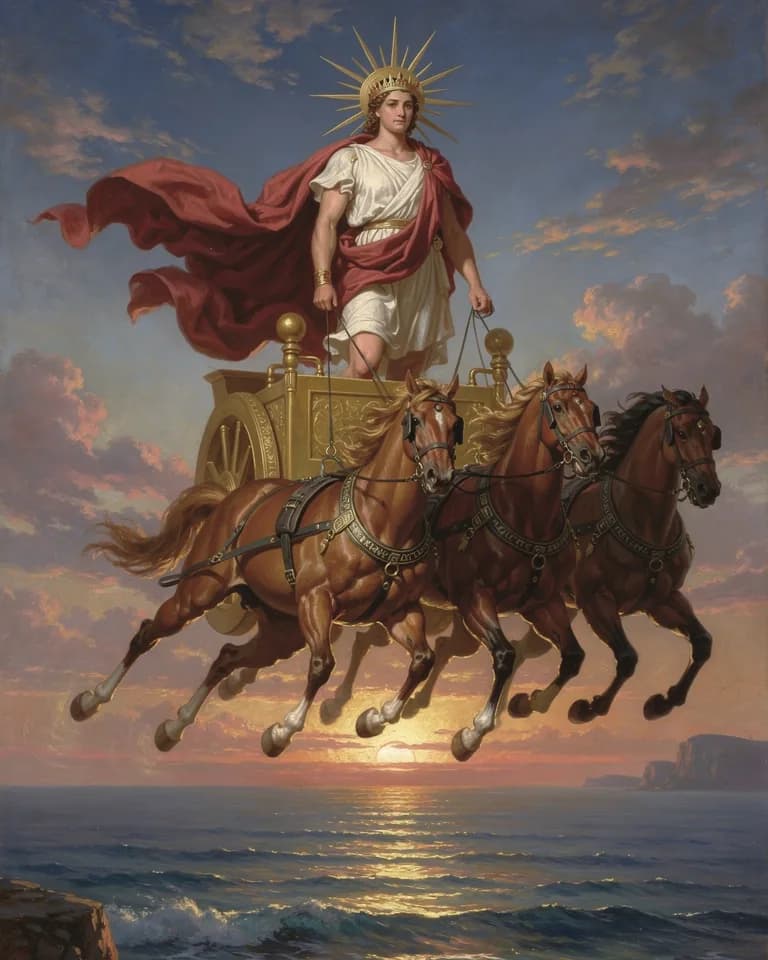
Helios
HeliosGreek
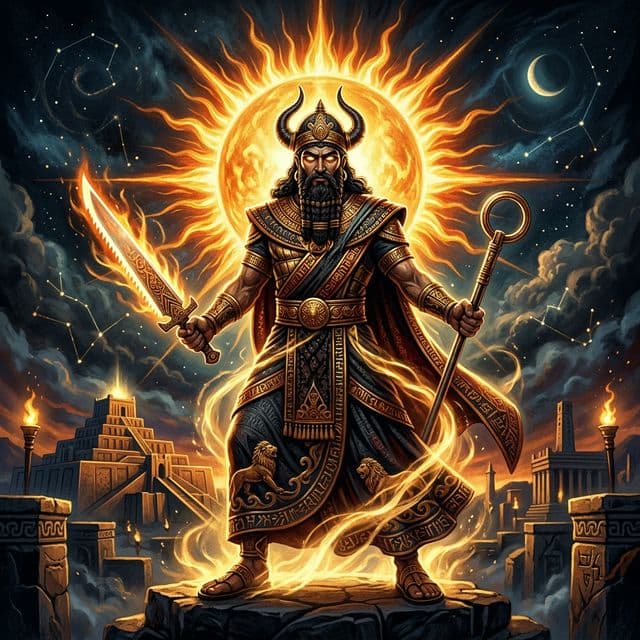
Shamash
ShamashMesopotamian

Both sun gods see everything on their daily course and are invoked as witnesses of oaths and justice.

At a glance

Helios and Shamash compared
HeliosShamash
TraditionGreek PantheonMesopotamian Pantheon
Domainsthe sun, sight, oaths, daylightsun, justice, truth, divination
Symbolsfour-horse chariot, radiate crown, golden helmet, cattle of the sunsun disk with rays, saw, measuring rod
Also calledHelius, Hyperion (as epithet), Sol (Roman)Utu, Babbar

Where they meet

The atlas records no domain or symbol that Helios and Shamash share.

They are compared for the part each plays in their own tradition rather than for any attribute in common.

Where they part

Only Helios

Associated with the sun, sight, oaths, and daylight.

Only Shamash

Associated with sun, justice, truth, and divination.

How each was worshipped

Helios

Cult sites
Rhodes, where the Colossus represented him
Festivals
Halieia (Rhodian games in his honor)

Rhodes gave Helios civic cult with games; a Roman report says the Rhodians yearly cast a four-horse chariot into the sea for him. Elsewhere he was more often invoked than worshipped, especially as witness to oaths.

Shamash

Cult sites
Ebabbar at Sippar; Ebabbar at Larsa
Festivals
Justice oaths at sunrise

The sun who sees the lawsuit. Hammurabi's stele puts him over the king. Cult is courtroom light as much as astronomy.

The two figures

Greek Pantheon

Helios

The Titan-born sun who drives his chariot across the sky each day and sees everything beneath it. Son of Hyperion and Theia, brother of Selene (Moon) and Eos (Dawn), Helios is the witness gods and mortals call on because nothing happens outside his gaze.

Helios was born to the Titans Hyperion and Theia, together with his sisters Selene and Eos. Hesiod lists the three light-bringers as a single brood; the Homeric Hymn to Helios names their mother Euryphaessa, 'far-shining', a title that may be another name for Theia.

Hesiod names Helios as a child of the Titans Hyperion and Theia, born with his sisters Selene and Eos. He is not an Olympian but an older power, and Greek poetry treats him less as a ruler than as a witness: because he crosses the whole sky every day, he sees what others miss.

Read the full Helios entry

Mesopotamian Pantheon

Shamash

The sun god and divine judge. Shamash sees all that occurs under the sun and is the god of justice, truth, and moral order.

Shamash is the son of the moon god Nanna/Sin, emerging from the underworld each dawn through the eastern mountains. Each night he descends through the western gates to travel through the underworld, bringing light even to the realm of the dead, before rising again at dawn.

Shamash traverses the sky each day, seeing everything that occurs beneath his rays. This all-seeing nature makes him the natural god of justice and truth. Nothing can be hidden from his sight, no lie escapes his notice, no injustice occurs beyond his witness. He is the great equalizer who treats beggar and king alike.

Read the full Shamash entry
About this comparison

Comparisons pair figures that play a similar role across traditions, or that the myths connect within one. A shared role does not, by itself, establish a shared origin.