
Side by sideParallel across traditions

Apollo (Greek) vs Shamash

Apollo
Apollo (Greek)Greek
Shamash
ShamashMesopotamian

Both are sun gods associated with truth and prophecy.

At a glance

Apollo (Greek) and Shamash compared
Apollo (Greek)Shamash
TraditionGreek PantheonMesopotamian Pantheon
Domainssun, music, poetry, prophecy, healing, archerysun, justice, truth, divination
Symbolslyre, bow and arrow, laurel wreath, sun, ravensun disk with rays, saw, measuring rod
Also calledPhoebus, Phoebus ApolloUtu, Babbar

Where they meet

Both are associated with sun.

Where they part

Only Apollo (Greek)

Associated with music, poetry, prophecy, healing, and archery.

Only Shamash

Associated with justice, truth, and divination.

How each was worshipped

Apollo (Greek)

Cult sites
Sanctuary of Apollo at Delphi; Sacred island and temples of Delos; Temple of Apollo at Didyma
Festivals
Pythian Games; Thargelia; Karneia (Sparta)

Delphi's oracle and the Pythian contest made him the public voice of the gods. Purification, plague, and the lyre sit in the same precinct. A boy-god of light is a later polish; the working cult is prophecy and katharsis.

Shamash

Cult sites
Ebabbar at Sippar; Ebabbar at Larsa
Festivals
Justice oaths at sunrise

The sun who sees the lawsuit. Hammurabi's stele puts him over the king. Cult is courtroom light as much as astronomy.

The two figures

Greek Pantheon

Apollo (Greek)

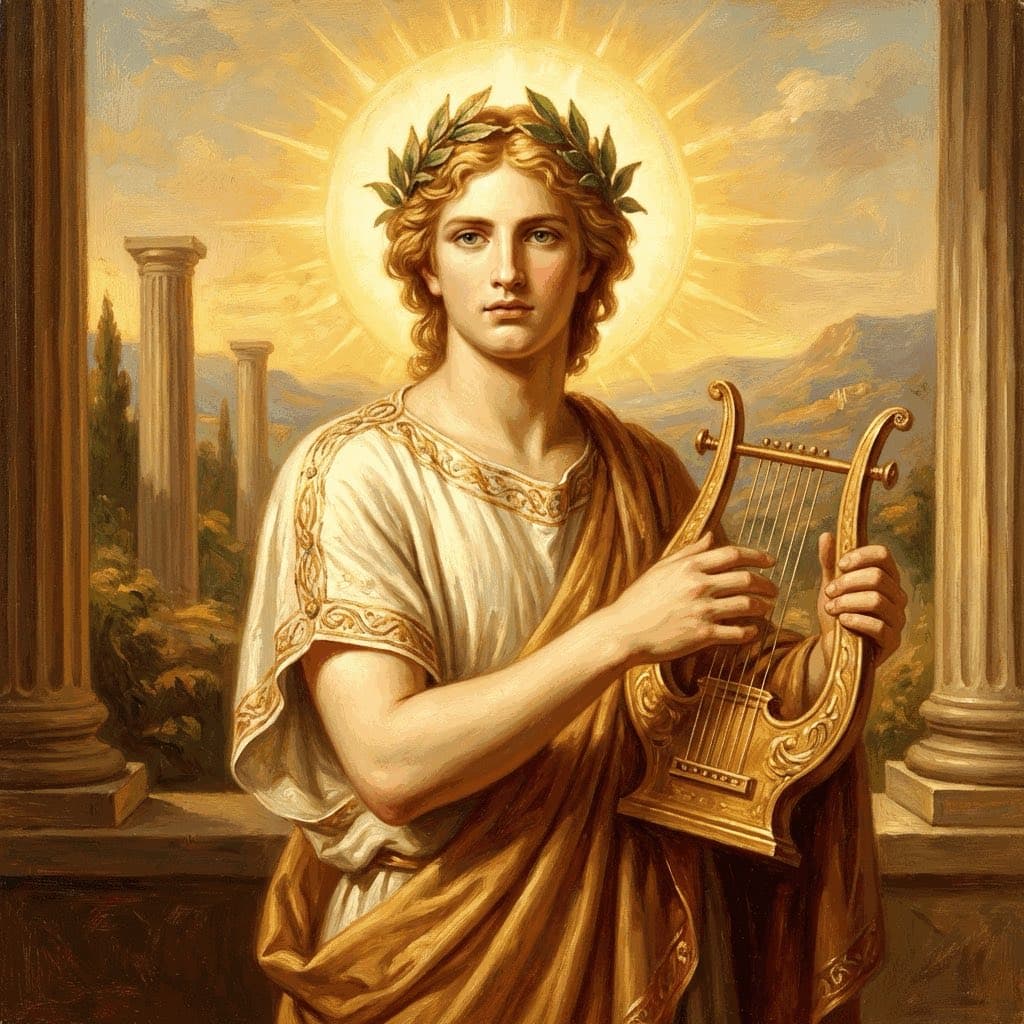
God of sun, music, poetry, prophecy, and healing. Twin brother of Artemis, patron of the Muses and leader of the nine sisters.

Apollo is the ideal of the *kouros* (beardless youth), representing light, harmony, and reason. He is the master of the lyre and the leader of the Muses.

Read the full Apollo entry

Mesopotamian Pantheon

Shamash

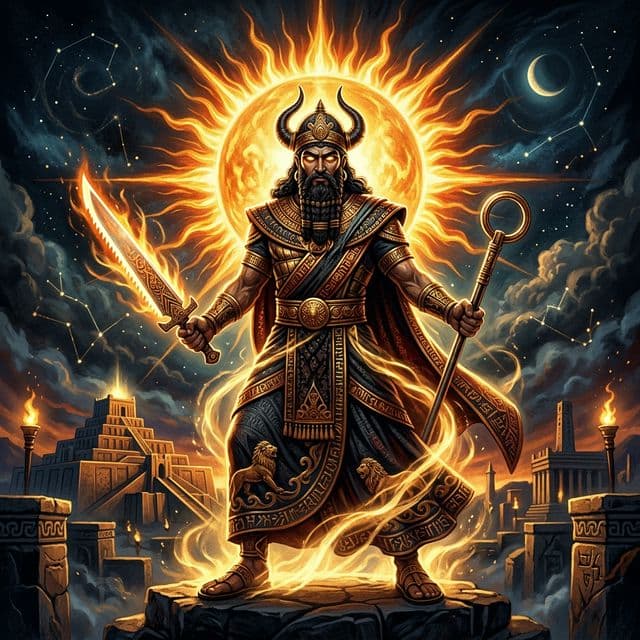
The sun god and divine judge. Shamash sees all that occurs under the sun and is the god of justice, truth, and moral order.

Shamash is the son of the moon god Nanna/Sin, emerging from the underworld each dawn through the eastern mountains. Each night he descends through the western gates to travel through the underworld, bringing light even to the realm of the dead, before rising again at dawn.

Shamash traverses the sky each day, seeing everything that occurs beneath his rays. This all-seeing nature makes him the natural god of justice and truth. Nothing can be hidden from his sight, no lie escapes his notice, no injustice occurs beyond his witness. He is the great equalizer who treats beggar and king alike.
Read the full Shamash entry
About this comparison

Comparisons pair figures that play a similar role across traditions, or that the myths connect within one. A shared role does not, by itself, establish a shared origin.