Mythos Atlas

Side by sideParallel across traditions

Helios vs Mithra

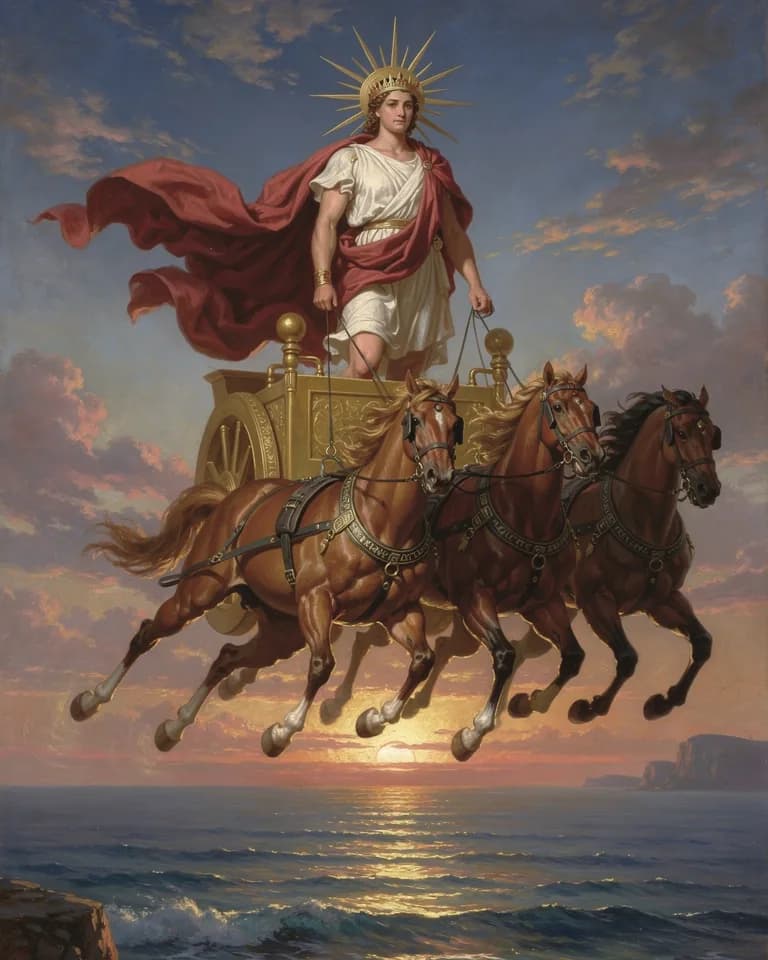
Helios
HeliosGreek
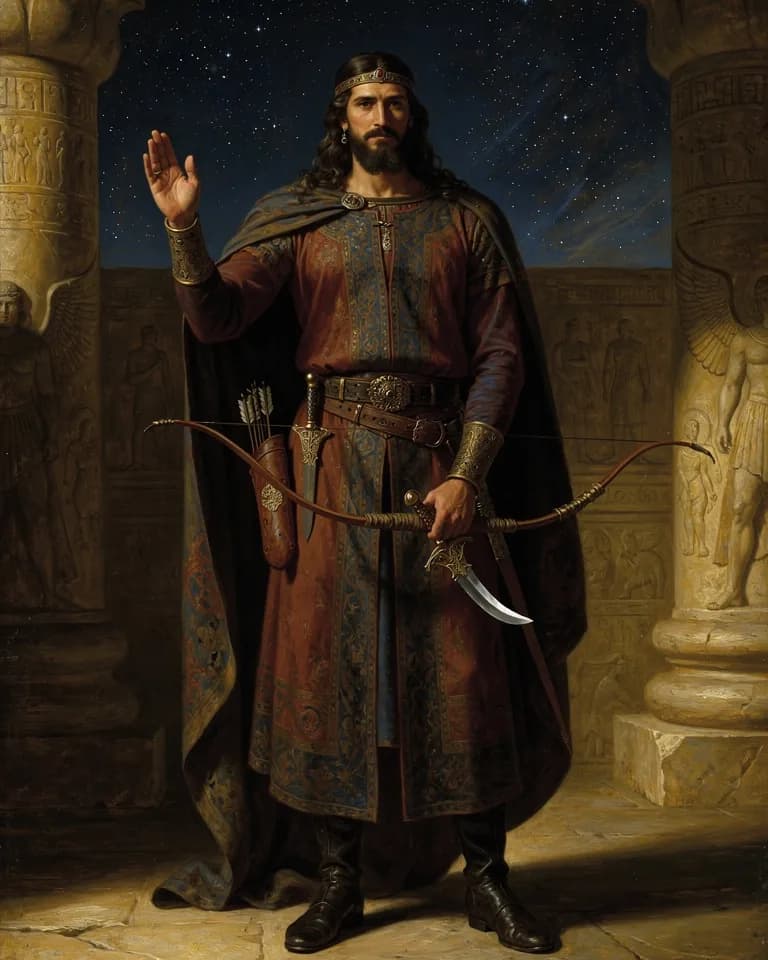
Mithra
MithraPersian (Iranian)

Strabo (Geography 15.3.13) says the Persians honor Helios, 'whom they call Mithras', and the Commagene inscriptions at Nemrut Dağ name a combined Apollo-Mithras-Helios-Hermes; the solar identification is Greek interpretation of Mithra's association with light and dawn.

At a glance

Helios and Mithra compared
HeliosMithra
TraditionGreek PantheonPersian (Iranian) Tradition
Domainsthe sun, sight, oaths, daylightcontracts and oaths, truth, the light of dawn, judgment of souls
Symbolsfour-horse chariot, radiate crown, golden helmet, cattle of the suna thousand ears and ten thousand eyes, the chariot drawn by white horses, the boar Verethragna running before him
Also calledHelius, Hyperion (as epithet), Sol (Roman)Mihr, Mehr, Mithra of wide pastures

Where they meet

The atlas records no domain or symbol that Helios and Mithra share.

They are compared for the part each plays in their own tradition rather than for any attribute in common.

Where they part

Only Helios

Associated with the sun, sight, oaths, and daylight.

Only Mithra

Associated with contracts and oaths, truth, the light of dawn, and judgment of souls.

How each was worshipped

Helios

Cult sites
Rhodes, where the Colossus represented him
Festivals
Halieia (Rhodian games in his honor)

Rhodes gave Helios civic cult with games; a Roman report says the Rhodians yearly cast a four-horse chariot into the sea for him. Elsewhere he was more often invoked than worshipped, especially as witness to oaths.

Mithra

Cult sites
Zoroastrian fire temples are also called Dar-e Mehr, 'the court of Mithra'.
Festivals
Mehregan, the autumn festival on the day Mihr of the month Mihr, still celebrated in Iran.

Invoked as witness and guardian of contracts and oaths; in Zoroastrian eschatology he judges souls with Sraosha and Rashnu at the Chinvat Bridge.

The two figures

Greek Pantheon

Helios

The Titan-born sun who drives his chariot across the sky each day and sees everything beneath it. Son of Hyperion and Theia, brother of Selene (Moon) and Eos (Dawn), Helios is the witness gods and mortals call on because nothing happens outside his gaze.

Helios was born to the Titans Hyperion and Theia, together with his sisters Selene and Eos. Hesiod lists the three light-bringers as a single brood; the Homeric Hymn to Helios names their mother Euryphaessa, 'far-shining', a title that may be another name for Theia.

Hesiod names Helios as a child of the Titans Hyperion and Theia, born with his sisters Selene and Eos. He is not an Olympian but an older power, and Greek poetry treats him less as a ruler than as a witness: because he crosses the whole sky every day, he sees what others miss.

Read the full Helios entry

Persian (Iranian) Tradition

Mithra

The yazata of the covenant, 'lord of wide pastures', who watches with a thousand ears and ten thousand eyes over everyone who keeps or breaks their word, and whom Ahura Mazda created 'as worthy of sacrifice as myself'.

Created by Ahura Mazda as worthy of worship as himself (Yasht 10.1).

Yasht 10, one of the longest hymns of the Avesta, is devoted to Mithra. It opens with Ahura Mazda declaring that he created Mithra as worthy of sacrifice and prayer as himself, and it describes a watchful, terrible god of the covenant: the first of the heavenly beings to rise over Mount Hara before the sun, he drives a chariot across the sky, sees everything with his thousand ears and ten thousand eyes, and brings ruin on the 'Mithra-deceiver' who breaks a contract, while protecting those who keep faith. Before him runs Verethragna, victory, in the shape of a boar.

Read the full Mithra entry
About this comparison

Comparisons pair figures that play a similar role across traditions, or that the myths connect within one. A shared role does not, by itself, establish a shared origin.