Persian (Iranian) Tradition
Mithra
Miθra(Mithra; Middle Persian Mihr)
Also known as Mihr, Mehr, Mithra of wide pastures
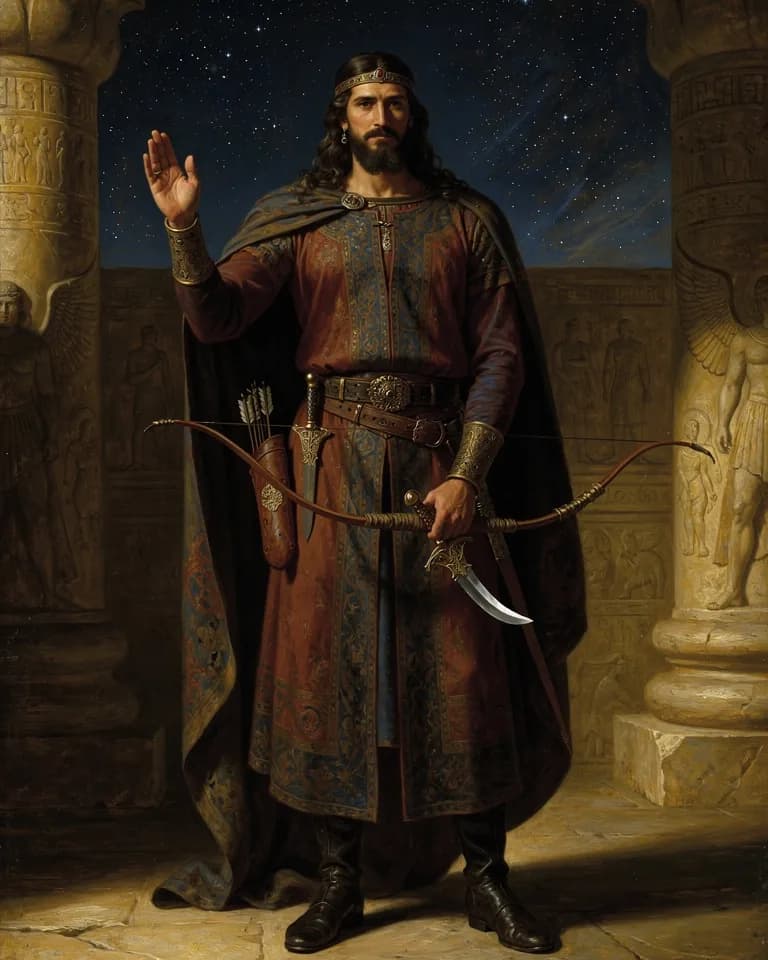
- contracts and oaths
- truth
- the light of dawn
- judgment of souls
The yazata of the covenant, 'lord of wide pastures', who watches with a thousand ears and ten thousand eyes over everyone who keeps or breaks their word, and whom Ahura Mazda created 'as worthy of sacrifice as myself'.
About Mithra
The Mihr Yasht
Yasht 10, one of the longest hymns of the Avesta, is devoted to Mithra. It opens with Ahura Mazda declaring that he created Mithra as worthy of sacrifice and prayer as himself, and it describes a watchful, terrible god of the covenant: the first of the heavenly beings to rise over Mount Hara before the sun, he drives a chariot across the sky, sees everything with his thousand ears and ten thousand eyes, and brings ruin on the 'Mithra-deceiver' who breaks a contract, while protecting those who keep faith. Before him runs Verethragna, victory, in the shape of a boar.
Kings, oaths, and the Sun
Artaxerxes II (r. 404-358 BCE) is the first Achaemenid king to invoke Mithra in his inscriptions, alongside Ahuramazda and Anahita. Greek writers equated Mithra with the Sun: Strabo reports that the Persians honor Helios, 'whom they call Mithras'. In Middle Persian tradition Mihr, with Sraosha and Rashnu, judges each soul at the Chinvat Bridge, and the seventh month and the autumn festival of Mehregan bear his name.
Mithra and Mithras
The Roman mystery god Mithras, worshipped in underground chambers across the Roman Empire from the first century CE and shown slaying a bull, shares Mithra's name. How much the Roman cult drew from Iranian religion is a long-standing scholarly debate; the bull-slaying scene, central to Roman Mithraism, has no counterpart in the Avesta.
Origin story
Created by Ahura Mazda as worthy of worship as himself (Yasht 10.1).
Across traditions
Parallel figures
Figures who play a role like Mithra's in other traditions.
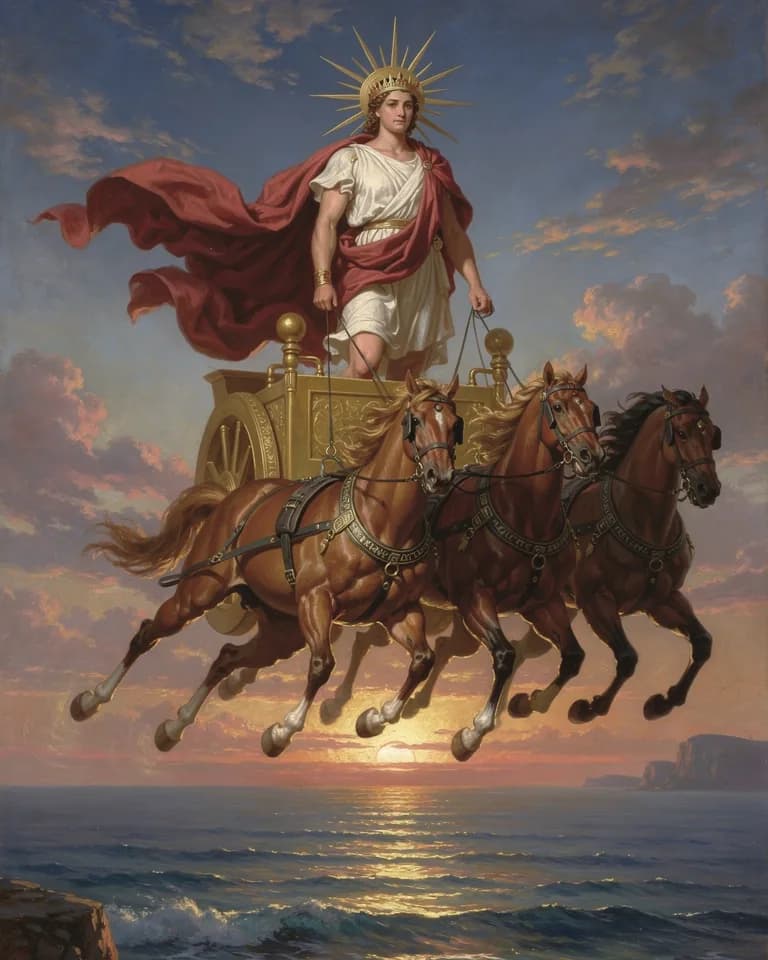 GreekHelios
Strabo (Geography 15.3.13) says the Persians honor Helios, 'whom they call Mithras', and the Commagene inscriptions at Nemrut Dağ name a combined Apollo-Mithras-Helios-Hermes; the solar identification is Greek interpretation of Mithra's association with light and dawn.
Compare Mithra and Helios side by side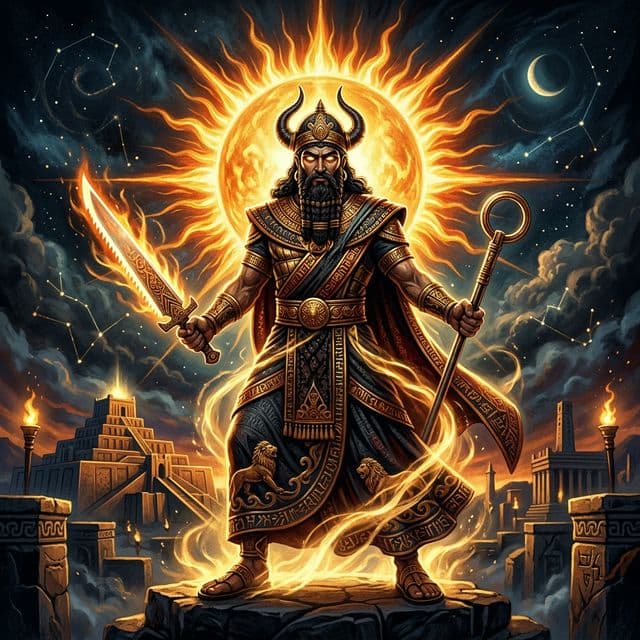 MesopotamianShamash
Both are all-seeing gods of the sun's light who guard oaths and justice, though Mithra's primary sense is the covenant itself rather than the solar disk.
Compare Mithra and Shamash side by side
Worship and cult
Temples, festivals, and practices recorded for Mithra
Invoked as witness and guardian of contracts and oaths; in Zoroastrian eschatology he judges souls with Sraosha and Rashnu at the Chinvat Bridge.
Sacred sites
- Zoroastrian fire temples are also called Dar-e Mehr, 'the court of Mithra'.
Festivals
- Mehregan, the autumn festival on the day Mihr of the month Mihr, still celebrated in Iran.
In the atlas
Where Mithra appears
Sources and further reading
Source notes
These references are recorded in the catalog. Their passage wording and translation have not been checked, so quotations are not displayed here.
- Avesta, Yasht 10.1 (trans. Darmesteter)
- Strabo, Geography 15.3.13 (paraphrase)
Appears in
Ancient and classical works featuring this figure.
lord of wide pastures and guardian of contracts (Yasht 10 (Mihr Yasht))
About this entry
By Elizabeth Stein for Mythos Atlas. About the author. Editorial notes are grounded in the site's cited sources and can be challenged through the contact page.
Parallels are editorial comparisons across traditions: a shared role does not, by itself, establish a shared origin.
Genealogy
Family tree
Mithra's parents, consorts, children and rivals, as recorded in the atlas.