Persian (Iranian) Tradition
Anahita
Arəduuī Sūrā Anāhitā(Ardvi Sura Anahita; Middle Persian Anahid)
Also known as Ardvi Sura Anahita, Anahid, Nahid, Anaitis
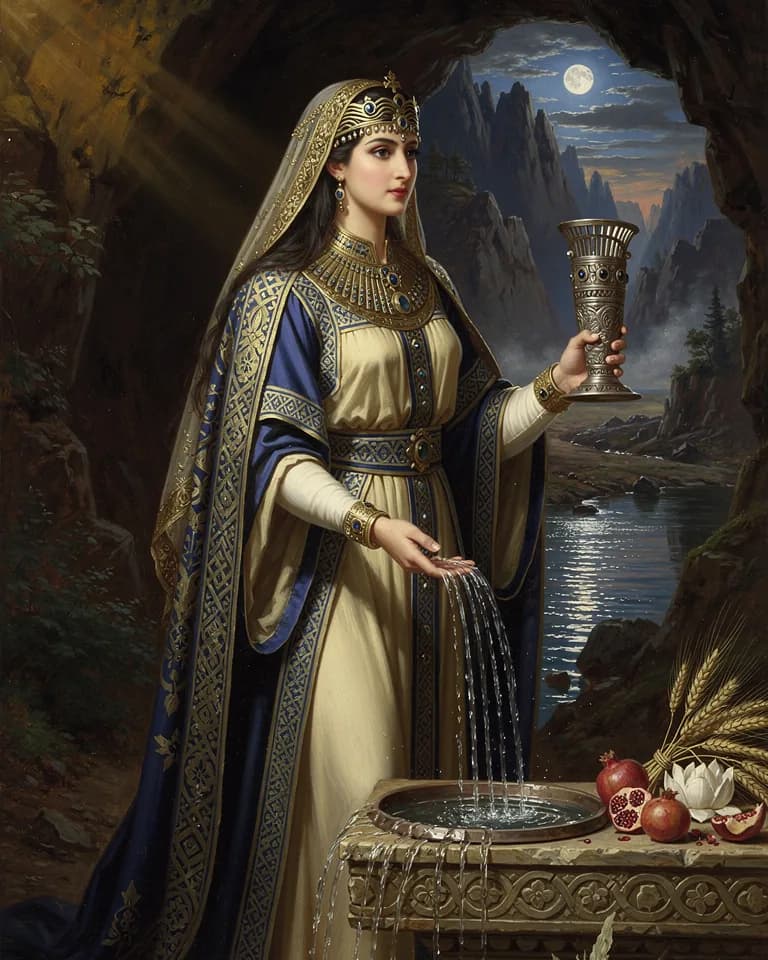
- the waters
- fertility and birth
- purity
- victory
The yazata of the waters, the heavenly river that flows from Mount Hukairya into the sea Vouru-Kasha and feeds every stream on earth, invoked for fertility, safe childbirth, and victory, and honored by Achaemenid and Sasanian kings.
About Anahita
The Aban Yasht
Yasht 5 is Anahita's hymn. Ahura Mazda commands sacrifice to 'this spring of mine', a river as large as all the waters on earth that runs from the height Hukairya down to the sea Vouru-Kasha, and from which all the waters of the seven regions of the world flow. She purifies the seed of males and the wombs of females and brings safe birth and milk. The hymn then catalogs heroes and villains who sacrificed to her, granting the prayers of the righteous and refusing the wicked, and it ends with a vivid description of her as a tall, strong maiden in a golden mantle, with golden earrings, a crown of stars, and robes of beaver skins.
A royal goddess
Artaxerxes II (r. 404-358 BCE) names Anahita with Ahuramazda and Mithra in his inscriptions, and the Babylonian priest Berossus, quoted by later Greek authors, says that he set up statues of 'Aphrodite Anaitis' in cities across the empire, an innovation in a religion that had not used cult images. Under the Sasanians, the dynasty's ancestor Sasan was remembered as the custodian of a fire temple of Anahid at Istakhr, and Sasanian kings honored her.
Name and identifications
The name combines several epithets: aredvi ('moist' or 'high'), sura ('strong'), and anahita ('undefiled'). Scholars have long compared the heavenly river with the Vedic river-goddess Sarasvati, whose name is cognate with the Iranian region Harahvaiti, and Greek writers equated Anahita with Artemis or Aphrodite.
Origin story
She 'proceeded forth from the Maker Mazda' (Yasht 5.7), who brought her waters down to the earth.
Across traditions
Parallel figures
Figures who play a role like Anahita's in other traditions.
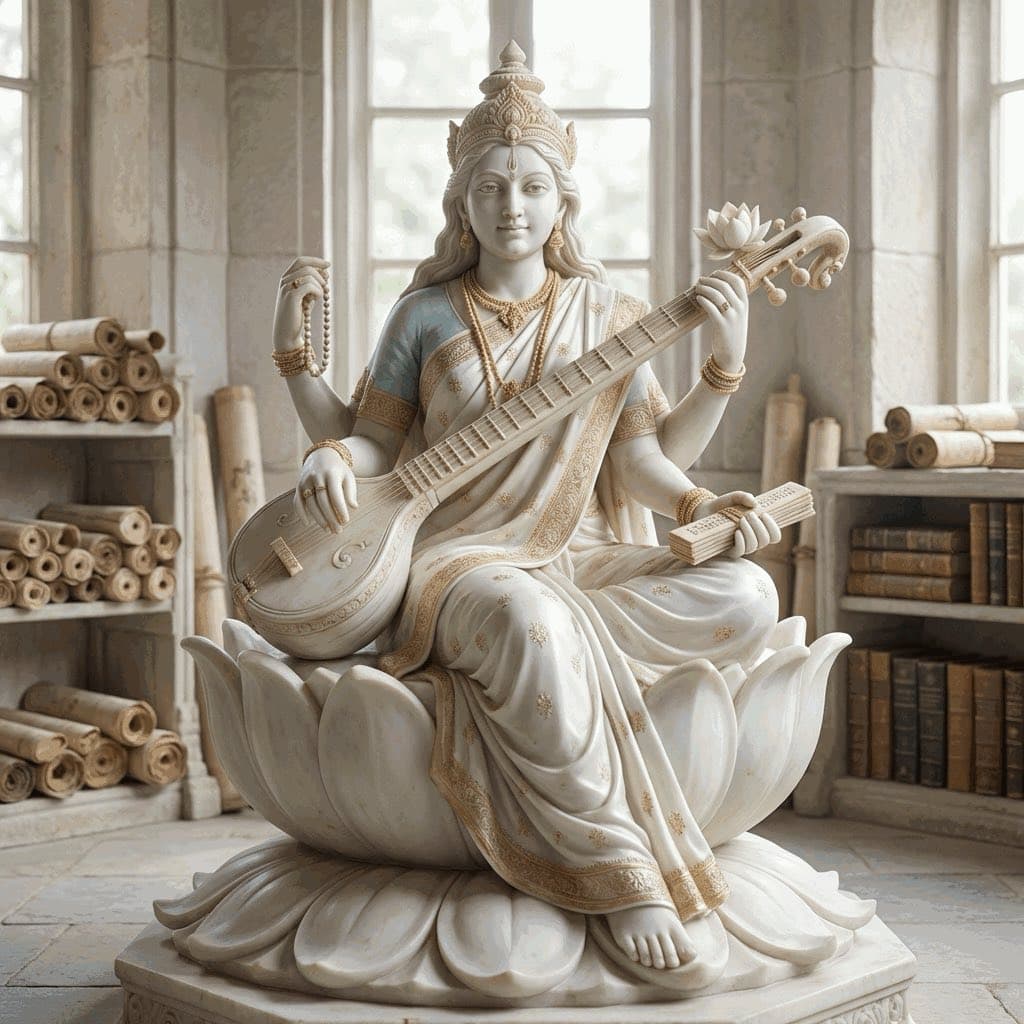 HinduSaraswati
Both are divine rivers personified as goddesses of fertility and purity; the Avestan region name Harahvaiti is the cognate of Sarasvati, and scholars have long compared Anahita's heavenly river with the Rigvedic river-goddess.
Compare Anahita and Saraswati side by side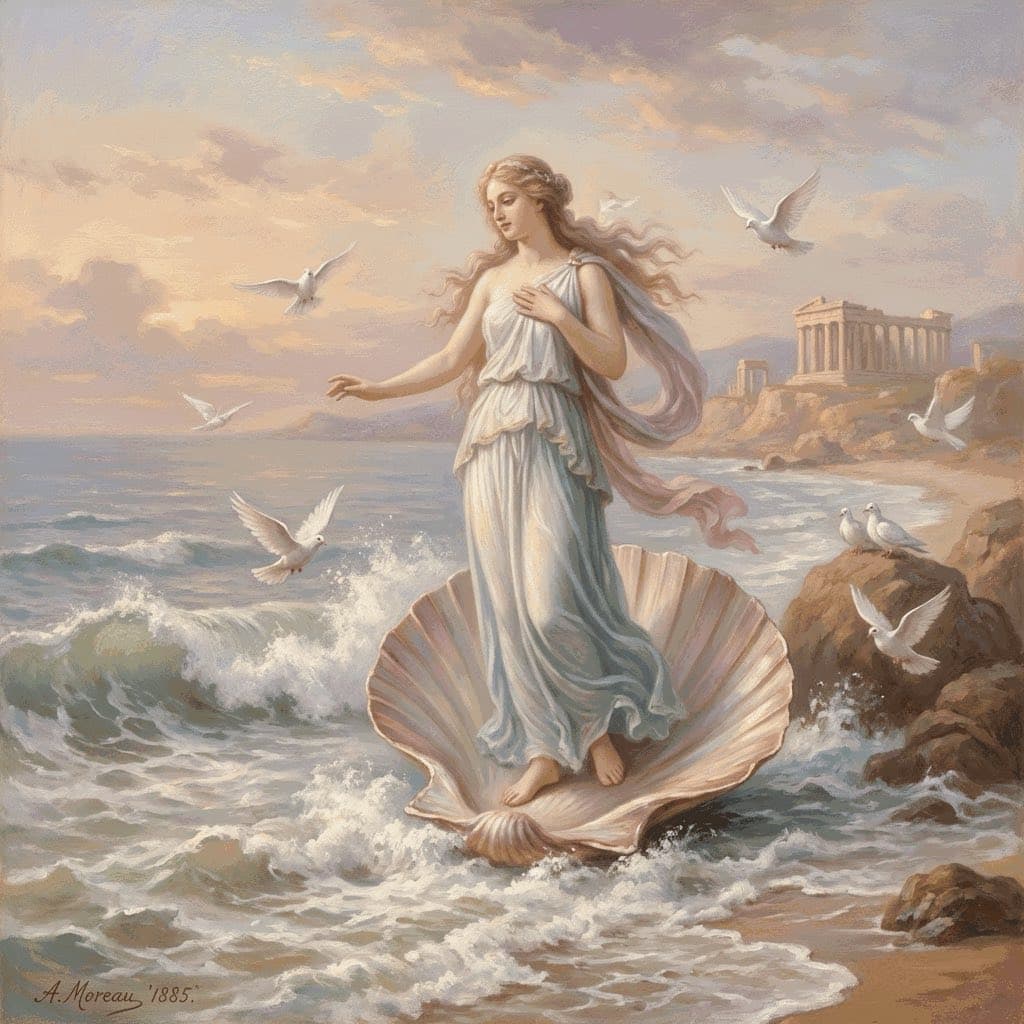 GreekAphrodite
Berossus, as quoted by Clement of Alexandria, calls the image Artaxerxes II set up 'Aphrodite Anaitis'; Greek writers also identified her with Artemis. The equations reflect Greek interpretation.
Compare Anahita and Aphrodite side by side
Worship and cult
Temples, festivals, and practices recorded for Anahita
Libations and prayers at rivers and springs; invoked for fertility, safe childbirth, and the purity of water.
Sacred sites
- A fire temple of Anahid at Istakhr in Persis, whose custodian Sasan was remembered as the ancestor of the Sasanian kings (al-Tabari).
- Images of Anahita set up by Artaxerxes II in Babylon, Susa, Ecbatana, Persepolis, Bactra, Damascus, and Sardis, according to Berossus as quoted by Clement of Alexandria.
Festivals
- Abangan, the feast of the waters on the day Aban of the month Aban in the Zoroastrian calendar.
Sources and further reading
Source notes
These references are recorded in the catalog. Their passage wording and translation have not been checked, so quotations are not displayed here.
- Avesta, Yasht 5.1 (trans. Darmesteter)
- Avesta, Yasht 5.123 (trans. Darmesteter)
Appears in
Ancient and classical works featuring this figure.
the heavenly river-goddess Ardvi Sura Anahita (Yasht 5 (Aban Yasht))
About this entry
By Elizabeth Stein for Mythos Atlas. About the author. Editorial notes are grounded in the site's cited sources and can be challenged through the contact page.
Parallels are editorial comparisons across traditions: a shared role does not, by itself, establish a shared origin.
Genealogy
Family tree
Anahita's parents, consorts, children and rivals, as recorded in the atlas.