Iranian plateau and Central Asia
Persian (Iranian) Tradition
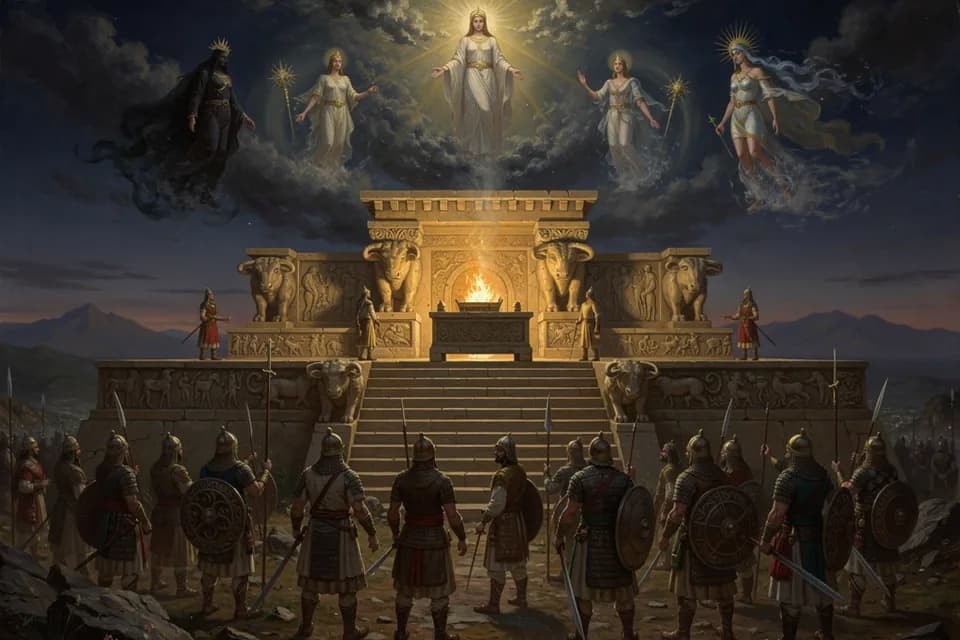
The divine beings and heroes of ancient Iran in two distinct layers: the Zoroastrian scripture of the Avesta, with Ahura Mazda, Angra Mainyu, Mithra, and Anahita, and Ferdowsi's Shahnameh, which a thousand years later retold Iran's primeval kings and heroes as epic.
History and context
Two traditions, kept apart
This entry draws on two bodies of material that should not be blurred together. The first is the Avesta, the scripture of Zoroastrianism, composed in Avestan, an Old Iranian language close to the Sanskrit of the Rigveda. Its oldest part, the Gathas, are seventeen hymns attributed to the prophet Zarathushtra; their date is disputed, with most scholars placing them somewhere between about 1500 and 1000 BCE on linguistic grounds and others later. The younger parts include the Yashts, hymns to individual divine beings such as Mithra, Anahita, and the star Tishtrya, and the Vendidad, a book of purity law that preserves myths of creation and of the first king, Yima. The Avesta was transmitted orally for many centuries, written down in a script devised in the Sasanian period, and survives only in medieval manuscripts. Middle Persian books of the ninth and tenth centuries CE, above all the Bundahishn, systematize its cosmology.
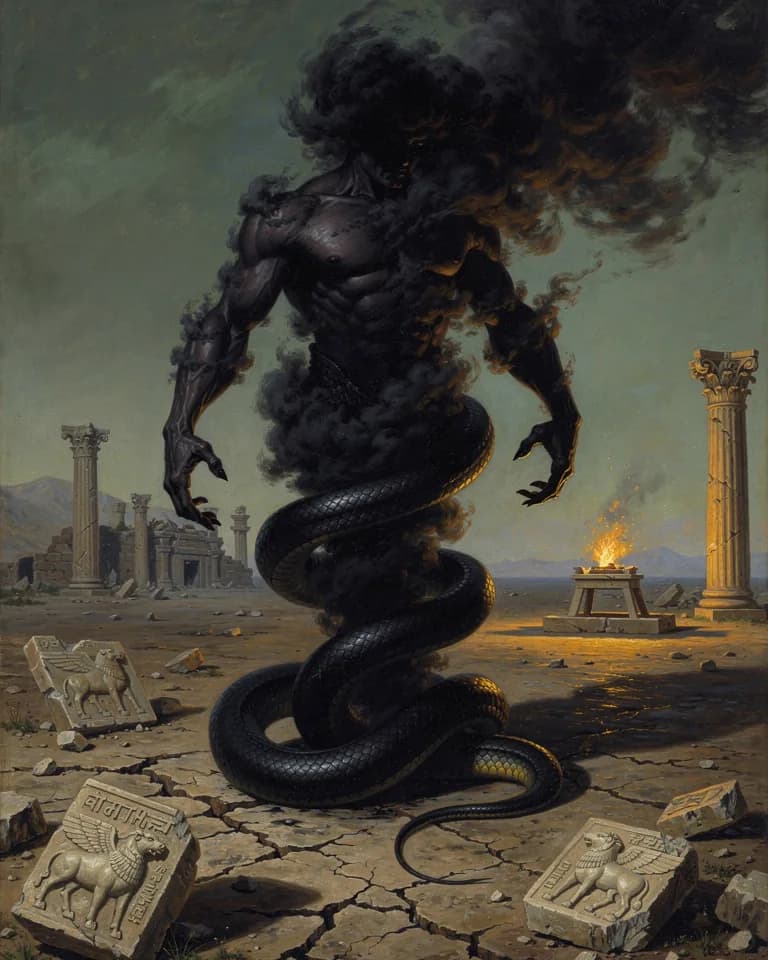
The second is the Shahnameh ('Book of Kings'), the Persian epic completed by Ferdowsi in 1010 CE, in Islamic-era Iran, from older chronicles of the Iranian kings. It contains no gods: Ferdowsi was a Muslim, and the Avestan figures reappear transformed into kings and villains, so that Yima becomes King Jamshid and the three-headed dragon Azhi Dahaka becomes the serpent-shouldered tyrant Zahhak. Its great heroes, Rostam above all, have no clear Avestan counterparts. Each record on this site says which layer it comes from.
One God, and beings worthy of worship
Zoroastrianism is a living religion, and 'pantheon' fits it only loosely. Zoroastrians today regard Ahura Mazda, the Wise Lord, as the one uncreated God. The Amesha Spentas ('Beneficent Immortals') such as Spenta Armaiti are his emanations or aspects, and the yazatas ('beings worthy of worship') such as Mithra, Anahita, and Tishtrya are divine beings created by him and honored in their own hymns. Opposed to this good creation is Angra Mainyu (Ahriman), the Hostile Spirit, who is not a god to be worshipped but the source of death, lies, and every corruption. At the heart of the Gathas is the choice between truth (asha) and the lie (druj) that each person must make.
Kings and inscriptions
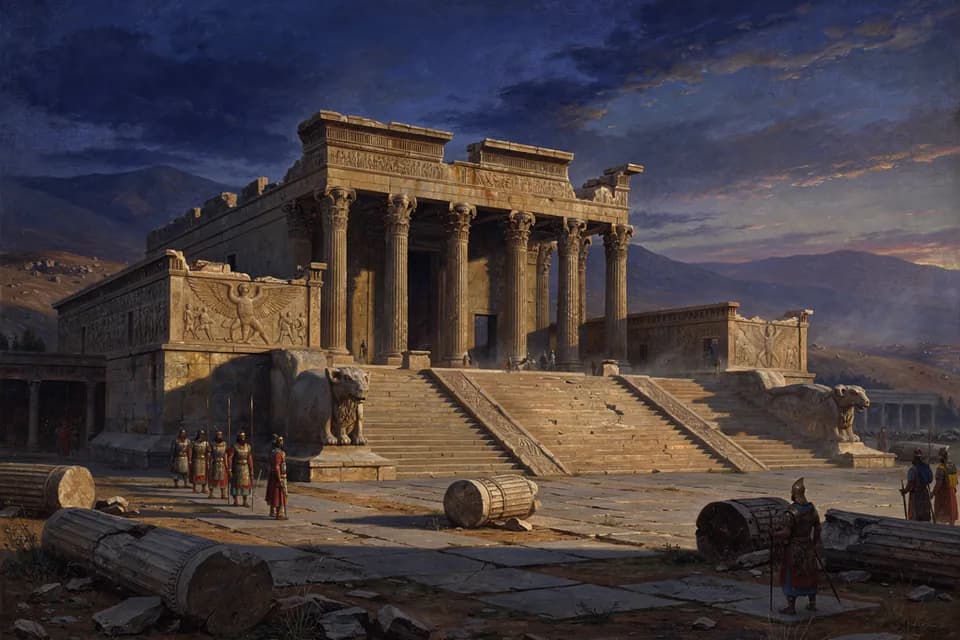
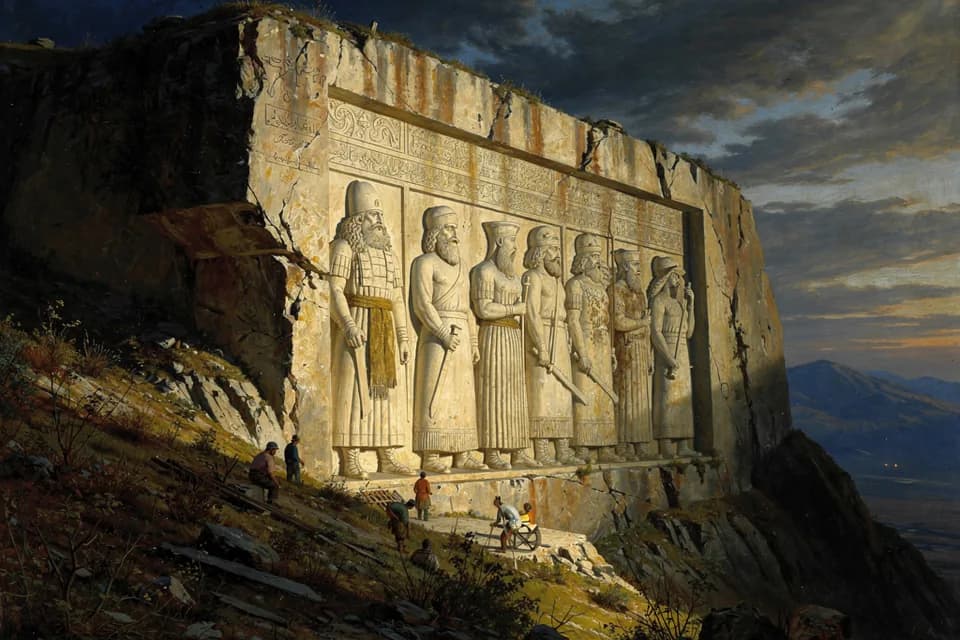
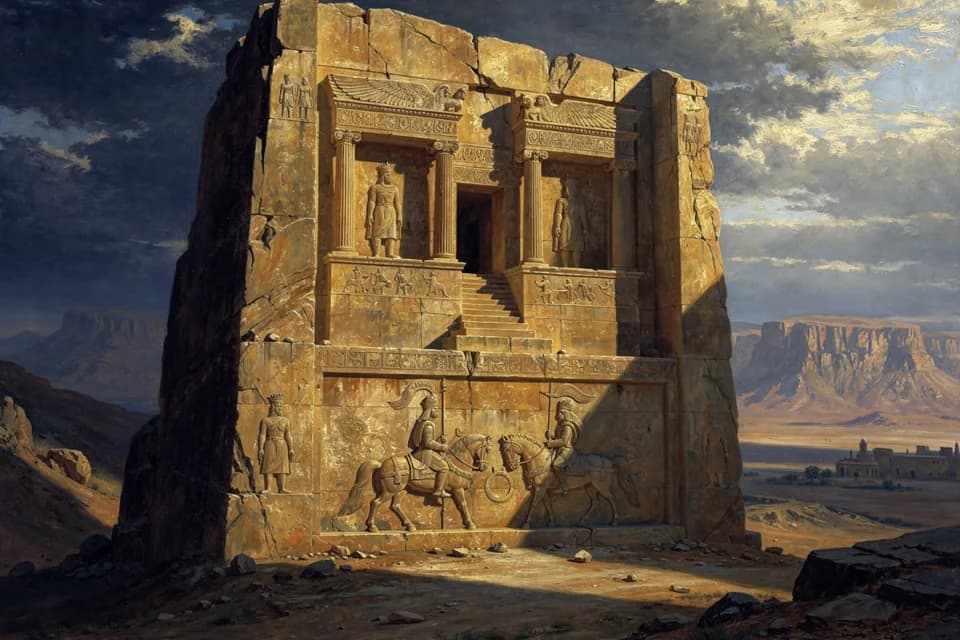
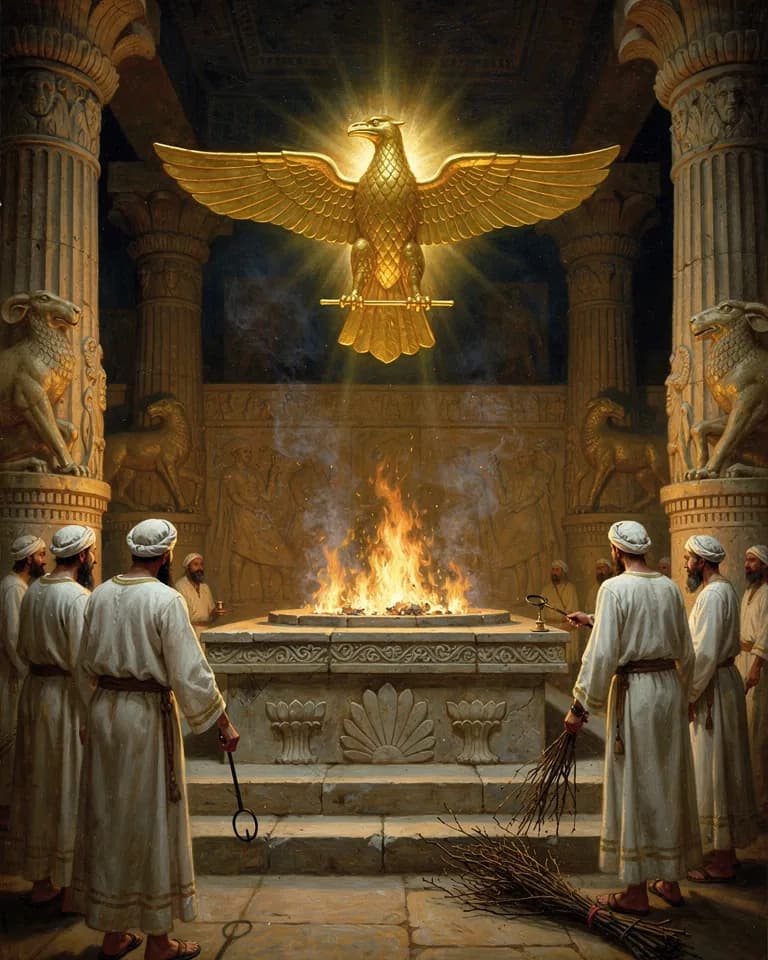
The Achaemenid kings (550-330 BCE) credited their rule to 'the favor of Ahuramazda' in inscriptions at Behistun, Persepolis, and Naqsh-e Rostam; Artaxerxes II (r. 404-358 BCE) is the first king whose inscriptions also name Anahita and Mithra. Herodotus reports that the Persians worshipped without temples or statues, on the tops of mountains. Under the Sasanians (224-651 CE) Zoroastrianism became a state church with great fire temples, and a speculative current, Zurvanism, made Infinite Time the father of both spirits. After the Arab conquest the religion became a minority in Iran; many Zoroastrians migrated to India, where they are known as Parsis. Zoroastrian communities survive today in Iran, India, and a worldwide diaspora, and festivals rooted in the old calendar, above all Nowruz, the new year at the spring equinox, are celebrated across the Iranian world.
Cautions
The winged figure in a disc on Achaemenid reliefs, now called the Faravahar, is popularly identified with Ahura Mazda, but scholars disagree whether it represents the god, the royal glory, or the king's guardian spirit. The Mithras of the Roman mystery cult shares a name with the Iranian Mithra, but how much, if anything, of Iranian belief lay behind the Roman mysteries remains debated.
Cosmology
Endless Light, the Seven Regions, and the House of the Lie
A world between light and darkness: the House of Song above, the stations of stars, moon, and sun, the seven regions of the earth around the world-mountain Hara and the sea Vouru-Kasha, the Chinvat Bridge that every soul must cross, and the House of the Lie below.
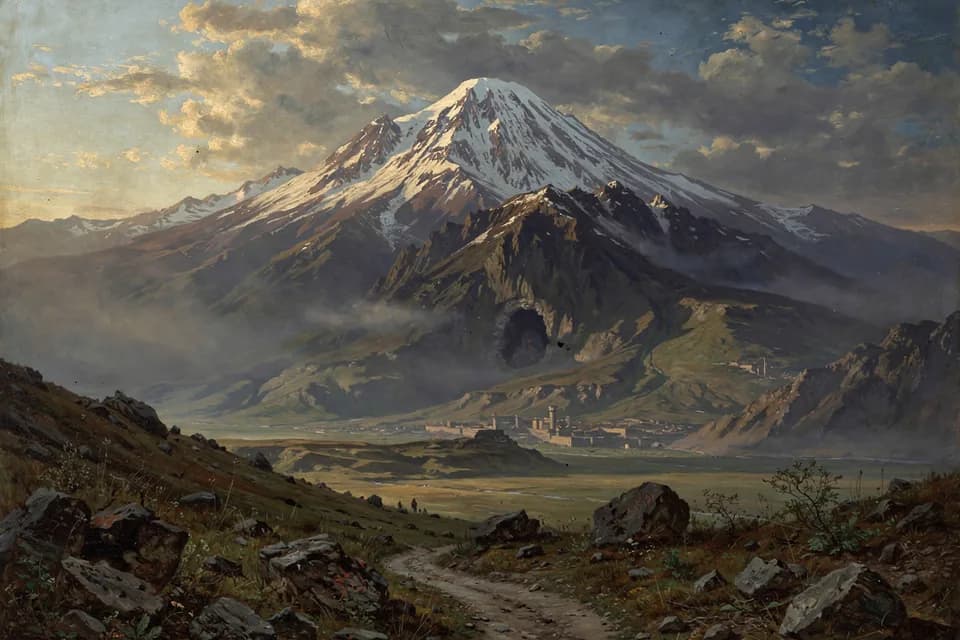
Hara Berezaiti (High Hara): · The world-mountain around which the sun, moon, and stars revolve; the Mihr Yasht has Mithra rise over Hara before the sun, and the Chinvat Bridge stretches from its peak. Later identified with the Alborz range of northern Iran.
Garo-demana: The House of Song
BeyondThe House of Song and the Endless LightsGarō.dəmāna / Garōdmān
The highest heaven, the dwelling of Ahura Mazda and the Beneficent Immortals, reached by righteous souls after the bridge.
The Stations of the Sun, Moon, and Stars
AboveThe Heavens
The spheres of the stars, moon, and sun, crossed by Mithra's chariot and by Tishtrya, the rain-star, on his flight to the sea.
The Seven Regions of the Earth
MiddleXvaniratha and the Six Outer Regionshaft kišwar
The inhabited central region and the six surrounding ones, ringed by mountains, where fire burns on the altars and Yima once ruled a deathless golden age.
Visit Mount Damavand
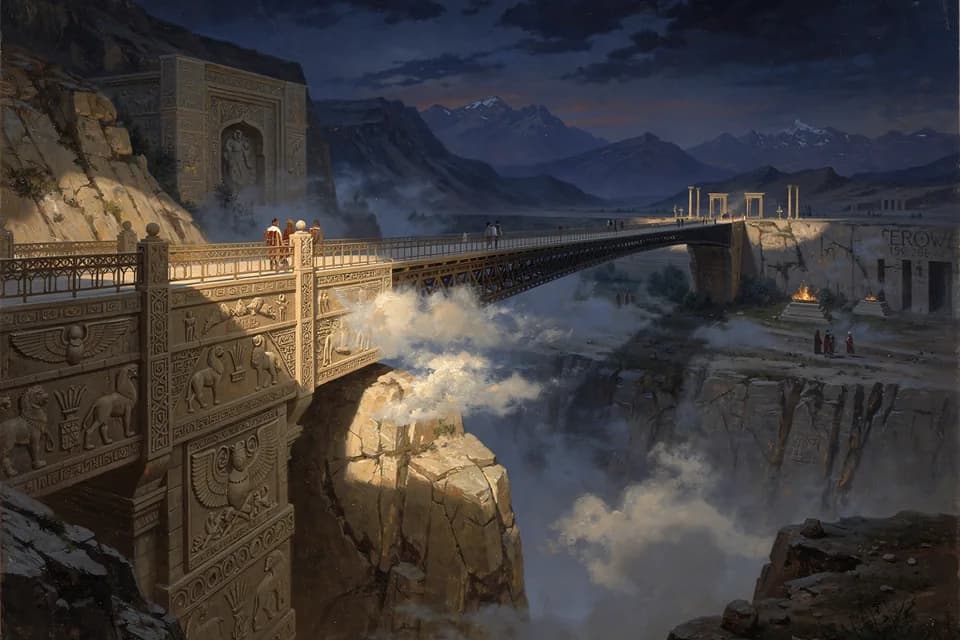
The Chinvat Bridge
BeyondThe Bridge of the SeparatorCinvatō Pərətu
The crossing every soul makes on the fourth dawn after death, judged by Mithra, Sraosha, and Rashnu: broad for the righteous, narrow as a blade for the wicked.
Visit Chinvat Bridge
The Sea Vouru-Kasha
WatersDrujo-demana: The House of the Lie
BelowThe House of the LieDrūjō.dəmāna / Dušox
The place of darkness, stench, and torment into which the wicked fall from the bridge, the realm of the Hostile Spirit and his demons until the final renewal.
 Ahura Mazda
 Spenta Armaiti
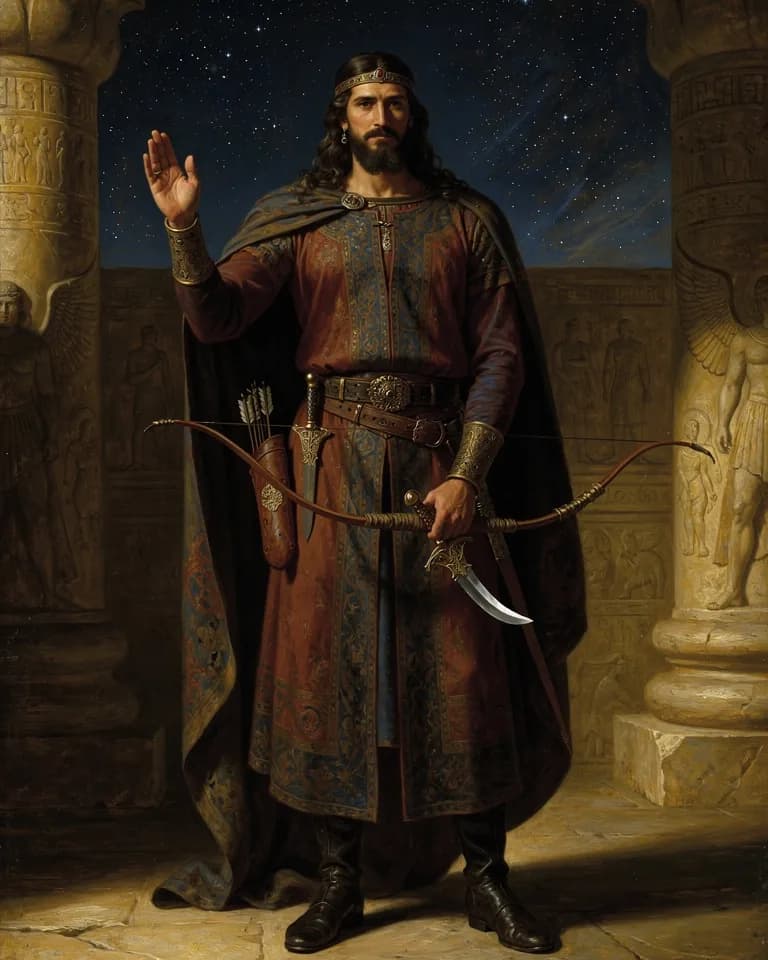
 Mithra
 Tishtrya
 Verethragna
 Atar
Atar Yima
Yima Simurgh
 Sraosha
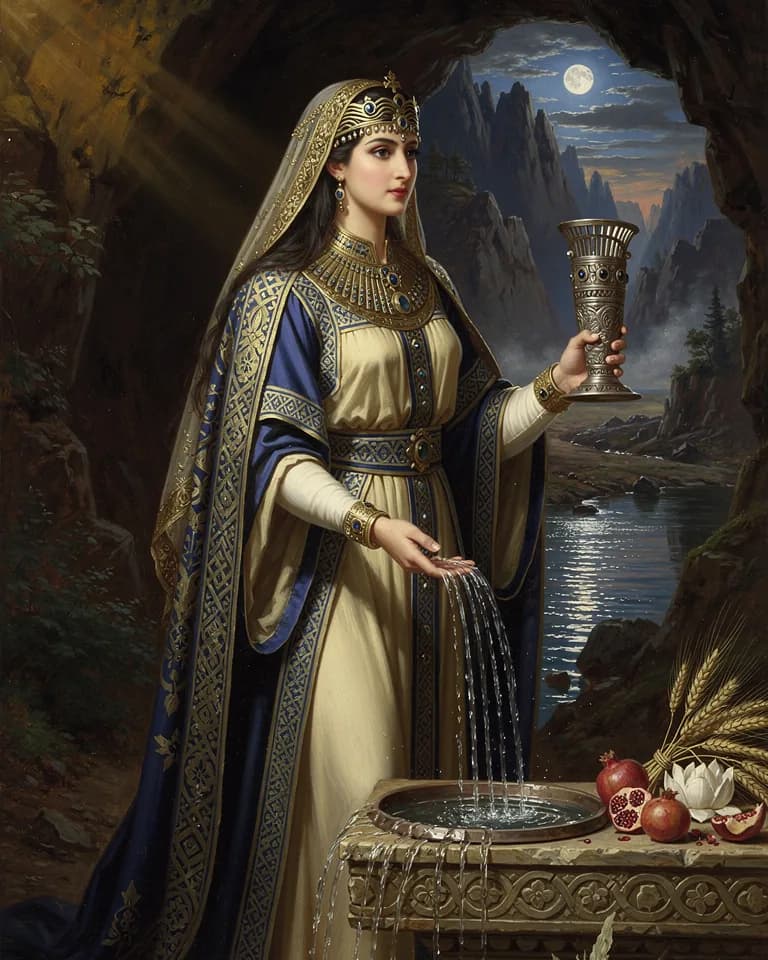
 Anahita
 Apaosha
 Angra Mainyu
 Azhi Dahaka
 Div-e Sepid
Sources
Works cited
The Zend-Avesta, Parts I-II (Vendidad; Yashts)
trans. James Darmesteter
The Zend-Avesta, Part III (Yasna, Gathas)
trans. L. H. Mills
Bundahishn
trans. E. W. West
Shahnameh
Abolqasem Ferdowsi; trans. A. G. and E. Warner; Dick Davis
Behistun Inscription
Darius I
A History of Zoroastrianism
Mary Boyce
About this guide
By Elizabeth Stein for Mythos Atlas. About the author. Editorial notes are grounded in the site's cited sources and can be challenged through the contact page.
The catalog period is the span of the sources this atlas draws on, not the age of the tradition itself. Many traditions are older than their first written record, and many are still practised.
11 in the atlas
Divine Beings & Kings
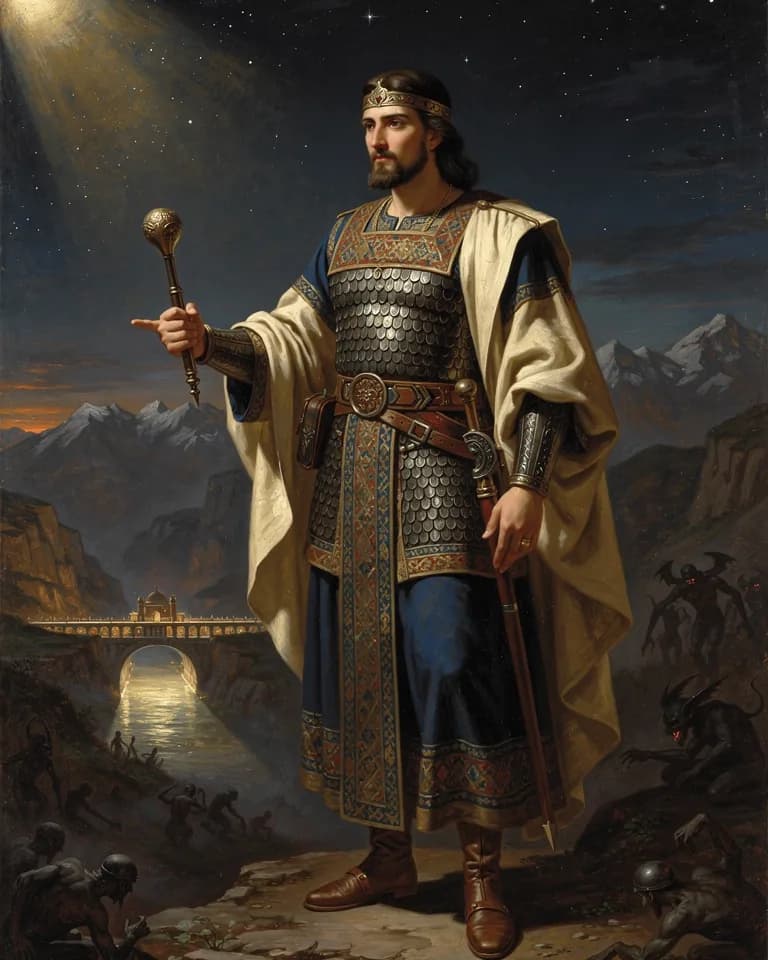
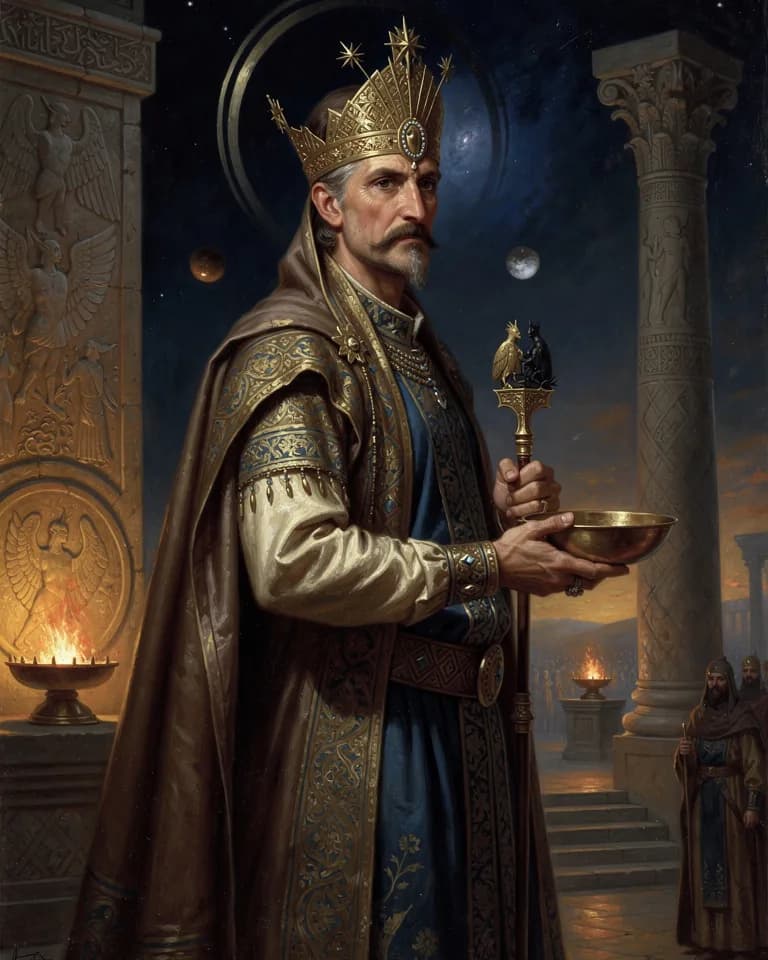
6 retold
Stories and myths
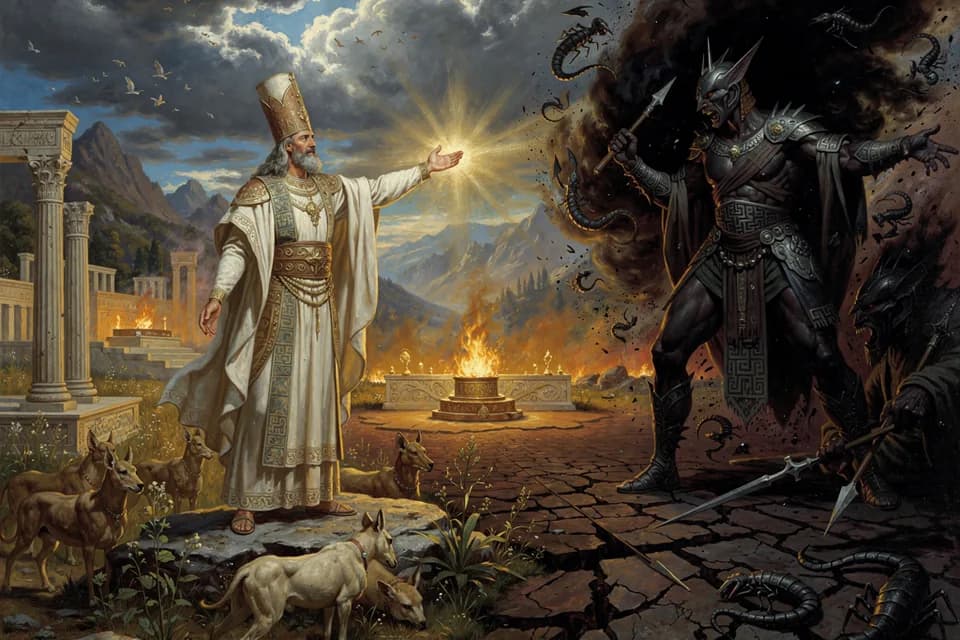 Ohrmazd and Ahriman: The Two Spirits and the Assault on CreationcreationFrom the Gathas' two primal spirits and the choice between truth and the lie to the Bundahishn's cosmic drama: Ohrmazd in light and Ahriman in darkness, a created world attacked and corrupted, and the promise of its final renewal.
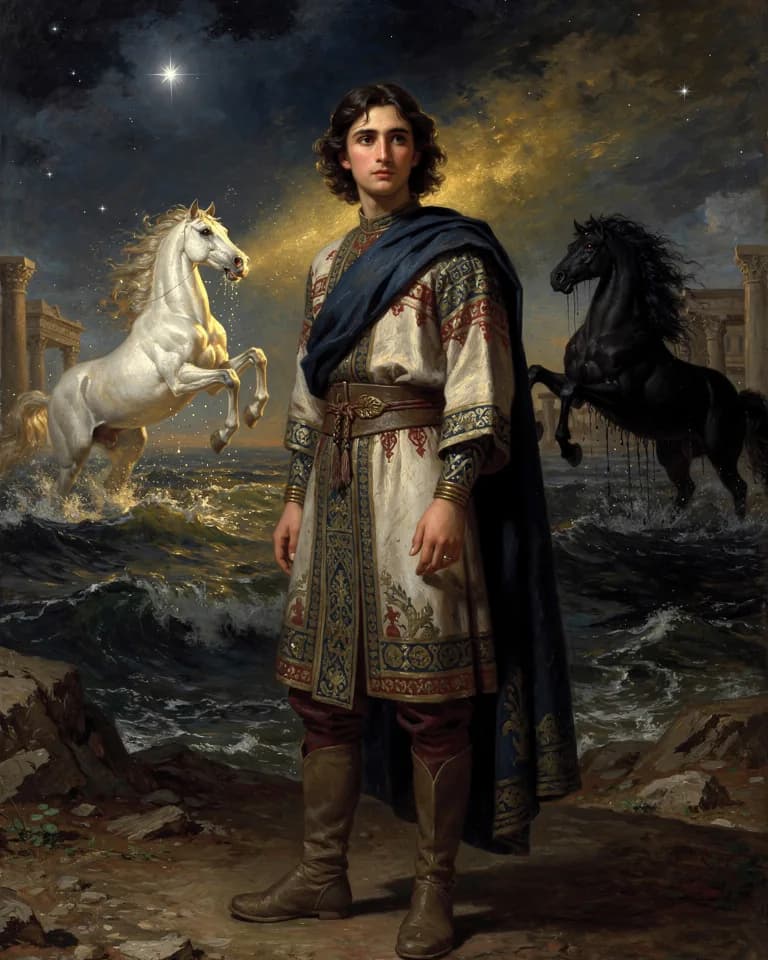
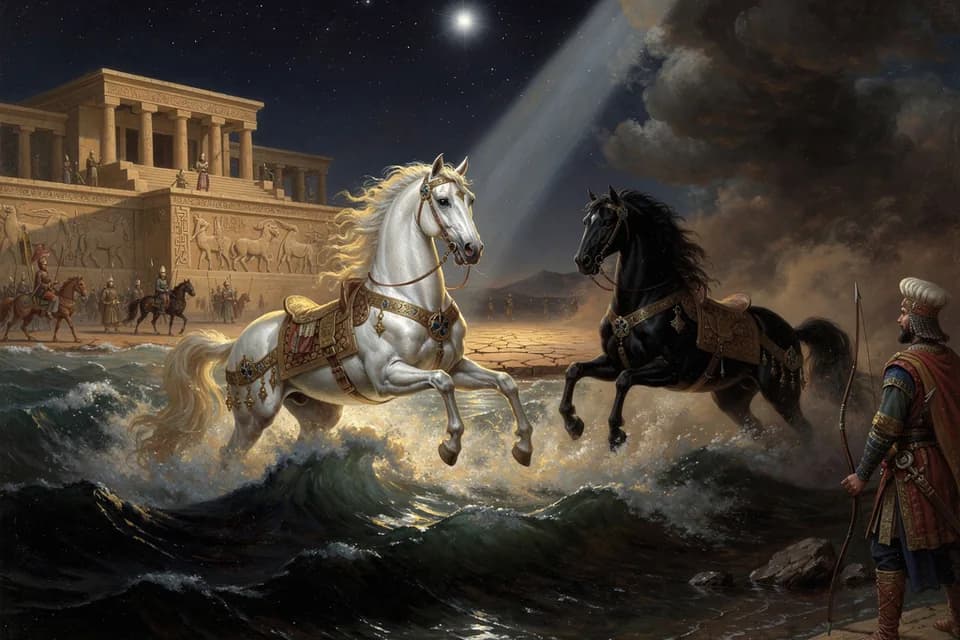 Tishtrya and the Demon of DroughtmythThe star Sirius descends to the cosmic sea as a white horse to release the rains, but the black horse of drought, Apaosha, defeats him; only when he is worshipped by his own name does Tishtrya return in strength, drive Apaosha away, and send the rain across the world.
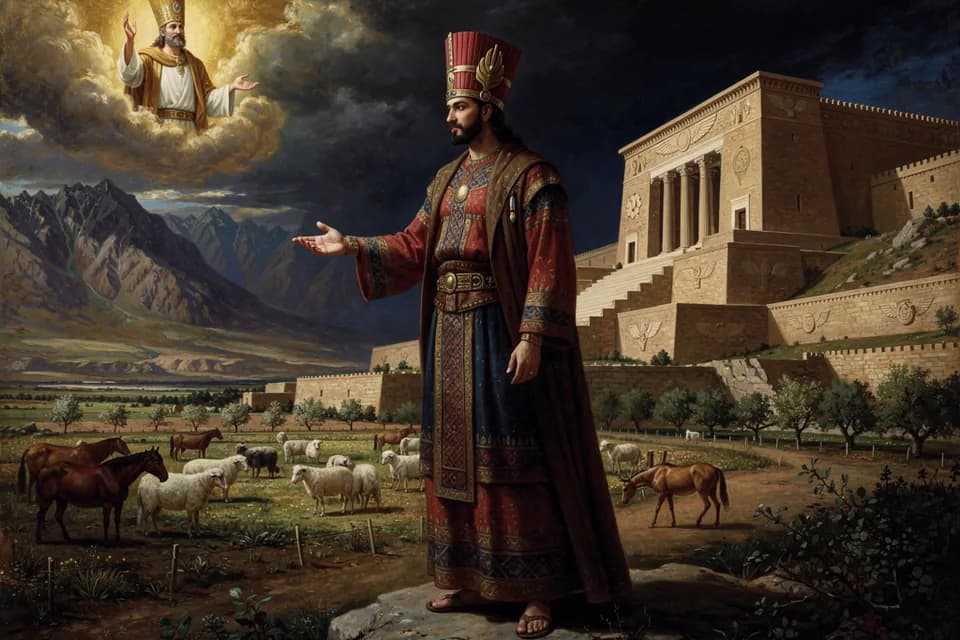 Yima and the VarmythYima, the first king, declines to be Ahura Mazda's prophet but agrees to rule and protect the world; he enlarges the earth three times, then builds an enclosure to preserve the best of every living thing from the coming winters, before his pride costs him the royal Glory.
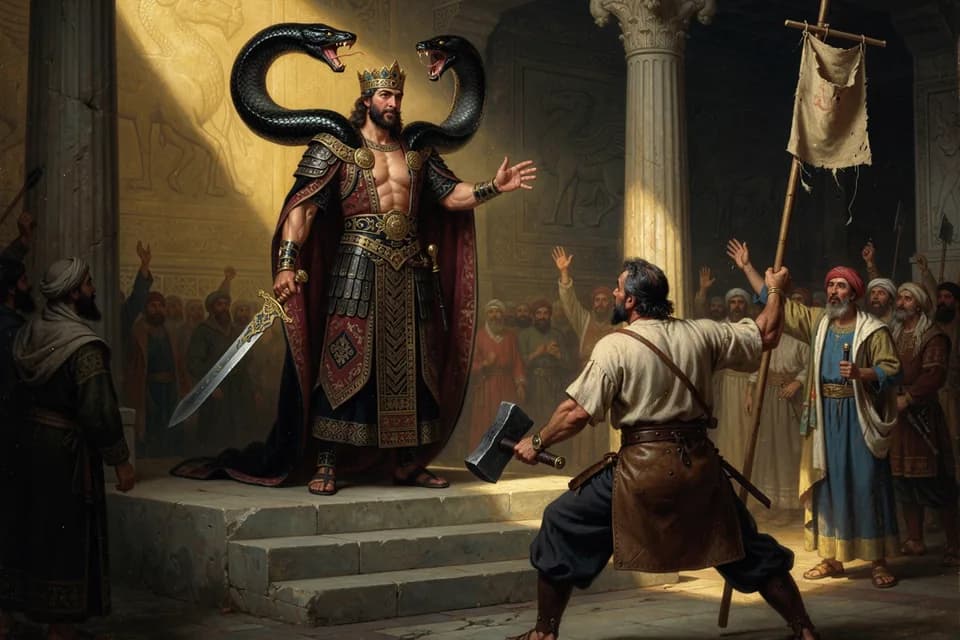 Zahhak the Serpent King and Kaveh the BlacksmithlegendTempted by Iblis, the prince Zahhak kills his father and seizes Jamshid's throne; serpents grow from his shoulders and must be fed on human brains, until the blacksmith Kaveh raises his leather apron as a banner and Fereydun defeats the tyrant and chains him in Mount Damavand.
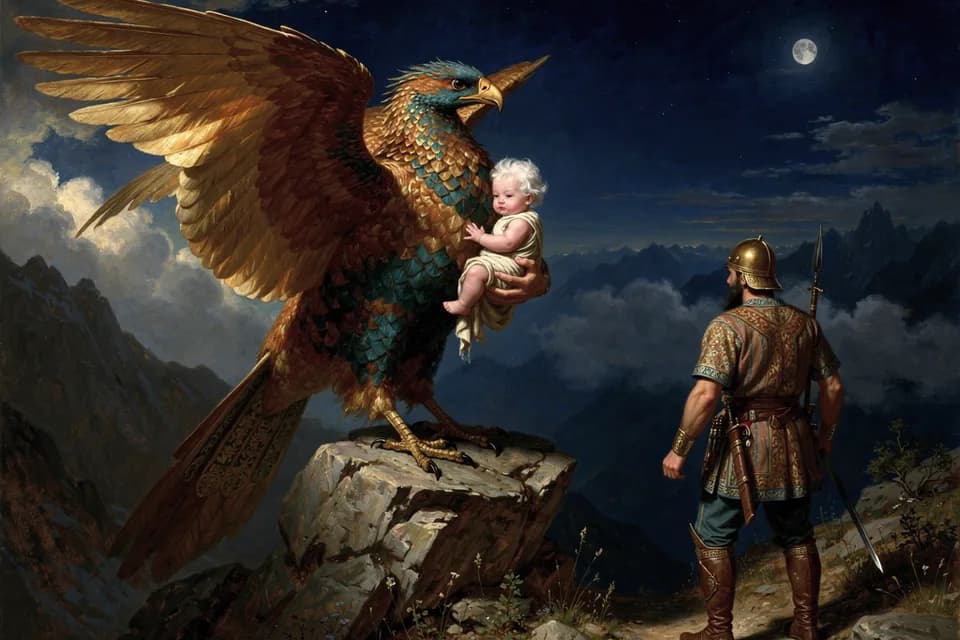 Zal and the SimurghlegendThe hero Sam abandons his newborn son on Mount Alborz because the child's hair is white as an old man's; the great bird Simurgh carries him to her nest and raises him, and when the repentant father comes for him, she gives the boy a feather to burn whenever he needs her.
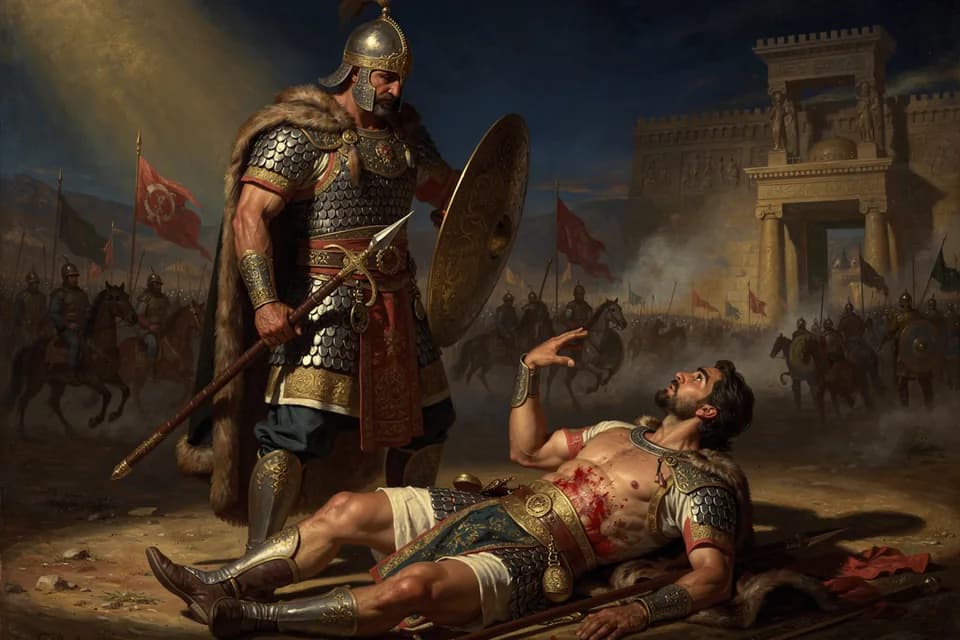 Rostam and SohrabtragedyRostam fathers a son on a night in Samangan and leaves a token for him; years later the young champion Sohrab leads an army against Iran seeking his father, and the two meet in single combat without either knowing the other, until Rostam's dagger strikes home.
6 in the atlas