Source recordAncient text
Shahnameh (The Book of Kings)
Abolqasem Ferdowsi · completed 1010 CE · Persian
Ancient text
Shahnameh (The Book of Kings)
Abolqasem Ferdowsi
The Persian national epic of roughly fifty thousand couplets, telling the history of Iran's kings from the first man to the Arab conquest. Composed in the Islamic era from older Iranian traditions, it retells Avestan figures as kings and heroes: Yima as Jamshid, Azhi Dahaka as Zahhak, Thraetaona as Fereydun.
About this work
The Persian national epic of roughly fifty thousand couplets, telling the history of Iran's kings from the first man to the Arab conquest. Composed in the Islamic era from older Iranian traditions, it retells Avestan figures as kings and heroes: Yima as Jamshid, Azhi Dahaka as Zahhak, Thraetaona as Fereydun.
Where to start
Dick Davis's 2006 prose-and-verse translation is the most readable complete selection; the Warners' nine-volume verse translation (1905-1925) is complete and public domain but archaic.
Figures in the text
Heroes and divinities who feature prominently, with where they appear.
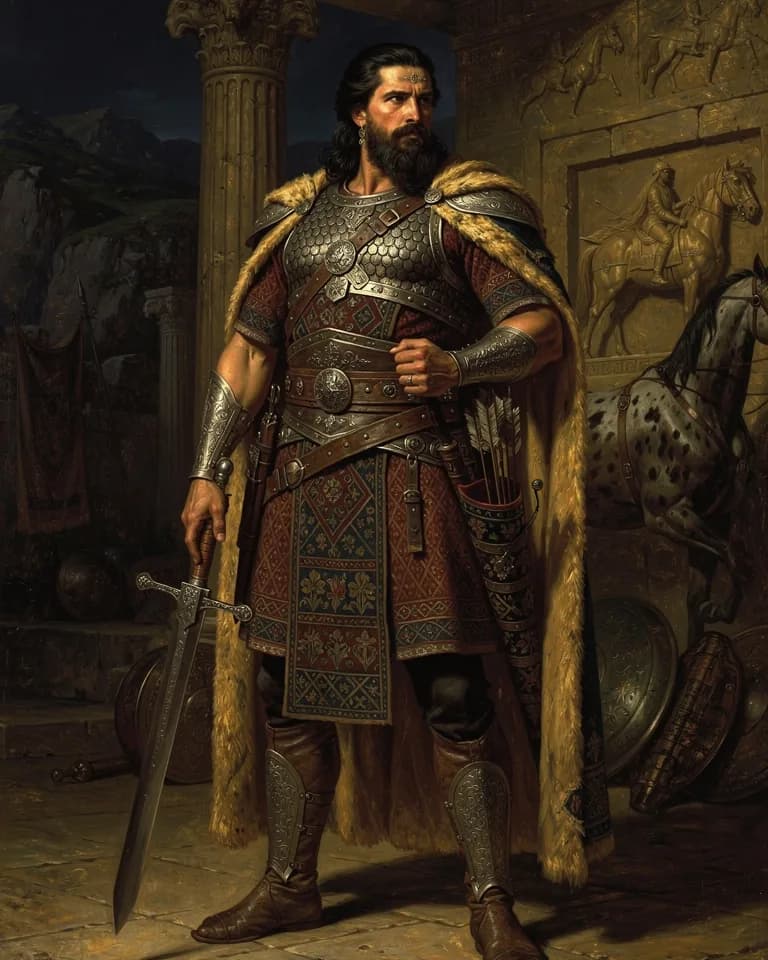
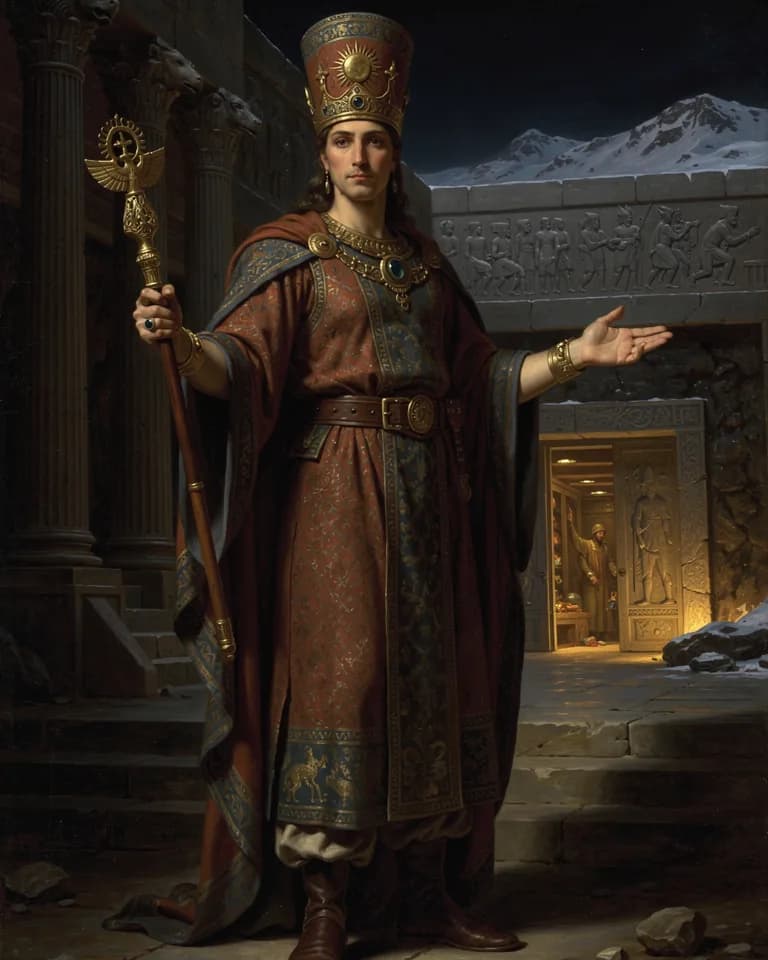
Key scenes
Turning points of the work, in reading order.
Zahhak and Kaveh
The serpent-shouldered tyrant is overthrown when the blacksmith Kaveh raises his leather apron as a banner for Fereydun.
Zal and the Simurgh
Exposed as an infant for his white hair, Zal is raised by the Simurgh on Mount Alborz.
Rostam and Sohrab
Rostam kills his own son in single combat, learning who he is only as he dies.
Stories drawn from it
Retellings in the atlas that quote or cite this work.
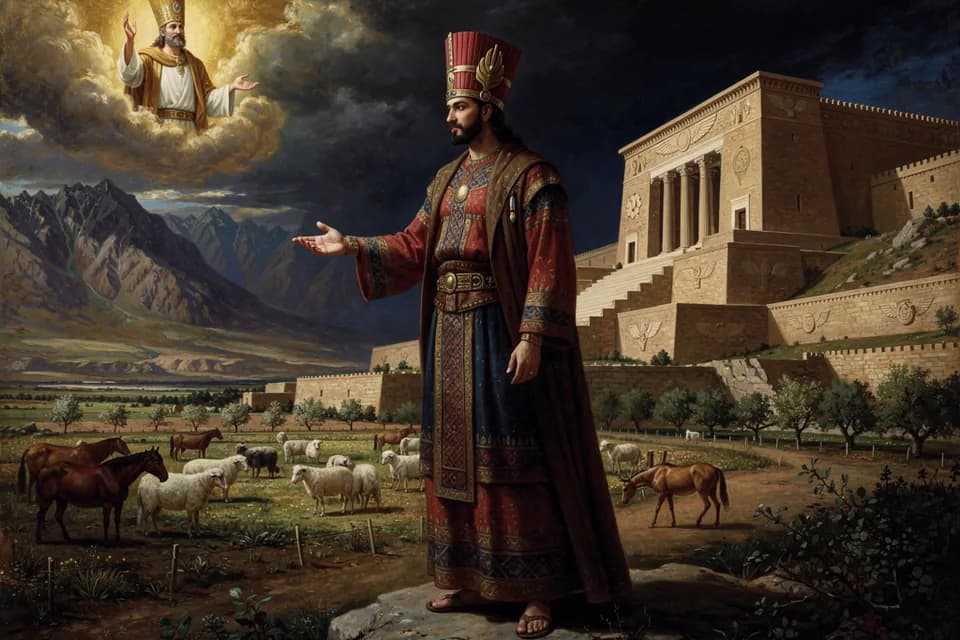 Yima and the VarmythYima, the first king, declines to be Ahura Mazda's prophet but agrees to rule and protect the world; he enlarges the earth three times, then builds an enclosure to preserve the best of every living thing from the coming winters, before his pride costs him the royal Glory.
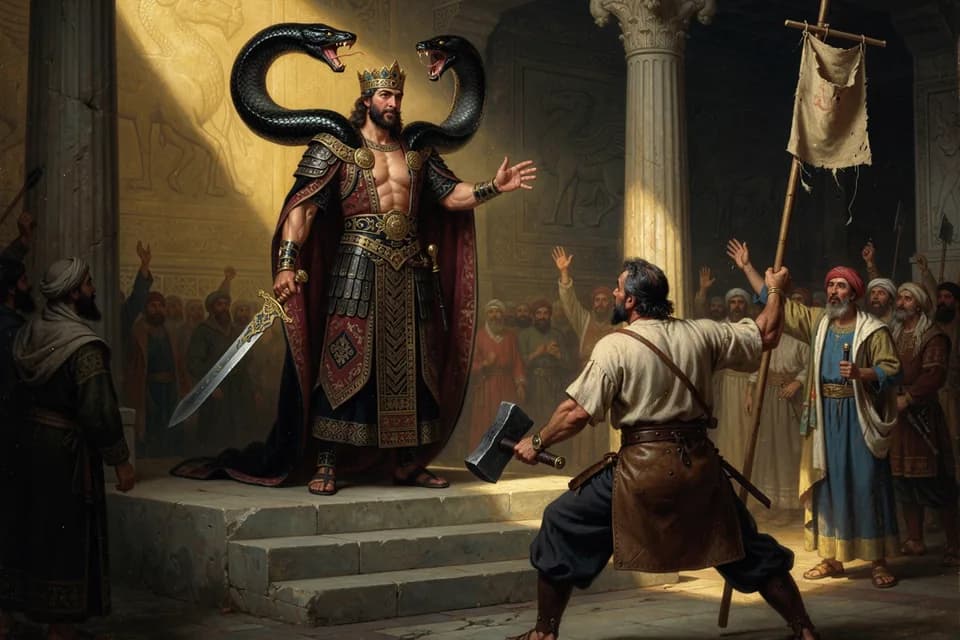 Zahhak the Serpent King and Kaveh the BlacksmithlegendTempted by Iblis, the prince Zahhak kills his father and seizes Jamshid's throne; serpents grow from his shoulders and must be fed on human brains, until the blacksmith Kaveh raises his leather apron as a banner and Fereydun defeats the tyrant and chains him in Mount Damavand.
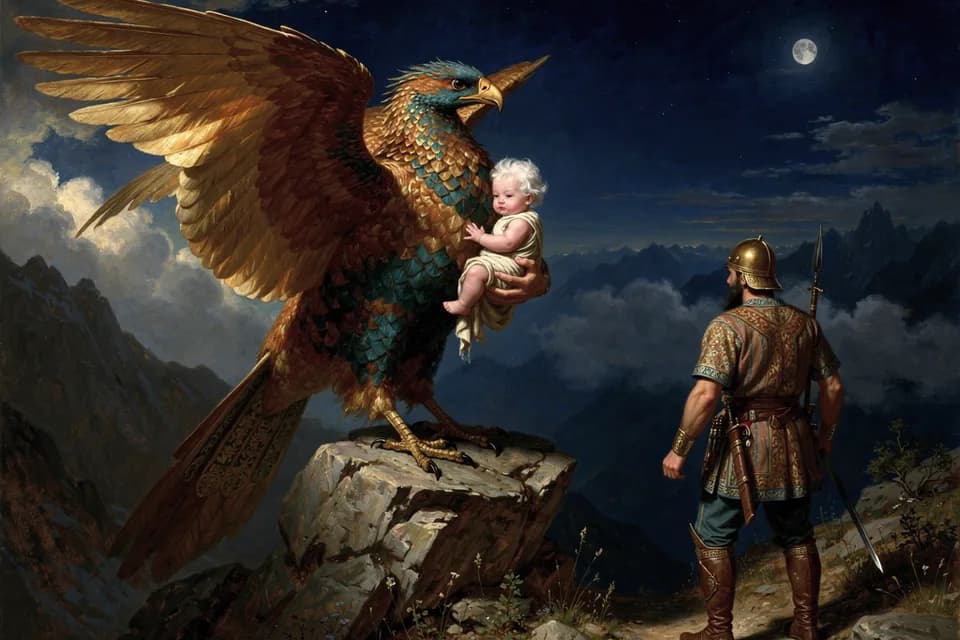 Zal and the SimurghlegendThe hero Sam abandons his newborn son on Mount Alborz because the child's hair is white as an old man's; the great bird Simurgh carries him to her nest and raises him, and when the repentant father comes for him, she gives the boy a feather to burn whenever he needs her.
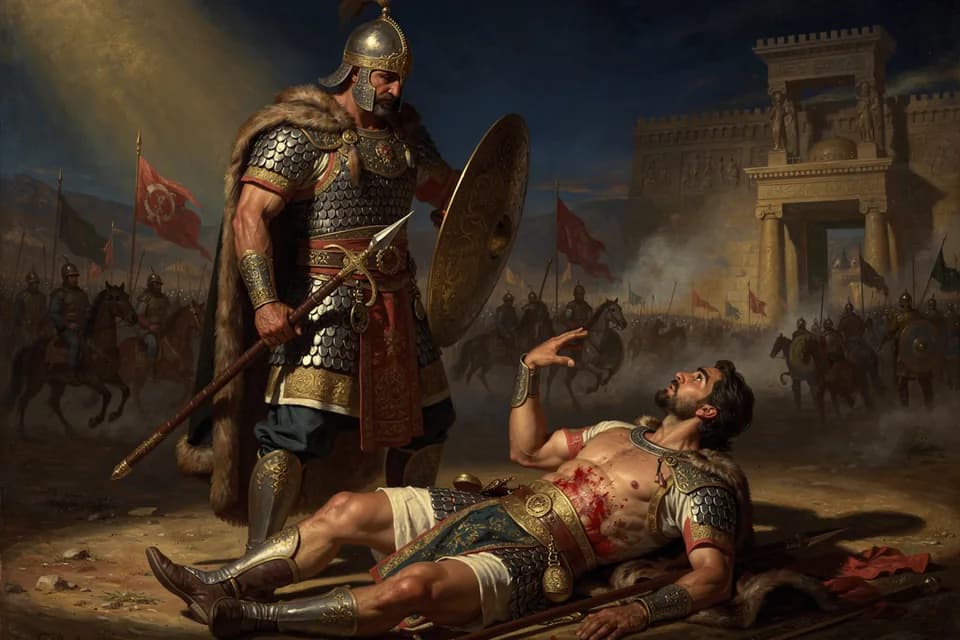 Rostam and SohrabtragedyRostam fathers a son on a night in Samangan and leaves a token for him; years later the young champion Sohrab leads an army against Iran seeking his father, and the two meet in single combat without either knowing the other, until Rostam's dagger strikes home.
About this record
By Elizabeth Stein for Mythos Atlas. About the author. Editorial notes are grounded in the site's cited sources and can be challenged through the contact page.
Dates and authorship follow standard scholarly references; for many ancient works both are approximate or disputed.