Greek Pantheon
Helios
Ἥλιος(Hēlios)
Also known as Helius, Hyperion (as epithet), Sol (Roman)
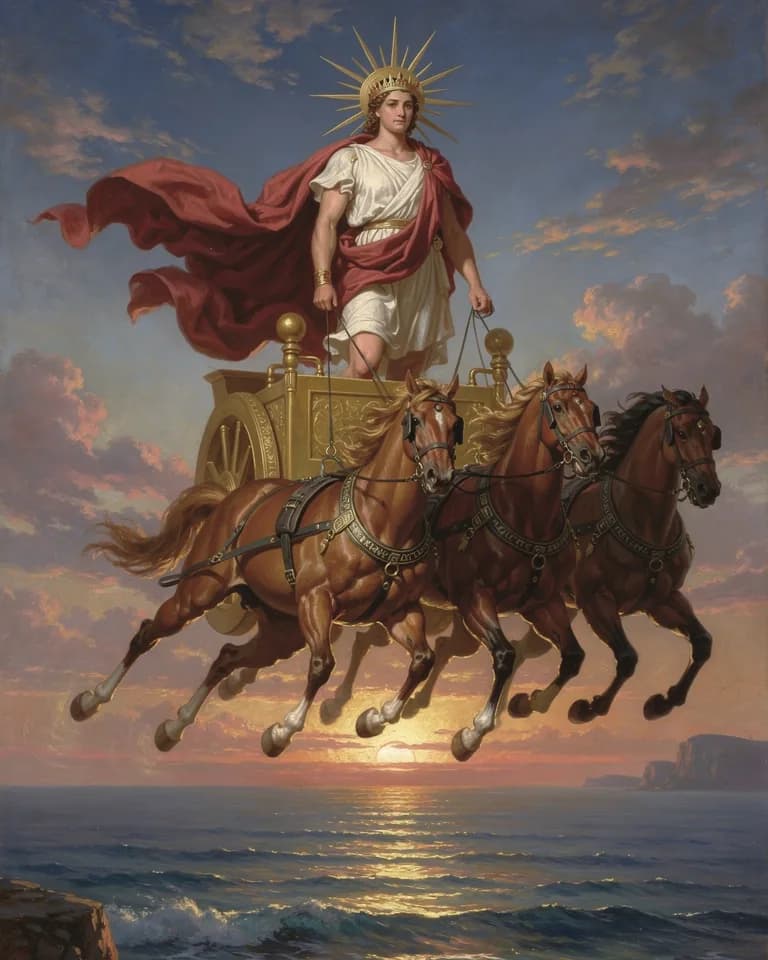
- the sun
- sight
- oaths
- daylight
The Titan-born sun who drives his chariot across the sky each day and sees everything beneath it. Son of Hyperion and Theia, brother of Selene (Moon) and Eos (Dawn), Helios is the witness gods and mortals call on because nothing happens outside his gaze.
About Helios
The Sun Who Sees All
Hesiod names Helios as a child of the Titans Hyperion and Theia, born with his sisters Selene and Eos. He is not an Olympian but an older power, and Greek poetry treats him less as a ruler than as a witness: because he crosses the whole sky every day, he sees what others miss.
Witness and Informer
That role drives his best-known appearances. In the Homeric Hymn to Demeter it is Helios who tells the grieving goddess that Hades carried off Persephone with Zeus's consent. In the Odyssey, the minstrel Demodocus sings how Helios spied Aphrodite with Ares and reported it to Hephaestus. Oaths in Homer call on him for the same reason.
The Cattle of the Sun
The Odyssey gives Helios sacred herds on the island of Thrinacia. When Odysseus's starving crew slaughter them, Helios demands vengeance from Zeus, and the ship is wrecked; only Odysseus survives.
Phaethon and Rhodes
Later writers, above all Ovid, tell how his son Phaethon begged to drive the sun-chariot for a day and lost control of the horses until Zeus struck him down. Rhodes claimed Helios as its patron; the Colossus of Rhodes, one of the Seven Wonders, was a bronze statue of him. In Classical and later thought Helios was increasingly identified with Apollo, but the two begin as distinct gods.
Origin story
Helios was born to the Titans Hyperion and Theia, together with his sisters Selene and Eos. Hesiod lists the three light-bringers as a single brood; the Homeric Hymn to Helios names their mother Euryphaessa, 'far-shining', a title that may be another name for Theia.
Across traditions
Parallel figures
Figures who play a role like Helios's in other traditions.
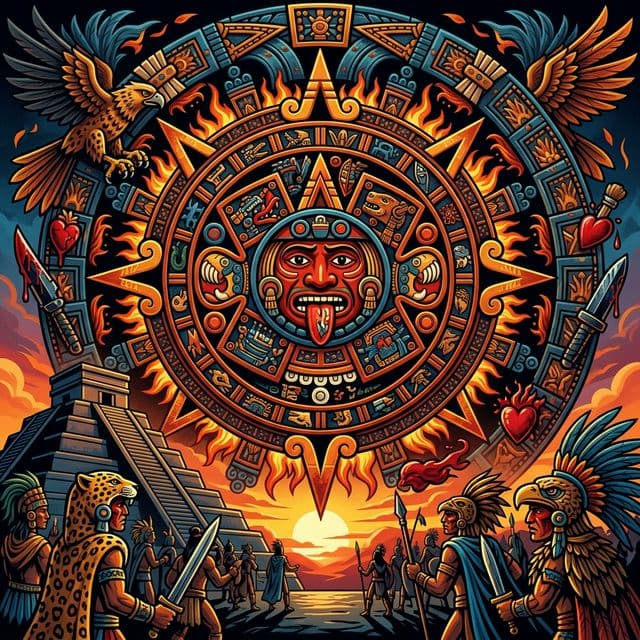 AztecTonatiuh
Both are personifications of the sun who travel across the sky
Compare Helios and Tonatiuh side by side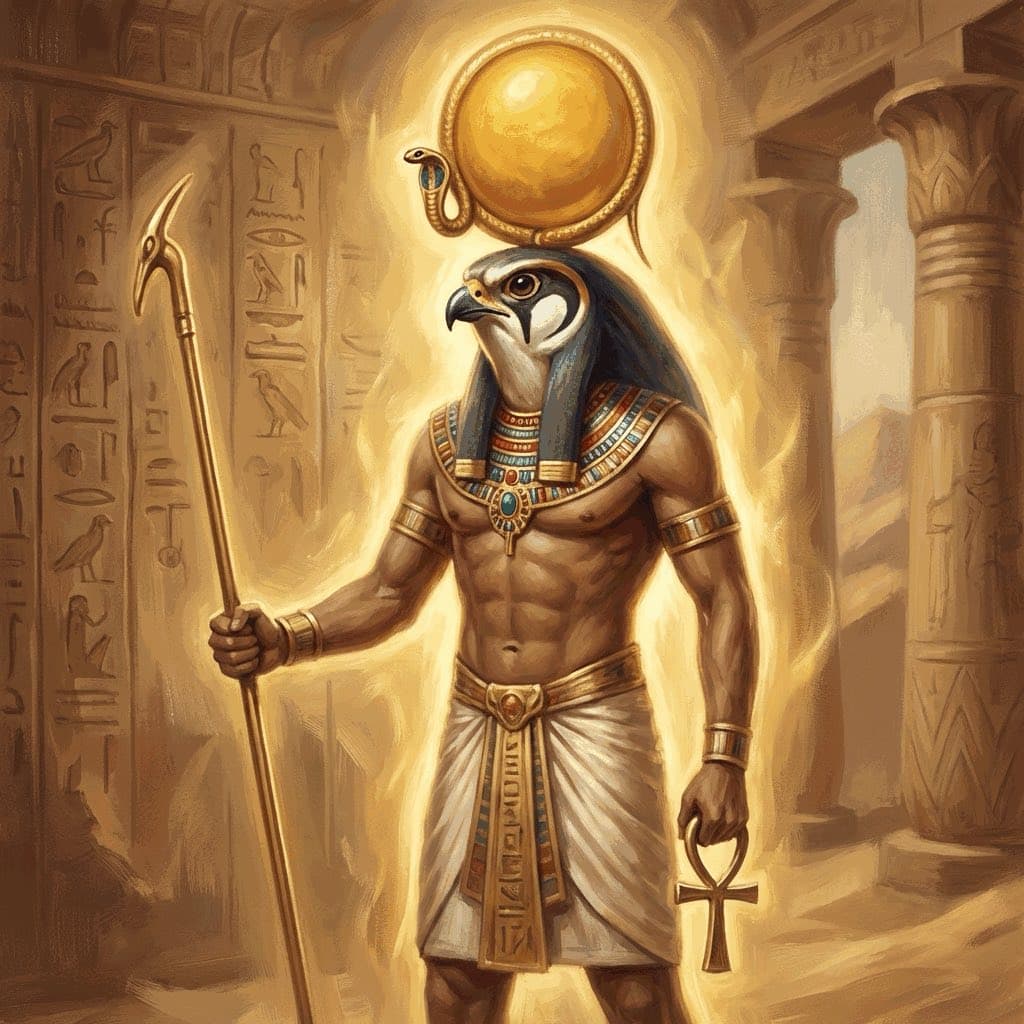 EgyptianRa
Both cross the sky daily, though Ra is a creator and king of the gods while Helios is a subordinate Titan-born power
Compare Helios and Ra side by side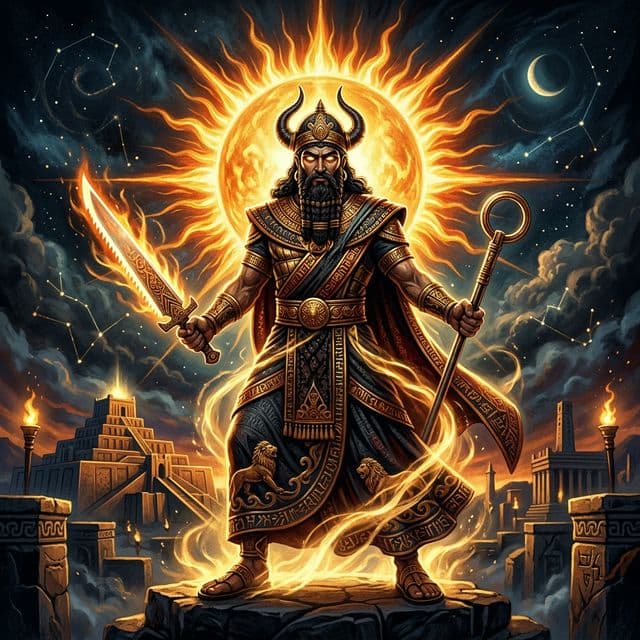 MesopotamianShamash
Both sun gods see everything on their daily course and are invoked as witnesses of oaths and justice
Compare Helios and Shamash side by side
Worship and cult
Temples, festivals, and practices recorded for Helios
Rhodes gave Helios civic cult with games; a Roman report says the Rhodians yearly cast a four-horse chariot into the sea for him. Elsewhere he was more often invoked than worshipped, especially as witness to oaths.
Sacred sites
- Rhodes, where the Colossus represented him
Festivals
- Halieia (Rhodian games in his honor)
Family
In the atlas
Where Helios appears
Sources and further reading
Source notes
These references are recorded in the catalog. Their passage wording and translation have not been checked, so quotations are not displayed here.
- Homeric Hymn 31, To Helios (trans. Evelyn-White)
- Hesiod, Theogony (trans. Evelyn-White)
Further reading
Hymn 31 to Helios and the Hymn to Demeter, where Helios reveals Persephone's abduction
Read online: Homeric Hymns (opens in new tab)The cattle of the sun on Thrinacia (Book 12)
Read online: Odyssey (opens in new tab)Ovid's telling of Phaethon and the sun-chariot (Books 1-2)
Read online: Metamorphoses (opens in new tab)
About this entry
By Elizabeth Stein for Mythos Atlas. About the author. Editorial notes are grounded in the site's cited sources and can be challenged through the contact page.
Parallels are editorial comparisons across traditions: a shared role does not, by itself, establish a shared origin.
Family relationships come from the atlas's kinship records. Ancient sources often disagree on divine genealogy.
Genealogy
Family tree
Helios's parents, consorts, children and rivals, as recorded in the atlas.