Greek Pantheon
Selene
Σελήνη(Selēnē)
Also known as Mene, Luna (Roman)
- the moon
- night
- the months
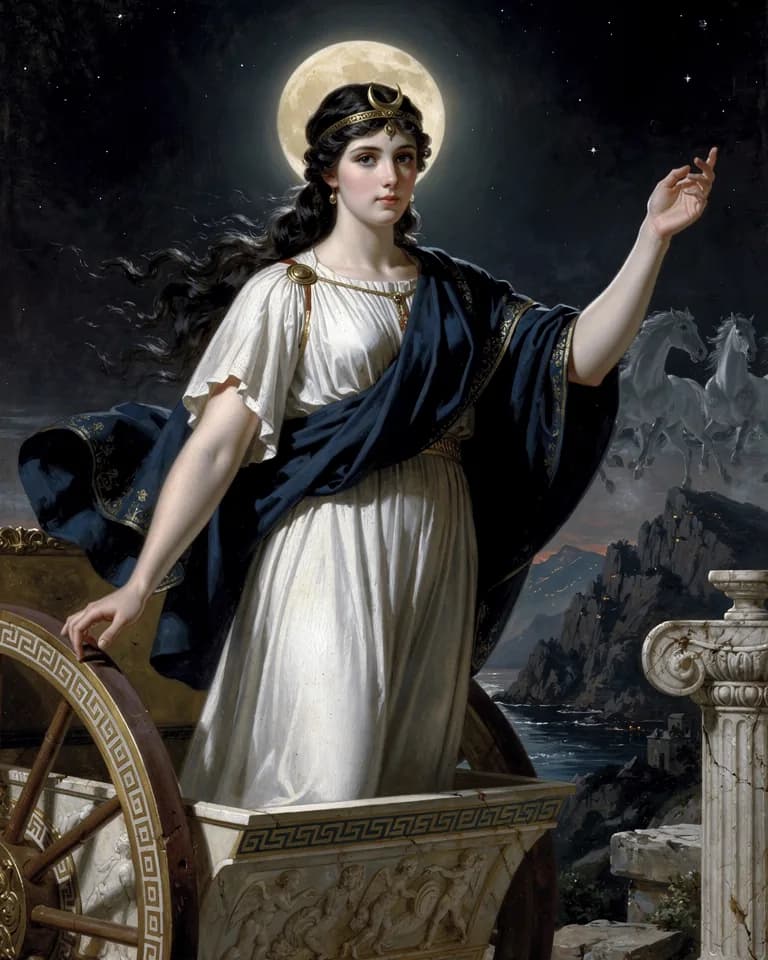
The Titan-born goddess of the moon, daughter of Hyperion and Theia and sister of Helios and Eos. She drives her team across the night sky, and poets tell of her love for the sleeping shepherd Endymion.
About Selene
The Moon in Her Chariot
Selene is the moon itself, imagined as a goddess who bathes in Ocean and drives her horses across the sky at night. Hesiod places her with Helios and Eos among the children of Hyperion and Theia. The Homeric Hymn to Selene describes the radiance from her head filling the air and calls her full moon a sign and token to mortals, since the month was counted by her phases.
Endymion
Her best-known myth is her love for Endymion, a beautiful young man cast into endless sleep. Sources disagree on the details: in some he is a king of Elis, in others a shepherd on Mount Latmus in Caria, and the sleep is sometimes Zeus's gift and sometimes Selene's wish. The story became a favorite subject of Roman sarcophagi, where Selene descends from her chariot toward the sleeper.
Selene and Artemis
Selene is distinct from Artemis in early poetry. From the Classical period on, writers increasingly identified the moon with Artemis (as they identified the sun with Apollo), and in Roman art Luna and Diana overlap. Selene herself received little formal cult; she belongs more to poetry, astronomy, and magic than to temple worship.
Origin story
Selene was born to the Titans Hyperion and Theia, sister of Helios the sun and Eos the dawn. The Homeric Hymn to Selene adds that Zeus lay with her and that she bore a daughter, Pandia.
Across traditions
Parallel figures
Figures who play a role like Selene's in other traditions.
 AztecCoyolxauhqui
Both are lunar goddesses who traverse the night sky
Compare Selene and Coyolxauhqui side by side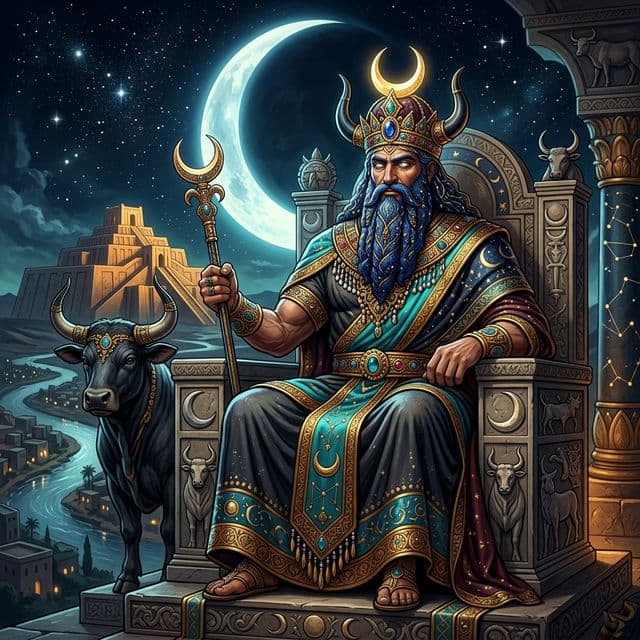 MesopotamianSin
Both are the moon personified and linked to the reckoning of months, though Nanna is a major city god and Selene had little cult
Compare Selene and Sin side by side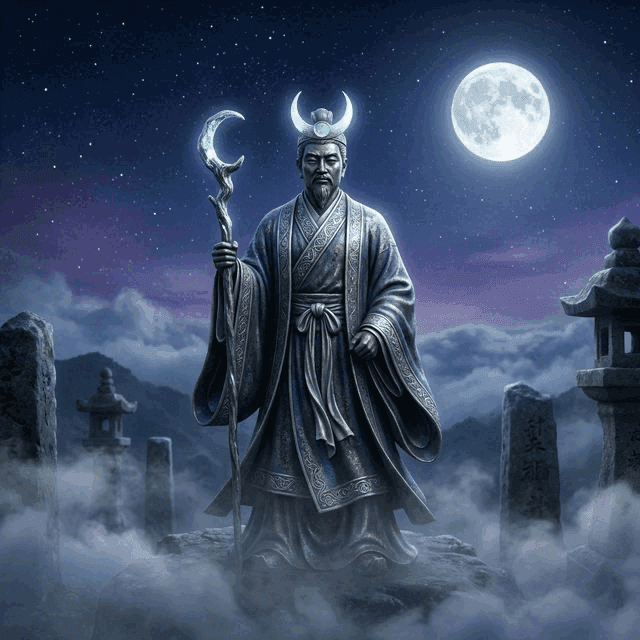 JapaneseTsukuyomi
Both are moon deities born as siblings of the sun
Compare Selene and Tsukuyomi side by side
Family
Sources and further reading
Source notes
These references are recorded in the catalog. Their passage wording and translation have not been checked, so quotations are not displayed here.
- Homeric Hymn 32, To Selene (trans. Evelyn-White)
- Hesiod, Theogony (trans. Evelyn-White)
Further reading
Hymn 32, the fullest early description of Selene
Read online: Homeric Hymns (opens in new tab)Her place among the Titan-born light-bringers
Read online: Theogony (opens in new tab)
About this entry
By Elizabeth Stein for Mythos Atlas. About the author. Editorial notes are grounded in the site's cited sources and can be challenged through the contact page.
Parallels are editorial comparisons across traditions: a shared role does not, by itself, establish a shared origin.
Family relationships come from the atlas's kinship records. Ancient sources often disagree on divine genealogy.
Genealogy
Family tree
Selene's parents, consorts, children and rivals, as recorded in the atlas.