Mythos Atlas

Side by sideParallel across traditions

Selene vs Sin

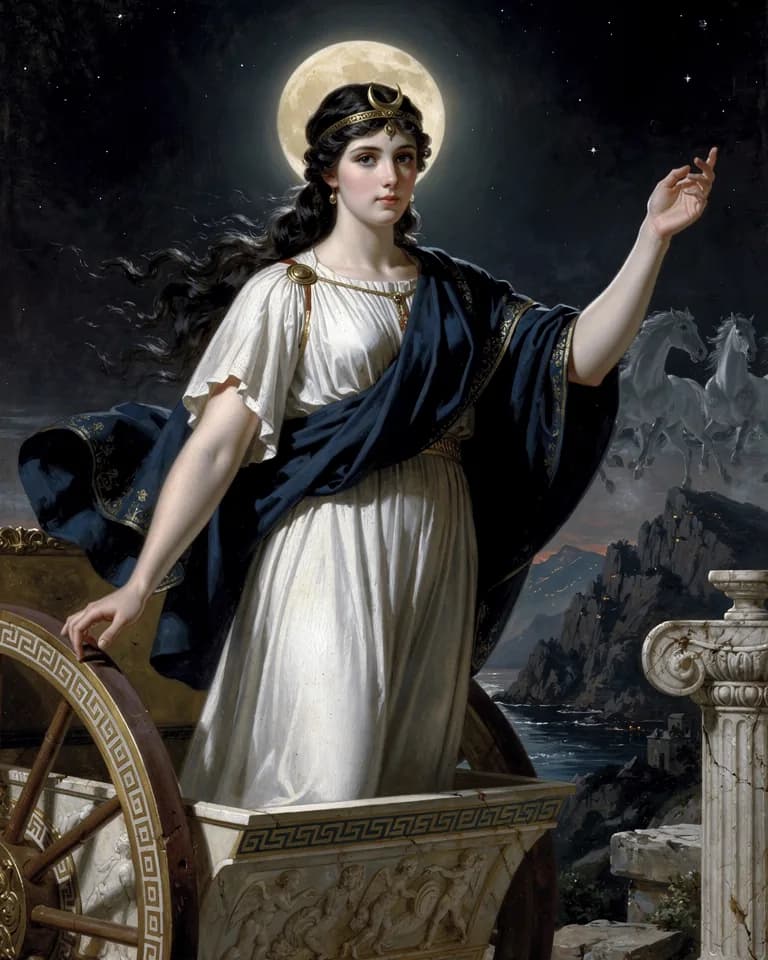
Selene
SeleneGreek
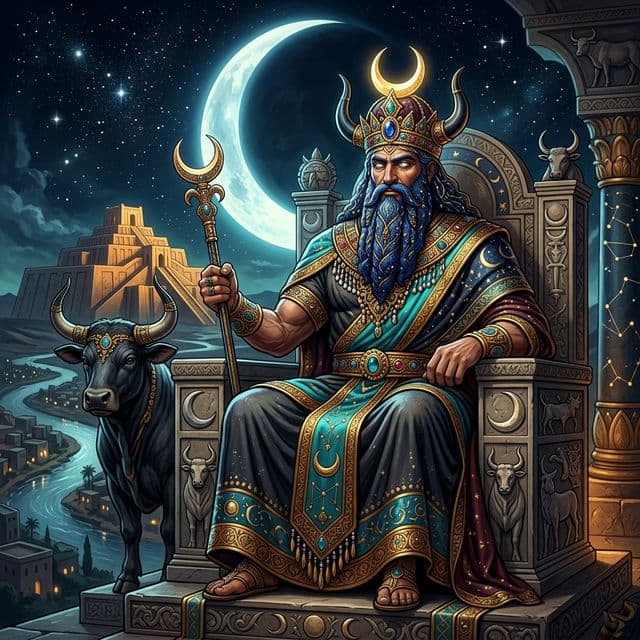
Sin
SinMesopotamian

Both are the moon personified and linked to the reckoning of months, though Nanna is a major city god and Selene had little cult.

At a glance

Selene and Sin compared
SeleneSin
TraditionGreek PantheonMesopotamian Pantheon
Domainsthe moon, night, the monthsmoon, time, wisdom, cattle
Symbolscrescent, two-horse chariot, billowing veil, torchcrescent moon, bull, lapis lazuli beard
Also calledMene, Luna (Roman)Nanna, Nannar, Suen

Where they meet

The atlas records no domain or symbol that Selene and Sin share.

They are compared for the part each plays in their own tradition rather than for any attribute in common.

Where they part

Only Selene

Associated with the moon, night, and the months.

Only Sin

Associated with moon, time, wisdom, and cattle.

How each was worshipped

Selene

No cult sites or festivals are recorded in the atlas.

Sin

Cult sites
Great Ziggurat of Ur; Harran in the later period
Festivals
Ur's moon festivals; Nanna's boat processions

The moon at Ur, with priestesses in the giparu. Nabonidus still cared in the sixth century BCE. Silver, cattle, and the month.

The two figures

Greek Pantheon

Selene

The Titan-born goddess of the moon, daughter of Hyperion and Theia and sister of Helios and Eos. She drives her team across the night sky, and poets tell of her love for the sleeping shepherd Endymion.

Selene was born to the Titans Hyperion and Theia, sister of Helios the sun and Eos the dawn. The Homeric Hymn to Selene adds that Zeus lay with her and that she bore a daughter, Pandia.

Selene is the moon itself, imagined as a goddess who bathes in Ocean and drives her horses across the sky at night. Hesiod places her with Helios and Eos among the children of Hyperion and Theia. The *Homeric Hymn to Selene* describes the radiance from her head filling the air and calls her full moon a sign and token to mortals, since the month was counted by her phases.

Read the full Selene entry

Mesopotamian Pantheon

Sin

The moon god and lord of the night sky. Sin is the father of the sun god Shamash and the goddess Inanna, and the keeper of time through the lunar calendar.

Sin was born to Enlil and Ninlil in the underworld under unusual circumstances. After Enlil was banished to the underworld for ravishing Ninlil, she followed him and gave birth to Nanna/Sin there. Through clever deception, Sin was allowed to ascend to the sky, where he became the moon.

Sin is the great moon god of Mesopotamia, father of the sun and stars. In Mesopotamian astral hierarchy, the moon held precedence over the sun, as the moon's phases provided the basis for the calendar and the measurement of time. Sin's waxing and waning represented the cosmic rhythm that governed agriculture, religion, and commerce.

Read the full Sin entry
About this comparison

Comparisons pair figures that play a similar role across traditions, or that the myths connect within one. A shared role does not, by itself, establish a shared origin.