Mythos Atlas

Side by sideParallel across traditions

Coyolxauhqui vs Selene

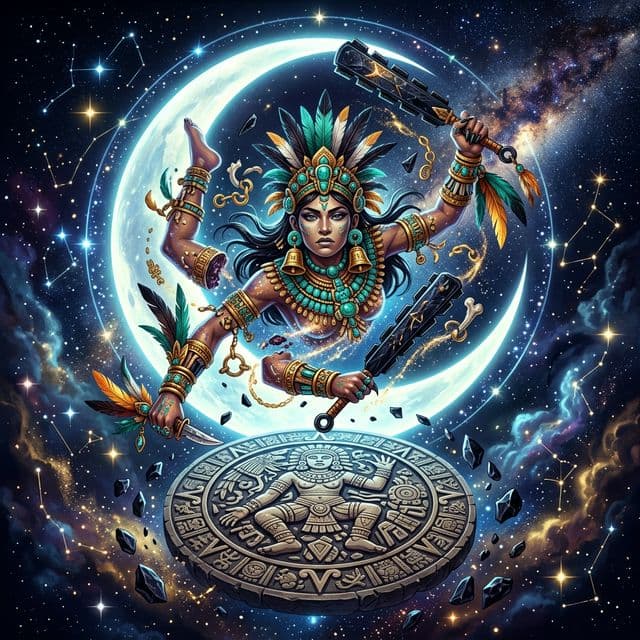
Coyolxauhqui
CoyolxauhquiAztec
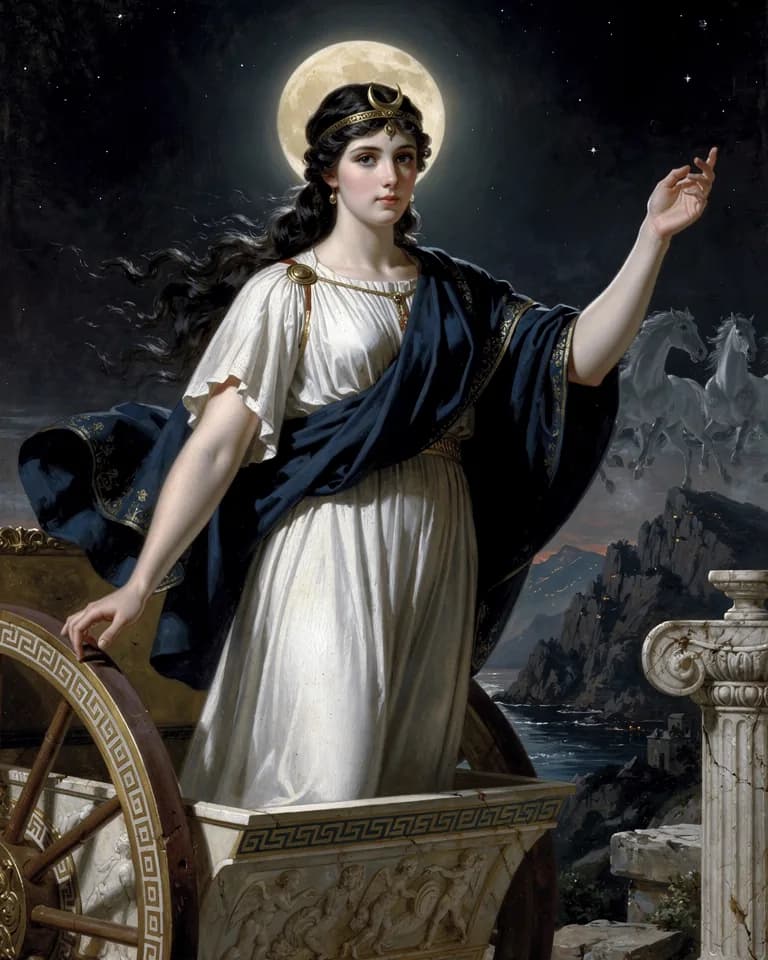
Selene
SeleneGreek

Both are lunar goddesses who traverse the night sky.

At a glance

Coyolxauhqui and Selene compared
CoyolxauhquiSelene
TraditionAztec PantheonGreek Pantheon
Domainsmoon, night, stars, warfarethe moon, night, the months
Symbolscopper bells, severed limbs, crescent moon, dismembered bodycrescent, two-horse chariot, billowing veil, torch
Also calledShe of the Bells on Her Cheeks, Golden BellsMene, Luna (Roman)

Where they meet

Both are associated with night.

Where they part

Only Coyolxauhqui

Associated with moon, stars, and warfare.

Only Selene

Associated with the moon and the months.

How each was worshipped

Coyolxauhqui

Cult sites
The great disk at the foot of Templo Mayor

She is the dismembered moon on the stairs, a warning more than a goddess you petition. Cult evidence is the sculpture and the myth of Coatepec, not a living priesthood in her name.

Selene

No cult sites or festivals are recorded in the atlas.

The two figures

Aztec Pantheon

Coyolxauhqui

The moon goddess, daughter of Coatlicue and leader of the 400 stars. Coyolxauhqui was slain and dismembered by her brother Huitzilopochtli at his miraculous birth, her defeat reenacted at every sunrise.

Coyolxauhqui was born to Coatlicue along with her 400 brothers, the stars. When her mother became pregnant through miraculous means, Coyolxauhqui led her brothers to kill her, but Huitzilopochtli was born at that moment and slew his sister, casting her dismembered body from the mountaintop.

Coyolxauhqui ("She of the Bells on Her Cheeks") was the Aztec **moon goddess** and daughter of the earth mother **Coatlicue**. Her name comes from the golden bells (coyolli) she wore on her face. Her violent dismemberment by her brother Huitzilopochtli is one of the central myths of Aztec religion.

Read the full Coyolxauhqui entry

Greek Pantheon

Selene

The Titan-born goddess of the moon, daughter of Hyperion and Theia and sister of Helios and Eos. She drives her team across the night sky, and poets tell of her love for the sleeping shepherd Endymion.

Selene was born to the Titans Hyperion and Theia, sister of Helios the sun and Eos the dawn. The Homeric Hymn to Selene adds that Zeus lay with her and that she bore a daughter, Pandia.

Selene is the moon itself, imagined as a goddess who bathes in Ocean and drives her horses across the sky at night. Hesiod places her with Helios and Eos among the children of Hyperion and Theia. The *Homeric Hymn to Selene* describes the radiance from her head filling the air and calls her full moon a sign and token to mortals, since the month was counted by her phases.

Read the full Selene entry
About this comparison

Comparisons pair figures that play a similar role across traditions, or that the myths connect within one. A shared role does not, by itself, establish a shared origin.