Side by sideParent and child

Coatlicue vs Coyolxauhqui

Coatlicue
CoatlicueAztec
Coyolxauhqui
CoyolxauhquiAztec

Coatlicue and Coyolxauhqui are recorded as parent and child in the Aztec Pantheon.

At a glance

Coatlicue and Coyolxauhqui compared
CoatlicueCoyolxauhqui
TraditionAztec PantheonAztec Pantheon
Domainsearth, fertility, life, deathmoon, night, stars, warfare
Symbolsserpent skirt, skull necklace, clawed handscopper bells, severed limbs, crescent moon, dismembered body
Also calledShe of the Serpent Skirt, Teteoh InnanShe of the Bells on Her Cheeks, Golden Bells

Where they meet

The atlas records no domain or symbol that Coatlicue and Coyolxauhqui share.

They are compared because of how the myths connect them, not because of what they rule.

Where they part

Only Coatlicue

Associated with earth, fertility, life, and death.

Only Coyolxauhqui

Associated with moon, night, stars, and warfare.

How each was worshipped

Coatlicue

Cult sites
Templo Mayor as mother of Huitzilopochtli; Teteoinnan shrines in the Mexica calendar
Festivals
Linked to mother-goddess days rather than a feast in her name alone

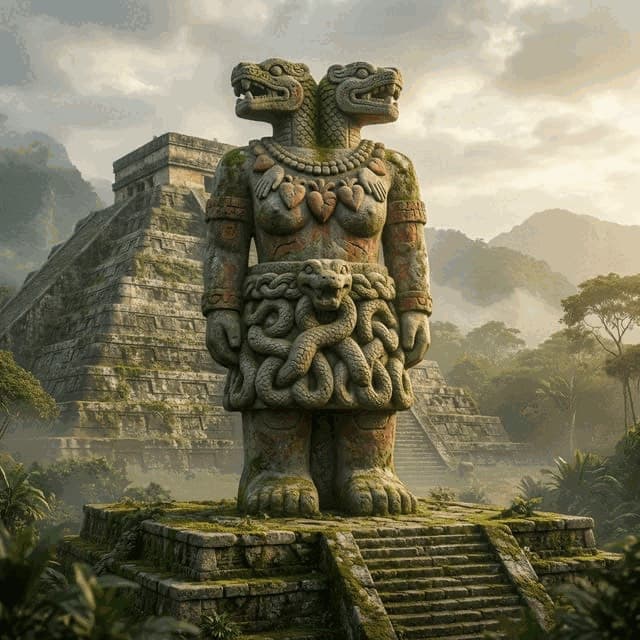
The serpent-skirt statue is a temple object, not a parlour icon. Her cult is the earth that eats and feeds, tied to Coatepec and the war god's birth.

Coyolxauhqui

Cult sites
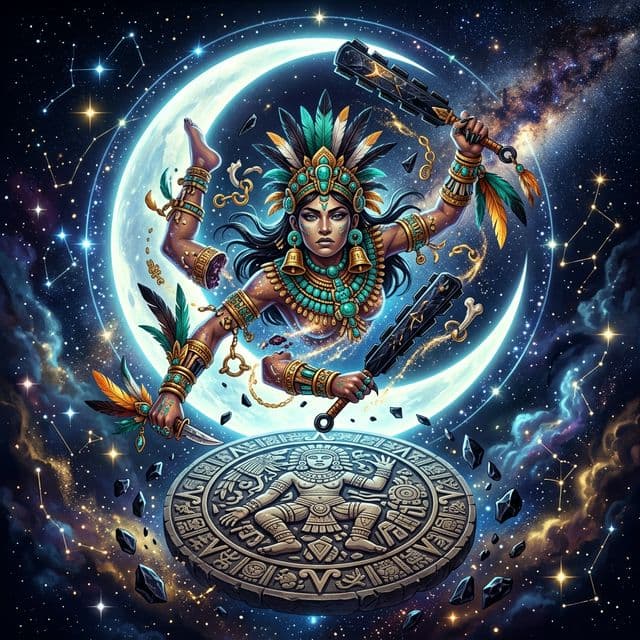
The great disk at the foot of Templo Mayor

She is the dismembered moon on the stairs, a warning more than a goddess you petition. Cult evidence is the sculpture and the myth of Coatepec, not a living priesthood in her name.

The two figures

Aztec Pantheon

Coatlicue

Earth mother goddess who gave birth to the moon, stars, and Huitzilopochtli. Depicted wearing a skirt of writhing serpents and a necklace of human hearts and hands.

While sweeping a temple on Coatepec, a ball of feathers fell on her and she became miraculously pregnant with Huitzilopochtli. Her other children plotted to kill her, but Huitzilopochtli was born fully armed and defended her.

Coatlicue, meaning "She of the Serpent Skirt," was the primordial **earth mother goddess** of the Aztecs, embodying both the terror and the nurturing power of the earth itself. Her famous statue in the National Museum of Anthropology in Mexico City depicts her with a skirt of writhing serpents, a necklace of human hearts, hands, and skulls, clawed feet, and two serpent heads forming her face - representing the duality of life and death.

Read the full Coatlicue entry

Aztec Pantheon

Coyolxauhqui

The moon goddess, daughter of Coatlicue and leader of the 400 stars. Coyolxauhqui was slain and dismembered by her brother Huitzilopochtli at his miraculous birth, her defeat reenacted at every sunrise.

Coyolxauhqui was born to Coatlicue along with her 400 brothers, the stars. When her mother became pregnant through miraculous means, Coyolxauhqui led her brothers to kill her, but Huitzilopochtli was born at that moment and slew his sister, casting her dismembered body from the mountaintop.

Coyolxauhqui ("She of the Bells on Her Cheeks") was the Aztec **moon goddess** and daughter of the earth mother **Coatlicue**. Her name comes from the golden bells (coyolli) she wore on her face. Her violent dismemberment by her brother Huitzilopochtli is one of the central myths of Aztec religion.

Read the full Coyolxauhqui entry
About this comparison

Comparisons pair figures that play a similar role across traditions, or that the myths connect within one. A shared role does not, by itself, establish a shared origin.