Side by sideParallel across traditions

Coatlicue vs Kali

Coatlicue
CoatlicueAztec
Kali
KaliHindu

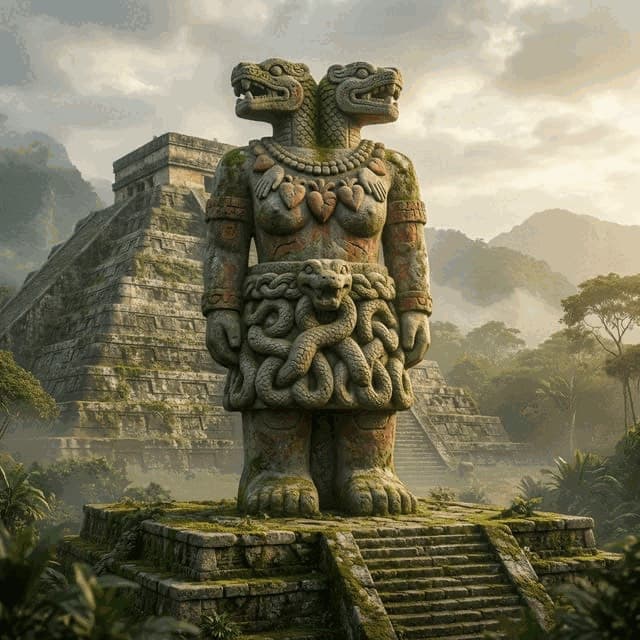
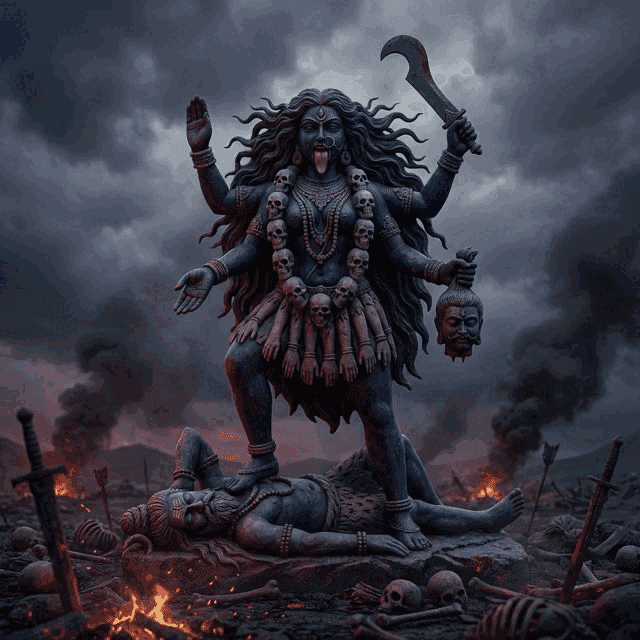
Both are 'terrible mother' goddesses adorned with symbols of death (a skull necklace vs. a skirt of serpents and a necklace of hands and hearts) who embody the life-death-rebirth cycle.

At a glance

Coatlicue and Kali compared
CoatlicueKali
TraditionAztec PantheonHindu Pantheon
Domainsearth, fertility, life, deathtime, change, death, destruction, liberation
Symbolsserpent skirt, skull necklace, clawed handssword, severed head, skull, blood
Also calledShe of the Serpent Skirt, Teteoh InnanMahakali, Bhadrakali, Kalika

Where they meet

Both are associated with death.

Where they part

Only Coatlicue

Associated with earth, fertility, and life.

Only Kali

Associated with time, change, destruction, and liberation.

Why they are compared

Both are 'terrible mother' goddesses adorned with symbols of death (a skirt of serpents and necklace of hands/hearts vs. a skull necklace) who embody destruction and rebirth.

How each was worshipped

Coatlicue

Cult sites
Templo Mayor as mother of Huitzilopochtli; Teteoinnan shrines in the Mexica calendar
Festivals
Linked to mother-goddess days rather than a feast in her name alone

The serpent-skirt statue is a temple object, not a parlour icon. Her cult is the earth that eats and feeds, tied to Coatepec and the war god's birth.

Kali

Cult sites
Kalighat in Kolkata; Dakshineswar Kali Temple; Kamakhya
Festivals
Kali Puja; Diwali night in Bengal; Navaratri in her fierce form

Night, red hibiscus, and in older practice blood. Tantric houses keep her close; most public temples now offer gourds or goats under local law. Do not pretty this into a wellness goddess.

The two figures

Aztec Pantheon

Coatlicue

Earth mother goddess who gave birth to the moon, stars, and Huitzilopochtli. Depicted wearing a skirt of writhing serpents and a necklace of human hearts and hands.

While sweeping a temple on Coatepec, a ball of feathers fell on her and she became miraculously pregnant with Huitzilopochtli. Her other children plotted to kill her, but Huitzilopochtli was born fully armed and defended her.

Coatlicue, meaning "She of the Serpent Skirt," was the primordial **earth mother goddess** of the Aztecs, embodying both the terror and the nurturing power of the earth itself. Her famous statue in the National Museum of Anthropology in Mexico City depicts her with a skirt of writhing serpents, a necklace of human hearts, hands, and skulls, clawed feet, and two serpent heads forming her face - representing the duality of life and death.

Read the full Coatlicue entry

Hindu Pantheon

Kali

Fierce goddess of time, change, death, and ultimate reality. A form of Parvati/Durga. Despite her terrifying appearance, she destroys evil and liberates devotees from ego and illusion.

Kali emerged from Durga's forehead during battle with demons. Her rage was so fierce she began destroying everything. Shiva lay beneath her feet to calm her. Kali is black, representing the void.

Kali is the fierce goddess of **time**, change, destruction, and ultimate reality. Her name derives from *kala* (time/black), representing the void from which all creation emerges and into which it dissolves. Despite her terrifying appearance, she liberates devotees from ego and illusion.

Read the full Kali entry
About this comparison

Comparisons pair figures that play a similar role across traditions, or that the myths connect within one. A shared role does not, by itself, establish a shared origin.