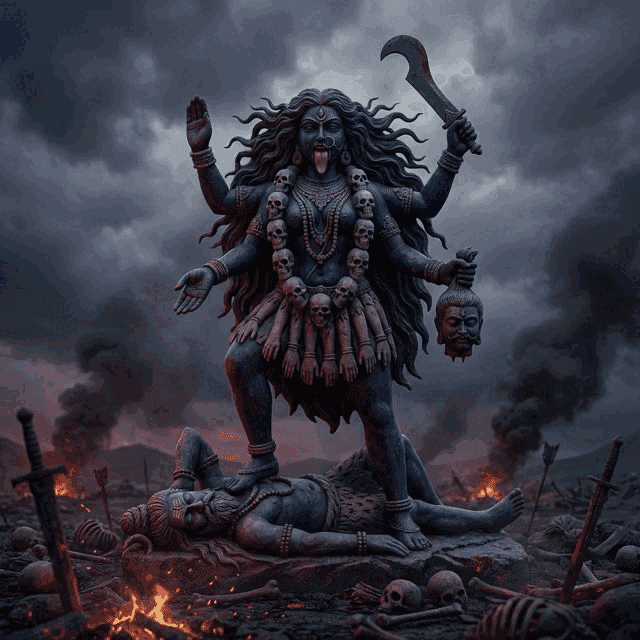
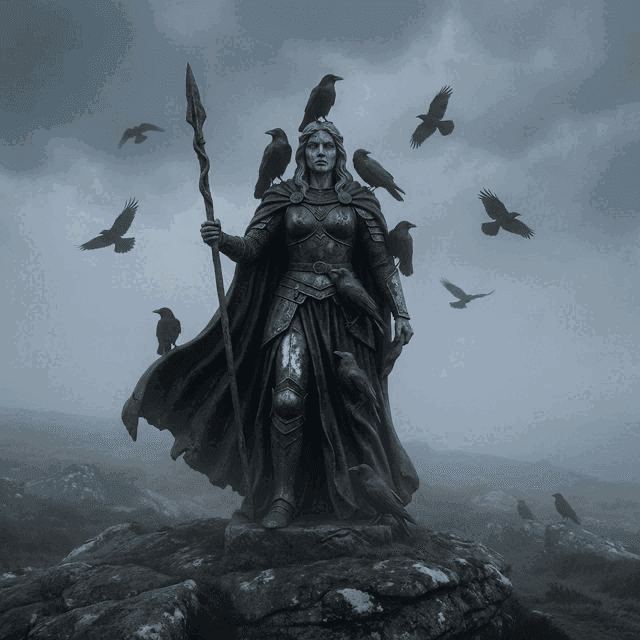
Side by sideParallel across traditions

Kali vs The Morrígan

Kali
KaliHindu
The Morrígan
The MorríganCeltic

Both are goddesses of death, time, and fate who preside over destruction as a path to renewal.

At a glance

Kali and The Morrígan compared
KaliThe Morrígan
TraditionHindu PantheonCeltic Pantheon
Domainstime, change, death, destruction, liberationwar, fate, death, sovereignty
Symbolssword, severed head, skull, bloodcrow, raven, cattle
Also calledMahakali, Bhadrakali, KalikaMorrígu, Phantom Queen

Where they meet

Both are associated with death.

Where they part

Only Kali

Associated with time, change, destruction, and liberation.

Only The Morrígan

Associated with war, fate, and sovereignty.

Why they are compared

Both are goddesses of death and fate whose fearsome aspect governs destruction and transformation.

How each was worshipped

Kali

Cult sites
Kalighat in Kolkata; Dakshineswar Kali Temple; Kamakhya
Festivals
Kali Puja; Diwali night in Bengal; Navaratri in her fierce form

Night, red hibiscus, and in older practice blood. Tantric houses keep her close; most public temples now offer gourds or goats under local law. Do not pretty this into a wellness goddess.

The Morrígan

Cult sites
No temple; battlefields, rivers, and sovereignty sites in the tales
Festivals
Samhain meetings in the Ulster Cycle

Phantom queen, crow, and the washer at the ford. You do not find a neat priesthood. Offerings, if any, sit in the same world as war-spells and land-goddess sovereignty, which the manuscripts remember as story.

The two figures

Hindu Pantheon

Kali

Fierce goddess of time, change, death, and ultimate reality. A form of Parvati/Durga. Despite her terrifying appearance, she destroys evil and liberates devotees from ego and illusion.

Kali emerged from Durga's forehead during battle with demons. Her rage was so fierce she began destroying everything. Shiva lay beneath her feet to calm her. Kali is black, representing the void.

Kali is the fierce goddess of **time**, change, destruction, and ultimate reality. Her name derives from *kala* (time/black), representing the void from which all creation emerges and into which it dissolves. Despite her terrifying appearance, she liberates devotees from ego and illusion.

Read the full Kali entry

Celtic Pantheon

The Morrígan

A shapeshifting goddess of war and fate, often appearing as a crow to foretell doom or victory. She represents the terrifying power of sovereignty.

The Morrígan is a powerful member of the **Tuatha Dé Danann**, though her parentage is obscure in the sources. Some texts identify her as a daughter of Ernmas, making her a sister to other sovereignty goddesses like Ériu, Banba, and Fódla. She is intimately connected to the land of Ireland itself. Her union with the Dagda before the Second Battle of Mag Tuired establishes her as a goddess of both war and fertility, and her prophecies after the battle speak to the fate of the world itself.

The Morrígan, whose name means **"Phantom Queen"** or **"Great Queen,"** is one of the most fearsome deities of Irish mythology. She embodies the terrifying aspects of war: not glory or honor, but the chaos, carnage, and inevitability of death on the battlefield. She is strongly associated with sovereignty, fate, and the land itself.

Read the full The Morrígan entry
About this comparison

Comparisons pair figures that play a similar role across traditions, or that the myths connect within one. A shared role does not, by itself, establish a shared origin.