Mythos Atlas

Side by sideSiblings

Helios vs Selene

Helios
HeliosGreek
Selene
SeleneGreek

Helios and Selene are recorded as siblings in the Greek Pantheon.

At a glance

Helios and Selene compared
HeliosSelene
TraditionGreek PantheonGreek Pantheon
Domainsthe sun, sight, oaths, daylightthe moon, night, the months
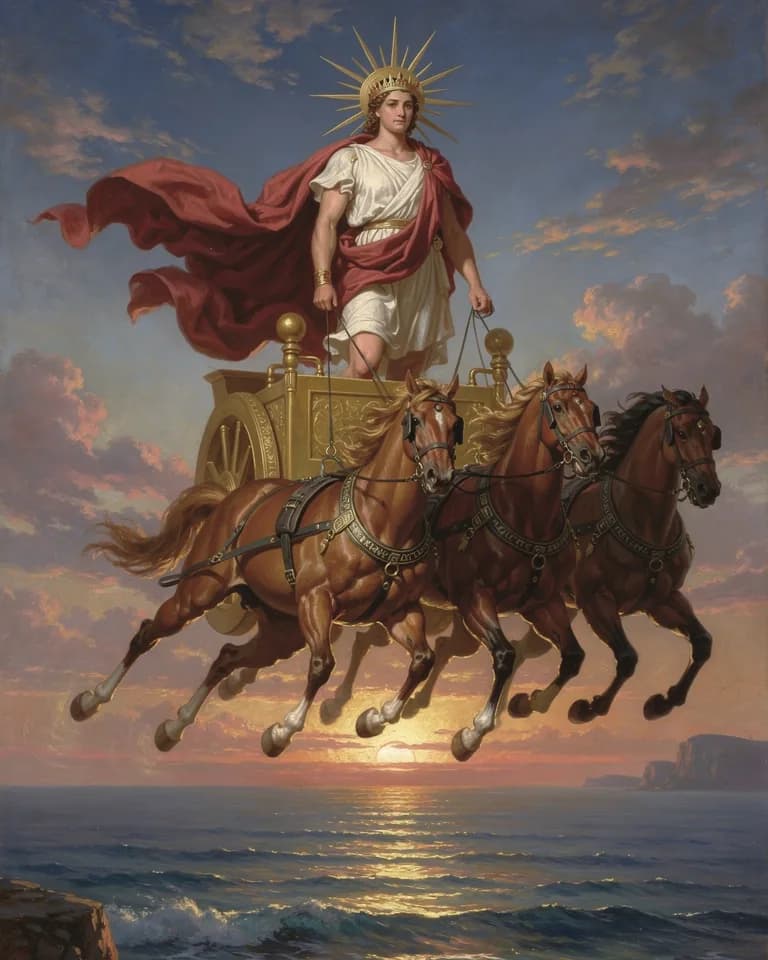
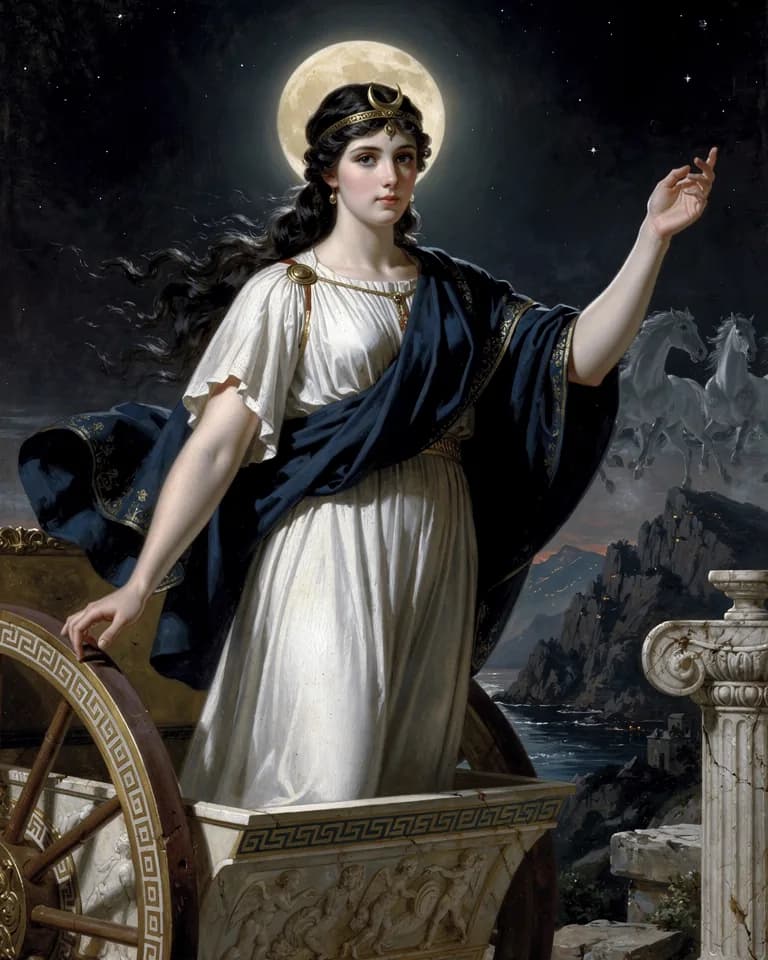
Symbolsfour-horse chariot, radiate crown, golden helmet, cattle of the suncrescent, two-horse chariot, billowing veil, torch
Also calledHelius, Hyperion (as epithet), Sol (Roman)Mene, Luna (Roman)

Where they meet

The atlas records no domain or symbol that Helios and Selene share.

They are compared because of how the myths connect them, not because of what they rule.

Where they part

Only Helios

Associated with the sun, sight, oaths, and daylight.

Only Selene

Associated with the moon, night, and the months.

How each was worshipped

Helios

Cult sites
Rhodes, where the Colossus represented him
Festivals
Halieia (Rhodian games in his honor)

Rhodes gave Helios civic cult with games; a Roman report says the Rhodians yearly cast a four-horse chariot into the sea for him. Elsewhere he was more often invoked than worshipped, especially as witness to oaths.

Selene

No cult sites or festivals are recorded in the atlas.

The two figures

Greek Pantheon

Helios

The Titan-born sun who drives his chariot across the sky each day and sees everything beneath it. Son of Hyperion and Theia, brother of Selene (Moon) and Eos (Dawn), Helios is the witness gods and mortals call on because nothing happens outside his gaze.

Helios was born to the Titans Hyperion and Theia, together with his sisters Selene and Eos. Hesiod lists the three light-bringers as a single brood; the Homeric Hymn to Helios names their mother Euryphaessa, 'far-shining', a title that may be another name for Theia.

Hesiod names Helios as a child of the Titans Hyperion and Theia, born with his sisters Selene and Eos. He is not an Olympian but an older power, and Greek poetry treats him less as a ruler than as a witness: because he crosses the whole sky every day, he sees what others miss.

Read the full Helios entry

Greek Pantheon

Selene

The Titan-born goddess of the moon, daughter of Hyperion and Theia and sister of Helios and Eos. She drives her team across the night sky, and poets tell of her love for the sleeping shepherd Endymion.

Selene was born to the Titans Hyperion and Theia, sister of Helios the sun and Eos the dawn. The Homeric Hymn to Selene adds that Zeus lay with her and that she bore a daughter, Pandia.

Selene is the moon itself, imagined as a goddess who bathes in Ocean and drives her horses across the sky at night. Hesiod places her with Helios and Eos among the children of Hyperion and Theia. The *Homeric Hymn to Selene* describes the radiance from her head filling the air and calls her full moon a sign and token to mortals, since the month was counted by her phases.

Read the full Selene entry
About this comparison

Comparisons pair figures that play a similar role across traditions, or that the myths connect within one. A shared role does not, by itself, establish a shared origin.