Mythos Atlas

Side by sideParent and child

Inanna vs Sin

Inanna
InannaMesopotamian
Sin
SinMesopotamian

Inanna and Sin are recorded as parent and child in the Mesopotamian Pantheon.

At a glance

Inanna and Sin compared
InannaSin
TraditionMesopotamian PantheonMesopotamian Pantheon
Domainslove, war, fertility, sexuality, political powermoon, time, wisdom, cattle
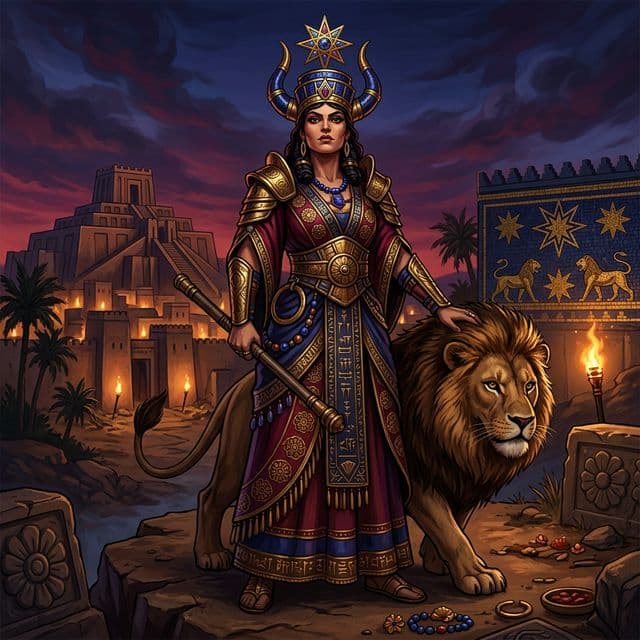
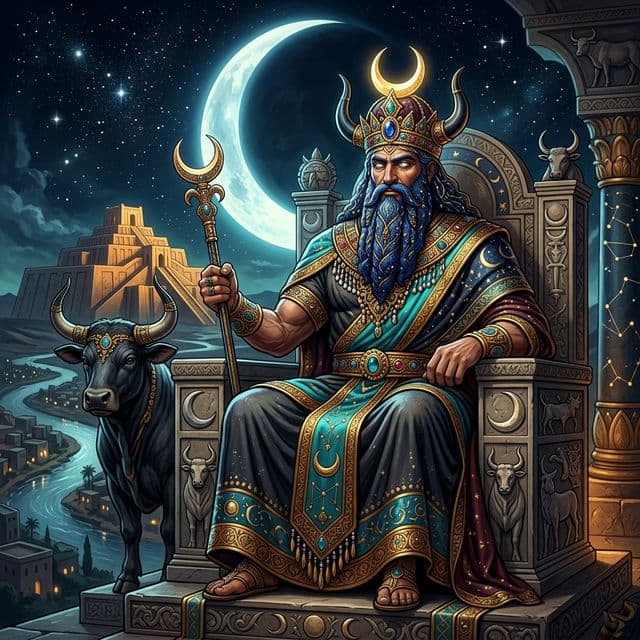
Symbolseight-pointed star, lion, rosette, ring and rodcrescent moon, bull, lapis lazuli beard
Also calledIshtar, AstarteNanna, Nannar, Suen

Where they meet

The atlas records no domain or symbol that Inanna and Sin share.

They are compared because of how the myths connect them, not because of what they rule.

Where they part

Only Inanna

Associated with love, war, fertility, sexuality, and political power.

Only Sin

Associated with moon, time, wisdom, and cattle.

How each was worshipped

Inanna

Cult sites
Eanna precinct at Uruk; Temples of Ishtar at Nineveh, Arbela, and Babylon
Festivals
Akitu in some cities; Sacred marriage rites in royal ideology; Mourning of Tammuz/Dumuzi

Love, war, and the descent. Uruk's Eanna is her house. Morning and evening star. The royal sacred marriage is ideology as much as ritual; the lament for Dumuzi is popular and old. She is not a gentle Venus.

Sin

Cult sites
Great Ziggurat of Ur; Harran in the later period
Festivals
Ur's moon festivals; Nanna's boat processions

The moon at Ur, with priestesses in the giparu. Nabonidus still cared in the sixth century BCE. Silver, cattle, and the month.

The two figures

Mesopotamian Pantheon

Inanna

Queen of Heaven and goddess of love and war. Inanna is the most complex and dynamic deity of the Mesopotamian pantheon, embodying both desire and destruction.

Inanna was born to the moon god Nanna/Sin and his wife Ningal. Unlike goddesses who received their powers passively, Inanna actively gathered the me (divine powers) from Enki, establishing herself as the goddess of civilization. She chose the shepherd Dumuzi as her consort in a sacred marriage that ensured the fertility of the land.

Inanna is the most celebrated and complex deity of ancient Mesopotamia. She embodies seemingly contradictory forces: passionate love and bloody war, fertility and destruction, order and chaos. As the personification of the planet Venus, she is both the morning and evening star, combining masculine and feminine energies in her divine nature.

Read the full Inanna entry

Mesopotamian Pantheon

Sin

The moon god and lord of the night sky. Sin is the father of the sun god Shamash and the goddess Inanna, and the keeper of time through the lunar calendar.

Sin was born to Enlil and Ninlil in the underworld under unusual circumstances. After Enlil was banished to the underworld for ravishing Ninlil, she followed him and gave birth to Nanna/Sin there. Through clever deception, Sin was allowed to ascend to the sky, where he became the moon.

Sin is the great moon god of Mesopotamia, father of the sun and stars. In Mesopotamian astral hierarchy, the moon held precedence over the sun, as the moon's phases provided the basis for the calendar and the measurement of time. Sin's waxing and waning represented the cosmic rhythm that governed agriculture, religion, and commerce.

Read the full Sin entry
About this comparison

Comparisons pair figures that play a similar role across traditions, or that the myths connect within one. A shared role does not, by itself, establish a shared origin.