
Side by sideParallel across traditions

Aphrodite vs Inanna

Aphrodite
AphroditeGreek
Inanna
InannaMesopotamian

Both are love goddesses associated with the planet Venus.

At a glance

Aphrodite and Inanna compared
AphroditeInanna
TraditionGreek PantheonMesopotamian Pantheon
Domainslove, beauty, desire, sexualitylove, war, fertility, sexuality, political power
Symbolsdove, swan, rose, myrtle, sparroweight-pointed star, lion, rosette, ring and rod
Also calledVenus, KyprisIshtar, Astarte

Where they meet

Both are associated with love and sexuality.

Where they part

Only Aphrodite

Associated with beauty and desire.

Only Inanna

Associated with war, fertility, and political power.

How each was worshipped

Aphrodite

Cult sites
Sanctuaries at Paphos and Amathus on Cyprus; Temple of Aphrodite on Acrocorinth; Aphrodite Pandemos at Athens
Festivals
Aphrodisia; Adonia

Cyprus is her oldest ground. Corinth mixed sailors, courtesans, and a high temple. Athens split Ourania from Pandemos: heavenly and of the whole people. Roses, doves, and the sea-foam story sit on top of a civic sex-and-luck cult.

Inanna

Cult sites
Eanna precinct at Uruk; Temples of Ishtar at Nineveh, Arbela, and Babylon
Festivals
Akitu in some cities; Sacred marriage rites in royal ideology; Mourning of Tammuz/Dumuzi

Love, war, and the descent. Uruk's Eanna is her house. Morning and evening star. The royal sacred marriage is ideology as much as ritual; the lament for Dumuzi is popular and old. She is not a gentle Venus.

The two figures

Greek Pantheon

Aphrodite

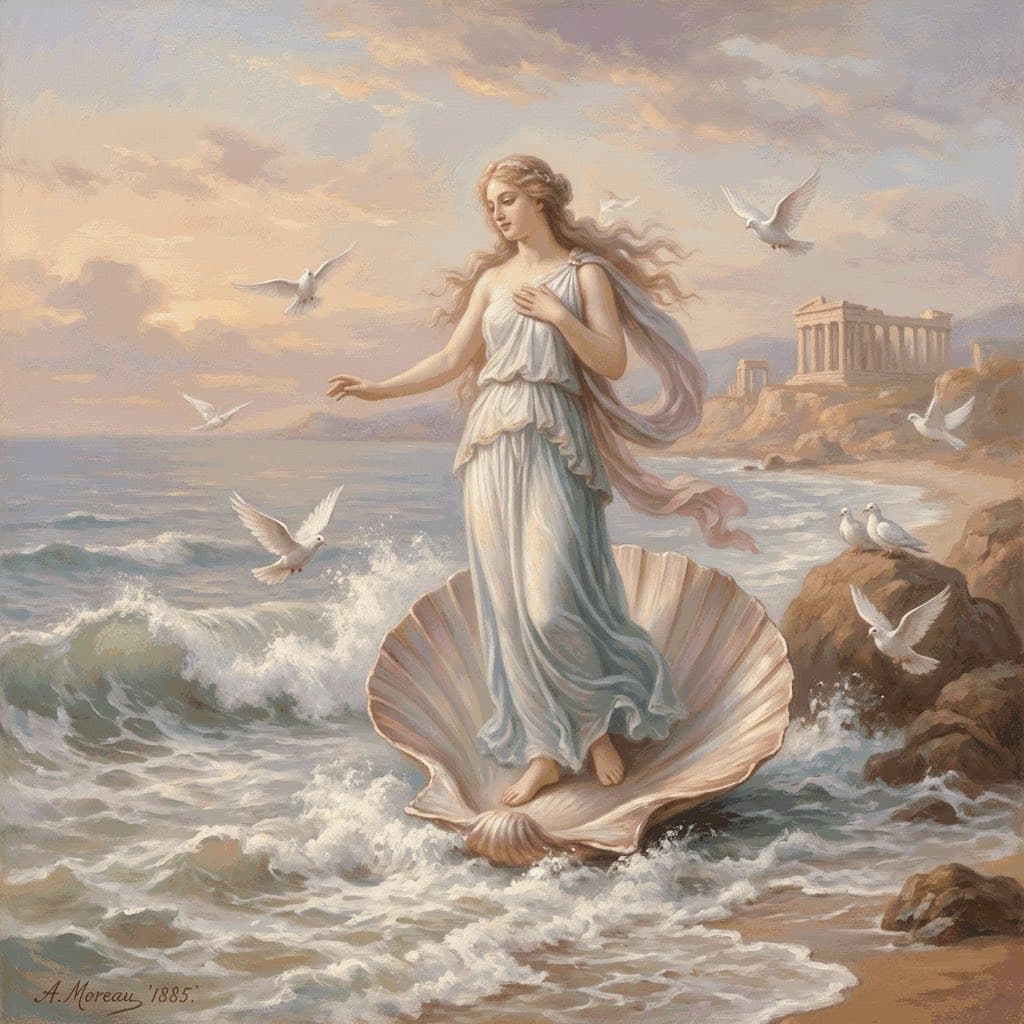
Goddess of love, beauty, and desire. Born from the sea foam after Cronus castrated Uranus and threw his genitals into the sea.

Aphrodite is the irresistible goddess of love and beauty. Though married to Hephaestus, she had many lovers, most notably Ares. She has the power to make anyone fall in love, a power that even Zeus cannot resist.

Read the full Aphrodite entry

Mesopotamian Pantheon

Inanna

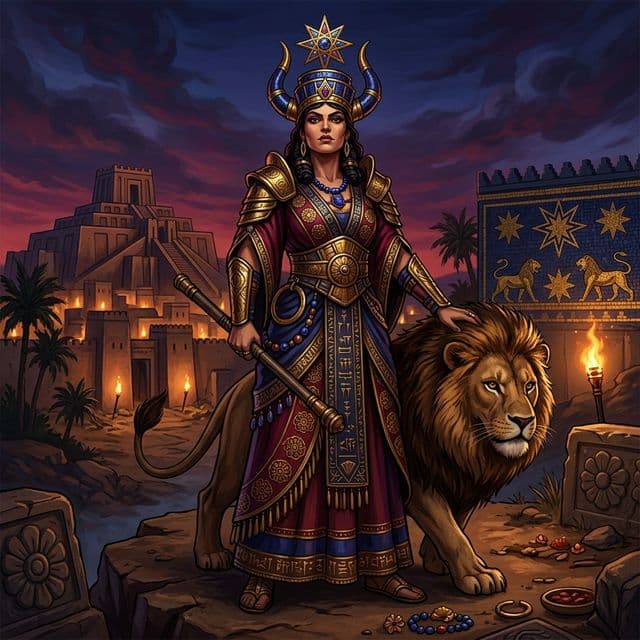
Queen of Heaven and goddess of love and war. Inanna is the most complex and dynamic deity of the Mesopotamian pantheon, embodying both desire and destruction.

Inanna was born to the moon god Nanna/Sin and his wife Ningal. Unlike goddesses who received their powers passively, Inanna actively gathered the me (divine powers) from Enki, establishing herself as the goddess of civilization. She chose the shepherd Dumuzi as her consort in a sacred marriage that ensured the fertility of the land.

Inanna is the most celebrated and complex deity of ancient Mesopotamia. She embodies seemingly contradictory forces: passionate love and bloody war, fertility and destruction, order and chaos. As the personification of the planet Venus, she is both the morning and evening star, combining masculine and feminine energies in her divine nature.
Read the full Inanna entry
About this comparison

Comparisons pair figures that play a similar role across traditions, or that the myths connect within one. A shared role does not, by itself, establish a shared origin.