
Side by sideParallel across traditions

Aphrodite vs Hathor

Aphrodite
AphroditeGreek
Hathor
HathorEgyptian

Hathor's epithet 'the Golden One' parallels Aphrodite's 'Golden Aphrodite'; both are goddesses of love, beauty, and music.

At a glance

Aphrodite and Hathor compared
AphroditeHathor
TraditionGreek PantheonEgyptian Pantheon
Domainslove, beauty, desire, sexualitylove, beauty, music, motherhood, joy, mining
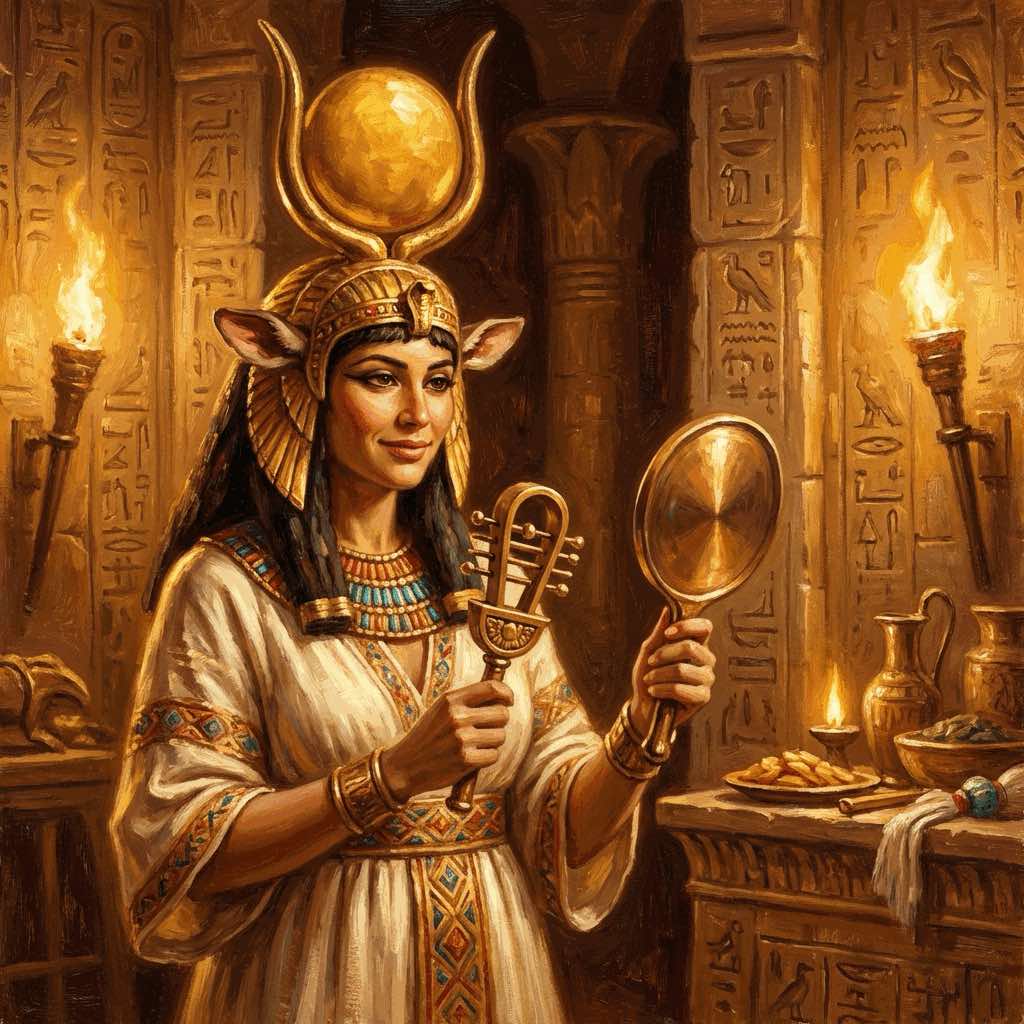
Symbolsdove, swan, rose, myrtle, sparrowcow, cow horns and sun disk, sistrum, mirror, menat necklace
Also calledVenus, KyprisHet-Heru, Lady of Stars

Where they meet

Both are associated with love and beauty.

Where they part

Only Aphrodite

Associated with desire and sexuality.

Only Hathor

Associated with music, motherhood, joy, and mining.

How each was worshipped

Aphrodite

Cult sites
Sanctuaries at Paphos and Amathus on Cyprus; Temple of Aphrodite on Acrocorinth; Aphrodite Pandemos at Athens
Festivals
Aphrodisia; Adonia

Cyprus is her oldest ground. Corinth mixed sailors, courtesans, and a high temple. Athens split Ourania from Pandemos: heavenly and of the whole people. Roses, doves, and the sea-foam story sit on top of a civic sex-and-luck cult.

Hathor

Cult sites
Dendera Temple of Hathor; Mining-country shrines in Sinai and at Timna
Festivals
Festival of the Beautiful Reunion (Dendera–Edfu); Hathor feasts of music and drunkenness

Love, turquoise, and the sistrum. Dendera still shows the roof rituals. She can be a cow, a woman, or the angry eye. Miners in the desert left her stelae because the desert was hers too.

The two figures

Greek Pantheon

Aphrodite

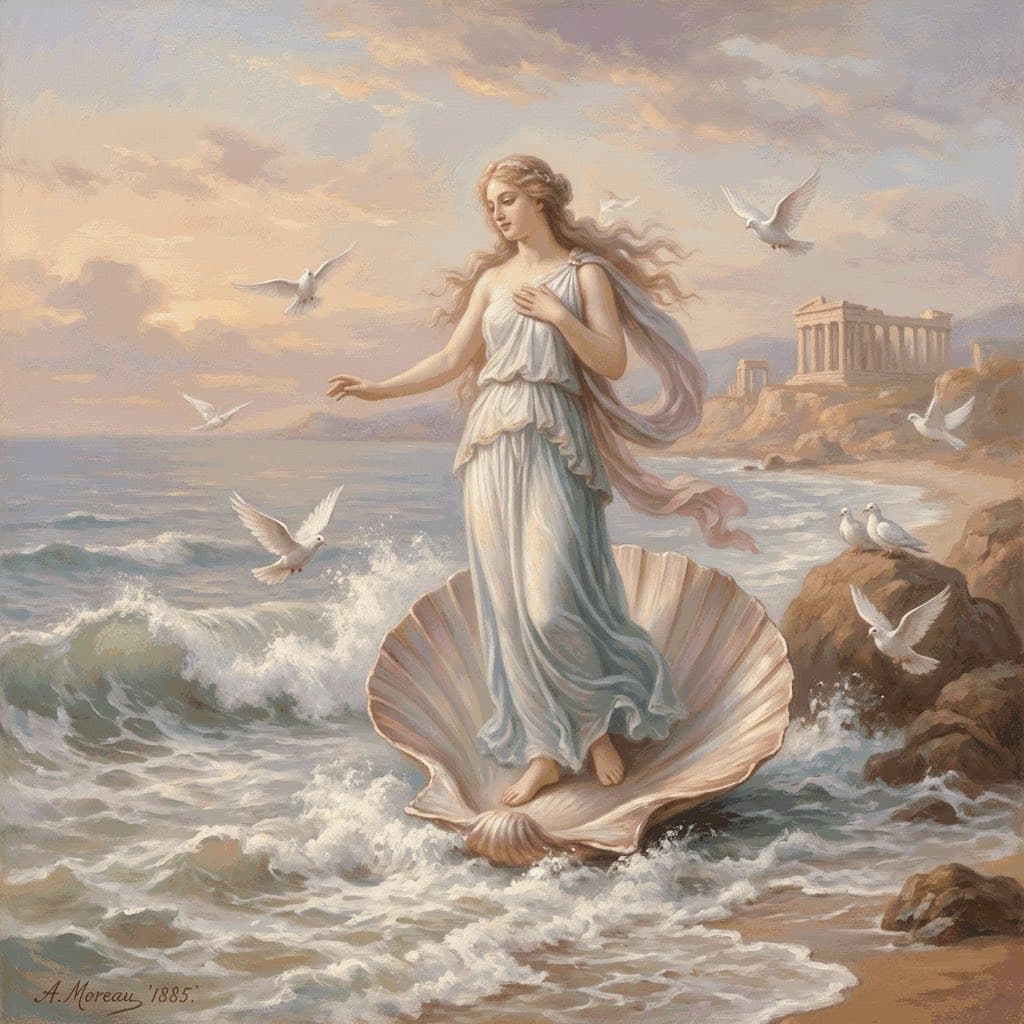
Goddess of love, beauty, and desire. Born from the sea foam after Cronus castrated Uranus and threw his genitals into the sea.

Aphrodite is the irresistible goddess of love and beauty. Though married to Hephaestus, she had many lovers, most notably Ares. She has the power to make anyone fall in love, a power that even Zeus cannot resist.

Read the full Aphrodite entry

Egyptian Pantheon

Hathor

Goddess of love, beauty, music, and motherhood. The 'Golden One' who embodies the feminine ideal. Protector of women.

Hathor's origins trace to the earliest periods of Egyptian religion, where she was worshipped as a sky goddess, with her body forming the heavens. In some traditions, she was the wife of Horus and thus connected to kingship. In others, she was the daughter of Ra, the sun god's eye given form. As one of the oldest Egyptian deities, her worship predates written records. Her association with the cow likely stemmed from the nurturing, life-giving qualities Egyptians observed in cattle, making her a natural embodiment of divine motherhood.

Hathor, known as the **"Golden One,"** is one of the most important and popular goddesses in Egyptian mythology. She embodies love, beauty, music, motherhood, joy, and feminine sexuality. As "Mistress of the West," she welcomed the dead into the afterlife, offering them food and drink.
Read the full Hathor entry
About this comparison

Comparisons pair figures that play a similar role across traditions, or that the myths connect within one. A shared role does not, by itself, establish a shared origin.